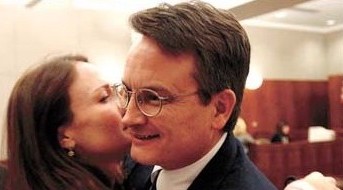
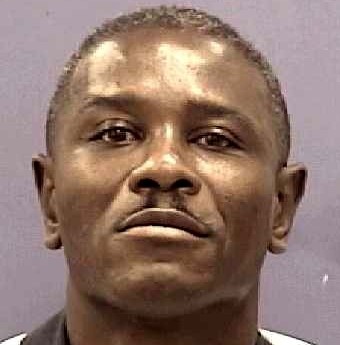
Robert Allen Weitzel
Homicide?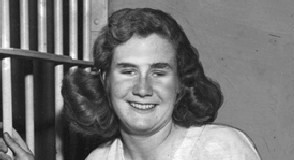 Beulah Louise Overell
Homicide? · USA · 1947
Beulah Louise Overell was charged with the homicide of her parents after a yach…
2 victims
Beulah Louise Overell
Homicide? · USA · 1947
Beulah Louise Overell was charged with the homicide of her parents after a yach…
2 victims
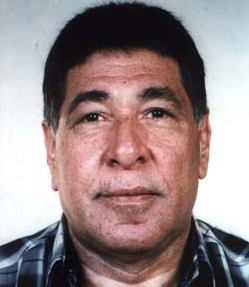 Gameel Al-Batouti
Mass murderer · USA · 1999
Gameel Al-Batouti (also rendered “Gamil ElBatouty” or “El Batouty” in U.S. offi…
216 victims
Gameel Al-Batouti
Mass murderer · USA · 1999
Gameel Al-Batouti (also rendered “Gamil ElBatouty” or “El Batouty” in U.S. offi…
216 victims
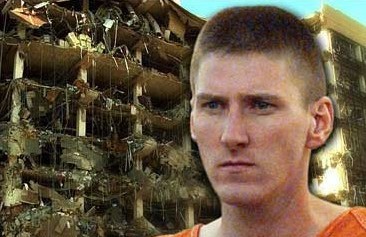 Timothy McVeigh
Mass murderer · USA · 1995
Timothy James McVeigh (April 23, 1968 – June 11, 2001) was a United States Army…
168 victims
Timothy McVeigh
Mass murderer · USA · 1995
Timothy James McVeigh (April 23, 1968 – June 11, 2001) was a United States Army…
168 victims
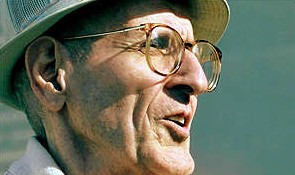 Jack Kevorkian
Homicide · USA · 1990
Jack Kevorkian (born May 26, 1928) was a controversial American pathologist. He…
130 victims
Jack Kevorkian
Homicide · USA · 1990
Jack Kevorkian (born May 26, 1928) was a controversial American pathologist. He…
130 victims
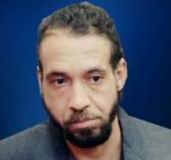 Julio Gonzalez
Mass murderer · USA · 1990
Julio Gonzalez was sentenced to 174 twenty-five-year sentences (a total of 4,35…
87 victims
Julio Gonzalez
Mass murderer · USA · 1990
Julio Gonzalez was sentenced to 174 twenty-five-year sentences (a total of 4,35…
87 victims
 David Koresh
Homicide · USA · 1993
David Koresh (born Vernon Wayne Howell; August 17, 1959 – April 19, 1993) led t…
79 victims
David Koresh
Homicide · USA · 1993
David Koresh (born Vernon Wayne Howell; August 17, 1959 – April 19, 1993) led t…
79 victims
 Kenneth Eugene Bruce
Murderer · USA · 1990
Kenneth Eugene Bruce was convicted of capital murder in Texas and was executed…
1 victim
Kenneth Eugene Bruce
Murderer · USA · 1990
Kenneth Eugene Bruce was convicted of capital murder in Texas and was executed…
1 victim
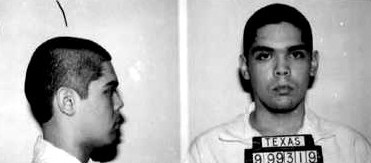 Richard Vasquez
Murderer · USA · 1998
Richard Vasquez was a Texas death row inmate. He stated: "Not Giving Up" My nam…
1 victim
Richard Vasquez
Murderer · USA · 1998
Richard Vasquez was a Texas death row inmate. He stated: "Not Giving Up" My nam…
1 victim
 Renee Kara O'Brien
Homicide · New Zealand · 2002
Renee Kara O'Brien was 14 years and nine months old when she beat Kenneth Pigot…
1 victim
Renee Kara O'Brien
Homicide · New Zealand · 2002
Renee Kara O'Brien was 14 years and nine months old when she beat Kenneth Pigot…
1 victim
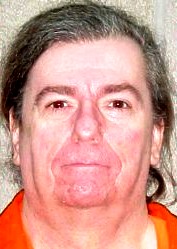 Joe Clarence Smith
Murderer · USA · 1975
Joe Clarence Smith was convicted and sentenced to death for the 1976 murders of…
2 victims
Joe Clarence Smith
Murderer · USA · 1975
Joe Clarence Smith was convicted and sentenced to death for the 1976 murders of…
2 victims
 Thomas Miller-El
Murderer · USA · 1985
Defendant: Thomas Joe Miller-El, convicted of capital murder in Texas state cou…
1 victim
Thomas Miller-El
Murderer · USA · 1985
Defendant: Thomas Joe Miller-El, convicted of capital murder in Texas state cou…
1 victim
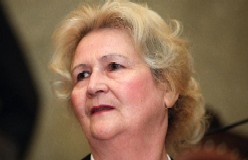 Elfriede Blauensteiner
Serial killer · Austria · 1981
Elfriede Blauensteiner (born 22 January 1931 in Vienna; died 18 November 2003)…
5 victims
Elfriede Blauensteiner
Serial killer · Austria · 1981
Elfriede Blauensteiner (born 22 January 1931 in Vienna; died 18 November 2003)…
5 victims
- Gender
- male
- Country
- USA
- Location
- Layton, Utah, USA
- Date of birth
- ???
- Characteristics
- poisoner
- Victim profile
- Ellen B. Anderson, 91 / Judith V. Larsen, 93 / Mary R. Crane, 72 / Lydia M. Smith, 90 / Ennis Alldredge , 83 (patients under his care )
- Method of murder
- Poisoning ( morphine overdose)
- Date(s) of murder
- December 1995 - January 1996
- Years active
- 1995–1996
- Date of arrest
- September 1999
- Status
-
Imprisoned
Found innocent in a second trial in 2002; sentence overturned in January 2001; sentenced to 15 years in prison in 2000 on two counts of manslaughter and three counts of negligent homicide
Parties and case identifiers
Robert Allen Weitzel was a psychiatrist charged in relation to the deaths of five patients at Davis Hospital and Medical Center in Layton.
Timeline
- December 1995 — Five patients died under Weitzel’s care at Davis Hospital and Medical Center’s geriatric-psychiatric unit over a 16-day span starting in late December 1995.
- January 1996 — By mid-January 1996, three more women and one man had died.
- September 1995 — Weitzel was charged with the deaths of Ellen Anderson, 91; Ennis Alldredge, 83; Judith Larsen, 93; Mary Crane, 72; and Lydia Smith, 90.
- Late December 1995 to mid-January 1996 — The five deaths occurred at Davis Hospital and Medical Center in Layton over a 16-day span.
- Summer of 2000 — A jury found Weitzel guilty of two second-degree felony counts of manslaughter and three misdemeanor counts after a six-week trial.
- July 10, 2000 — Weitzel was convicted on two counts of manslaughter and three counts of negligent homicide in relation to the deaths of five patients.
- 2000 — Weitzel was sentenced to 15 years in prison.
- January 2001 — Weitzel’s sentence was overturned; Judge Thomas L. Kay ruled prosecutors had withheld exculpatory evidence from the defense, and a new trial was granted.
- January 10, 2001 — A new trial was granted to a Salt Lake City psychiatrist convicted of killing five of his elderly patients with excessive doses of morphine.
- Nov. 4 (year not stated in source) — The second trial began.
- Friday, Nov. 23, 2002 — A five-man, three-woman jury delivered verdicts after deliberations; Weitzel was found innocent.
- 2002 — Weitzel was found innocent in a second trial.
The offence
Weitzel was accused of homicide in the deaths of five elderly patients treated under his care in the Davis Hospital and Medical Center geriatric-psychiatric unit.
The five deaths occurred over a 16-day span in late December 1995 through January 1996. The five patients were:
- Ellen Anderson, 91, described as a widow for 28 years and a former elementary school teacher, a Mormon who did not drink or smoke; she had been diagnosed with dementia four years earlier and was unable to make herself understood.
- Judith Larsen, 93.
- Mary Crane, 72.
- Lydia Smith, 90.
- Ennis Alldredge, 83.
Prosecutors alleged that Weitzel ordered morphine injections for all five patients and that his care included over-medicating patients and failing to call in a consultant when medical problems arose, along with failure to attend to his patients.
The first trial involved two second-degree felony counts of manslaughter and three misdemeanor counts of negligent homicide.
The first-degree felony murder charges alleged that Weitzel killed:
- 91-year-old Ellen B. Anderson of Brigham City,
- 93-year-old Judith V. Larsen of Salt Lake City,
- 72-year-old Mary R. Crane of Salt Lake City,
- 90-year-old Lydia M. Smith of Centerville,
- 83-year-old Ennis Alldredge of Oak City.
Each charge carried a sentence of five years to life.
Investigation
Investigators exhumed bodies of three patients earlier that summer and performed autopsies by the state medical examiner. Prosecutors later said the exhumations and autopsies were part of the technical medical evidence presented at trial.
Weitzel was also under federal indictment for fraudulently obtaining prescription pain killers, including a federal allegation that he wrote numerous prescriptions for morphine and Demerol to a handful of people but kept the drugs. He was also said to have been charged with 22 counts of fraudulently obtaining prescription pain killers.
Layton Police Department homicide detective Joe Morrison headed the investigation into the deaths at the Horizon unit.
Arrest and pretrial matters
Weitzel was arrested in Bay City, Texas, as he stepped off his private plane. At the time of arrest, he was free on bail.
A warrant issued in Utah led to his arrest in Texas on Sept. 20, 1999, and he was charged with five counts of murder. Two days later, federal prosecutors in Utah unsealed an indictment charging 22 counts of obtaining controlled substances by deception.
Weitzel later refused written and telephone requests for interviews.
Trial
First trial (manslaughter and negligent homicide)
A six-week murder trial took place in summer 2000. A jury found Weitzel guilty of two counts of manslaughter and three counts of negligent homicide.
Weitzel was convicted on July 10, 2000 on two counts of manslaughter and three counts of negligent homicide.
Prosecutors said the verdict came after technical medical testimony and that the trial changed direction from what prosecutors described as morphine overdose deaths to end-of-life care and pain management.
County Attorney Mel Wilson said he perceived parts of the trial turned into a forum for end-of-life care and pain management, and said: “I perceive parts of this trial turned into a forum for end-of-life care and pain management. This case is about five people and the deaths of five people.”
Defense attorney Walter Bugden said in closing arguments that Weitzel obeyed the wishes of his patients, and said: “is not the only one on trial, but palliative care in Utah and in America is on trial here.”
Bugden also said the case came about because three nurses did not understand the concept of people in the process of death, and he specifically referred to a nurse named Earlene Cooper as someone who had a dislike for Weitzel. Cooper testified for the prosecution in both trials.
A nurse and other witnesses described disputes about the purpose of the unit and the appropriateness of drugs given.
Verdict details and deliberations in second trial
In the second trial, a five-man, three-woman jury deliberated and returned verdicts after two hours of deliberation.
The jury cleared Weitzel in the deaths of five patients and found him innocent on two counts of manslaughter and three counts of negligent homicide.
The jury delivered the last “not guilty” verdict after deliberations.
Weitzel said in a telephone interview: “I'm very happy with the verdict. It was a long, long haul,”
Defense attorney Walter Bugden wiped away tears as the last “not guilty” verdict was read.
Weitzel issued a prepared statement outside the courtroom that included: “I am terribly saddened about the completely unnecessary suffering my patients" families have been put through. Finally, I'm deeply disturbed that the state ever tried to criminalize compassionate and appropriate care."
Prosecutors said the verdict came about because the trial changed direction from morphine overdose deaths to end-of-life care.
Defense attorney Bugden said in closing arguments that Weitzel obeyed patients’ wishes and that palliative care in Utah and in America was on trial.
Cooper said in a telephone interview: “the whole issue was Weitzel's lack of empathy and lack of ability to care about these patients,” not about end-of-life care.
County Attorney Mel Wilson accepted the verdict and did not believe testimony from Dr. Perry Fine hurt the state’s case. The report described Dr. Perry Fine as an exculpatory witness and as an end-of-life care and pain-management specialist, and said the defense team in 2000 said he could have strengthened its case.
Sentencing
Weitzel was sentenced to 15 years in prison in 2000.
Appeals
Overturning of conviction and new trial
On appeal, a new trial was granted in January 2001 after Judge Thomas L. Kay ruled prosecutors had withheld exculpatory evidence from the defense. Kay later was removed from the case.
Kay ruled prosecutors had a legal and ethical duty to disclose the testimony of Dr. Perry Fine to defense attorneys, and the failure to do so warranted a new trial.
Kay wrote: “It is clear that the likelihood of a different result is sufficiently high so as to undermine the confidence in the outcome of the trial,”
The report also said prosecutors dropped Fine from their witness list because they did not plan to focus on end-of-life care. It further described that Fine reportedly told assistant Utah attorney generals that he did not support a criminal case against Weitzel, and that he said the five patients were terminally ill and could have been in pain. Those issues were described as heavily contested during Weitzel’s murder trial, and Kay ruled the statements should have been turned over to the doctor’s defense team.
The report also described a later, separate matter involving removal of Judge Thomas Kay from the case due to allegations of bias and intemperate remarks, and an appeals court judge disqualified Kay, stating that his apparent anger toward prosecutors even though justified reasonably called into question his impartiality. It also described accusations of prosecutorial misconduct and press-related attempts.
Other details
Unit and role
Weitzel was the director of a geriatric-psychiatric unit run by Houston-based Horizons Mental Health Management Inc. at Davis Hospital and Medical Center in Layton.
Investigators’ narrative about the patients
The five patients were elderly and confused, with mental problems that made them difficult or impossible to care for in nursing homes. Investigators described them as in good physical condition considering their age and that doctors, nurses, and families expected the patients to leave the unit within weeks after being stabilized on psychotropic medication.
Bodies and autopsies
The bodies of Larsen, Crane, and Alldredge were exhumed earlier that summer and autopsies were performed by the state medical examiner. Deputy County Attorney Steve Major said earlier that the tests were inconclusive.
Example patient histories described during the case
The record included extended descriptions of individual patient circumstances.
Ellen Anderson, 91: Her night of admission at 11:30 p.m. included an injection of morphine. Nursing notes described her breathing as “very erratic” and described Weitzel being paged at least twice, including at around 1 a.m. and again at 3:15 a.m. when Anderson was described as “thrashing arms” and “moaning and screaming.” At 3:30 a.m., Weitzel returned the page and ordered another shot of morphine, after which Anderson was dead in the morning. Anderson’s family described her as calm when her sister or daughter was with her and screaming when she woke up alone, with screams described as out of anxiety rather than pain.
Ennis Alldredge, 82: The record described his oldest daughter, Danice Mikesell, saying her father became violent and “took out five aides.” Alldredge was given two types of anti-psychotics, a sedative and morphine, and he died six days after admission. Mikesell visited the day before his death and found him strapped to his bed. A nurse warned she would get hit or kicked if she removed the restraints. Mikesell described her father squeezing her hand and crying, though he was unable to speak. A nurse gave him a shot saying it was for pain. At the time, Mikesell believed he was getting good care and she described feeling good that he knew who she was and squeezed her hand.
Judith Larsen, 93: Her record described strokes and that she often shouted, disturbing other residents at Holladay. Her son Merlin Larsen testified that the nursing home recommended Horizon to improve behavior and make residents more peaceful and easier to live with. Three weeks after admission, Merlin Larsen said the nursing staff told him the mother would have to be moved to another facility, and that Holladay wouldn’t take her back. Merlin Larsen quoted that Weitzel said it was his opinion she would not live very long, and that he said “We won't require you to move her. We'll just keep her comfortable until she dies.” Harold Larsen said that when he visited, she was often asleep or unresponsive, and described deterioration in less than a month. Harold Larsen said her mother never complained of pain. The record described that eventually Judith Larsen was given 5-milligram shots of morphine every four hours around the clock, and on Jan. 3, 1996, she was given an additional 25-milligram shot. Melvin Wilson testified that, according to the state’s pain expert, this shot was lethal and quoted: “It shows intent, I would submit to this court, to cause death,” followed by: “There is no medically acceptable reason to order this kind of dose, particularly when there is no indication that the patient is in pain.”
Statements by county attorney and defense attorney in the second trial coverage
County Attorney Mel Wilson said: “The ones I feel bad for are the victims” families. They took it pretty rough,” Defense attorney Walter Bugden said his closing arguments included that palliative care in Utah and in America was on trial.
Wilson also quoted during the second trial coverage: “I accept the verdict rendered by the jury and doesn't believe the testimony given by Dr. Perry Fine, a defense expert witness, Thursday hurt the state's case.”
Reactions by family members and testimony described
Myrna Gronwald, daughter of Ennis Alldredge, arrived after the verdict and said: “I think it's a bad joke. I talked to Mel (Wilson) and the staff afterward, and it wasn't Bugden who won the case. What it came down to was the standard of care,”
Carolyn Buhman, daughter of Lydia Smith, said she appreciated the jury’s work but was upset with the verdict and said: “The jury was confused, so they had a reasonable doubt and had to find him not guilty,”
Buhman said she was concerned that in Utah doctors do not have to be responsible to the public, and quoted: “Why are doctors not held accountable?”
Pretrial and career history details described
The record described that Weitzel moved to Utah from California in 1993 after becoming sexually involved with a patient, and that around the time he was hired by Horizon in September 1995, Utah Division of Occupational and Professional Licensing received an anonymous complaint alleging abuse of Demerol and morphine obtained by writing prescriptions for patients.
The record said that in April 1996, a similar anonymous tip sparked a federal investigation. It described Weitzel continuing to practice medicine until September 1999 when he was charged with killing the patients at Davis and indicted on federal drug charges.
The record also described that Weitzel was hired in February 1998 as director of another geriatric psychiatric clinic at Matagorda County Hospital in Texas, with the unit subcontracted to Cornerstone Behavioral Health Services Inc.
A patient at Matagorda, Laura Ware, 86, died under his care under similar circumstances, and police were investigating her death.
The record described Weitzel surrendered his license to practice medicine in California rather than fight charges of becoming sexually involved with a patient, and said he was under federal indictment on 22 charges of fraudulently obtaining Demerol and morphine allegedly for his personal use.
Charges and trial expectations described in pretrial coverage
Pretrial coverage described that if the jury found Weitzel committed a crime, he could be convicted of intentional murder or a lesser charge such as criminally negligent homicide. It described that prosecutors argued Weitzel intended to kill and knowingly prescribed morphine in lethal amounts to patients not in pain and without physical problems except normal infirmities of old age.
Pretrial coverage also included the quote by Betsy Bowman, deputy attorney general for Utah’s Division of Occupational and Professional Licensing: “Somebody should have realized something was wrong,” followed by: “People were being carried out of there in body bags.”
It included a quote by Weitzel’s lawyer Peter Stirba defending Weitzel: “I believe that the evidence will show that they were appropriate and consistent with standards of care in terms of the treatment of those patients at the hospital,”
It also included a quote by Melvin Wilson at a preliminary hearing comparing the danger of drug administration to pointing a gun: “However, you have the administration of a drug that is so dangerous and so insidious that in the course of its administration, if it's not handled appropriately and properly, it creates the same grave risk of death as an individual pointing a gun at somebody's head,”
The record described allegations that Weitzel gave orders for large doses of morphine and powerful psychotropic drugs over the telephone without monitoring the patients and that he often failed to respond to pages from the hospital.
Expert and medical licensing references included
The record included mention that a Texas State Board of Medical Examiners hotline call had been made for information about Weitzel and that it indicated only an infraction cleared in January 1999 with payment of a $3,500 penalty and a reprimand, and described the infraction as “action due to dishonorable conduct, likely to deceive or defraud the public.”
The record described that at present Weitzel could still legally practice medicine in Texas, and described that in the past decade he had practiced in three states, showing an apparent pattern of moving on before investigators caught up.
It further described that California board records showed his involvement with Nancy M., including that she became pregnant and had an abortion, and that he surrendered his California license in 1997 rather than contest charges that he had “methodically manipulated [a] patient and her treatment in order to use her as an object to gratify his own emotional and sexual needs.”
It described an investigation at a headache clinic leading authorities to five deaths and described overprescribing and inadequate monitoring of patients. It also included a quote by Elizabeth Bowman about discrepancies between prescribed and administered doses: “For example, he'd prescribe 30 mg of morphine but administer only 12 mg,”
It described a state assistant attorney general and past president Elizabeth Bowman, and it quoted Val B. Johnson on the alleged absence of a witch hunt: “There is no evidence of a state-sanctioned witch hunt against physicians who legitimately use narcotics to treat pain,”
The record included a quote by Weitzel: “I'm going to the mat with them,” and a quote by Weitzel about past problems and being a convenient target: “I'm not exactly the poster boy for Utah medicine. I've had some problems in my past, and that makes me a convenient target. Prosecutors use my history as a smoke screen because they don't want anyone to focus on the facts of the case.”
It also included a quote by Weitzel about his position: “I've done some very stupid things. But prosecutors have smeared me with irrelevant allegations. If what I did in this case is murder, then half of all doctors in America are probably guilty also.”
Sentences, conviction counts, and final status preservation
Weitzel was convicted on two counts of manslaughter and three counts of negligent homicide, sentenced to 15 years in prison in 2000, had the sentence overturned in January 2001, and was found innocent in a second trial in 2002.
Spotted an error, or have more information about this case?