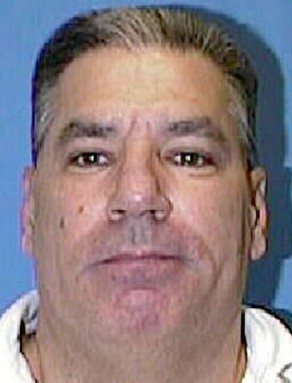
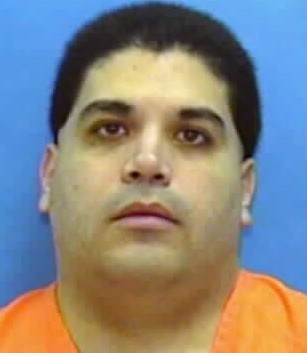
Michael Griffith
Murderer Brian Kevin Rosenfeld
Murderer · USA · 1985
Brian Kevin Rosenfeld Brian Kevin Rosenfeld was sentenced to three concurrent l…
23 victims
Brian Kevin Rosenfeld
Murderer · USA · 1985
Brian Kevin Rosenfeld Brian Kevin Rosenfeld was sentenced to three concurrent l…
23 victims
 Russell Ellwood
Murderer · USA · 1991
Russell Ellwood was a former taxi driver. Authorities suspected him of killing…
20 victims
Russell Ellwood
Murderer · USA · 1991
Russell Ellwood was a former taxi driver. Authorities suspected him of killing…
20 victims
 Robert Martines Perez
Murderer · USA · 1994
Name: Robert Martines Perez · Other name used in proceedings: Robert Martinez P…
15 victims
Robert Martines Perez
Murderer · USA · 1994
Name: Robert Martines Perez · Other name used in proceedings: Robert Martinez P…
15 victims
 Billy Frank Vickers
Murderer · USA · 1993
Billy Frank Vickers Vickers was executed by lethal injection in Texas on Januar…
14 victims
Billy Frank Vickers
Murderer · USA · 1993
Billy Frank Vickers Vickers was executed by lethal injection in Texas on Januar…
14 victims
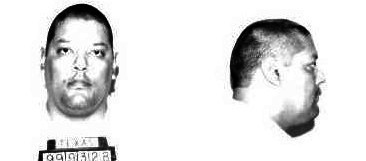 Louis Castro Perez
Murderer · USA · 1998
Louis Castro Perez was listed as a condemned killer with TDCJ Number 999328. He…
3 victims
Louis Castro Perez
Murderer · USA · 1998
Louis Castro Perez was listed as a condemned killer with TDCJ Number 999328. He…
3 victims
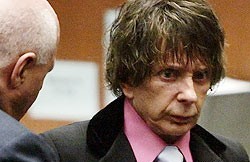 Phil Spector
Murderer · USA · 2003
Harvey Phillip Spector (born December 26, 1939) was an American record producer…
1 victim
Phil Spector
Murderer · USA · 2003
Harvey Phillip Spector (born December 26, 1939) was an American record producer…
1 victim
 Li Hao
Murderer · China · 2009
Li Hao was convicted of murder, rape, illegal detention, organized prostitution…
2 victims
Li Hao
Murderer · China · 2009
Li Hao was convicted of murder, rape, illegal detention, organized prostitution…
2 victims
 Mohan Kumar
Serial killer · India · 2005
Mohan Kumar was a former primary school teacher who was convicted in a third ca…
20 victims
Mohan Kumar
Serial killer · India · 2005
Mohan Kumar was a former primary school teacher who was convicted in a third ca…
20 victims
 Donald Gene Franklin
Murderer · USA · 1975
Donald Gene Franklin was convicted of capital murder under Tex.Penal Code Ann.…
1 victim
Donald Gene Franklin
Murderer · USA · 1975
Donald Gene Franklin was convicted of capital murder under Tex.Penal Code Ann.…
1 victim
- Gender
- male
- Country
- USA
- Location
- Harris County, Texas, USA
- Date of birth
- J uly 11, 1950
- Age at first offence
- 44
- Characteristics
- abuse, rape, robbery, police officer
- Victim profile
- Deborah McCormick, 44 (flower shop owner)
- Method of murder
- St abbing with knife
- Date(s) of murder
- October 10, 1994
- Years active
- 1994
- Date of arrest
- 1 month after
- Status
-
Executed
Executed by lethal injection in Texas on June 6, 2007
Case information
- Name: Michael Griffith
- Status: Executed by lethal injection in Texas on June 6, 2007
- Age: 56 (as stated in execution reporting)
- Victim: Deborah McCormick, 44
- Victim’s mother: Mary Ringer
- Family member witness to execution: Dawn Kirkland (Deborah McCormick’s daughter)
Timeline
- October 10, 1994 — Mary Ringer left Deborah McCormick alone at the Always and Forever Florist Shop and Wedding Chapel in Houston; when Mary returned about 30 minutes later, she found Deborah McCormick’s body lying in a pool of blood and naked from the waist up, stabbed eleven times.
- Later on October 10, 1994 — Mary Ringer’s missing credit cards were used at a gas station more than eighteen miles away from the murder scene and were also used at three department stores.
- October 14, 1994 — Michael Griffith robbed a Guardian Savings and Loan in Harris County and shot the lone employee in the back of the head; the victim survived.
- October 28, 1994 — Griffith robbed a bridal salon and sexually assaulted the salesperson.
- September 19, 1994 — Hilda Garcia testified that Griffith became angry in Garcia’s home, destroyed some things, and attacked her when she tried to throw him out; Garcia filed assault charges.
- Around three weeks after October 10, 1994 — Griffith was arrested in a hotel room/motel room; police discovered stolen credit cards and an envelope containing money and a knife.
- December 1995 — Griffith was convicted and sentenced to death for the capital murder of Deborah McCormick.
- October 8, 2003 — The Texas Court of Criminal Appeals denied state habeas corpus relief.
- September 27, 2005 — Griffith’s federal petition for writ of habeas corpus was denied.
- October 5, 2005 — Griffith filed a notice of appeal.
- July 21, 2006 — The 5th U.S. Circuit Court of Appeals denied Griffith’s request for a certificate of appealability.
- January 8, 2007 — The Supreme Court denied certiorari review of the 5th U.S. Circuit Court of Appeals’ decision.
- June 6, 2007 — Griffith was executed by lethal injection in Texas after 6 p.m., pronounced dead at 6:18 p.m. nine minutes after the lethal drugs hit his veins.
Background
Michael Griffith was a former Harris County sheriff’s deputy. He rose to the rank of sergeant over his 10-year career with the Harris County Sheriff’s Department. He was terminated or fired from the sheriff’s department in 1993 after a violation of departmental policy regarding domestic abuse, and reporting also described a misdemeanor conviction for domestic violence and the loss of his job in January 1993.
At Griffith’s capital murder trial and in subsequent penalty-phase evidence, his prior conduct toward women and his work history were presented. A former co-worker from the Harris County Sheriff’s Department testified that Griffith had a reputation for not being peaceful and law-abiding and that Griffith was prone to spontaneous eruptions. Other law enforcement officers described him as a model officer.
The offence
Capital murder and robbery of Deborah McCormick
Deborah McCormick and her mother, Mary Ringer, worked together at the Always and Forever Florist Shop and Wedding Chapel in Houston. The shop had a policy that if only one of them was in the store, the door would be locked and no one would be admitted unless the customer was known to them.
On the morning of October 10, 1994, Mary Ringer left Deborah McCormick alone in the shop and locked the door behind her. When Mary returned about 30 minutes later, she found her daughter’s body lying in a pool of blood and naked from the waist up. The body had been stabbed eleven times.
Investigators found that money and credit cards were missing. Missing were four hundred dollars that had been hidden in a makeup bag and the mother’s credit cards that had been in the victim’s purse. The mother’s missing credit cards were used later that day at a gas station more than eighteen miles away from the murder scene and they were also used at three department stores.
A knife recovered from Griffith was described as consistent with the knife that inflicted the wounds on Deborah McCormick’s body, and DNA testing indicated the knife had a mixture of two different blood types—Deborah McCormick’s and Griffith’s. Griffith was recognized as a customer by Mary Ringer, who testified he had been in the shop on three other occasions to purchase roses and who recognized him at the time because he was a customer.
Arrest after the murder
Griffith was arrested about a month after the murder in a hotel room. Police discovered stolen credit cards and an envelope containing money and a knife. In Griffith’s car, police found a receipt for a dozen red roses from the Always and Forever Florist Shop. In reporting describing the arrest, Griffith was found in a hotel room/motel room about three weeks after the murder, and police found Mary Ringer’s stolen credit cards, a knife, and an envelope containing cash; a receipt from the Always and Forever shop bearing the date of the murder was in his possession.
Additional violent robberies and assaults
At the punishment phase, the State presented evidence of two other violent robberies Griffith committed shortly after the murder.
Guardian Savings and Loan robbery (October 14, 1994) Griffith robbed a Guardian Savings and Loan in Harris County on October 14, 1994, four days after the murder. During the robbery, Griffith made the lone employee walk to the restroom in the back of the building, at which time Griffith shot her in the back of the head. The first shot grazed the victim’s head, and a second shot lodged and fragmented into her skull. The victim survived and remained conscious long enough to see Griffith shoot a security camera.
Bridal salon robbery and sexual assault (October 28, 1994) Griffith robbed a bridal salon and sexually assaulted the salesperson on October 28, 1994.
Investigation and arrest
Investigators suspected Griffith after searching for a hotel room secured with one of the stolen cards. Police knocked on the door and Griffith answered. Officers arrested Griffith pursuant to outstanding warrants for other crimes and conducted a protective search of the room. Within five minutes of entry, Griffith was presented with a consent to search form, which he signed after receiving Miranda warnings; in appellate review, Griffith disputed whether he had been read Miranda warnings, and the appellate discussion notes that Griffith admitted on cross-examination that he knew what the consent to search form was, that he signed it “knowingly and voluntarily,” and that he knew he could have refused to sign it. Griffith also admitted that a warrant was out for his arrest on an assault charge and that officers “had a lawful right to arrest” him on that charge.
Evidence included the murder weapon (knife), credit cards taken from Deborah McCormick, and credit card receipts. Police found an envelope containing money and a knife.
Trial
Conviction and sentencing
Griffith was convicted of capital murder for the stabbing, sexual assault, and robbery of Deborah McCormick. The Texas capital-murder statute referenced on direct appeal was V.T.C.A., Penal Code, Section 19.03(a)(2). Pursuant to the jury’s answers to statutory punishment issues under Texas Code of Criminal Procedure Article 37.071, Sections 2(b) and 2(e), the trial judge sentenced Griffith to death in December 1995.
Issues raised on direct appeal
Griffith’s direct appeal included arguments challenging evidence and procedural rulings.
Suppression motion and consent to search Griffith asserted that the evidence seized from the hotel room following his arrest should have been suppressed notwithstanding his consent to search form. He did not assert that his arrest was illegal, but rather that the State failed to carry its burden at the suppression hearing to show that the search was lawful. The appellate discussion notes that Griffith admitted he signed the consent form knowingly and voluntarily and knew he could have refused; it also notes Griffith admitted that officers had a lawful right to arrest him on an assault charge. The appellate holding overruled this point of error.
Funding and appointment of an expert (Dr. Theodore Blau) Griffith asserted that the trial court erred in failing to provide funds to employ a particular psychologist, Dr. Theodore Blau, to rebut State psychologist FBI Special Agent Dr. Allan Brantley. The appellate discussion described motions requesting appointment of psychiatrist Mitchell Young and psychologist Ed Friedman, as well as limitations to $6,000.00, and subsequent motions specifically asking for appointment of psychologist Dr. Theodore Blau. The trial judge overruled the request. The appellate opinion discussed Ake v. Oklahoma, Rey v. State, and explained the standard for threshold showing of need for expert assistance; it held the trial judge did not abuse discretion in refusing to appoint Blau.
Admission of Brantley testimony and Rule 702-705 hearing Griffith asserted that Brantley should not have been allowed to testify without first holding a Rule 702 hearing to determine whether Brantley’s theories were sufficiently reliable to be admissible. The appellate discussion notes the record of an exchange about a hearing, and that before Brantley’s testimony before the jury the judge heard from both attorneys and Brantley regarding qualifications and basis of testimony, with no indication that Griffith was prohibited from calling witnesses for the hearing or complained about its sufficiency.
Brantley testimony reliability and relevance Griffith contended that Brantley’s testimony was based on novel scientific theory and was unreliable, and also claimed it was inadmissible because it did not assist the jury with specialized knowledge. The appellate discussion includes the Rule 702 framework and explains that during the hearing Brantley expressly stated he would not offer testimony about a profile. The appellate court held the arguments overruled and found the testimony admissible, emphasizing that a future-danger question of fact required jury evaluation and that expert testimony was relevant to that issue.
Victim impact testimony Griffith complained that the trial court erred in allowing the victim’s brother to testify at the punishment stage about the impact of the victim’s death on their family. The appellate discussion describes the witness and notes Griffith did not cross-examine. The appellate holding found no abuse of discretion.
Parole-related instructions and voir dire Griffith complained about the requirement under Article 42.18, Section 8(b)(2) that a life-sentenced defendant must spend at least forty years in jail before becoming eligible for parole. The appellate opinion states that requested instruction, voir dire, and testimony were refused and that the appellate court rejected the argument that Simmons required parole-eligibility considerations by the jury.
Mitigation evidence sufficiency review Griffith challenged the negative finding on mitigation issues and factual sufficiency of mitigation evidence. The appellate opinion held sufficiency of mitigation evidence was not reviewable and that it was not constitutionally required.
Punishment-stage impeachment and personnel file Griffith asserted the trial court erred in allowing the State to introduce evidence that two Harris County Sheriff’s Office supervisors who wrote positively of him were fired because of criminal convictions. During the punishment stage, the State called Ruben Diaz, a lieutenant who served as Griffith’s immediate supervisor at one point. After defense counsel introduced Griffith’s personnel file, the prosecutor elicited testimony on redirect that deputies G. Poindexter and B. Mathis had been fired after being convicted of criminal offenses. The appellate discussion discussed Tex. R. Crim. Evid. 806 and 801(d), concluded the trial judge could have determined the statements within the file were hearsay and allowed impeachment under Rule 806. The appellate opinion noted that Mathis’ prior conviction was for the felony of rape, and said that the record did not appear to set out what conviction was used to impeach Poindexter’s credibility.
The Texas Court of Criminal Appeals affirmed the conviction and death sentence.
Sentencing
The punishment phase evidence included testimony about Griffith’s reputation and behavior.
Co-worker testimony
A former co-worker testified Griffith had a reputation for not being peaceful and law-abiding and that Griffith was prone to spontaneous eruptions.
Termination for domestic abuse policy violation
A co-worker also testified Griffith was terminated from the sheriff’s department on January 21, 1993, for a violation of departmental policy regarding domestic abuse. Other reporting also described that he was fired in 1993, and that it followed a domestic abuse matter.
Prior violent robberies after the murder
The State used evidence of the October 14, 1994 savings and loan robbery and the October 28, 1994 bridal salon robbery and sexual assault.
Evidence of abuse toward ex-wives and girlfriends
Multiple witnesses testified about Griffith’s treatment of partners.
First wife (Cheryl Stanley) Cheryl Stanley testified Griffith began hitting her very early in their marriage; Griffith was unfaithful, and when she confronted him he broke several ribs. She testified she left him when he injured their oldest daughter in a fight.
Another ex-wife An ex-wife testified Griffith was charming and gave gifts while dating but became violent on the day they were married. During the three-year marriage, she testified Griffith physically abused her and began beating her four or five months into the marriage. She testified Griffith threatened to kill her for wearing a dress he thought was too tight. She also testified that after they separated, Griffith attacked her when she attempted to take money out of their bank account; she testified Griffith broke down her front door, broke her car windows, and took the money she had withdrawn.
Dating a co-worker beginning October 1992 Testimony described that in October 1992 Griffith began dating a co-worker. The woman testified that at first he was charming and sent flowers and gifts frequently but soon became possessive, jealous, and temperamental. She testified that on one occasion Griffith choked her and threatened her with a gun. She testified that in January 1993, despondent over losing his job, Griffith held her hostage at his apartment for twelve hours and threatened her with a pair of scissors, telling her he should kill her. She testified he told her “it’s a good day for you to die” and that she could say goodbye to her children before he killed her. She testified she escaped and Griffith was arrested for assault.
Hilda Garcia Hilda Garcia testified that when they first began dating, Griffith treated her well and gave her flowers but soon became possessive and temperamental. She testified Griffith struck her on two occasions, once chipping her tooth. She testified that on September 19, 1994, Griffith destroyed some things in Garcia’s home and attacked her when she tried to throw him out, and that Garcia filed assault charges.
Defense psychologist and mitigation evidence
Griffith’s attorneys did not contest guilt at trial; they presented mitigation evidence.
- A defense psychologist testified Griffith had a borderline personality disorder that showed up against wives and girlfriends whose actions reminded him of his neglectful mother who was often angry and violent when drunk.
- The defense presented testimony that Griffith was scarred by a neglectful mother and that he had received professional awards and praise from supervisors and people in the community.
- Defense experts described that structure in prison would help function and that without contact with women Griffith would not be dangerous in prison.
State rebuttal and future dangerousness opinion
As a rebuttal witness, the State called Allan Brantley, an FBI agent who worked at the National Center for the Analysis of Violent Crimes. Brantley testified there was a high probability Griffith would engage in future acts of violence consistent with his past behavior. Brantley opined Griffith’s actions were motivated by a sexual drive and that such sexual drives do not go away. Brantley compared Griffith to a sexual predator who enjoyed the power, control, and domination of a weaker individual, and who would continue seeking similar outlets for sexual gratification; if isolated from females, Brantley testified the predator would look for a similar victim within the available population, which could include weaker males. Another appeal discussion described that Brantley testified prisoners encounter women and children within prison systems.
Jury findings and death sentence
The jury found that if sentenced to life imprisonment Griffith would constitute a continuing threat to society and that mitigating evidence was not sufficient to justify a life sentence. The judge then sentenced Griffith to death.
Appeals
Direct appeal
The Texas Court of Criminal Appeals affirmed Griffith’s conviction and sentence.
The appellate decision cited Griffith v. State, 983 S.W.2d 282 (Tex. Crim. App. 1998) and described holdings including:
- the legality of the hotel room search at the time of arrest,
- that Griffith was not entitled to appointment of a particular psychologist as an expert witness,
- that State psychologist testimony was admissible on future dangerousness,
- and that sufficiency of mitigation evidence was not reviewable.
The opinion also stated the Court would affirm and listed the points of error addressed in the appellate analysis.
State habeas corpus
The Texas Court of Criminal Appeals denied state habeas corpus relief on October 8, 2003 after adopting the trial court’s findings of fact and conclusions of law.
Federal habeas corpus and certificate of appealability
Griffith’s federal petition for writ of habeas corpus was denied on September 27, 2005. The district court also denied a certificate of appealability (COA) in the same opinion. Griffith filed a notice of appeal on October 5, 2005. The 5th U.S. Circuit Court of Appeals denied Griffith’s request for COA on July 21, 2006, and the Supreme Court denied certiorari review on January 8, 2007.
The federal appellate discussion addressed COA issues including the admission of FBI Special Agent Allan Brantley’s expert testimony, the denial of additional expert assistance (Dr. Theodore Blau), and victim impact testimony by Billy Ringer, Jr.; the request for a COA was denied.
Outcome
Michael Griffith was executed by lethal injection in Texas on June 6, 2007. Execution reporting states he was pronounced dead at 6:18 p.m., nine minutes after lethal drugs hit his veins, and that he was asked for a final statement and replied “No, sir.” Reporting also states he whispered, “Please take my spirit to the Lord,” as the lethal drugs began flowing.
Aftermath
Dawn Kirkland, Deborah McCormick’s daughter, stated after the execution, “We will never be the same.” Another statement attributed to Kirkland after the execution read: “We came here today with justice on our minds and heaviness in our hearts,” and “This is merely the end of another chapter in our story and with this end may it bring peace to our family.”
Additional execution reporting described that Griffith made no final statement beyond “No, sir,” and that he whispered “Please take my spirit to the Lord.” Friends and family of McCormick did not speak during the execution and stared forward at Griffith’s body. Other reporting described that Both of McCormick’s two grown daughers, her brother, son-in-law, and ex-husband witnessed the execution, and that five relatives watched the execution.
The reporting also described that Griffith’s execution was among multiple scheduled lethal injection executions in Texas.

Spotted an error, or have more information about this case?