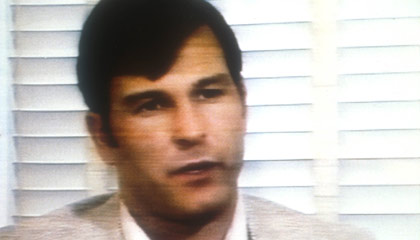
Daniel James White
Murderer Ervil LeBaron
Murderer · USA · 1972
Ervil Morrell LeBaron (1925 to August 16, 1981) was the leader of a polygamous…
35 victims
Ervil LeBaron
Murderer · USA · 1972
Ervil Morrell LeBaron (1925 to August 16, 1981) was the leader of a polygamous…
35 victims
 Brian Kevin Rosenfeld
Murderer · USA · 1985
Brian Kevin Rosenfeld Brian Kevin Rosenfeld was sentenced to three concurrent l…
23 victims
Brian Kevin Rosenfeld
Murderer · USA · 1985
Brian Kevin Rosenfeld Brian Kevin Rosenfeld was sentenced to three concurrent l…
23 victims
 Marvin Gray
Murderer · USA · 1975
Marvin Gray was convicted killer who claimed responsibility for 23 slayings and…
23 victims
Marvin Gray
Murderer · USA · 1975
Marvin Gray was convicted killer who claimed responsibility for 23 slayings and…
23 victims
 Yahweh ben Yahweh
Murderer · USA · 1980
Yahweh ben Yahweh was born and legally named Hulon Mitchell Jr. (October 27, 19…
23 victims
Yahweh ben Yahweh
Murderer · USA · 1980
Yahweh ben Yahweh was born and legally named Hulon Mitchell Jr. (October 27, 19…
23 victims
 Dean Phillip Carter
Spree killer · USA · 1984
Dean Phillip Carter was sentenced to death in 1985. He was an inmate at San Que…
5 victims
Dean Phillip Carter
Spree killer · USA · 1984
Dean Phillip Carter was sentenced to death in 1985. He was an inmate at San Que…
5 victims
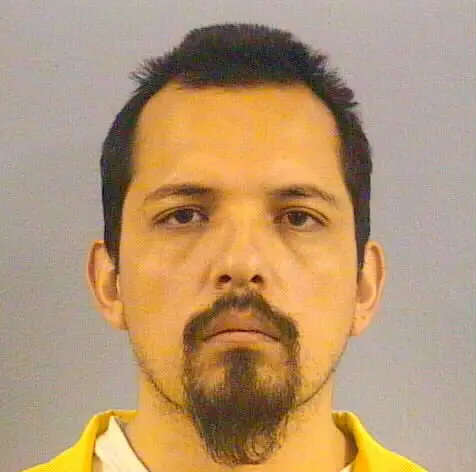 Juan Luna
Mass murderer · USA · 1993
Juan Luna was convicted of killing seven people in the Brown’s Chicken massacre…
7 victims
Juan Luna
Mass murderer · USA · 1993
Juan Luna was convicted of killing seven people in the Brown’s Chicken massacre…
7 victims
 Mark Jensen
Murderer · USA
Mark Jensen was a stockbroker husband accused of killing his wife, Julie Jensen…
1 victim
Mark Jensen
Murderer · USA
Mark Jensen was a stockbroker husband accused of killing his wife, Julie Jensen…
1 victim
 Lillie Stanton
Murderer · USA · 2012
Lillie Stanton was 49 and lived at a house on Vaught Road in Winchester, where…
2 victims
Lillie Stanton
Murderer · USA · 2012
Lillie Stanton was 49 and lived at a house on Vaught Road in Winchester, where…
2 victims
 Ann Bilansky
Murderer · USA · 1859
Ann Bilansky was executed by hanging in Minnesota on March 23, 1860 for the ars…
1 victim
Ann Bilansky
Murderer · USA · 1859
Ann Bilansky was executed by hanging in Minnesota on March 23, 1860 for the ars…
1 victim
- Gender
- male
- Country
- USA
- Location
- San Francisco, California, USA
- Date of birth
- September 2, 1946
- Age at first offence
- 32
- Characteristics
- abuse, alcohol, history of mental illness, motive unknown
- Victim profile
- San Francisco Mayor George Moscone and openly gay San Francisco Supervisor Harvey Milk
- Method of murder
- Shooting
- Date(s) of murder
- November 27, 1978
- Years active
- 1978
- Date of arrest
- Same day (surrenders)
- Status
-
Died in custody
Found guilty of voluntary manslaughter on May 21, 1979; sentenced to seven years and eight monts imprisonment; paroled on January 6, 1984; committed suicide by carbon monoxide poisoning in his garage by running a garden hose from the exhaust pipe to the inside of his car on October 21, 1985
Case details
Daniel James White (September 2, 1946 – October 21, 1985) was a San Francisco supervisor who assassinated Supervisor Harvey Milk and Mayor George Moscone on November 27, 1978 at City Hall.
Timeline
- September 2, 1946 — Daniel James White was born.
- 1965 — White enlisted in the Army.
- 1972 — White was honorably discharged from the Army; he worked as a security professional at A.J. Dimond High School in Anchorage, Alaska during early 1972.
- 1975 — Willie Brown authored the bill that legalized homosexuality in California.
- 1977 — White was elected as a Democrat to the San Francisco Board of Supervisors from District 8.
- April 1978 — The Catholic Church proposed a facility for juvenile offenders who had committed murder, arson, rape, and other crimes in White’s district.
- November 10, 1978 — White resigned his seat as supervisor.
- November 14, 1978 — White reversed his resignation after supporters lobbied him to seek appointment from George Moscone.
- November 27, 1978 — White visited San Francisco City Hall, entered Moscone’s office, shot Mayor George Moscone, then shot Supervisor Harvey Milk, fled, and later turned himself in.
- May 21, 1979 — White was found guilty of voluntary manslaughter.
- January 6, 1984 — White was paroled.
- October 21, 1985 — White committed suicide by carbon monoxide poisoning in his garage by running a garden hose from the exhaust pipe to the inside of his car.
- October 21, 1985 (shortly before 2 p.m.) — White’s body was discovered by his brother, Tom (also referred to as Thomas).
- 1998 — Frank Falzon said White confessed to intending to kill additional individuals during a meeting in 1984.
- 1984 — The story of the assassinations was told in the documentary film The Times of Harvey Milk.
Background
White was born in Los Angeles County. He was the second of nine children and was raised by working-class parents in a Roman Catholic household in the Visitacion Valley neighborhood of San Francisco.
He attended Riordan High School and was expelled for violence during his junior year. He then attended Woodrow Wilson High School and was valedictorian.
White enlisted in the Army in 1965 and served in the Vietnam War before being honorably discharged in 1972.
After his discharge, he worked as a security professional at A.J. He returned to San Francisco to work as a police officer and quit after reporting another officer for beating a handcuffed suspect. He joined the San Francisco Fire Department. While on duty, White’s rescue of a woman and her baby from a seventh-floor apartment in the Geneva Towers was covered by The San Francisco Chronicle, and newspapers referred to him as “an all-American boy”.
White had previously been a member of the San Francisco Police Department and the San Francisco Fire Department.
Milk owned and operated a camera store on Castro Street, which he sold upon election to the Board of Supervisors. Before 2003, members of the San Francisco Board of Supervisors were only paid part-time salaries, and in 1977 the annual salary for a Supervisor was less than $12,000 (also stated as $9,600 a year). Frustrated with the nature of San Francisco politics and finding it impossible to support his family on the salary, White resigned his seat in November 1978 about a week before Thanksgiving.
White was elected in 1977 as a Democrat to the San Francisco Board of Supervisors from District 8, which included several neighborhoods near the southeastern limits of San Francisco. Supervisors were elected by district under the system described, rather than at-large. He had strong support from the police and firefighter’s unions. His district was described as largely white, middle-class, hostile to the growing homosexual community.
White openly saw himself as the board’s “defender of the home, the family and religious life against homosexuals, pot smokers and cynics.”
White and Supervisor Harvey Milk initially had several areas of political agreement and reportedly worked well together. Milk was one of three supervisors invited to the baptism of White’s newborn child. White also persuaded Dianne Feinstein to appoint Milk chairman of the Streets and Transportation Committee.
The Catholic Church proposed a facility for juvenile offenders who had committed murder, arson, rape, and other crimes in White’s district in April 1978. White was strongly opposed, while Milk supported the facility, and this difference led to a conflict between the two.
White held a mixed record on gay rights issues. He opposed the Briggs Initiative and voted against an ordinance prohibiting anti-gay housing and employment discrimination. Despite this, Milk supported the appointment of juvenile offender facility proposed by the Catholic Church, which White opposed.
The offence
On Monday, November 27, 1978, White loaded his gun and went to City Hall. He entered through a basement window that had been widely known to be left open, and he proceeded to the Mayor’s office. Moscone was conferring with Willie Brown, then Speaker of the California Assembly, and Brown left through a back exit and Moscone saw White.
White asked Moscone if he would be re-appointed to his seat on the Board. When Moscone said no, White took out his gun and shot the Mayor five times at point blank range. At least one shot was described as administered execution-style. White re-loaded his gun and went down the corridor to Harvey Milk’s office.
As Milk arose from his seat to greet White, he was shot multiple times at point blank range. White then fled City Hall and later turned himself in at the police station where he had been formerly an officer. There were reports that his old colleagues cheered and applauded him when he arrived to surrender.
A separate account described that Moscone suggested going to a more private room so they could not be overheard. In that version, Moscone declined the re-appointment request and their conversation turned into a heated argument over a pending appointment. White shot Moscone twice in the abdomen and then twice in the head, then walked to Milk’s office and confronted Milk in an adjacent room. White reported that Milk “smirked” and told him “too bad” about the appointment; White then shot Milk multiple times: three times in the chest, once in the back, and two times again in the head. Feinstein discovered Milk’s body, and attempts to resuscitate him were in vain.
In addition, during a 1998 discussion of a 1984 meeting, homicide inspector Frank Falzon said that White confessed that he intended to kill not only Moscone and Milk, but another supervisor, Carol Ruth Silver, and then-member of the California State Assembly (and future San Francisco Mayor) Willie Brown.
Investigation
While being interviewed by investigators after turning himself in, White recorded a tearful confession, stating: “I just shot him.”
Frank Falzon, a homicide inspector with the San Francisco police, said in 1998 that he met White in 1984 and that at that meeting White confessed he had intended to kill additional individuals beyond Moscone and Milk. Falzon quoted White as having said:
“I was on a mission. I wanted four of them. Carol Ruth Silver, she was the biggest snake ... and Willie Brown, he was masterminding the whole thing.”
Falzon also said he believed White’s confession, stating:
“I felt like I had been hit by a sledge-hammer ... I found out it was a premeditated murder”.
Falzon was described as having been a friend of White’s and as having taken White’s initial statement at the time White turned himself in.
Arrest
After the shootings, White turned himself in at the Northern Police Station, where he had been a police officer. He later recorded a statement acknowledging shooting Moscone and Milk.
Trial
White was tried for first-degree murder with special circumstance, a crime which potentially carried the death penalty in California.
White’s defense team argued that his mental state at the time of the killings was one of diminished capacity due to depression. They argued that he was therefore not capable of premeditating the killings and was not legally guilty of first-degree murder.
Forensic psychiatrist Martin Blinder testified that White was suffering from depression and pointed to behavioral symptoms, including that White had gone from being highly health-conscious to consuming sugary foods and drinks.
When the prosecution played a recording of White’s confession, several jurors wept as they listened to what was described as “a man pushed beyond his endurance.” Many City Hall visitors and others claimed it was common to enter through the window to save time. A police officer friend of White said that several officials carried weapons at this time and speculated that White carried the extra ammunition as a habit that police officers had.
White’s defense relied on problems in his home life and on his stress and eating large amounts of junk food. This contributed to the public perception that White’s defense counsel was arguing that White was not responsible for his actions due to ingestion of too much sugar, which produced the term “The Twinkie Defense.”
At trial, it was argued that White’s depression led to diminished capacity, leaving him unable to form the premeditation necessary to commit first-degree murder. The jury accepted these arguments, and White was found guilty of the lesser crime of voluntary manslaughter rather than first-degree murder.
The verdict proved controversial. It was described as resulting in a seven-year sentence instead of first-degree murder.
The jury found White guilty of voluntary manslaughter, and the case was associated with the “Twinkie defense.”
Sentencing
On May 21, 1979, White was found guilty of voluntary manslaughter. He was sentenced to seven years and eight monts imprisonment.
White served five years at Soledad State Prison and was paroled on January 6, 1984.
Appeals
No appeals were described in the provided material.
Outcome
After his conviction, the seven-year sentence and voluntary manslaughter verdict led to public outrage.
Aftermath
Peaceful demonstrations by Castro’s gay community outside City Hall turned violent. It was described that 5,000 policemen responded by entering nightclubs armed with truncheons and assaulting patrons. A total of 124 people were injured, including 59 policemen. The episode was known as the White Night Riots.
White feared he might be murdered in retaliation for his crimes. California State Corrections Officials secretly transported him to Los Angeles, where he served a year’s parole. After satisfying the terms of parole, White sought to return to San Francisco, and Mayor Dianne Feinstein issued a public statement formally asking White not to return. White nevertheless returned and attempted to rebuild his life with his wife and children. His marriage ended.
A child had been born while he was in prison, subsequent to conjugal visits, and the child was described as born with disabilities. It was stated that White may have believed the affliction was a divine punishment for killing Moscone and Milk.
On October 21, 1985, White committed suicide by carbon monoxide poisoning in his garage by running a garden hose from the exhaust pipe to the inside of his car. His body was discovered by his brother, Tom (also referred to as Thomas), shortly before 2 p.m. the same day.
White was buried at Golden Gate National Cemetery in San Bruno, California, with a traditional government-furnished headstone issued for war veterans. He was survived by his two sons (seven and four years old) and an infant daughter.
Other details
White’s death and legal outcome were widely referred to through cultural references. The Dead Kennedys sang about White and the assassinations to Sonny Curtis’ “I Fought the Law” on their album Give Me Convenience or Give Me Death. A photo from the White Night Riot also appeared as the album cover of the Dead Kennedys’ first LP Fresh Fruit for Rotting Vegetables.
He was portrayed by actor Tim Daly in the 1999 Showtime film Execution of Justice, which chronicled the events leading to the assassination of George Moscone and Harvey Milk.
White’s life and the assassinations were covered in the 1984 book Double Play: The San Francisco City Hall Killings by Mike Weiss, which won the Edgar Award as Best True Crime Book of the Year. An expanded second edition, Double Play: The Double Assassination of George Moscone and Harvey Milk, was issued in 2010 and updated White’s story to include his life after prison and his suicide. The second edition included a DVD with a half-hour video interview of White.
The story of the assassinations was told in the Academy Award-winning documentary film The Times of Harvey Milk (1984). The play Execution of Justice by Emily Mann chronicled the events leading to the assassinations, and the play was adapted to film for cable network Showtime in 1999.
The song “Special Treatment for the Family Man” by San Francisco band Tuxedomoon was described as a comment on the trial and verdict.
Actor Josh Brolin was nominated for an Academy Award for playing Dan White in Gus Van Sant’s 2008 biopic Milk, which opened with wide release from Focus Features.
Court psychiatrist Martin Blinder devoted a chapter of his 1985 book Lovers, Killers, Husbands and Wives to the Dan White case, including interviews. The book was written prior to White’s release and suicide.
In another cultural depiction, the assassinations were described as the basis for a scene in the 1987 science fiction movie RoboCop in which a deranged former municipal official holds the Mayor and others hostage and demands his job back.
A cultural or media claim also included that there was speculation about whether Milk’s assassination was a hate crime, and that it accelerated the political career of Dianne Feinstein, who became mayor of San Francisco and later a U.S. Senator for California.
Spotted an error, or have more information about this case?