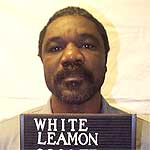
Leamon White
Murderer Brian Kevin Rosenfeld
Murderer · USA · 1985
Brian Kevin Rosenfeld Brian Kevin Rosenfeld was sentenced to three concurrent l…
23 victims
Brian Kevin Rosenfeld
Murderer · USA · 1985
Brian Kevin Rosenfeld Brian Kevin Rosenfeld was sentenced to three concurrent l…
23 victims
 Yahweh ben Yahweh
Murderer · USA · 1980
Yahweh ben Yahweh was born and legally named Hulon Mitchell Jr. (October 27, 19…
23 victims
Yahweh ben Yahweh
Murderer · USA · 1980
Yahweh ben Yahweh was born and legally named Hulon Mitchell Jr. (October 27, 19…
23 victims
 Russell Ellwood
Murderer · USA · 1991
Russell Ellwood was a former taxi driver. Authorities suspected him of killing…
20 victims
Russell Ellwood
Murderer · USA · 1991
Russell Ellwood was a former taxi driver. Authorities suspected him of killing…
20 victims
 Paul David Johnson
Murderer · USA · 1984
Paul David Johnson was convicted on one count in Tennessee in 1984 and later re…
2 victims
Paul David Johnson
Murderer · USA · 1984
Paul David Johnson was convicted on one count in Tennessee in 1984 and later re…
2 victims
 Muzzammil Hassan
Murderer · USA · 2009
Muzzammil Syed Hassan, also known as Mo Steve Hassan, was a Pakistani-American…
1 victim
Muzzammil Hassan
Murderer · USA · 2009
Muzzammil Syed Hassan, also known as Mo Steve Hassan, was a Pakistani-American…
1 victim
 William Hamilton Little
Murderer · USA · 1983
December 3, 1983 — Michael John Rammel found the body of Marilyn Peter in her h…
1 victim
William Hamilton Little
Murderer · USA · 1983
December 3, 1983 — Michael John Rammel found the body of Marilyn Peter in her h…
1 victim
 Jose Martinez High
Homicide · USA
Jose Martinez High · July 26, 1976 — Jose High, Nathan Brown and Judson Ruffin…
1 victim
Jose Martinez High
Homicide · USA
Jose Martinez High · July 26, 1976 — Jose High, Nathan Brown and Judson Ruffin…
1 victim
 Delphine LaLaurie
Murderer · USA · 1831
Delphine LaLaurie fled before she could be bought to justice and was never caug…
Delphine LaLaurie
Murderer · USA · 1831
Delphine LaLaurie fled before she could be bought to justice and was never caug…
- Gender
- male
- Country
- USA
- Location
- Jackson County, Missouri, USA
- Date of birth
- J uly 17, 1950
- Age at first offence
- 37
- Characteristics
- drugs
- Victim profile
- Don Wright (crack dealer)
- Method of murder
- Strangulation
- Date(s) of murder
- January 5, 1987
- Years active
- 1987
- Date of arrest
- —
- Status
-
Sentenced to death
Sentenced to death on April 14, 1989
Case details
Leamon White was convicted of first-degree murder and sentenced to death by a Missouri state court in 1989.
Timeline
- January 5, 1987 — White went with his friend Roger Buckner to the home of the victims, Don Wright and Carol Kinney; third victim Earnest Black was also present as a guest.
- January 6, 1987 — In the early morning hours, three men went to the home of Don Wright and his girlfriend, Carol Kinney, to obtain crack cocaine.
- 1989 — White was convicted of first-degree murder and sentenced to death; the Supreme Court of Missouri affirmed the conviction and sentence and the denial of state post-conviction relief.
Background
White went with his friend Roger Buckner to the home of Don Wright and Carol Kinney with the purpose of obtaining some crack cocaine. Wright had previously promised to get the cocaine and sell it to White. White and Buckner discussed the crack deal with Wright when they arrived.
While they were in the house, Cleveland Ford, another of White’s friends, came into the house unannounced through the back door and claimed to be associated with White and Buckner. A third victim, Earnest Black, was present in the home as a guest.
The offence
When the three purported drug buyers drew guns, White put his gun to Wright’s head and asked where he kept his money and drugs. Wright said there were no drugs or money in the house.
White and his companions then tied up Wright, Black, Kinney, and Kinney’s two children. The assailants beat Wright and Black with their guns while unsuccessfully interrogating them about where the money and drugs could be found.
Witnesses testified that White declared that the three adults should die. Ford held up Wright’s head while White slit his throat. Buckner then cut Kinney’s throat repeatedly, slicing her jugular vein.
After the attack, White, Buckner, and Ford turned on the gas stove, extinguished the pilot lights, and left the apartment.
Victims and surviving victims
Wright died from strangulation asphyxiation.
Black and Kinney survived the attack and later identified White, Buckner, and Ford as their attackers.
Kinney’s two young sons, Deonta and Raymond, were in the house at the time of the crime and saw the assailants.
Investigation
During Buckner’s trial, both boys testified. Their testimony included that one assailant spoke with a Jamaican accent and was known as “A.J.”
Deonta identified a picture of Constantine as A.J.; Raymond could not identify the picture of Constantine as A.J.
After the attack, Deonta told police that A.J. had been with Buckner before the two came to Wright’s house.
Arrest
The record did not state an arrest event for White.
Trial
At White’s trial, Kinney’s and Black’s identification testimony was presented that White was one of the three perpetrators.
White’s defense at trial was that Kinney and Black were mistaken in identifying White, and that the third assailant was in fact a Jamaican drug trafficker named A.J. Constantine.
Though other witnesses linked White to Buckner and Ford and tended to support the testimony of Kinney and Black, no physical evidence linked White to the crime scene.
At White’s trial, Raymond was called as a defense witness. Raymond testified that White was not an assailant but could not identify Constantine as the third killer.
Deonta was not interviewed by trial counsel and did not testify.
Other witnesses at the evidentiary hearing
Earlier on the night of the murder, the victims—Wright, Carol Kinney, Black, Deonta, and Raymond—were at the home of Dorothy Merrell and Carol’s brother, Ben Kinney, who ran a crack house. In the district court’s evidentiary hearing, Merrell testified that Buckner and a companion arrived looking for drugs while the others were there.
Merrell testified that Wright said he had drugs at his house and arranged to meet with Buckner at Wright’s house later that night.
Merrell testified that Buckner’s companion was a Jamaican named Jay or A.J. Constantine. Deonta also told police after the attack that A.J. had been with Buckner at Merrell’s house before the two came to Wright’s house.
Neither Deonta nor Mrs. Merrell knew White and neither saw him on the night of the murder.
Merrell was neither interviewed by defense counsel nor called as a witness at White’s trial.
Trial counsel
White’s trial counsel was Robert Duncan. Duncan died in 1996 before the district court’s evidentiary hearing.
Second chair John O’Connor and Duncan’s son, the defense investigator, both testified at the hearing.
Post-conviction and federal habeas proceedings
The Supreme Court of Missouri affirmed White’s conviction and sentence and the denial of state post-conviction relief: State v. White, 813 S.W.2d 862 (Mo. banc 1991), cert. denied, 502 U.S. 1103, 112 S.Ct. 1193, 117 L.Ed.2d 434 (1992); State v. White, 873 S.W.2d 590 (Mo. banc 1994); White v. State, 939 S.W.2d 887 (Mo. banc), cert. denied, 522 U.S. 948, 118 S.Ct. 365, 139 L.Ed.2d 284 (1997).
White then filed a petition for a federal writ of habeas corpus, which the district court denied. White appealed, and the court held that certain constitutional issues were not procedurally barred from federal habeas review in White v. Bowersox, 206 F.3d 776 (8th Cir.), cert. denied, 531 U.S. 917, 121 S.Ct. 275, 148 L.Ed.2d 200 (2000).
After a second appeal, the case was remanded. The court directed the district court “to decide on their merits all claims alleged in the petition for writ of habeas corpus, not previously decided on their merits.” White v. Luebbers, 307 F.3d 722, 731 (8th Cir. 2002), cert. denied, 538 U.S. 981, 123 S.Ct. 1785, 155 L.Ed.2d 671 (2003).
On remand, the district court held an evidentiary hearing on the remaining claims and granted the writ.
Sentencing
The district court had granted the writ and provided guilt phase habeas relief based on ineffective assistance findings. The State of Missouri appealed only the guilt phase determination, conceding that White was entitled to penalty phase relief.
Appeals
The appeal was an Eighth Circuit decision involving Leamon White and Don Roper, with an Eighth Circuit panel consisting of LOKEN, Chief Judge, BEAM and MELLOY, Circuit Judges. The docket number stated was 04-2772 and the case included the federal citation 416 F.3d 728.
The State argued that White failed to demonstrate counsel’s constitutionally deficient performance and that the district court misapplied the prejudice standard of Strickland v. Washington, 466 U.S. 668, 104 S.Ct. 2052, 80 L.Ed.2d 674 (1984).
The Eighth Circuit stated that there was no state court ruling on the merits of the ineffective assistance claim after an evidentiary hearing and therefore there was no state court ruling to which it had to defer under 28 U.S.C. 2254(d).
Outcome
The Eighth Circuit affirmed the district court’s conclusion that White was entitled to guilt phase habeas relief under Strickland because he proved prejudice by counsel’s deficient performance.
The judgment of the district court was affirmed.
Other details
The district court concluded that trial counsel failed to conduct an adequate investigation because Duncan did not interview Deonta Kinney, did not attend Buckner’s trial, and did not have copies of the boys’ deposition transcripts from Buckner’s case until the eve of trial.
The district court concluded that this deficient performance prejudiced White’s defense. It found that counsel failed to call two witnesses who would have directly supported the defense theory of mistaken identification: Deonta’s testimony and Dorothy Merrell’s testimony.
The district court found that Deonta’s testimony directly implicated Constantine and exculpated White.
The district court concluded that counsel failed to call Dorothy Merrell (“Dorothy”) to testify. Dorothy identified Constantine’s picture as a person she knew as a Jamaican drug dealer who went by the name “Jay” or “A.J.” The district court concluded that her testimony placed Buckner and Constantine together shortly before the crime and described circumstances that led to Buckner’s and Constantine’s departure to Wright’s house.
The district court found that counsel’s performance fell below an objective standard of reasonable competence and that the deficient performance prejudiced White’s defense.
The State argued that trial counsel’s failure to call witnesses was presumed reasonable as trial strategy. The Eighth Circuit rejected applying that presumption, stating that the record established that counsel’s investigation was too superficial to reveal the comparative strength of Raymond’s and Deonta’s support for the defense of mistaken identification and to discover the support Dorothy Merrell could provide for the defense that Constantine was the third assailant.
The Eighth Circuit also addressed a claim that the district court misapplied the prejudice standard by using the phrase “not confident in the jury’s verdict” and a “reasonable possibility” formulation, concluding that the district court knew and correctly applied the familiar Strickland prejudice standard despite a mistake in word choice.
Spotted an error, or have more information about this case?