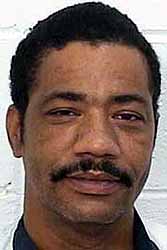
Jose Martinez High
Homicide Edward Brian Capetillo
Homicide · USA
Edward Brian Capetillo was a Latino male who was 17 years of age at the time of…
1995 victims
Edward Brian Capetillo
Homicide · USA
Edward Brian Capetillo was a Latino male who was 17 years of age at the time of…
1995 victims
 Jack Kevorkian
Homicide · USA · 1990
Jack Kevorkian (born May 26, 1928) was a controversial American pathologist. He…
130 victims
Jack Kevorkian
Homicide · USA · 1990
Jack Kevorkian (born May 26, 1928) was a controversial American pathologist. He…
130 victims
 David Koresh
Homicide · USA · 1993
David Koresh (born Vernon Wayne Howell; August 17, 1959 – April 19, 1993) led t…
79 victims
David Koresh
Homicide · USA · 1993
David Koresh (born Vernon Wayne Howell; August 17, 1959 – April 19, 1993) led t…
79 victims
 Nathaniel Gordon
Homicide · USA · 1860
Nathaniel Gordon (c.1834 – February 21, 1862) was the first and only American s…
29 victims
Nathaniel Gordon
Homicide · USA · 1860
Nathaniel Gordon (c.1834 – February 21, 1862) was the first and only American s…
29 victims
 James Smith
Murderer · United Kingdom · 1962
James Smith (1936 - 28 November 1962) was the sixth-to-last criminal to be exec…
1 victim
James Smith
Murderer · United Kingdom · 1962
James Smith (1936 - 28 November 1962) was the sixth-to-last criminal to be exec…
1 victim
 Raphael Leon Holiday
Murderer · USA · 2000
Raphael Leon Holiday (TDCJ Number 999419) was born on 07/20/1979 and was 22 whe…
3 victims
Raphael Leon Holiday
Murderer · USA · 2000
Raphael Leon Holiday (TDCJ Number 999419) was born on 07/20/1979 and was 22 whe…
3 victims
 Donna Roberts
Murderer · USA · 2001
Donna Roberts was convicted as an accomplice to murder and was sentenced to dea…
1 victim
Donna Roberts
Murderer · USA · 2001
Donna Roberts was convicted as an accomplice to murder and was sentenced to dea…
1 victim
 Billy Joe Woods
Murderer · USA · 1975
Billy Joe Woods, age 50 (28), was executed by lethal injection in Texas on Apri…
1 victim
Billy Joe Woods
Murderer · USA · 1975
Billy Joe Woods, age 50 (28), was executed by lethal injection in Texas on Apri…
1 victim
 Jordan Brown
Homicide · USA · 2009
Jordan Brown (Jordan Anthony Brown, born August 12, 1997) was found responsible…
1 victim
Jordan Brown
Homicide · USA · 2009
Jordan Brown (Jordan Anthony Brown, born August 12, 1997) was found responsible…
1 victim
- Gender
- male
- Country
- USA
- Location
- Taliaferro County, Georgia, USA
- Date of birth
- August 19, 1958
- Characteristics
- juvenile (17), armed robbery, kidnapping
- Victim profile
- Bonnie Bulloch (male, 11)
- Method of murder
- Shooting
- Date(s) of murder
- July 26, 197 6
- Years active
- —
- Date of arrest
- August 1977
- Status
-
Executed
Executed by lethal injection on November 6, 2001
Case identification
Jose Martinez High
Timeline
- July 26, 1976 — Jose High, Nathan Brown and Judson Ruffin robbed a service station near Crawfordville, Georgia; Henry Lee Phillips and his 11-year-old stepson, Bonnie Bulloch, were abducted during the robbery.
- December 1, 1978 — Jose High was sentenced to death for the murder and armed robbery and both counts of kidnapping with bodily injury.
- September 10, 1982 — High filed a petition for a writ of habeas corpus in the Superior Court of Butts County, Georgia; it was denied.
- January 25, 1982 — A petition for a writ of certiorari was denied.
- May 29, 1984 — The Supreme Court denied a petition for a writ of certiorari.
- June 4, 1987 — The United States Court of Appeals for the Eleventh Circuit affirmed the decision of the district court insofar as it denied habeas corpus relief, but reversed the district court’s decision granting relief as to sentence and found relief should be denied as to all allegations.
- August 30, 1989 — A motion for rehearing was denied.
- September 14, 1989 — The district court entered an order denying High’s motion for relief from judgment under Rule 60(b)(6).
- May 21, 1991 — High filed a second state habeas corpus petition in the Superior Court of Butts County, Georgia.
- September 9, 1991 — A hearing was held on the issue of a filmed “interview” of High.
- March 8, 1994 — The state court dismissed the second petition as successive.
- January 8, 1996 — The Supreme Court denied High’s petition for a writ of certiorari.
- April 23, 1996 — High filed a second federal habeas corpus petition in the United States District Court for the Southern District of Georgia.
- July 24, 1998 — The district court denied the second federal habeas corpus petition.
- April 20, 2000 — The Eleventh Circuit Court of Appeals affirmed the denial of relief.
- March 5, 2001 — The Supreme Court denied High’s petition for a writ of certiorari.
- March 21, 2001 — The Georgia Supreme Court stayed the scheduled March 27, 2001 execution pending whether death by electrocution violated the Eighth Amendment.
- October 5, 2001 — The Georgia Supreme Court found electrocution unconstitutional under the Georgia Constitution and directed future executions be carried out by lethal injection.
- October 17, 2001 — The Superior Court of Taliaferro County filed an order setting the seven-day window for High’s execution to begin at noon on November 6, 2001 and end seven days later at noon on November 13, 2001.
- November 6, 2001 — High was executed by lethal injection at approximately 8:07 p.m.
- November 7, 2001 — Media reported details of the execution and the denial of a petition and application for a stay of execution.
Background
In the late evening hours of July 26, 1976, Henry Lee Phillips operated an Amoco service station near Crawfordsville, Georgia, with his eleven-year-old stepson, Bonnie Bulloch, helping him. A car pulled into the station with three occupants: Judson Ruffin, Nathan Brown and Jose High. High got out and pointed a pistol at Henry’s face, demanding money.
The offence
High and his accomplices robbed and kidnapped Henry Phillips and his stepson, Bonnie Bulloch, during the robbery.
High got out of the car and pointed a pistol at Henry Lee Phillips’s face, demanding money. Ruffin had a sawed-off shotgun. Henry was forced to leave the booth while Ruffin removed money from the register and demanded any other money. When Henry told him there was no more money, Ruffin grabbed Bonnie Bulloch and told Henry to get in the car trunk or Henry and the boy would be killed. Bonnie rode in the passenger compartment.
Henry was put into the trunk of the car. When Henry was released from the trunk, the group was in the woods. Henry and his stepson were marched around to the front of the car and ordered to lie on the ground. Henry then heard shots fired. When Henry regained consciousness, he discovered that the boy was dead.
In Ruffin’s confession, Ruffin stated that he shot the boy in the head while his cohorts also shot at the victims. Bonnie Bulloch died of a bullet wound to the head. Henry Phillips suffered gunshot wounds to the head and wrist but survived and got to a nearby house, where police were called. Henry was later able to identify High, Ruffin and Brown. Henry Phillips positively identified High as one of the three persons who robbed the gasoline station and subsequently shot him and his stepson.
Hazardous taunting during the kidnapping was described: High taunted Bonnie Bulloch with threats that he was going to die and the child begged for his life. High stated to the child during the ride: “Are you ready to die? Do you want to die? Well, you’re going to die.” High also said that Bonnie was begging for his life.
High and his accomplices planned the armed robbery on the night in question with the express purpose of eliminating any witnesses to the crime.
Investigation and arrest
High was arrested in Richmond County on other charges. He later confessed to the murder.
At trial, High’s statement and confessions were discussed as part of the evidentiary record. Henry Phillips testified and later identified High.
During the course of the police investigation, High requested that he be interviewed by a well-known television personality. In anticipation of this interview, High prepared a set of questions which he wished to be asked of him, identified as “State’s Exhibit 21.”
A police mock television studio was constructed at the sheriff’s department. A local television announcer interviewed High. Ingram testified that High answered a question about how many people his “family” had killed by stating that his “family” had killed 4 1/2 persons, with the half person being Henry Lee Phillips who survived after receiving a bullet wound to his temple. The aspect of High’s confession concerning the 4 1/2 persons killed was related to the court outside the jury’s presence during voir dire at a hearing conducted for the purpose of satisfying the rule of Jackson v. Denno; it was not presented before the jury.
High’s filmed interview was conducted inside the Richmond County jail. Although it took place in 1976, the film was not produced until 1991. Former Sheriff Anderson testified that after the film was processed he stored the developed cannisters in a footlocker in the trunk of his patrol car and turned the car in on December 31, 1976; he took the footlocker home. Anderson stated he forgot the film was in the footlocker until 1983 or 1984, when he was contacted by William Wilcher, a parole officer investigating High’s case. Anderson gave the cannisters to Wilcher, who gave them to the Georgia Board of Pardons and Paroles. The film remained in the Parole Board’s files until a request was made in 1991 under the Georgia Open Records Act, when it was converted to VHS videocassette and provided to High and counsel.
Trial
High was indicted by the grand jury of Taliaferro County, Georgia, on charges of murder, two counts of kidnapping with bodily injury, armed robbery, possession of a firearm during the commission of a crime and aggravated assault.
High was also charged with other offenses in Richmond County, Georgia. Prior to trial in Taliaferro County, High filed a motion to suppress in Richmond County challenging his arrest and subsequent statements. The Court of Appeals of Georgia reversed the granting of the motion to suppress by the trial court, declined to rule on the admissibility of any confession and found the arrest to be legal. High was not tried for the Richmond County offenses.
High was convicted by a jury in the Superior Court of Taliaferro County, Georgia, for murder, two counts of kidnapping with bodily injury, armed robbery, possession of a firearm during the commission of a crime and aggravated assault.
Sentencing
On December 1, 1978, High was sentenced to death for the murder and armed robbery and both counts of kidnapping with bodily injury.
Appeals
Direct appeal (Georgia Supreme Court)
The Supreme Court of Georgia affirmed the convictions for armed robbery, murder and the two counts of kidnapping with bodily injury. It vacated the convictions for possession of a firearm and aggravated assault because those crimes merged into the crimes of armed robbery and kidnapping with bodily injury.
The Supreme Court also affirmed the death penalty for murder and for the kidnapping with bodily injury of Bonnie Bulloch. It vacated the death sentences for armed robbery and for the kidnapping with bodily injury of Henry Lee Phillips.
High v. State was cited as: High v. State, 247 Ga. 289, 276 S.E.2d 5 (1981). A petition for certiorari was denied on January 25, 1982: High v. State, 455 U.S. 927 (1982).
State habeas corpus
High filed a petition for a writ of habeas corpus in the Superior Court of Butts County, Georgia; it was denied on September 10, 1982. The Supreme Court of Georgia granted an application for a certificate of probable cause to appeal and then affirmed the denial of habeas corpus relief: High v. Zant, 250 Ga. 693, 300 S.E.2d 654 (1983).
Federal habeas corpus (First)
High filed a petition for a writ of habeas corpus in the United States District Court for the Southern District of Georgia. On November 19, 1985, the district court entered an order granting habeas corpus relief as to the sentencing phase based upon the charge on mitigating circumstances and denying relief as to the remainder of the allegations: High v. Kemp, 624 F. Supp. 316 (S.D. Ga. 1985).
On June 4, 1987, the United States Court of Appeals for the Eleventh Circuit affirmed the decision insofar as it denied relief, but reversed the decision granting relief as to sentence and found relief should be denied as to all allegations: High v. Kemp, 819 F.2d 988 (11th Cir. 1987). The court denied a petition for rehearing.
High filed a petition for certiorari asserting the death penalty would be cruel and unusual punishment because he was allegedly under 18 at the time of the offense. On June 30, 1988, the Supreme Court granted certiorari limited to the question of imposition of the death penalty based upon age: High v. Zant, 487 U.S. 1233 (1988).
The state filed a suggestion of mootness based on newly obtained information indicating High was not 17 but was 19. The Supreme Court did not decide the issue of High’s age but held the case pending decisions in other cases. On July 3, 1989, the Supreme Court entered an order vacating its prior order and denying certiorari. A subsequent motion for rehearing was denied on August 30, 1989: High v. Zant, 492 U.S. 926 (1989); High v. Zant, 492 U.S. 937 (1989).
High filed a motion for relief from judgment under Rule 60(b)(6) in the United States District Court, Southern District of Georgia. On September 14, 1989, the district court denied the motion. On October 23, 1990, the Eleventh Circuit Court of Appeals affirmed: High v. Zant, 916 F.2d 1507 (11th Cir. 1990). A petition for rehearing was denied on November 20, 1990. The Supreme Court denied a petition for certiorari on April 1, 1991, and denied rehearing on May 20, 1991: High v. Zant, 499 U.S. 954 (1991); High v. Zant, 500 U.S. 938 (1991).
Second state habeas corpus
High filed a second state habeas corpus petition on May 21, 1991. A hearing was held on September 9, 1991 limited to a filmed interview issue. On March 8, 1994, the state court dismissed the petition as successive. The Supreme Court of Georgia denied a certificate of probable cause to appeal and denied a motion for reconsideration on May 19, 1995. The Supreme Court of the United States denied High’s petition for a writ of certiorari on January 8, 1996.
Second federal habeas corpus
High filed a second federal habeas corpus petition on April 23, 1996. On July 24, 1998, the district court denied the petition: High v. Turpin, 14 F. Supp. 2d 1358 (S.D. Ga. 1998).
The Eleventh Circuit affirmed on April 20, 2000: High v. Head, 209 F.3d 1257 (11th Cir. 2000). The Supreme Court of the United States denied certiorari on March 5, 2001.
Stay pending electrocution issue
On March 21, 2001, the Georgia Supreme Court stayed the scheduled March 27, 2001 execution “until [the Georgia Supreme Court] addresses whether death by electrocution violates the Eighth Amendment prohibition against cruel and unusual punishment.” On October 5, 2001, it found electrocution unconstitutional under the Georgia Constitution and directed that future executions be carried out by lethal injection.
On October 17, 2001, the Superior Court of Taliaferro County filed an order setting the seven-day window beginning at noon on November 6, 2001 and ending seven days later at noon on November 13, 2001.
Legal issues raised in federal habeas decisions
High challenged aspects of the jury instructions regarding mitigating circumstances, and the adequacy of instructions was evaluated. High also challenged preemptory strikes under Batson v. Kentucky and alleged that the execution under age eighteen at the time of the offense constituted cruel and unusual punishment, as well as ineffective assistance of counsel, jury instructions concerning intent, and prosecutorial comments.
At the trial guilt phase, the jury received the following instruction:
“I charge you that the acts of a person of sound mind and discretion are presumed to be the product of a person's will, but the presumption may be rebutted. I charge you that a person of sound mind and discretion is presumed to intend the natural and probable consequences of his act, but the presumption may be rebutted.”
Trial Transcript at 882.
A prosecutorial statement challenged as part of closing arguments was quoted as:
“There's going to be a state's Exhibit 21 here where this man was so proud of himself in killing these people--he killed four and a half, and the 'half' was one that was shot that didn't die.”
Trial Transcript at 836.
High also alleged conflict of interest arising from simultaneous representation; before trial Walton Hardin was appointed in March of 1977 to represent High as well as Ruffin and Brown; in February of 1978, High retained John H. Ruffin, Jr. while Ruffin and Brown continued to be represented by Hardin. Ruffin and Brown were granted federal habeas relief due to Hardin’s conflicted representation.
Mental health and age dispute
High’s date of birth was given as 19 August 1958 at trial, which would have made him 17 at the time of the murder. Georgia authorities later stated that his birth certificate gave his birth date as 19 August 1956, in which case he was 19 years old in July 1976. The issue remained a disputed one.
Amnesty International materials described that High had been diagnosed with serious mental illness and borderline mental retardation and cited multiple mental health experts’ affidavits and prison diagnoses, including schizoaffective and depressive disorders, and references to visual and auditory hallucinations, seizures and suicidal ideation.
Execution and outcome
Following the latest denial of appeals by the courts, High’s execution proceeded by lethal injection.
Technicians had trouble finding a suitable vein in High’s arms to deliver the chemicals. Doctors made a small incision in his chest and used a vein there.
A lethal sequence of three chemicals was pumped through intravenous lines: sodium pentothal, then Pavulon to paralyze his lungs, and then potassium chloride to stop his heart.
High was pronounced dead at 8:07 p.m. on November 6, 2001 (approximately 8:07 p.m.).
Last statement and final remarks
In a defiant final statement, High said he never fired the shot that killed Bonnie Bulloch. He stated:
“I did not kill that little boy,”
“I could not hurt a child.”
High also stated:
“Poor people are on death row, and the death penalty is racist to the core. That's it,”
As part of his last words, High addressed the boy’s mother, Hazel Phillips, who was on prison grounds but did not witness the execution. High said:
“I'm sorry about your kid, Mrs. Phillips,”
“My life is a poor substitute for your son. I know how it is. Death is a universal process.”
After the execution, Hazel Phillips told reporters:
“I really hope that God forgave him,”
“I really hope someday that I will have the strength to do that.”
Aftermath
High’s execution left inmates on Georgia’s death row; one report stated that it left 125 inmates—124 men and a woman.
Outside prison grounds, about 30 death penalty opponents held a candlelight vigil. Similar peaceful protests were held in other cities throughout the state.
Five media witnesses were selected, named as Sandy Hodson of the Augusta Chronicle; Rhonda Cook of the Atlanta Journal-Constitution; Tom Campbell of WRDW-TV in Augusta; Jon Lewis of WSB Radio in Atlanta; and Erin McClam of the Associated Press. Media were allowed onto the prison grounds beginning at 11:00 a.m. on Tuesday.
Spotted an error, or have more information about this case?