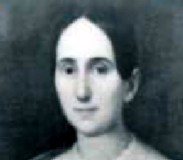
Delphine LaLaurie
Murderer Patty Cannon
Murderer · USA · 1821
Martha “Patty” Cannon (circa 1760 – May 11, 1829) led a gang in the early 19th…
11 victims
Patty Cannon
Murderer · USA · 1821
Martha “Patty” Cannon (circa 1760 – May 11, 1829) led a gang in the early 19th…
11 victims
 Diane Spencer
Murderer · USA
Diane Louise Spencer was sentenced to life in prison in Michigan on March 13, 1…
1990 victims
Diane Spencer
Murderer · USA
Diane Louise Spencer was sentenced to life in prison in Michigan on March 13, 1…
1990 victims
 Howard Arthur Allen
Serial killer · USA · 1974
Howard Arthur Allen was sentenced to death on June 11, 1988. August 1974 — Alle…
3 victims
Howard Arthur Allen
Serial killer · USA · 1974
Howard Arthur Allen was sentenced to death on June 11, 1988. August 1974 — Alle…
3 victims
 Rev. James Hackman
Murderer · United Kingdom · 1779
13 December 1752 — James Hackman was baptized at Gosport, Hampshire. · 1772 — H…
1 victim
Rev. James Hackman
Murderer · United Kingdom · 1779
13 December 1752 — James Hackman was baptized at Gosport, Hampshire. · 1772 — H…
1 victim
 Uthai Dechawiwat
Murderer · Thailand · 2008
Uthai Dechawiwat — Thai police officer and former sergeant; defendant. · Leo De…
2 victims
Uthai Dechawiwat
Murderer · Thailand · 2008
Uthai Dechawiwat — Thai police officer and former sergeant; defendant. · Leo De…
2 victims
 Yiya Murano
Murderer · Argentina · 1979
Yiya Murano (born May 20, 1930) was an Argentine murderer and swindler, known a…
3 victims
Yiya Murano
Murderer · Argentina · 1979
Yiya Murano (born May 20, 1930) was an Argentine murderer and swindler, known a…
3 victims
 Charles David Ellison
Murderer · USA · 1999
Charles David Ellison was sentenced to death on February 17, 2004. Charles Elli…
2 victims
Charles David Ellison
Murderer · USA · 1999
Charles David Ellison was sentenced to death on February 17, 2004. Charles Elli…
2 victims
- Gender
- female
- Country
- USA
- Location
- New Orleans, Louisiana, USA
- Date of birth
- c. 1775
- Age at first offence
- 56
- Characteristics
- torture, abuse, fugitive
- Victim profile
- Blacks slaves
- Method of murder
- Starvation - Torture
- Date(s) of murder
- 1831 - 1834
- Years active
- 1831–1834
- Date of arrest
- —
- Status
-
Died in custody
Fled before she could be bought to justice; she was never caught; died in Paris on December 7, 1842
Case record: Delphine LaLaurie
Status and outcome
Delphine LaLaurie fled before she could be bought to justice and was never caught. She died in Paris on December 7, 1842.
Background
Delphine LaLaurie, also known as Madame LaLaurie, was a Louisiana-born socialite and serial killer known for involvement in the torture and murder of black slaves. She was known as Marie Delphine LaLaurie (née Macarty or Maccarthy, c. 1775 – c. 1842). She was born in New Orleans.
She maintained a prominent position in the social circles of New Orleans until April 10, 1834, when rescuers responding to a fire at her Royal Street mansion discovered bound slaves within the house who showed evidence of torture over a long period.
After the fire and subsequent mob violence, she fled the city. LaLaurie later died in Paris on December 7, 1842. Late-life details were not well documented.
Family and early life
Delphine Macarty was born around 1775 and was one of five children. Her father was Barthelmy Louis Macarty, whose father Barthelmy Macarty brought the family to New Orleans from Ireland around 1730. Her mother was Marie Jeanne Lovable, also known as “the widow Lecomte,” whose marriage to Barthelmy Louis Macarty was her second. Both were prominent members of the New Orleans white Créole community.
Delphine’s cousin, Augustin de Macarty, was mayor of New Orleans from 1815 to 1820.
Marriages and children
On June 11, 1800, Delphine Macarty married Don Ramon de Lopez y Angullo, a Caballero de la Royal de Carlos (a high ranking Spanish officer), at the Saint Louis Cathedral in New Orleans. By 1804, Don Ramon had risen to the position of consul general for Spain in Louisiana. In 1804, Delphine and Don Ramon traveled to Spain.
Accounts of the trip differed. Grace King wrote in 1921 that the trip was Don Ramon's “military punishment”, and that Delphine met the Queen, who was impressed by Delphine's beauty. Stanley Arthur’s 1936 report differed. It stated that on March 26, 1804, Don Ramon was recalled to the court of Spain “to take his place at court as befitting his new position”, but that Ramon never arrived in Spain because he died in Havana en route to Madrid.
During the voyage, Delphine gave birth to a daughter, named Marie Borgia Delphine Lopez y Angulla de la Candelaria, nicknamed “Borquita”. Delphine and her daughter returned to New Orleans afterwards.
In June 1808, Delphine married Jean Blanque, a prominent banker, merchant, lawyer and legislator. At the time of the marriage, Blanque purchased a house at 409 Royal Street in New Orleans for the family, which became known later as the Villa Blanque. Delphine had four more children by Blanque: Marie Louise Pauline, Louise Marie Laure, Marie Louise Jeanne, and Jeanne Pierre Paulin Blanque. Blanque died in 1816.
Delphine married her third husband, physician Leonard Louis Nicolas LaLaurie (much younger than her), on June 25, 1825.
Property ownership and house at 1140 Royal Street
In 1831, she bought property at 1140 Royal Street and managed it in her own name with little involvement of her husband. By 1832, she built a three-story mansion there, complete with attached slave quarters.
She lived there with her husband and two of her daughters. She maintained a central position in the social circles of New Orleans.
The offence: allegations and reported conduct toward enslaved people
In 1834, LaLauries maintained several black slaves in slave quarters attached to the Royal Street mansion. Accounts of Delphine LaLaurie’s treatments of her slaves between 1831 and 1834 were mixed.
Harriet Martineau, writing in 1838 and recounting tales told to her by New Orleans residents during her 1836 visit, claimed LaLaurie’s slaves were observed to be “singularly haggard and wretched”. Martineau also reported that public rumors about LaLaurie’s mistreatment of her slaves were sufficiently widespread that a local lawyer was dispatched to Royal Street to remind LaLaurie of the laws relevant to the upkeep of slaves. During this visit, the lawyer found no evidence of wrongdoing or mistreatment of slaves by LaLaurie.
In public appearances, LaLaurie was seen to be generally polite to black people and solicitous of her slaves’ health. Court records of the time showed that LaLaurie emancipated two of her own slaves: Jean Louis in 1819 and Devince in 1832.
Martineau recounted other tales of cruelty current among New Orleans residents about 1836. She claimed that, after the visit of the local lawyer, one of LaLaurie’s neighbors saw one of the LaLaurie’s slaves—a twelve-year-old girl named Lia (or Leah)—fall to her death from the roof of the Royal Street mansion while trying to avoid punishment from a whip-wielding Delphine LaLaurie. Martineau said Lia was brushing Delphine’s hair when she hit a snag, causing Delphine to grab a whip and chase her. Martineau said the body was subsequently buried on the mansion grounds.
According to Martineau, the incident led to an investigation of the LaLauries in which they were found guilty of illegal cruelty and forced to forfeit nine slaves. Martineau said these nine slaves were then bought back by the LaLauries through the intermediary of one of their relatives and returned to the Royal Street residences. Martineau also reported stories that LaLaurie kept her cook chained to the kitchen stove and beat her daughters when they attempted to feed the slaves.
1834 fire and discovery of enslaved people
On April 10, 1834, a fire broke out in the LaLaurie residence on Royal Street, starting in the kitchen. When police and fire marshals got there, they found a seventy-year-old woman, the cook, chained to the stove by her ankle.
The cook later confessed to them that she had set the fire as a suicide attempt for fear of her punishment. She said, “Anyone who had been taken there, never came back.”
Forced entry into slave quarters and alleged injuries
As reported in the New Orleans Bee of April 11, 1834, bystanders responding to the fire attempted to enter the slave quarters to ensure everyone had been evacuated. Upon being refused the keys by the LaLauries, bystanders broke down the doors to the slave quarters and found “seven slaves, more or less horribly mutilated ... suspended by the neck, with their limbs apparently stretched and torn from one extremity to the other”, who claimed to have been imprisoned there for some months.
One of those who entered the premises was Judge Jean-Francois Canonge. Judge Canonge subsequently deposed that he found in the LaLaurie mansion, among others, “a negress ... wearing an iron collar” and “an old negro woman who had received a very deep wound on her head [who was] too weak to be able to walk”.
Canonge said that when he questioned Madame LaLaurie’s husband about the slaves, he was told in an insolent manner that: “some people had better stay at home rather than come to others' houses to dictate laws and meddle with other people's business”
A version of this story circulating in 1836, recounted by Martineau, added that the slaves were emaciated, showed signs of being flayed with a whip, were bound in restrictive postures, and wore spiked iron collars which kept their heads in static positions.
Mob attack on the residence
When the discovery became widely known, a mob of local citizens attacked the LaLaurie residence and “demolished and destroyed everything upon which they could lay their hands”. A sheriff and his officers dispersed the crowd. By the time the mob left, the Royal Street property had sustained major damage, with “scarcely any thing [remaining] but the walls”.
Public viewing of the injured enslaved people
The tortured slaves were taken to a local jail, where they were available for public viewing. The New Orleans Bee reported that by April 12 up to 4,000 people had attended to view the tortured slaves “to convince themselves of their sufferings”.
Reported deaths and disinterment claims
The Pittsfield Sun, citing the New Orleans Advertiser and writing several weeks after the evacuation of LaLaurie’s slave quarters, claimed that two of the slaves found in the LaLaurie mansion had died since their rescue. It added: “We understand ... that in digging the yard, bodies have been disinterred, and the condemned well [in the grounds of the mansion] having been uncovered, others, particularly that of a child, were found.”
Martineau repeated these claims in her 1838 book Retrospect of Western Travel, placing the number of unearthed bodies at two, including the child.
1834 immediate end: flight from New Orleans
Martineau wrote in 1838 that LaLaurie fled New Orleans during the mob violence that followed the fire, taking a coach to the waterfront and traveling by schooner from there to Mobile, Alabama and then on to Paris.
By the time Martineau personally visited the Royal Street mansion in 1836, it was still unoccupied and badly damaged, with “gaping windows and empty walls”.
Other parts of her later life were not well documented, and some accounts differed.
George Washington Cable recounted in 1888 a then-popular but unsubstantiated story that LaLaurie had died in France in a boar-hunting accident.
Death in Paris
In the late 1930s, Eugene Backes, who served as sexton to St. Louis Cemetery #1 until 1924, discovered an old cracked copper plate in Alley 4 of the cemetery. The inscription on the plate read: “ Madame LaLaurie, née Marie Delphine Macarty, décédée à Paris, le 7 Décembre, 1842, à l'âge de 6--.”
Later folklore and explicit retellings
Folk histories of LaLaurie’s poor treatment of her slaves circulated in Louisiana during the nineteenth century and were reprinted in collections of stories by Henry Castellanos and George Washington Cable. Cable’s account was based on contemporary stories in newspapers such as the New Orleans Bee and the Advertiser, and upon Martineau’s 1838 account, Retrospect of Western Travel, but it mixed synthesis, dialogue and supposition.
After 1945, stories became more explicit. Jeanne deLavigne, writing in Ghost Stories of Old New Orleans (1946), alleged that LaLaurie had a “sadistic appetite [that] seemed never appeased until she had inflicted on one or more of her black servitors some hideous form of torture” and claimed responders found: “male slaves, stark naked, chained to the wall, their eyes gouged out, their fingernails pulled off by the roots; others had their joints skinned and festering, great holes in their buttocks where the flesh had been sliced away, their ears hanging by shreds, their lips sewn together ... Intestines were pulled out and knotted around naked waists. There were holes in skulls, where a rough stick had been inserted to stir the brains.”
DeLavigne did not directly cite any sources for these claims and they were not supported by the primary sources given.
Kalila Katherina Smith’s 1998 book Journey Into Darkness: Ghosts and Vampires of New Orleans popularised and embellished the story, adding more explicit details to the discoveries allegedly made by rescuers during the 1834 fire, including a “victim [who] obviously had her arms amputated and her skin peeled off in a circular pattern, making her look like a human caterpillar,” and another who had had her limbs broken and reset “at odd angles so she resembled a human crab”.
Modern retellings used deLavigne and Smith’s versions to support claims of explicit tortures and placed the number of slaves who died under LaLaurie’s care at up to one hundred.
Additional narratives: alternate account elements
Separate narrative versions included statements such as LaLaurie fleeing for her life as a plan to escape during the mob violence. In one version, the questions from the crowd included: “Where are all Mme. Lalaurie's servants that they do not help in the efforts to save?” and LaLaurie replied: “Nevermind the servants, save my valuables. This way gentlemen, this way.”
A threatening voice said: “The servants! The servants?” and: “There are human beings locked in those rooms who will be roasted alive in the flames.”
A Creole gentleman called for: “The keys! The keys!” and men rushed forward clamoring for the keys.
A person cried: “Who will follow me through the smoke and flames?” and “A dozen or more men volunteered.”
In this narrative, the iron bars between the wing and attic were broken away, the doors were burst open, and two old women with heavy iron collars upon their necks and irons upon their feet were brought out. The narrative also described victims as “gaunt and wild-eyed, loaded down with chains and crippled from the attitudes in which they had been chained to the floor”.
Timeline
- June 11, 1800 — Delphine Macarty married Don Ramon de Lopez y Angullo at the Saint Louis Cathedral in New Orleans.
- 1804 — Delphine and Don Ramon traveled to Spain; during the voyage, Delphine gave birth to a daughter nicknamed “Borquita”.
- June 1808 — Delphine married Jean Blanque.
- 1816 — Jean Blanque died.
- June 25, 1825 — Delphine married physician Leonard Louis Nicolas LaLaurie.
- 1831 — Delphine bought property at 1140 Royal Street.
- 1832 — A three-story mansion with attached slave quarters was built at 1140 Royal Street.
- April 10, 1834 — A fire broke out in the LaLaurie residence on Royal Street starting in the kitchen.
- April 11, 1834 — The New Orleans Bee reported bystanders finding “seven slaves, more or less horribly mutilated ... suspended by the neck, with their limbs apparently stretched and torn from one extremity to the other”.
- April 12, 1834 — Up to 4,000 people attended to view the injured enslaved people.
- December 7, 1842 — Delphine LaLaurie died in Paris.
- Late 1930s — Eugene Backes discovered an old cracked copper plate inscription in St. Louis Cemetery #1.
Other details: LaLaurie Mansion and later ownership
The New Orleans house occupied by Delphine LaLaurie at the time of the 1834 fires stands today at 1140 Royal Street, on the corner of Royal Street and Governor Nicholls Street (formerly known as Hospital Street).
It was described in 1928 as “the highest building for squares around”, and as “from the cupola on the roof one may look out over the Vieux Carré and see the Mississippi in its crescent before Jackson Square”.
The entrance bears iron grillwork, and the door is carved with an image of “Phoebus in his chariot, and with wreaths of flowers and depending garlands in bas-relief”. Inside, the vestibule was floored in black and white marble, and a curved mahogany-railed staircase ran the full three storeys.
The second floor held three large drawing-rooms connected by ornamented sliding doors, whose walls were decorated with plaster rosettes, carved woodwork, black marble mantlepieces and fluted pilasters.
The house remained ruined at least until 1836. Prior to 1888, it was “unrecognisably restored”. Over following decades, it was used as a public high school, a conservatory of music, a tenement, a refuge for young delinquents, a bar, a furniture store, and a luxury apartment building.
In April 2007, actor Nicolas Cage bought the LaLaurie House through Hancock Park Real Estate Company LLC for $3.45 million. The mortgage documents were arranged so Cage’s name did not appear on them.
On November 13, 2009, the property valued at $3.5 million was listed for auction as a result of bank foreclosure and purchased by Regions Financial Corporation for $2.3 million.
Other details: 19th-century and other accounts
The legend of Madame Delphine LaLaurie haunted New Orleans for nearly two hundred years. When fire destroyed part of her home in 1834, the public was outraged to learn that behind closed doors Lalaurie routinely bound, starved, and tortured her slaves. The Laulaurie house was described as the city’s “most haunted” during ghost tours.
In a narrative of the fire’s aftermath, LaLaurie’s daily ride in her carriage was described: she stepped out on the sidewalk and entered the vehicle. In a split-second, the horses took off at full speed away from her house. The narrative included shouted calls from the mob including: “Stop that carriage!” “She is running away!” “Drag her out.” “Shoot her.” “Shoot the horses!”
The narrative said the carriage reached Bayou St. John and a schooner moored near the bank. It said: “She paid the captain a handful of gold and the vessel set sail for Mandeville.” The narrative then said LaLaurie took refuge for 10 days near the Claiborne Cottages in Covington, and that some accounts said she then made her way to Mobile or New York and then to Paris. Other accounts claimed persistent stories that she never left the Northshore, and that “Alas, what really happened remains a mystery as here, the trail goes cold...”.

Spotted an error, or have more information about this case?