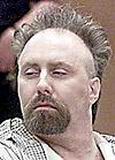
Dayva Cross
Murderer Russell Ellwood
Murderer · USA · 1991
Russell Ellwood was a former taxi driver. Authorities suspected him of killing…
20 victims
Russell Ellwood
Murderer · USA · 1991
Russell Ellwood was a former taxi driver. Authorities suspected him of killing…
20 victims
 Robert Martines Perez
Murderer · USA · 1994
Name: Robert Martines Perez · Other name used in proceedings: Robert Martinez P…
15 victims
Robert Martines Perez
Murderer · USA · 1994
Name: Robert Martines Perez · Other name used in proceedings: Robert Martinez P…
15 victims
 Billy Frank Vickers
Murderer · USA · 1993
Billy Frank Vickers Vickers was executed by lethal injection in Texas on Januar…
14 victims
Billy Frank Vickers
Murderer · USA · 1993
Billy Frank Vickers Vickers was executed by lethal injection in Texas on Januar…
14 victims
 Alice Njoki
Murderer · Kenya · 2009
Alice Njoki was 27 years old at the time of the sentencing. She had been marrie…
1 victim
Alice Njoki
Murderer · Kenya · 2009
Alice Njoki was 27 years old at the time of the sentencing. She had been marrie…
1 victim
 Ana Maria Cardona
Murderer · USA · 1990
Ana Maria Cardona was sentenced to death on April 1, 1992. She was resentenced…
1 victim
Ana Maria Cardona
Murderer · USA · 1990
Ana Maria Cardona was sentenced to death on April 1, 1992. She was resentenced…
1 victim
 Khoua Her
Mass murderer · USA · 1998
Khoua Her pleaded guilty and received a sentence of 50 years in prison with no…
6 victims
Khoua Her
Mass murderer · USA · 1998
Khoua Her pleaded guilty and received a sentence of 50 years in prison with no…
6 victims
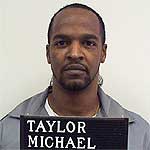 Michael Anthony Taylor
Murderer · USA · 1995
Defendant: Michael Anthony Taylor · Co-defendant: Roderick Nunley · Victim: Ann…
1 victim
Michael Anthony Taylor
Murderer · USA · 1995
Defendant: Michael Anthony Taylor · Co-defendant: Roderick Nunley · Victim: Ann…
1 victim
 Guy Martel
Spree killer · France
Guy Martel killed seven people and wounded five others in a shooting spree thro…
7 victims
Guy Martel
Spree killer · France
Guy Martel killed seven people and wounded five others in a shooting spree thro…
7 victims
- Gender
- male
- Country
- USA
- Location
- Snoqualmie, King County, Washington, USA
- Date of birth
- 1959
- Age at first offence
- 40
- Characteristics
- history of mental illness
- Victim profile
- His wife Anouchka Baldwin, 37, and stepdaughters Amanda Baldwin, 15, and Salome Holle, 18
- Method of murder
- Stabbing with knife
- Date(s) of murder
- March 6, 1999
- Years active
- 1999
- Date of arrest
- Same day
- Status
-
Sentenced to death
Sentenced to death on May 13, 2001; conviction and death sentence affirmed on appeal in 2006
Case details
Dayva Michael Cross was sentenced to death for the stabbing deaths of his wife, Anouchka Baldwin, 37, and his stepdaughters, Amanda Baldwin, 15, and Salome Holle, 18, in King County, Washington, USA, on March 6, 1999.
Cross had a long history of mental illness.
Timeline
- March 6, 1999 — Cross struck his wife, Anoutchka, in the face during an argument, and later stabbed to death his wife and her two teenage daughters, including M.B. (13), Solome (18), and Amanda (15); Cross then kept M.B. confined at knife point for five hours while he drank wine and watched television.
- March 1999 evening — Cross struck his wife, Anoutchka, in the face during an argument.
- March 1999 morning — Anoutchka’s 13-year-old daughter, M.B., woke to the sounds of Cross brutally and repeatedly stabbing her mother and her elder sister, 18-year-old Solome, to death.
- March 1999 morning (after the initial stabbings) — Cross tried to force his way into the bedroom M.B. shared with her 15-year-old sister, Amanda; despite Amanda’s efforts to keep the door closed, Cross forced it off its hinges and killed her in front of M.B.’s eyes.
- March 1999 afternoon (same day as the killings) — Cross was arrested without incident that afternoon; officers and medics reentered the home, confirmed that the victims had been killed, and took pictures of the crime scene.
- April 11, 2001 — A defense attorney argued to jurors that Cross’s depression and delusions led to the killings.
- May 1, 2001 — A jury panel considered testimony from experts, from Cross’s family, and from friends and family of his victims.
- May 13, 2001 — Cross was wheeled into court where he heard a jury sentence him to death for the slayings of his wife and her two daughters.
- June 22, 2001 — A sentencing jury unanimously sentenced Cross to death after hearing testimony at the sentencing phase; Cross was convicted on June 22, 2001.
- March 30, 2006 — The Washington Supreme Court affirmed Cross’s death sentence and addressed whether reversible error existed.
The offence
Cross killed three people: his wife and two of her three daughters.
During an argument, Cross struck his wife, Anoutchka, in the face.
Cross then stabbed to death:
- his wife, Anouchka Baldwin, 37
- his stepdaughter, Salome Holle, 18
- his stepdaughter, Amanda Baldwin, 15
M.B., identified in one account as a 13-year-old daughter, woke to the sounds of Cross stabbing her mother and her elder sister to death, and later testified that Cross tried to force his way into the bedroom shared with her 15-year-old sister, Amanda, and killed Amanda in front of her eyes.
Cross then kept M.B. confined at knife point for five hours while he drank wine and watched television; M.B. escaped after Cross fell asleep.
Investigation
Five minutes after Cross was arrested and before obtaining a warrant, police reentered the house accompanied by medics, confirmed that the victims were dead, and took photographs of the crime scene. A telephonic warrant was approved about three hours later, and it was not based on any information collected during the second entry into the house.
Officers conducted a more sweeping search after they obtained a search warrant.
Arrest
Cross was arrested without incident that afternoon. After the arrest, officers and medics reentered the home, confirmed that the victims had been killed, and took pictures of the crime scene.
Trial
Cross pleaded guilty to the underlying crime.
Cross initially pleaded not guilty by reason of insanity and stated he intended to present a diminished capacity defense. Some time later, against his counsels’ advice, Cross withdrew his not guilty plea and entered an Alford plea.
The trial judge accepted Cross’s plea only after a probing inquiry that included a competency evaluation at Western State Hospital and a review of extensive argument and evidence.
In his Alford plea, Cross specifically denied premeditating the murders. The prosecution effectively agreed that Cross could argue lack of premeditation to the sentencing jury as a mitigating factor.
At sentencing:
- A sentencing jury was impaneled after two unsuccessful tries.
- The jury considered testimony from experts, from Cross’s family, and from friends and family of his victims.
- The jury unanimously found beyond a reasonable doubt that mercy was not warranted and sentenced Cross to death.
Evidence about mental illness
The proceedings discussed that Cross had a long history of mental illness and attempted suicide at least two times since the 1999 killings.
Cross’s suicide attempts resulted in fractured skull and cervical column and injuries to his brain and spine, rendering him paraplegic.
One jury panel had to be dismissed after widespread media coverage of one of his suicide attempts.
Statements and Miranda
Cross challenged the admission of statements after he received Miranda warnings on the grounds he indicated he wanted questioning to cease, and the appellate court found no error.
After Cross was taken to the police station and read his Miranda rights, Detective Doyon recorded the following exchange:
- Detective Doyon: “DAVID, you have the right to remain silent. Do you understand that?”
- Cross: “Yea. I understand my fuckin' rights.”
- Detective Doyon: “Okay.”
- Cross: “I don't have no fuckin' rights from [now] on. Behind fuckin' bars the rest of my life, I don't give a fuck.”
Detective Doyon continued through the Miranda warning with Cross acknowledging each element on tape.
At the conclusion, Detective Doyon asked if Cross would talk, and the following colloquy occurred:
- Detective Doyon: “About what?”
- Detective Doyon: “Well, I wanna ask you ah, some general questions.”
Cross’s statements during the interview included the following:
- Cross: “I don't give a. ... I killed them. I did it. My life's over.”
- Cross: “I don't know man. I just told [you] that it's ․ Quit asking me some of the fuckin' things, man, will ya?”
- Cross: “You're askin' me too much. My life is over, I don't give a fuck.”
The appellate court found that Cross’s equivocal protests did not effectively assert his right to remain silent and that selective responses functioned as a waiver.
Sentencing
Cross was sentenced to death.
A sentencing date could be set as soon as next week, and the law gave Judge Joan DuBuque no discretion about what to impose.
The record included that jurors spent long hours talking about Cross’s mental problems and decided they were not serious enough to warrant mercy.
Cross was 41 years old at the time of sentencing in one account, and he was described as a Snoqualmie man who had become partially paralyzed after slamming himself headfirst into the floor and walls of his cell in a suicide attempt.
After the jury’s death verdict, Cross was quoted:
- Cross: “Off to ... Disneyland now,”
- Cross: “Anyone want to come with me?”
Appeals
Cross appealed his sentence.
The Washington Supreme Court addressed issues including:
- exclusion of challenged jurors
- whether the jury was properly instructed regarding premeditation in light of the Alford plea
- whether Cross was denied the right to counsel due to conflict about mental health evidence
- whether expert testimony about Cross’s mental health was properly admitted
- whether the jury instructions improperly pressured unanimity
- suppression and admission of photographic evidence
- admission of custodial statements
- constitutionality of Washington’s death penalty and proportionality review, including comparison involving Gary Ridgway
The appellate decision affirmed Cross’s death sentence and stated:
- The court affirmed, finding no reversible error.
- The dissent and concurring opinions discussed systemic concerns about proportionality, including reference to Gary Ridgway and other cases where death sentences were spared, overturned, or resulted in life sentences.
Quotes from proceedings (selection)
Jury foreman Scott Baumann, 54, was quoted describing the jury’s deliberations:
- Scott Baumann: “The bloodiness of the killings was extreme. The innocence of the victims was incredible,”
- Scott Baumann: “The fact that he could have had a marital spat was bad -- but the fact that the other girls had to suffer was inexcusable.”
- Scott Baumann: “Depressed people commit suicide,”
- Scott Baumann: “It is not an excuse for homicide.”
Deputy Prosecutor Tim Bradshaw was quoted:
- Tim Bradshaw: “There are few cases that present the quantum of horror that existed in this case and today the state Supreme Court recognized that.”
- Tim Bradshaw: “This type of case is not a 'win-lose,'”
- Tim Bradshaw: “No pleasure should be taken from such a verdict. Rather, this is the strong voice of the community.”
- Tim Bradshaw: “The murders 'scream out for such a sentence.'”
- Tim Bradshaw: “This becomes Dayva Cross' ultimate day of reckoning.”
A defense attorney, Todd Maybrown, was quoted:
- Todd Maybrown: “On any scale, Ridgway's crimes are exponentially worse” than the slayings committed by the seven men on Washington’s death row.
- Todd Maybrown: “He got the benefit of the fact that he killed more people, he killed so well and he knew where the bodies were.”
Other details
Victims
The victims were:
- Anouchka Baldwin, 37 (Cross’s wife)
- Amanda Baldwin, 15 (Cross’s stepdaughter)
- Salome Holle, 18 (Cross’s stepdaughter)
In one account, M.B. was described as a 13-year-old daughter who escaped after Cross fell asleep.
Legal procedural details included in the appellate decision
- The King County Prosecuting Attorney’s Office sought the death penalty.
- Cross was charged and pleaded guilty to three counts of aggravated first degree murder and one count of kidnapping.
- After Cross pleaded guilty, a sentencing jury sentenced him to death.
- The Washington Supreme Court reviewed whether Cross had shown reversible error and found he had not.
Outcome
The Washington Supreme Court affirmed Dayva Cross’s sentence of death.
Spotted an error, or have more information about this case?