Leah Marie Florence
Murderer Tooba Yahya
Murderer · Canada · 2009
Tooba Yahya was a 41-year-old second wife in the polygamous Shafia household. H…
4 victims
Tooba Yahya
Murderer · Canada · 2009
Tooba Yahya was a 41-year-old second wife in the polygamous Shafia household. H…
4 victims
 Allyson McConnell
Murderer · Canada · 2010
Allyson McConnell was convicted of manslaughter in the bathtub drowning of her…
2 victims
Allyson McConnell
Murderer · Canada · 2010
Allyson McConnell was convicted of manslaughter in the bathtub drowning of her…
2 victims
 Jane LaMarsh
Murderer · Canada · 2009
Name: Jane LaMarsh Jane LaMarsh was a 50-year-old woman from Wallaceburg, Ontar…
2 victims
Jane LaMarsh
Murderer · Canada · 2009
Name: Jane LaMarsh Jane LaMarsh was a 50-year-old woman from Wallaceburg, Ontar…
2 victims
 Melanie Alix
Murderer · Canada · 2001
Melanie Alix was a South Shore resident. Her brother, Francois Alix, was 18 mon…
2 victims
Melanie Alix
Murderer · Canada · 2001
Melanie Alix was a South Shore resident. Her brother, Francois Alix, was 18 mon…
2 victims
 Aset Magomadova
Murderer · Canada · 2007
Aset Magomadova was convicted of manslaughter for strangling her daughter, Amin…
1 victim
Aset Magomadova
Murderer · Canada · 2007
Aset Magomadova was convicted of manslaughter for strangling her daughter, Amin…
1 victim
 Catherine Andrus
Murderer · Canada · 2009
Catherine Andrus — common-law wife of Michel Leblanc; pleaded guilty to second-…
1 victim
Catherine Andrus
Murderer · Canada · 2009
Catherine Andrus — common-law wife of Michel Leblanc; pleaded guilty to second-…
1 victim
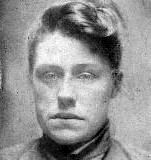 Frances Knorr
Murderer · Australia · 1891
Frances Lydia Alice Knorr (also known as Minnie Thwaites) was born in 1868 in L…
2 victims
Frances Knorr
Murderer · Australia · 1891
Frances Lydia Alice Knorr (also known as Minnie Thwaites) was born in 1868 in L…
2 victims
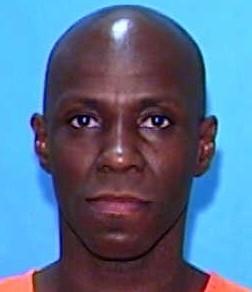 Alphonso Cave
Murderer · USA · 1982
Alphonso Cave was convicted of first-degree murder, robbery with a firearm, and…
1 victim
Alphonso Cave
Murderer · USA · 1982
Alphonso Cave was convicted of first-degree murder, robbery with a firearm, and…
1 victim
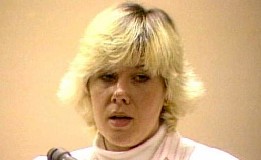 Catherine May Wood
Murderer · USA · 1987
Catherine May Wood was an American caregiver who worked at the Alpine Manor Nur…
5 victims
Catherine May Wood
Murderer · USA · 1987
Catherine May Wood was an American caregiver who worked at the Alpine Manor Nur…
5 victims
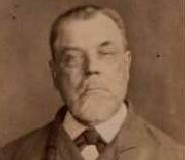 Per Palsson
Murderer · Sweden · 1868
Per Pålsson (also called Kitte-Pelle) (September 16, 1828 – February 4, 1914) w…
1 victim
Per Palsson
Murderer · Sweden · 1868
Per Pålsson (also called Kitte-Pelle) (September 16, 1828 – February 4, 1914) w…
1 victim
 Giovanni Scattone
Murderer · Italy · 1997
Giovanni Scattone was accused in relation to the killing of Marta Russo, a 22-y…
1 victim
Giovanni Scattone
Murderer · Italy · 1997
Giovanni Scattone was accused in relation to the killing of Marta Russo, a 22-y…
1 victim
- Gender
- female
- Country
- Canada
- Location
- Port Hammond, Maple Ridge, British Columbia, Canada
- Date of birth
- 1967
- Age at first offence
- 42
- Characteristics
- parricide, domestic dispute
- Victim profile
- Andrew Lynn Milne, 50 (her husband)
- Method of murder
- Stabbing with knife 14 times
- Date(s) of murder
- November 3, 2009
- Years active
- 2009
- Date of arrest
- Same day
- Status
-
Life imprisonment
Sentenced to life in prison with no chance of parole for 10 years on November 20, 2012
Case record: Leah Marie Florence
Background
Leah Marie Florence was a Maple Ridge woman who lived in a home owned by her aunt, Patricia Burt, in Hammond at the time of the murder. Burt allowed Florence and her husband to live in the basement suite because they were near homeless after they had been evicted, and because they had no rent charged.
Burt set rules for the couple: no smoking in the house, no drinking, no fighting, and no drugs. Burt testified she had not seen either of them consuming alcohol and had not seen empty bottles until the events of November 3, 2009. Burt described their general day-to-day interaction as “tenants downstairs” and described them as having been happy and optimistic earlier that day.
Florence and her husband, Andrew Lynn Milne, had been married for 15 years. Florence was 45 years old at sentencing, and was described as 42 years old in earlier proceedings.
Florence was a mother of two. She was a member of the Katzie First Nation but did not have her Indian Status. A pre-sentence report detailed Florence’s aboriginal background for the court. Florence and her mother argued that her father’s inability to obtain status contributed to his alcoholism and violent behaviour, of which Florence was a victim. Florence argued that not having Indian Status prevented her from living on reserve and alienated her from her family there, including her grandparents.
At sentencing, Crown counsel Theresa Iandiorio challenged the legitimacy of the aboriginal background as a mitigating factor, arguing the report lacked corroboration from police records, school records, and corrections records. Iandiorio suggested Florence’s aboriginal background was not a mitigating factor because Florence had not been sexually assaulted, had not been sent to a residential school, both of her parents were still in her life, her father was sober by the time Florence was 13 years old, and Florence and her father had a close relationship. Iandiorio also pointed to Florence’s admission that she had not felt discrimination or racism as a result of being aboriginal.
While the report noted Milne had previously been charged with spousal assault, Iandiorio pointed out that he had never been convicted.
The offence
On November 3, 2009, Andrew Milne died as a result of injuries sustained from multiple stab wounds inflicted by his wife, Leah Florence.
The stabbing occurred in the basement suite that was part of the home owned by Patricia Burt. The injuries included fourteen sharp-force injuries: ten stab wounds and four cuts. Dr. Craig Litwin testified that a stab wound was a sharp-force injury where the depth of penetration was greater than the dimensions of the wound on the skin surface, and a cut was the opposite where the dimension on the skin surface was greater than the depth.
Dr. Litwin testified that there were two stab wounds that were potentially life-threatening and in need of immediate medical attention. One stab wound to the left side of the chest (wound A) passed through the chest wall and injured the left lung and the heart and was associated with significant internal bleeding. Another stab wound to the left side of the back (wound B) passed through the chest wall and injured the left lung, the diaphragm, the spleen, and the stomach and was also associated with significant internal bleeding.
In addition to chest and back stab wounds, there were stab wounds to the left flank, the right side of the face, the right side of the neck, the left armpit, and the left arm. Cuts were sustained to the right side of the chin, the left arm, the left side of the chest, and the left side of the abdomen.
Dr. Litwin testified that it was possible that one injury to the left arm represented a defensive injury. He was unable to say which injuries occurred first or in which order. He testified that all injuries appeared of the same age and could have been inflicted over minutes or over hours.
He testified that significant force would have been necessary to pass through the rib and similarly a significant amount of force was apparent with respect to the wound on the face which entered the bone. He agreed in cross-examination that force can be generated in more than one way and that the wolf knife may have been stationary.
All injuries were consistent with having been inflicted by the wolf knife. In conclusion, Dr. Litwin agreed that all of the fourteen stab wounds and cuts were contributing factors in the death of Andrew Milne.
The wolf knife had a blade measured 18.5 cm by 3 cm. Tool mark analysis determined that the wolf knife was used to cut Milne’s left 4th rib.
Investigation
Patricia Burt called 911 about an incident that had occurred shortly beforehand in the basement suite of her home. At 2044 hours on November 3, 2009, Burt called 911 regarding an incident that had occurred shortly beforehand in the basement suite of her home at 20226 Ospring Street, Maple Ridge, British Columbia.
When police, ambulance, and fire personnel attended shortly after Burt called 911, they found a man near the bed in the basement suite. That man was Andrew Milne. He was stabbed multiple times. He was taken immediately to Ridge Meadows Hospital, and Dr. Aaron Johnston tried to save his life for approximately one hour but at 2201 hours on November 3, 2009, Dr. Johnston pronounced Mr. Milne dead.
At autopsy, Dr. Craig Litwin removed Milne’s left 4th rib, which had a cut in it. The rib was used for tool mark analysis. Dr. Litwin took samples of Milne’s blood and other bodily fluids which were later used for DNA and other forensic tests.
At the time of his death, Milne had alcohol and cocaine (and its derivatives) in his system. Samples of his blood and other bodily fluids were taken at 2135 hours on November 3, 2009, and were later sent for toxicology screening. A copy of the toxicology report was attached as Exhibit A.
Continuity of Milne’s body from the time he was found until the autopsy was admitted.
During the search of the basement suite, police located:
- one nearly empty two litre bottle of peach cider on the table next to the fridge;
- one empty bottle of brandy in a black bag in the north west corner of the room next to the TV and the window;
- one empty 200 ml bottle of vodka under the table next to the fireplace, behind a grey and green storage container and next to the wall.
Police located a wolf knife marked police exhibit #11. DNA testing determined that the blood on the blade of the knife came from Mr. Milne. DNA analysis determined blood belonging to Milne was found in five areas in the basement suite: a large pool of blood (saturation stain) where Milne was found on the floor at the foot of the bed; stains on the clothing and carpet immediately adjacent to where Milne was found; on the blade of the wolf knife; a castoff pattern on the ceiling and south west wall; and as a minor component on the handle of the wolf knife.
DNA analysis determined that all the drops of blood sent for analysis came from the same female person designated as Female 1, and it was admitted that Female 1 was Ms. Florence. It was also admitted that Florence caused Milne’s death by stabbing him multiple times.
Security and continuity of the basement suite at 20226 Ospring Street, Maple Ridge, British Columbia from arrival through the thorough search and photographs was admitted.
Police seized video surveillance tapes from Bailey’s Cold Beer and Wine Store at 11232 Dartford Street, Maple Ridge, British Columbia. Those tapes bore the date of November 3, 2009, and three different times. There had been no verification of the times shown on the tapes, but it was admitted that Milne, among others, was depicted on those tapes. A disc of those tapes was attached as Exhibit B.
During the course of investigation, Cpl. Bechtel asked Florence at 0348 hours on November 4, 2009, whether she was willing to provide a sample of her breath, and she declined. The purpose was to determine her blood alcohol level.
At trial, it was admitted that the evidence of Florence’s statement recorded by Cstbl. Henley was voluntary and there were no Charter issues impacting its admissibility.
Arrest
Cstbl. Ryan Henley was one of the two RCMP officers who arrived first at the residence. He took charge of Florence after she was seated in the carport. He arrested her for second degree murder and read the Charter warning at 9:20 pm on November 3, 2009.
Henley began an audio recording at 9:18 pm and continued until Florence was at the Ridge Meadows RCMP Detachment at 00:57 am.
Before the start of the recording, firefighters were attending to Florence. Henley testified that she was responsive to questions, topical and appropriate in her responses, responded without delay, and was able to hold a conversation. Henley described her level of sobriety as intoxicated by alcohol indicated by the odour of liquor and with some slurred speech, but still able to understand directions as shown by carrying them out. Henley testified that Florence also seemed to understand the gravity of the situation and made the comment “My husband is gone.”
Trial
The case proceeded as a judge-alone trial before Madam Justice Jeanne Watchuk at B.C. Supreme Court in New Westminster.
Florence did not deny responsibility for the actus reus of the offence. All elements except the requisite specific intent were conceded. The issue was whether Crown proved Florence intended to kill Milne in light of evidence of alcohol consumption and the issue of provocation related to the cut on Florence’s arm.
Charges and verdict
Florence was charged with second degree murder following the November 3, 2009 death of Andrew Lynn Milne.
Watchuk read her 53-page decision in B.C. Supreme Court in New Westminster Tuesday. The defence lawyer had submitted that, although Florence admitted to killing Milne, she was too intoxicated to form the intent to murder him. The judge was asked instead to find Florence guilty of manslaughter.
Watchuk found that the cut on Florence’s arm was inflicted by Milne. She also considered whether Florence was intoxicated and angry to such a degree that prevented her from intending to cause Milne bodily harm or seeing that the multiple stab wounds and cuts would cause his death.
Evidence regarding the offence and intent
The defence argued that Florence’s BAC was 170 to 200 mg% at the time of the offence, and that there was reasonable doubt as to whether she knew she had caused bodily harm likely to result in Milne’s death.
Crown submitted in the absence of evidence of alcohol consumption that the intentional elements would be met based on Florence’s purposeful, goal-oriented actions, including selecting a knife the size and shape of the wolf knife, striking Milne 14 times in his head, neck and torso with sufficient force to penetrate and damage vital organs, resulting in predictable and obvious death. Crown submitted that it proved beyond a reasonable doubt that Florence had the necessary intent notwithstanding consumption of alcohol and provocation.
Justice Watchuk held that although Florence was drinking that night, she was not too intoxicated to form the intent to murder her husband. Watchuk stated:
“I find that Ms. Florence was not intoxicated and angry to such a degree that prevented her from intending to cause Mr. Milne bodily harm or seeing that the multiple stab wounds and cuts would cause his death,” said Watchuk.
Watchuk found that the Crown had proven the mens rea of second degree murder beyond a reasonable doubt.
Provocation analysis
The defence raised the defence of provocation because Florence had been cut on her arm. The defence had maintained that Milne cut Florence at some point and Florence stabbed Milne in response.
Watchuk addressed the statutory partial defence of provocation by considering whether there was wrongful act or insult, whether an ordinary person would be deprived of self-control, whether Florence acted in fact in response, and whether her response was sudden and before time for passion to cool.
Watchuk found that the cut was inflicted by Milne. She referenced evidence of the cut being not particularly painful and noted Florence’s stated high tolerance for pain.
Watchuk addressed prior fighting and argument as a basis for rejecting the idea of a surprising cut. She referred to evidence from Burt that there had been a rule against fighting, and Burt had heard Milne say “Leah stop it” about an hour before she was called downstairs, describing it as indicating argument.
Watchuk found that although there was evidence of intoxication and exaggerated emotions, she understood circumstances and was not emotionally unstable in the relevant way. She found that there was no evidence that the knife wound deprived Florence of self-control and agreed with the Crown on that third branch.
On the suddenness element, Watchuk held there was no air of reality to the defence of provocation because there was no evidence establishing that stabbing occurred “on the sudden” and before time for passion to cool. Watchuk stated:
“There can only be speculation on the sequence of events in the basement suite that evening,” Watchuk said.
And she stated:
“The defence of provocation is not available to Ms. Florence,” Watchuk said.
Quotations from the trial narrative
The judgement included reported statements by Florence during her statements and recording.
In the audio tape observations, Watchuk wrote that Florence stated:
- “we had 3 bottles of coolers” and later “three 2 litres of peach”;
- “oh no, Andrew had slit me with a ... with a wolf knife”;
- “I am up for murder, right?”
- “I must have fuckin’ hit him with it [the knife]”
- “I didn’t care ... about the slashing me ...”
- “poor Auntie Pat”
- “...stupid of me ‘cause we haven’t drank in a long time [indecipherable] he slit my arm open [indecipherable] (crying) and now my [indecipherable] is gone and I am charged with fuckin’ murder, oh my God (crying) I wish my [indecipherable] (crying) [indecipherable]”.
In the judgement’s description of evidence, Watchuk included Florence’s statements relayed or witnessed:
- “Andy cut me” spoken to Burt;
- “Don’t leave me Andy my love” and “don’t die” spoken by Florence while near Milne, as described by Burt;
- “My husband is dead, my husband is gone” as part of Henley’s testimony and the record;
- and a note that after being arrested, Florence was heard on recordings referring to being charged with murder.
Watchuk concluded that Florence had engaged in a purposeful, goal-oriented series of actions.
“In stabbing Mr. Milne, the Crown has proven that she engaged in a purposeful, goal-oriented series of actions.”
And Watchuk concluded that Florence’s conviction was for second degree murder.
“Having therefore considered the totality of the evidence in this trial, Ms. Florence, I find you guilty of the second degree murder of Mr. Andrew Milne on November 3, 2009.”
Sentencing
Florence was sentenced after conviction to a mandatory life sentence, with parole ineligibility.
At the sentencing hearing at New Westminster Supreme Court, Crown counsel Theresa Iandiorio agreed to the mandatory life sentence. With a minimum parole eligibility of 10 years served, Florence could be out of jail in as little as seven years, but Crown counsel’s position was that Florence should receive a minimum of 13 years before being eligible for parole given the nature of the crime.
The sentencing hearing was adjourned until Friday, Nov. 23.
Justice Jeanne Watchuk imposed the parole ineligibility minimum in the mandatory life sentence framework.
Florence received a sentence of life imprisonment with no chance of parole for 10 years on November 20, 2012.
Appeals
No appeals were described in the provided material.
Outcome
Florence was convicted of second degree murder of her husband Andrew Lynn Milne.
Watchuk rejected the defences of intoxication negating specific intent and the defence of provocation. The court found there was insufficient basis for provocation and that Florence was not intoxicated and angry to such a degree that prevented her from intending to cause bodily harm and foreseeing death from multiple stab wounds and cuts.
Aftermath
Florence had spent the past three years in custody at the Surrey Pretrial Centre before sentencing, as described in the sentencing narrative. Burt called 911 and police arrived to find Milne lying on the floor in a pool of his own blood, and he died later in hospital. Florence sustained a cut on her arm and required stitches.


Spotted an error, or have more information about this case?