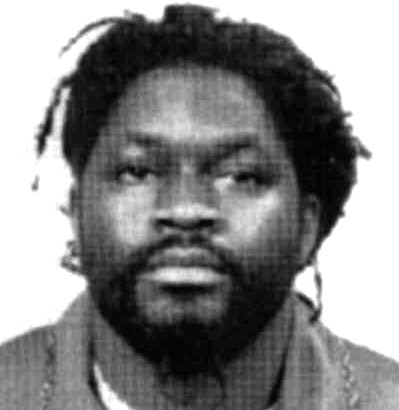
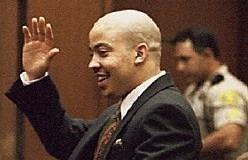
Darnell Williams
Murderer Brian Kevin Rosenfeld
Murderer · USA · 1985
Brian Kevin Rosenfeld Brian Kevin Rosenfeld was sentenced to three concurrent l…
23 victims
Brian Kevin Rosenfeld
Murderer · USA · 1985
Brian Kevin Rosenfeld Brian Kevin Rosenfeld was sentenced to three concurrent l…
23 victims
 Yahweh ben Yahweh
Murderer · USA · 1980
Yahweh ben Yahweh was born and legally named Hulon Mitchell Jr. (October 27, 19…
23 victims
Yahweh ben Yahweh
Murderer · USA · 1980
Yahweh ben Yahweh was born and legally named Hulon Mitchell Jr. (October 27, 19…
23 victims
 Russell Ellwood
Murderer · USA · 1991
Russell Ellwood was a former taxi driver. Authorities suspected him of killing…
20 victims
Russell Ellwood
Murderer · USA · 1991
Russell Ellwood was a former taxi driver. Authorities suspected him of killing…
20 victims
 Hans Thomas Reiser
Murderer · USA · 2006
Hans Thomas Reiser (born 19 December 1963) was an American computer programmer…
1 victim
Hans Thomas Reiser
Murderer · USA · 2006
Hans Thomas Reiser (born 19 December 1963) was an American computer programmer…
1 victim
 Kirk Lankford
Murderer · USA · 2007
Kirk Matthew Lankford (born 1985) was an American from Kalihi, Hawaii. He was c…
1 victim
Kirk Lankford
Murderer · USA · 2007
Kirk Matthew Lankford (born 1985) was an American from Kalihi, Hawaii. He was c…
1 victim
 Victor Kennedy
Murderer · USA · 1980
Victor Kennedy was 37 at the time of his execution. He was executed by electroc…
1 victim
Victor Kennedy
Murderer · USA · 1980
Victor Kennedy was 37 at the time of his execution. He was executed by electroc…
1 victim
 John Ingle
Murderer · USA · 1996
Name: John Ingle Sex/Race: White male Date of birth: 10-29-49 Age: not stated D…
1 victim
John Ingle
Murderer · USA · 1996
Name: John Ingle Sex/Race: White male Date of birth: 10-29-49 Age: not stated D…
1 victim
 Connie Williams
Murderer · USA · 1974
Connie Williams murdered and dismembered his wife, Francesca. The Supreme Court…
2 victims
Connie Williams
Murderer · USA · 1974
Connie Williams murdered and dismembered his wife, Francesca. The Supreme Court…
2 victims
 James Ruzicka
Murderer · USA · 1973
James Ruzicka was described as a “sexual psychopath”. James Edward Ruzicka was…
2 victims
James Ruzicka
Murderer · USA · 1973
James Ruzicka was described as a “sexual psychopath”. James Edward Ruzicka was…
2 victims
- Gender
- male
- Country
- USA
- Location
- Lake County, Indiana, USA
- Date of birth
- J uly 31, 1966
- Age at first offence
- 20
- Characteristics
- robbery, mentally ill
- Victim profile
- John Rease, 74, and Henrietta Rease, 59
- Method of murder
- Shooting
- Date(s) of murder
- August 12, 1986
- Years active
- 1986
- Date of arrest
- Same day
- Status
-
Sentenced to death
Commuted to Life Imprisonment Without Parole on July 2, 2004 after being sentenced to death on March 23, 1987
Case record: Darnell Williams
Status and sentencing outcome
Darnell Williams received a death sentence on March 23, 1987. On July 2, 2004, the death sentence was commuted to Life Imprisonment Without Parole.
In July 2003, Governor Frank O’Bannon granted a stay of execution for Darnell Williams so that DNA testing could be performed on clothing he was wearing when arrested. The testing proved inconclusive at best. The Indiana Supreme Court then set a July 9, 2004 execution date.
After that, Governor Joe Kernan issued an Executive Order on July 2, 2004 commuting the death sentence of Darnell Williams to Life Imprisonment Without Parole. Governor Kernan said: “Because Rouster cannot be executed for the crime, it is unjust for Williams to be executed.” The commutation followed a recommendation for commutation from the State Parole Board. It was described as the first time since the reinstatement of the Death Penalty in Indiana in 1977 that the Parole Board recommended commutation of a death sentence, or that the Governor commuted a death sentence. The record further stated that it was unclear whether Life Without Parole was an appropriate sentence, since it was not available at the time Williams committed the murders or was convicted of the murders.
People
- Darnell Williams — defendant; convicted of two counts of felony murder in Indiana state court; later sentenced to death and then had the death sentence commuted to Life Imprisonment Without Parole.
- Gregory Rouster — defendant and co-defendant; convicted in the same joint proceedings; death sentence was not carried out because Rouster was declared mentally retarded.
- Theresa Newsome — co-defendant; acquitted on both felony murder counts at the joint trial.
- Edwin Taylor — co-defendant; described as another foster child living with the Reases; Taylor testified during sentencing after pleading guilty and not proceeding to trial.
- Kim Toney — mentioned as being present in the group at the Reases’ house on the night of the robbery/murders.
- John Rease — victim; elderly couple’s husband.
- Henrietta Rease — victim; elderly couple’s wife.
- Derrick Bryant — seventeen-year-old foster child who testified.
- Eugene Powell — neighborhood teenager who testified.
- Jamal Pope — neighborhood teenager who testified.
- Jimmy Gray — neighborhood teenager who testified.
- Demond Ligon — neighborhood teenager who testified.
- Lelia Gray — Jimmy Gray’s mother; testified to seeing and hearing gunshots and who entered/exited the Reases’ house.
- Kimberly Epperson — forensic serologist employed by the Indiana State Police.
- Ronald Lach — Lake County crime technician.
- Timothy Lukasik — Lake County Police Officer who arrested Williams.
- Bill Wegman — Lake County Police Officer who gathered Williams’ clothing from an evidence lab and brought it to the Prosecutor’s Office.
- Rodney Means — Indiana State Trooper who arrested Rouster.
- State Parole Board — recommended commutation.
- Governor Frank O’Bannon — granted a stay in July 2003.
- Governor Joe Kernan — issued the July 2, 2004 Executive Order commuting Williams’ sentence.
- Cecil Davis — Superintendent, Indiana State Prison; respondent in the federal appeal.
- The jury — convicted Williams and Rouster of two counts of felony murder; acquitted Newsome on both counts; recommended the death penalty for both Williams and Rouster.
- Trial judge — sentenced Williams and Rouster to death after considering the jury’s recommendation.
- Indiana Supreme Court — rejected Williams’ claims on direct appeal and later affirmed denial of post-conviction relief; affirmed that Williams was not prejudiced.
- United States Court of Appeals, Seventh Circuit — affirmed the denial of Williams’ federal habeas petition.
Timeline
- March 23, 1987 — Darnell Williams was sentenced to death.
- November 1985 to February 7, 1986 — Gregory Rouster lived with John and Henrietta Rease from November 1985 until his eighteenth birthday on February 7, 1986.
- August 12, 1986 — The Reases were robbed and shot to death in their home.
- August 15, 1986 — Williams’ clothing was confiscated at the Lake County Jail and stored in an evidence lab, and he was issued a jail uniform.
- February 7, 1986 — Gregory Rouster reached his eighteenth birthday.
- May 12, 2000 — Williams filed a petition for writ of habeas corpus in the Northern District of Indiana.
- July 2003 — Governor Frank O’Bannon granted a stay of execution for Darnell Williams for DNA testing.
- July 2, 2004 — Governor Joe Kernan issued an Executive Order commuting Williams’ death sentence to Life Imprisonment Without Parole.
- August 29, 2002 — The Seventh Circuit decided the federal appeal; it affirmed the denial of the habeas petition.
- July 23, 2002 — The Seventh Circuit appeal was argued.
- July 9, 2004 — The Indiana Supreme Court set an execution date after the stay.
Background
John and Henrietta Rease, an elderly couple who lived in Gary, Indiana, cared for, fed, and housed foster children at their home in exchange for $160 per month per child. One foster child was Gregory Rouster, who lived with the Reases from November 1985 until his eighteenth birthday on February 7, 1986.
Four months after Rouster’s eighteenth birthday, the Reases were robbed and shot to death in their home. Police arrested Rouster and his three friends: Darnell Williams, Theresa Newsome, and Edwin Taylor, and charged them each with two counts of felony murder. The State sought the death penalty against Williams and Rouster pursuant to Indiana’s death penalty statute.
The offence
On the night of August 12, 1986, Darnell Williams, Gregory Rouster, Theresa Newsome, and Kim Toney went to the Reases’ house to collect money that Rouster believed the Reases owed to him.
Derrick Bryant, a seventeen-year-old foster child who lived with the Reases at the time of the crimes, testified that when Williams and Rouster got to the house, they went into a back room with Henrietta Rease and got into an argument with her about whether the Reases owed Rouster money.
Bryant testified that after Henrietta Rease asked Rouster to leave the house, Bryant heard Williams say, “I won't let her, she's doing nothing but gypping [Rouster] out of the money.”
Bryant then heard a series of gunshots and went upstairs into the attic to hide. While in the attic, Bryant heard a conversation between Williams, Rouster, and Taylor in which Williams and Rouster agreed to rob the Reases at gunpoint.
Bryant then ran downstairs to hide behind a stairway and heard Williams and Rouster bring the Reases into the bedroom. Bryant testified that Henrietta Rease told Williams not to hit John Rease.
Bryant testified that he then heard Williams state, “it's your time” and heard Rouster reply, “waste them.” Bryant then heard a second series of gunshots coming from the bedroom. He ran out of the house and flagged down a police car.
Several neighborhood teenagers—including Eugene Powell, Jamal Pope, Jimmy Gray, and Demond Ligon—testified about events that they witnessed that night and corroborated Bryant’s testimony regarding two series of gunshots coming from the Reases’ house shortly after Williams and Rouster entered the house. The teenagers also testified about a third series of gunshots that came from the Reases’ house when Rouster and Newsome were in the Reases’ front yard, while Williams presumably was still inside of the house.
Lelia Gray, Jimmy Gray’s mother, testified that she saw Williams and Rouster enter the Reases’ house, heard two series of gunshots, and also heard a third series of gunshots coming from the Reases’ house while Rouster and Newsome were outside.
Police found the Reases’ bodies lying on the bedroom floor later that night. Lake County crime technician Ronald Lach discovered the bodies on the bedroom floor and found several live .30 caliber cartridges in the Reases’ bedroom as well as several fired .22 caliber and .32 caliber shells.
Lach found a .22 caliber pistol in the bedroom and a .32 caliber pistol in the Reases’ backyard that were later determined to have fired the gunshots that killed the Reases.
During sentencing testimony, Edwin Taylor described events at the Reases’ house on August 12, 1986. Taylor testified that Henrietta Rease asked Williams and Rouster to leave after they accused her of keeping money purportedly owed to Rouster. Taylor testified that Williams then pointed a gun at Taylor and asked him where the Reases kept their money. Taylor testified that he answered that the Reases kept their money on the bedroom dresser, and that Williams replied, “you better not be lying.” Taylor testified that he ran to his friend’s house to call the police and heard several gunshots coming from the Reases’ house. Taylor testified that Williams was the last person he saw with a gun.
The federal appellate discussion also noted that no one testified that Williams was still in the house when the third series of gunshots was fired. The record also explained that the only time Williams was seen leaving the house was after the first series of gunshots, when Williams searched for something in the front yard and exclaimed, “my shells.” Powell and Pope then saw Williams re-enter the house, and they then heard the second series of gunshots. No one saw Williams leave the house before the third series of gunshots.
Investigation
Lake County crime technician Ronald Lach searched the Reases’ house for evidence later that night and discovered the bodies on the bedroom floor.
Lach also found several live .30 caliber cartridges in the Reases’ bedroom and several fired .22 caliber and .32 caliber shells. He found a .22 caliber pistol in the bedroom and a .32 caliber pistol in the Reases’ backyard that were later determined to have fired the gunshots that killed the Reases.
Crime technician Lach testified that he searched for and examined Williams’ clothing on the night Williams was arrested and observed Williams’ clothing but did not find any blood on it. The record also described what that examination involved: Williams was made to stand about two feet away, raise his arms in the air, and turn around slowly, and he was told to lift his feet so that Lach could observe the bottom of his shoes. At least two other police officers were present and they also did not see any blood on Williams’ shorts. The record described that due to the color and pattern of the shorts Williams wore, it would have been difficult to see whether there was any blood on them at that time.
Arrest
Lake County Police Officer Timothy Lukasik arrested Williams that same night. At the time of arrest, Williams had a black leather pouch containing, among other things, $232.00 in cash, a wallet with no money in it, and a .30 caliber live round of ammunition. Williams was taken to the Gary Police Department.
The record stated that Williams was detained at the Gary City Jail for two days before being transferred to the Lake County Jail.
Rouster was arrested on the night of the murders by Indiana State Trooper Rodney Means. Means testified that when he arrested Rouster, he noticed several red spots that looked like blood stains on the back of Rouster’s white shirt.
Evidence and forensic testing
On August 15, 1986, Williams’ clothing was confiscated at the Lake County Jail and stored in an evidence lab, and Williams was issued a jail uniform.
Lake County Police Officer Bill Wegman testified that approximately one week later, he gathered Williams’ clothing from the evidence lab, placed it in a plastic bag, and brought it to the Prosecutor’s Office.
Williams’ clothing was eventually given to Kimberly Epperson, a forensic serologist employed by the Indiana State Police. Epperson examined the shorts Williams wore on the night of the murders and found three small spots of dried human blood on them.
Epperson explained that the blood was consistent with the blood type of John and Henrietta Rease and of Rouster, but not consistent with Williams’ blood type nor that of Newsome or Taylor. She explained that the blood found on Williams’ shorts was consistent with the blood type of 45% of the population.
During cross-examination at trial, Epperson admitted that she did not find any blood on Williams’ shoes.
At the postconviction hearing, Epperson also testified that Indiana State Police Laboratory policy required clothing to be stored individually and in sealed paper bags so that testable biological material would not degrade and so that the serologists could perform additional tests to narrow down the source of the blood. Epperson testified that the manner in which Williams’ clothing was sent to the lab violated that policy because all of Williams’ clothing items arrived in a single plastic bag. She also testified that despite the improper storage, she was able to obtain results from the tests she conducted on Williams’ shorts.
Epperson testified at trial that the blood found on Rouster’s clothes was consistent with the blood type of John and Henrietta Rease, but not with that of Newsome, Taylor, Rouster, nor Williams.
Trial
At the joint trial with Rouster and Newsome, the jury heard testimony and found Williams and Rouster guilty of two counts of felony murder in Indiana state court. The jury acquitted Newsome on both counts.
During closing arguments, the State argued that in addition to the witnesses’ testimony, the blood found on Williams’ shorts established that Williams participated in the Reases’ murders.
During closing arguments, Williams’ counsel attacked the weight of the blood evidence, arguing that the State did not present a “splatter” expert to testify about how the blood got on Williams’ shorts. Williams’ counsel also argued that the State’s evidence concerning the blood found on Williams’ shorts showed that the blood could have come from “millions of people” other than the Reases. The record also described that Williams’ counsel seized on the fact that the blood was consistent with 45% of the population and argued that the blood could have come from “millions of people.” Williams’ counsel also stated that the State did not present a “splatter” expert, and therefore failed to show that the blood came from the crime scene.
The trial included a joint penalty phase for Williams and Rouster, and the jury recommended the death penalty for both.
During his closing argument, Williams' counsel attacked the weight of the blood evidence, stating that the State did not present a "splatter" expert to testify about how the blood got on Williams' shorts. Williams' counsel also argued that the State's evidence concerning the blood found on Williams' shorts showed that the blood could have come from "millions of people" other than the Reases.
Sentencing
At the joint penalty phase, the State sought the death penalty against both defendants pursuant to Indiana Code § 35-50-2-9.
The record stated that the statute allowed the State to seek death for murder if the State proved beyond a reasonable doubt one of the aggravating factors, including that the defendant committed murder by intentionally killing the victim while committing or attempting to commit robbery, or that the defendant had been convicted of another murder.
For this penalty phase, the State alleged aggravating factors for Williams including:
- Williams intentionally killed John Rease while committing or attempting to commit a robbery,
- Williams intentionally killed Henrietta Rease while committing or attempting to commit a robbery, or
- Williams had been convicted of the murders of both John and Henrietta Rease.
The statute allowed Williams to present evidence pertaining to potential mitigating circumstances, and the jury could recommend death only after finding that at least one aggravating circumstance existed beyond a reasonable doubt and that any mitigating circumstances outweighed by aggravating circumstances, with the judge making the final determination after considering the jury’s recommendation and the statute’s standards.
During the sentencing hearing, the State presented Taylor’s testimony about the events on August 12, 1986, including that Henrietta Rease asked Williams and Rouster to leave, that Williams pointed a gun at Taylor and asked where the Reases kept their money, that Taylor answered that it was on the bedroom dresser, and that Williams said, “you better not be lying,” followed by Taylor’s running to call the police and hearing gunshots. Taylor also testified that Williams was the last person he saw with a gun.
The State also introduced evidence that Williams had previously participated in a robbery similar to the one committed against the Reases.
Williams presented evidence that he was employed, had graduated high school, and had lived with his mother for most of his life. Friends and family members also testified about Williams’ character and described him as a kind and responsible young man.
After the sentencing hearing, the trial judge indicated that the State had proved three aggravating factors under Indiana Code § 35-50-2-9(b):
- Williams intentionally killed John Rease while committing the crime of robbery,
- Williams intentionally killed Henrietta Rease while committing the crime of robbery, and
- Williams had been convicted of multiple murders—those of both John and Henrietta Rease.
The trial judge held that none of the potential mitigating circumstances applied, and sentenced both Williams and Rouster to death.
Appeals and post-conviction proceedings
After the Indiana Supreme Court rejected Williams’ claims on direct appeal, Williams filed a petition for post-conviction relief in which he alleged, among other things, that his two trial attorneys were ineffective for failing to fully review discovery materials given to them by the State.
Counsel’s defense at trial was based on their belief that no blood was found on Williams’ clothing. However, the record stated that serologist Epperson’s report was given to Williams’ attorneys before trial, and the report indicated that Epperson had tested blood she had found on Williams’ shorts.
At the postconviction hearing, trial counsel admitted that they had received and read Epperson’s pre-trial report but testified that they overlooked that Epperson had indicated that she found blood on Williams’ shorts. Trial counsel claimed they did not know about the blood on Williams’ shorts until Epperson was called to testify towards the end of the trial. The record stated that because of this, the trial record contained few facts about the police officer’s examination of Williams’ clothing on the night of his arrest and about Epperson’s testing. More facts were adduced at the postconviction hearing about Williams’ clothing.
The record described the evidence adduced at postconviction hearing:
- Lach testified that he examined Williams’ clothing at the Gary Police Department on the night of Williams’ arrest and did not find any blood on Williams’ shorts at that time, with the details of the examination described above.
- Lach testified that at least two other police officers were present and they also did not see any blood on Williams’ shorts.
- Lach testified that because of the color and pattern of the shorts, it would have been difficult to see any blood at that time.
- Epperson testified about the laboratory policy regarding storage in sealed paper bags and individual storage, and that the manner of packaging in a single plastic bag violated that policy, but she obtained results anyway.
Williams asserted in postconviction relief that if his trial attorneys had adequately reviewed Epperson’s report before trial, they would have known about the blood on Williams’ shorts and the defense strategy would have been more effective. Williams argued that counsel’s misconception that no blood was found meant there was little evidence placing Williams in the Reases’ bedroom. Williams also argued that because counsel were surprised by the blood evidence, they were unable to attack the weight of the blood evidence effectively.
Specifically, Williams asserted that he was prejudiced because competent counsel could have weakened the inference that blood found on Williams’ clothing meant he was in the Reases’ bedroom during the murders.
The postconviction court denied Williams’ claim. The Indiana Supreme Court affirmed and stated:
Even if Williams' counsel had more thoroughly investigated the blood evidence, as his counsel was able to do for postconviction, they would have been unable to provide the jury with any information significantly different from that actually provided by the State's witness. Because the evidence Williams argues should have been presented would not have significantly changed the facts available to the judge and jurors, Williams was not prejudiced during either the guilt or sentencing phase of his trial.
Williams v. State, 706 N.E.2d 149, 156 (Ind.1999).
Williams then filed a petition for writ of habeas corpus in the Northern District of Indiana raising, among other things, the same ineffective assistance of counsel claim. The district court denied the petition, agreeing with the Indiana Supreme Court that Williams was not prejudiced by trial counsel’s performance. Williams appealed that denial to the Seventh Circuit.
The Seventh Circuit decided the appeal. It affirmed the district court’s denial of Williams’ petition for writ of habeas corpus. The Seventh Circuit held that the Indiana Supreme Court’s decision was not an unreasonable application of Strickland for two reasons:
- The trial judge and jury were already well-informed that the blood could have come from somewhere other than the crime scene, including that Epperson testified the blood was consistent with the blood of 45% of the population, and that Williams’ counsel highlighted this during closing arguments and also emphasized the State’s failure to present a “splatter” expert. The record further described that Lach conceded he did not see any blood on Williams’ clothing the night he was arrested, creating an inference that blood could have gotten onto Williams’ shorts sometime after Lach observed them but before his clothing was confiscated three days later.
- The Seventh Circuit held that Williams was not prejudiced because even without the blood evidence, Williams would still have been sentenced to death based on other evidence. The Seventh Circuit cited Bryant’s testimony about the robbery plan at gunpoint, the argument and threats, Bryant’s statements “it's your time” and Rouster’s reply “waste them,” and gunshots, Taylor’s sentencing testimony that Williams threatened the Reases, pointed a gun at Taylor, asked where they kept their money, and was the last person he saw with a gun, physical evidence including .30 caliber cartridges on Williams and in the Reases’ bedroom that night and $232.00 in Williams’ pouch, and neighborhood teenagers’ testimony about gunshots when Rouster and Newsome were outside. The court concluded this evidence supported the aggravating circumstances and outweighed mitigating factors, including rejecting that Williams was a minor accomplice.
The Seventh Circuit referenced that the only mitigating factor Williams addressed on appeal was his contention that he was a minor accomplice under Indiana Code § 30-50-2-9(c)(4). The Seventh Circuit stated the evidence showed Williams planned the robbery with Rouster and was a major participant in the robbery and murders, supporting the trial judge’s finding that the minor accomplice factor did not apply to Williams. The Seventh Circuit cited Wisehart v. State for the idea that the minor accomplice factor was inapplicable even though the defendant did not strike the fatal blow.
The Seventh Circuit concluded that Williams’ other claims on appeal were without merit and it affirmed the denial of the habeas petition.
We AFFIRM the district court's denial of Williams' petition for writ of habeas corpus.
Other details
- The reases’ foster arrangement involved $160 per month per child.
- Taylor pleaded guilty and did not proceed to trial.
- The record stated the State charged the defendants with felony murder under Indiana Code § 35-42-1-1(2) and sought the death penalty pursuant to Indiana Code § 35-50-2-2-9.
- The record included notes about witness timing: no one saw Williams leave the house before the third series of gunshots, and no one testified Williams was still in the house when the third series of gunshots was fired.
- Williams’ mother later testified that Williams had possessed all of the items in his pouch before August 12, 1986.
- The record referenced appellate counsel’s concession at oral argument that trial counsel’s performance did not prejudice Williams during the guilt phase.
- The record included that Williams filed his habeas petition after AEDPA’s effective date and therefore AEDPA governed review under 28 U.S.C. § 2254(d).
Spotted an error, or have more information about this case?