
Hans Thomas Reiser
Murderer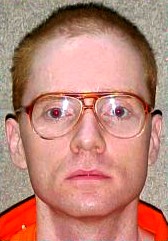 Robert Glen Jones
Murderer · USA · 1996
Defendant: Robert Glenn Jones (ADC#070566) · Co-defendant: Scott Nordstrom (ADC…
7 victims
Robert Glen Jones
Murderer · USA · 1996
Defendant: Robert Glenn Jones (ADC#070566) · Co-defendant: Scott Nordstrom (ADC…
7 victims
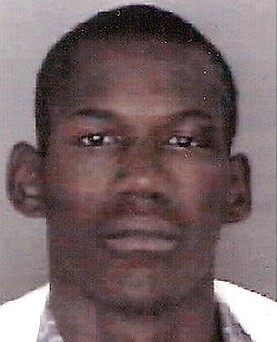 Joshua Wayne Andrews
Murderer · USA · 2000
Joshua Wayne Andrews was a serial killer accused of killing several people in V…
5 victims
Joshua Wayne Andrews
Murderer · USA · 2000
Joshua Wayne Andrews was a serial killer accused of killing several people in V…
5 victims
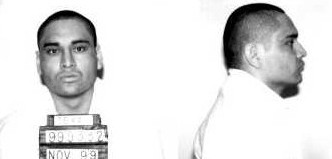 Juan Carlos Alvarez
Murderer · USA · 1998
Juan Carlos Alvarez, born on March 9, 1977, in San Luis, Mexico, was a Hispanic…
5 victims
Juan Carlos Alvarez
Murderer · USA · 1998
Juan Carlos Alvarez, born on March 9, 1977, in San Luis, Mexico, was a Hispanic…
5 victims
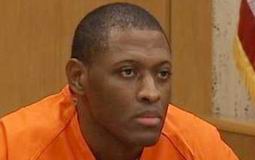 Leon Davis Jr.
Murderer · USA · 2007
Leon Davis Jr. was sentenced to death on April 29, 2011, for the execution-styl…
5 victims
Leon Davis Jr.
Murderer · USA · 2007
Leon Davis Jr. was sentenced to death on April 29, 2011, for the execution-styl…
5 victims
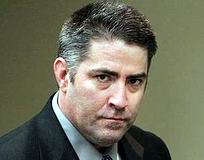 Raymond Lee Oyler
Murderer · USA · 2006
Raymond Lee Oyler was convicted for starting the 2006 Esperanza fire in Riversi…
5 victims
Raymond Lee Oyler
Murderer · USA · 2006
Raymond Lee Oyler was convicted for starting the 2006 Esperanza fire in Riversi…
5 victims
 Faryion Wardrip
Serial killer · USA · 1984
Name: Faryion Wardrip · TDCJ Number: 999331 · Full name: Wardrip, Faryion Edwar…
5 victims
Faryion Wardrip
Serial killer · USA · 1984
Name: Faryion Wardrip · TDCJ Number: 999331 · Full name: Wardrip, Faryion Edwar…
5 victims
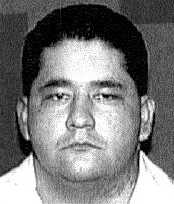 Michael Dean Gonzales
Murderer · USA · 1995
Michael Dean Gonzales was convicted of capital murder and sentenced to death. A…
2 victims
Michael Dean Gonzales
Murderer · USA · 1995
Michael Dean Gonzales was convicted of capital murder and sentenced to death. A…
2 victims
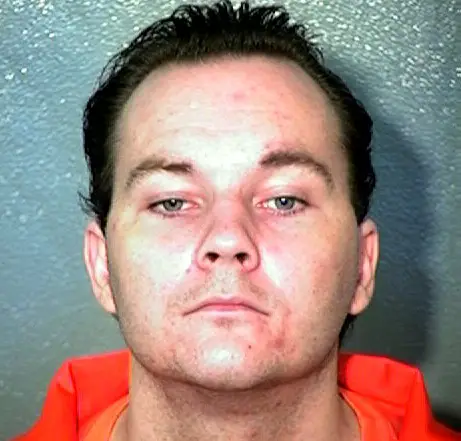 Steven Newell
Murderer · USA · 2001
Steven Newell was known to Elizabeth Byrd because he had dated Elizabeth’s sist…
1 victim
Steven Newell
Murderer · USA · 2001
Steven Newell was known to Elizabeth Byrd because he had dated Elizabeth’s sist…
1 victim
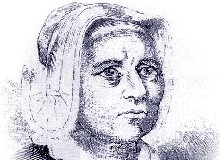 Hélène Jégado
Serial killer · France · 1833
Hélène Jégado (1803–1852) was a French domestic servant and poisoner. She was e…
23 victims
Hélène Jégado
Serial killer · France · 1833
Hélène Jégado (1803–1852) was a French domestic servant and poisoner. She was e…
23 victims
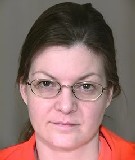 Wendi Andriano
Murderer · USA · 2000
Wendi Andriano was sentenced to death on December 22, 2004. Wendi Elizabeth Och…
1 victim
Wendi Andriano
Murderer · USA · 2000
Wendi Andriano was sentenced to death on December 22, 2004. Wendi Elizabeth Och…
1 victim
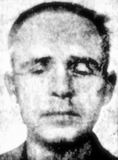 James Rodgers
Murderer · USA · 1957
James W. Rodgers (August 3, 1910 – March 30, 1960) was an American who was sent…
1 victim
James Rodgers
Murderer · USA · 1957
James W. Rodgers (August 3, 1910 – March 30, 1960) was an American who was sent…
1 victim
- Gender
- male
- Country
- USA
- Location
- Contra Costa County, California, USA
- Date of birth
- December 19, 1963
- Age at first offence
- 43
- Characteristics
- parricide
- Victim profile
- Nina Reiser (his wife)
- Method of murder
- ???
- Date(s) of murder
- September 3, 2006
- Years active
- 2006
- Date of arrest
- October 10, 2006
- Status
-
Life imprisonment
Sentenced to 15 years to life on August 29, 2008
Case record: Hans Thomas Reiser
Background
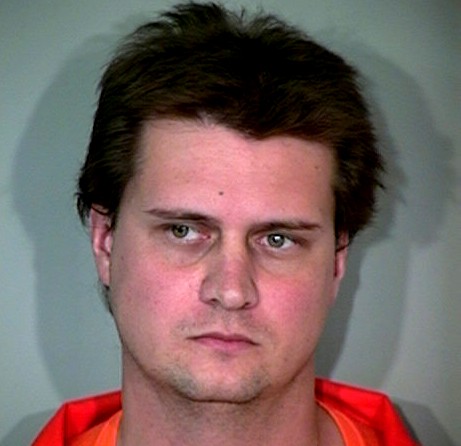
Hans Thomas Reiser (born 19 December 1963) was an American computer programmer and the primary developer of the ReiserFS and Reiser4 computer filesystems. He was the owner of Namesys.
Reiser grew up in California and dropped out of junior high school before he was 14, citing disagreements with the conventional schooling system. He was accepted at the University of California, Berkeley at the age of 15, and he attended off and on until he received a BA in Systematizing (an individualized major dealing with physics, math and related topics) in 1992, at the age of 28. He was also one of the founding members of the Open Computing Facility at UC Berkeley. Reiser chose not to pursue a Ph.D., citing the same reasons he had dropped out of junior high school.
Reiser worked part-to full-time in the computer field while founding and building the California-based international software company Namesys Inc. Prior to founding Namesys, he held positions at Synopsys, IBM Research, Premos, and ARDC.
Namesys and ReiserFS Reiser and his company Namesys developed the journaled computer file systems ReiserFS and Reiser4. ReiserFS had been available in the Linux operating system since version 2.4.1. It had at times been the default filesystem on several Linux distributions including, until 2006, Novell's SUSE Linux Enterprise.
Following Reiser's 2006 arrest on suspicion of murder, people in the free software community expressed concern over the future of Reiser's filesystem (Reiser4). After his conviction, Jonathan Corbet, editor of LWN.net, argued that the immaturity of Reiser4's feature set and Reiser's extensive combative relationship with the community meant the filesystem's future had been limited in any event.
Shortly after Reiser's arrest, the employees of Namesys stated they would continue to work. They said that the arrest had no immediate effect on the rate of the software's development, and if the case expanded over a longer time they would seek solutions to ensure the long-term future of the company.
On 21 December 2006, Hans Reiser announced he was selling the company to raise money for his increasing legal fees. As of January 2008, the commercial activity of the company ceased (according to an interview with employee Edward Shishkin) but it had not been sold.
The offence
Hans Reiser was convicted of the first degree murder of his wife, Nina Reiser, who disappeared in 2006. After conviction, Reiser later pled guilty to a reduced charge of second degree murder. The plea agreement included identifying the location of Nina Reiser's body.
People involved
- Hans Thomas Reiser — defendant; husband of Nina Reiser.
- Nina Reiser — victim; wife of Hans Reiser. She disappeared in 2006. Her body was later recovered.
- Ramon Reiser — Hans Reiser’s parent.
- Beverly Palmer — Hans Reiser’s parent; mother; lived in connection with the case during the time referenced.
- Nina Sharanova (Нина Шаранова) — Nina Reiser’s name; described as a Russian-born and trained obstetrician and gynecologist studying to become an American licensed OB/GYN.
- Edward Shishkin — Namesys employee (interview referenced).
- Jonathan Corbet — editor of LWN.net.
- Greg Dolge — prosecutor referenced in connection with Hans Reiser’s son arriving from Russia to testify before Judge Larry Goodman.
- Daniel Horowitz — high-profile defense attorney who joined the defense team but dropped the case on 28 November, citing Reiser's inability to pay for his services.
- William Du Bois / William DuBois — defense attorney referenced in multiple parts of the case; accompanied Reiser at the site where Nina Reiser’s body was led to police.
- Paul Hora — Alameda County District Attorney referenced in connection with a decision involving Reiser’s son arriving from Russia.
- William Du Bois / William DuBois — defense attorney.
- Judge Julie Conger — judge referenced for decisions on closing arguments and whether there was enough evidence to order Hans Reiser to stand trial.
- Judge Larry Goodman — Alameda County Superior Court judge assigned to the trial; referenced in decisions including denial of an appeal request and approval related to a plea agreement.
- Judge C. Don Clay — judge before whom Reiser pled not guilty.
- Lt. Ersie Joyner — Oakland homicide detective referenced for recollection of Reiser leading police to the exact site without hesitation or confusion.
- Officer Gino Guerrero — officer who testified in the preliminary hearing about surveillance following Reiser.
- Beverly Palmer — Reiser’s mother; testified at the preliminary hearing; described as living with Reiser where a pillar with blood was later referenced.
- Alameda County District Attorney Paul Hora — referenced.
- Judge Goodman — referenced for final approval of the deal.
- Coroner — referenced for positively identifying skeletal remains as those of Nina Reiser.
- San Quentin State Prison — place referenced for Hans Reiser’s arrival.
- Mule Creek State Prison — place referenced for transfer.
Investigation
Nina Reiser was reported missing on 5 September 2006. She was last seen on 3 September when she dropped the couple’s two children off with Hans at his mother's house where he was living at the time. She also failed to meet her best friend at her house later that evening.
Nina Reiser's 2001 Honda Odyssey minivan, with groceries inside, was found on 9 September on Fernwood Drive in Oakland's Montclair district, just east of the SR 13 Warren Freeway.
Police reported that neighbors first spotted the parked minivan on 5 September, the day she was supposed to pick up her children at school. Hans Reiser's neighbors said they saw him spraying water off something in the driveway for half an hour shortly after Nina went missing. They said his car—a 1988 Honda CRX Si hatchback—disappeared shortly after. They said Reiser's mother rented a car so Hans could drive hers.
Police brought cadaver dogs in to search his property, but no human remains were found.
Following Nina Reiser’s disappearance, which resulted in the removal of the Reiser children from the Reiser family, Hans Reiser attempted to obtain custody but was unsuccessful. Oakland police testified against Hans Reiser at the custody hearing, though they did not reveal the evidence on which they based their concerns.
Detention, DNA sample, and search warrants In September 2006, Oakland police briefly detained Hans Reiser, served him with a search warrant on his person, and obtained a DNA sample.
On 10 October 2006, following the second search of his home, Oakland police and FBI investigators removed a number of items. Police announced that they were now treating the disappearance as a homicide case, and Reiser was arrested for the murder of Nina Reiser and subsequently charged.
On 11 October 2006, law enforcement officials said that splatters of blood had been found in Hans Reiser's house and car. Forensic testing, including DNA analysis, could neither confirm nor rule out Nina Reiser as the source of the blood.
Officials had not located the passenger seat of his 1988 Honda CRX Si hatchback which was missing. Officials also indicated that they had found in the car two books on homicide investigation purchased by Reiser on September 8: "Homicide: A Year on the Killing Streets" by David Simon, and "Masterpieces of Murder" by Jonathan Goodman.
Arrest
Hans Reiser was arrested for the murder of Nina Reiser and subsequently charged after Oakland police and FBI investigators treated the disappearance as a homicide case on 10 October 2006.
Trial
Preliminary hearing
The preliminary hearing opened on 11 December 2006, with Reiser being represented by attorney William Du Bois.
At the hearing, a forensic technician testified that blood matching Nina Reiser's DNA had been found on a bag in Hans Reiser's car and on a pillar in Beverly Palmer's house, where he had been living since the separation. However, it emerged that a mistake had been made when the police analyzed the blood on the pillar, rendering the evidence inconclusive.
Police also testified that they had found a 40-piece socket set which may have been used to remove the passenger seat. Police testified to the existence of a receipt for the purchase of the socket set from Kragen Auto Parts, four seat bolts, and a wrench with a socket in it, suggesting that the seat may have been removed recently.
A traffic officer who had pulled Reiser over nine days after Reiser's wife went missing testified later in the trial that the passenger seat had been present at the time and that the officer had not seen any blood.
Surveillance testimony at the preliminary hearing During the third day of the preliminary hearing, on December 16, 2006, Officer Gino Guerrero stated that Reiser had engaged in a lengthy cat-and-mouse game with surveillance officers who were trailing him on the evening of September 18, 2006.
Guerrero testified that when Reiser left family court at 600 Washington Street in Oakland in the afternoon of September 18, he was trailed by police officers using both cars and an airplane. According to a probable cause statement, Reiser and a male friend "appeared to be conducting counter surveillance" to avoid police by driving at varying speeds, turning down small residential streets and making abrupt stops.
The probable cause statement also described that Reiser and his friend eventually dined at Fonda restaurant on Solano Avenue in Albany. Afterwards, Guerrero testified that the friend dropped Reiser at the corner of San Pablo and Ashby avenues in Berkeley.
Guerrero said Reiser walked around the area furtively, stopping occasionally to look in all directions, and eventually got into a 1988 Honda CRX parked on Acton Street near Carleton Street. Guerrero said police then followed Reiser as he drove the car to 2425 Monterey Road in Oakland, less than three miles (5 km) away from where Reiser was living with his mother.
Beverly Palmer testified that she had been out of town the weekend Nina Reiser disappeared and was surprised to learn that her son was driving her car, a 2003 Honda Hybrid, and that his Honda CRX wasn't at the house.
Palmer testified that when she asked her son where the CRX was, he said it wasn't working and "he'd take care of it and I should never mind."
Reiser’s son fails to testify and later arrives On 17 January 2007, the Reisers' seven-year-old son was scheduled to testify but failed to appear. Judge Julie Conger asked that their son return to court and clarify his testimony, but he never did because his maternal grandmother failed to bring the children back from Russia as promised. She had since begun Russian court custody proceedings.
It was originally thought that Reiser's son would not return to testify in his father's trial. However, in a move by Alameda County District Attorney Paul Hora, the son arrived from Russia to testify before Judge Larry Goodman.
Prosecutor Greg Dolge stated that he spoke to the grandmother and that Reiser's son was under the care of a therapist in Russia who wanted him to stay in Russia for further treatment.
It was also revealed that Nina Reiser obtained Russian citizenship for her daughter and son 2 years and 2 months, respectively, before she disappeared.
Pretrial motions and arraignment
Reiser was arraigned on Thursday, 12 October, where he delayed entering a plea until his next court appearance on 28 November. He was held without bail.
On 28 November, Reiser entered a not guilty plea and invoked his right for a speedy trial, forcing the state to schedule a preliminary hearing for 11 December.
On 2 December, at the request of the Oakland police, search and rescue teams combed an area less than three miles (5 km) from Hans Reiser's house, but no new major findings were immediately announced.
On 28 November, Judge Julie Conger indicated that on February 23 she would hold closing arguments and rule on whether there was enough evidence to order Hans Reiser to stand trial.
On 22 February 2007, closing arguments were postponed until 9 March because Reiser's attorney was involved with another unrelated trial that was running longer than expected. On 9 March, the judge ruled that Reiser would stand trial and set Reiser's arraignment for 23 March.
On 23 March 2007, Reiser pled not guilty before Judge C. Don Clay.
On 11 June, Reiser's trial was assigned to Alameda County Superior Court Judge Larry Goodman, who had presided over a number of murder and death penalty cases, including the trial of Alex DeMolle.
Hearings on pretrial motions began on 23 July 2007. Potential jurors were brought to court on 29 August, 30 August, and 4 September to fill out questionnaires, but prospective jurors weren't questioned until 30 September 2007. Opening statements were expected to begin on 29 October 2007 but were postponed and rescheduled for 5 November 2007.
The defense stated that the delay was due to possible prejudicial information in a television segment about the case to be aired 2 November. The prosecutor stated the delay was necessary as more time was needed for additional pretrial motions.
Trial and verdict
Hans Reiser's murder trial began on 6 November 2007 with opening statements from prosecutor Paul Hora.
After three days of trial, the prosecutor concluded opening statements urging jurors to convict Hans Reiser for murdering his wife.
In closing argument, Reiser's attorney William DuBois urged the jury to consider a sentence of voluntary manslaughter if they believed that Nina was dead and that Hans Reiser killed her in a moment of passion.
On Monday, 28 April 2008, Hans Reiser was found guilty of first degree murder.
Sentencing
A deal had been described in which prosecutors agreed that Reiser would reveal the location of his wife's body in exchange for pleading guilty to second-degree murder. The deal was made with the agreement of Nina's family and was subject to final approval by Judge Goodman.
On Monday, 7 July 2008, Reiser led police to Nina's body buried in the Oakland hills. Reiser's attorney, William DuBois, who was handcuffed to Reiser and accompanied by a heavy police guard to the site, said the remains were found buried on the side of a hill between Redwood Regional Park and the Huckleberry Botanic Regional Preserve, less than half a mile (< 800 m) from the home on Exeter Drive where Reiser lived with his mother, and where Nina Reiser was last seen alive on 3 September 2006.
Oakland homicide detective Lt. Ersie Joyner recalled that Reiser led them directly to the exact site, without any hesitation or confusion.
Reiser said he hoped a cherry tree would be planted to mark the grave site.
On 8 July, the coroner positively identified the skeletal remains as those of Nina Reiser.
On 29 August 2008, Reiser was sentenced to 15 years to life in accordance with the charge of second-degree murder. Reiser could not appeal his conviction or sentence as a result of his plea bargain.
On 5 September 2008, Hans Reiser arrived at San Quentin State Prison to begin serving his sentence.
Appeals
On 30 October 2008, Hans Reiser tried to appeal his second-degree murder conviction. The request was denied by Judge Larry Goodman on 13 November 2008.
Outcome
Hans Reiser was convicted of first degree murder on 28 April 2008. He later pled guilty to a reduced charge of second degree murder as part of a settlement agreement that included identifying the location of Nina Reiser's body.
Aftermath
On 10 January 2009, it was reported that Hans Reiser was recovering after having been beaten up by several prisoners.
By 4 March 2009, Hans Reiser had been transferred to Mule Creek State Prison.
Other details
Marriage and custody background
In 1998, while working in Russia, Hans Reiser reportedly selected from a mail-order bride catalogue and subsequently married Nina Sharanova (Нина Шаранова), described as a Russian-born and trained obstetrician and gynecologist who was studying to become an American licensed OB/GYN.
Reiser stated that he met Nina when he went to a date set up by a Russian dating service; Nina had come along to translate for his date. They had two children.
The Reisers separated in May 2004. Nina Reiser filed for divorce three months later, citing irreconcilable differences. She said that their children “hardly know their father” because he was out of the country on business for most of the year, according to court records. The court granted sole legal custody of the children and shared physical custody of them with her husband.
The divorce was never finalized.
Nina Reiser obtained a temporary restraining order against Hans in December 2004 after he allegedly pushed her, at the height of the divorce proceedings. She dropped the temporary restraining order in late 2005 because the heat of the divorce had chilled over time.
In exchange, Hans Reiser agreed to be bound by a one year civil restraining order which prohibited him from “contacting, harassing or disturbing the peace” of Nina Reiser at her home or place of work and ordered him to stay at least 100 yards (91 m) away from her.
In May, Nina Reiser alleged in court filings that her husband had failed to pay 50 percent medical expenses and childcare expenses as ordered by a judge.
Recovery of the alleged motive context
No additional motive was stated beyond the described settlement arrangement in which Reiser would reveal the location of Nina Reiser’s body in exchange for pleading guilty to second-degree murder.
Defense counsel change
Daniel Horowitz joined the defense team but dropped the case on 28 November, citing Reiser's inability to pay for his services.
Spotted an error, or have more information about this case?