
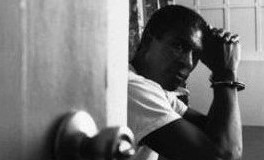
Victor Kennedy
Murderer Ervil LeBaron
Murderer · USA · 1972
Ervil Morrell LeBaron (1925 to August 16, 1981) was the leader of a polygamous…
35 victims
Ervil LeBaron
Murderer · USA · 1972
Ervil Morrell LeBaron (1925 to August 16, 1981) was the leader of a polygamous…
35 victims
 Brian Kevin Rosenfeld
Murderer · USA · 1985
Brian Kevin Rosenfeld Brian Kevin Rosenfeld was sentenced to three concurrent l…
23 victims
Brian Kevin Rosenfeld
Murderer · USA · 1985
Brian Kevin Rosenfeld Brian Kevin Rosenfeld was sentenced to three concurrent l…
23 victims
 Marvin Gray
Murderer · USA · 1975
Marvin Gray was convicted killer who claimed responsibility for 23 slayings and…
23 victims
Marvin Gray
Murderer · USA · 1975
Marvin Gray was convicted killer who claimed responsibility for 23 slayings and…
23 victims
 Yahweh ben Yahweh
Murderer · USA · 1980
Yahweh ben Yahweh was born and legally named Hulon Mitchell Jr. (October 27, 19…
23 victims
Yahweh ben Yahweh
Murderer · USA · 1980
Yahweh ben Yahweh was born and legally named Hulon Mitchell Jr. (October 27, 19…
23 victims
 Denise Frei
Murderer · USA · 2009
Denise Leone Frei was a live-in girlfriend of Curtis Bailey. She was convicted…
1 victim
Denise Frei
Murderer · USA · 2009
Denise Leone Frei was a live-in girlfriend of Curtis Bailey. She was convicted…
1 victim
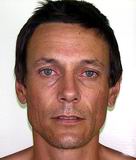 Brett Cowan
Murderer · Australia · 2003
Brett Peter Cowan (born 18 August 1969) was sentenced in the Supreme Court of Q…
1 victim
Brett Cowan
Murderer · Australia · 2003
Brett Peter Cowan (born 18 August 1969) was sentenced in the Supreme Court of Q…
1 victim
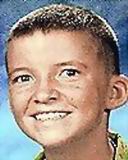 Evan Savoie
Homicide · USA · 2003
Evan Drake Savoie was a 12-year-old boy from Ephrata, Washington. Craig Sorger…
1 victim
Evan Savoie
Homicide · USA · 2003
Evan Drake Savoie was a 12-year-old boy from Ephrata, Washington. Craig Sorger…
1 victim
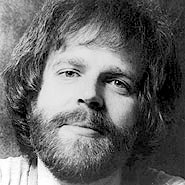 Jerry Harvey
Murderer · USA · 1988
Jerry Harvey (October 28, 1949 – April 9, 1988) was an American screenwriter an…
1 victim
Jerry Harvey
Murderer · USA · 1988
Jerry Harvey (October 28, 1949 – April 9, 1988) was an American screenwriter an…
1 victim
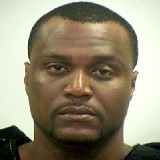 Tyrone Cade
Murderer · USA · 2011
Defendant: Tyrone Cade (Black male) · TDCJ number: 999575 · Prior prison record…
2 victims
Tyrone Cade
Murderer · USA · 2011
Defendant: Tyrone Cade (Black male) · TDCJ number: 999575 · Prior prison record…
2 victims
 Curtis Allgier
Murderer · USA · 2007
Curtis Michael Allgier (born August 25, 1979) was a white supremacist skinhead…
1 victim
Curtis Allgier
Murderer · USA · 2007
Curtis Michael Allgier (born August 25, 1979) was a white supremacist skinhead…
1 victim
- Gender
- male
- Country
- USA
- Location
- Shelby County, Alabama, USA
- Date of birth
- 1962
- Age at first offence
- 18
- Characteristics
- rape, robbery
- Victim profile
- Annie Orr (female, 86)
- Method of murder
- Asphyxiation
- Date(s) of murder
- December 23, 1980
- Years active
- 1980
- Date of arrest
- Next day (surrenders)
- Status
-
Executed
Executed by electrocution in Alabama on August 6, 1999
Case record: Victor Kennedy
Background
Victor Kennedy was 37 at the time of his execution. He was executed by electrocution in Alabama on August 6, 1999.
Annie Laura Orr was an 86-year-old woman who lived alone in Montevallo, Alabama.
Darrell Grayson was the co-defendant. Grayson was 19 at the time of Annie Laura Orr’s slaying.
Victor Kennedy and Darrell Grayson had occasionally performed odd jobs for Mrs. Orr, according to trial testimony.
The offence
Victor Kennedy was convicted for the murder of 86-year-old Annie Orr on December 23, 1980 at Orr's home in Montevallo, Alabama.
Annie Orr was badly beaten, repeatedly raped, and finally suffocated slowly on her bed under a pillowcase taped tightly around her head.
The coroner testified that the tape, not the pillowcase, caused her asphyxiation.
Prosecutors said Kennedy and Darrell Grayson wanted money when they entered Mrs. Orr's home in the early morning hours of Christmas Eve 1980. The elderly woman had no money.
A gun was fired into the wall to intimidate her, according to Assistant Attorney General Clay Crenshaw.
Prosecutors said both men raped her. They said she died after they put a pillowcase over her head and wrapped her head, mummy-fashion, in masking tape.
Investigation
Kennedy made three statements to the police, and all three statements were admitted in evidence.
In Kennedy’s statements, he admitted to accompanying Darrell Grayson, whom Annie had employed, to her house in order to steal money for Christmas. Kennedy and Grayson had been drinking heavily, and Kennedy had a gun.
Kennedy stated that he entered the house with Grayson and searched the house for cash.
Kennedy stated that he saw Grayson having intercourse with Annie.
Kennedy stated that he entered Annie’s bedroom at this time to look for his gun.
Kennedy did not admit to taping the pillowcase, and he did not admit to having been in Annie’s bedroom when the tape was wrapped around her head.
Apart from Kennedy’s statements, the state’s evidence was circumstantial.
Playing cards found in Annie's house and on the path between her house and Kennedy's nearby residence corresponded to missing cards of a deck seized at Kennedy's residence.
Hairs collected from Annie's body and bedroom, where she was found, proved to be those of a black male. Both Kennedy and Grayson were black, but forensic analysts could not identify the hairs as belonging to either of them.
Serological analysis did not indicate that any of the semen present was Kennedy’s, although there was too much to have resulted from one ejaculation.
At least some of the semen was shown to be Grayson’s.
Grayson made two statements to the police. Neither statement was introduced at Kennedy’s trial.
Grayson’s story differed from Kennedy’s.
According to Grayson’s statements, he and Kennedy had gone to Annie’s house at Kennedy’s suggestion to rob her, and Kennedy had taken a gun.
Upon breaking into Annie’s house, both men went to her bedroom.
Grayson’s statements inconsistently recounted the order of events in the bedroom, but said that at some time while the two were in the house Kennedy grabbed Annie by the throat, raped her, struck her head with his fist, and held her down as Grayson wrapped the tape around the pillowcase.
Grayson also confessed to having raped Annie, possibly twice.
Trial
Kennedy was convicted of capital murder.
Kennedy was sentenced to death in 1982.
A federal judge later granted a new trial based on claims the prosecution failed to turn 2 of Grayson’s statements over to Kennedy’s defense lawyers during Kennedy’s trial.
Sentencing
Kennedy becomes the 2nd condemned inmate to be put to death this year in Alabama, and the 19th overall since the state resumed capital punishment on April 22, 1983.
Appeals
A federal judge granted Kennedy a new trial in 1994 based on claims the prosecution failed to turn 2 of Grayson’s statements over to Kennedy’s defense lawyers during Kennedy’s trial.
In 1995, the 11th U.S. Circuit Court of Appeals overturned that 1994 ruling, stating that the statements would have helped prosecutors more than the defense.
The U.S. Supreme Court refused to hear Kennedy's case in April.
Earlier Thursday, the Alabama Supreme Court denied an appeal and a request for a stay of execution, prison system spokesman Tom Gilkeson said.
A federal judge was pending on Grayson’s appeal.
Outcome
Victor Kennedy was executed in Alabama on August 6, 1999 by electrocution at Holman Prison in Atmore.
Kennedy was pronounced dead at 12:11 a.m.
According to Department of Corrections officials, Kennedy sat quietly in the electric chair shortly before the execution was carried out.
Kennedy made a brief final statement, which wasn't audible to reporters.
Holman Warden Charlie Jones said Kennedy thanked his supporters and wanted Mrs. Orr's family to know he was sorry.
As the current was switched on, Kennedy’s body jerked upward and his fists clenched.
Kennedy’s attorney, LaJuana Davis of Montgomery, had no reaction after the execution.
Kennedy left most of his belongings, including pictures, letters and a Bible, to his mother, Mary L. Williams of Montevallo, according to Corrections officials.
Kennedy also gave some possessions to other death row inmates, said Jones.
None of Kennedy's family members witnessed the execution.
Aftermath
A somber Kennedy was watched by relatives of Annie Laura Orr.
Milton Orr Jr., Miss Binion's uncle and a former Montevallo mayor, found his mother's body. He said: “It was terrible.” He said: “They raped her and rolled her up in a sheet.” He said he would not attend Kennedy's execution.
Lee Binion of Birmingham, who was 22 when her grandmother was slain, earlier said she planned to witness Kennedy's execution. She told The Birmingham News in a story published Thursday: “This is not about retribution. This is about seeing justice done,” She told reporters: “I want him to know I am there, and I want to see the coroner pick his wrist up and tell me he's dead.”
Mrs. Orr's granddaughter and a grandson by marriage witnessed the execution.
After the execution, the Orr family criticized the lengthy appeals process. It took 17 years for Kennedy's sentence to be carried out.
Charles Preston, married to one of Mrs. Orr's granddaughters, read a prepared statement after the execution as another relative held up a picture of the victim. Charles Preston said: “Her family has finally received the last full measure of justice that she and we so richly deserve. A few moments ago, a long struggle was ended,” Preston also said: justice was done when her killer was executed but they said it never should have taken 17 years for Victor Kennedy to die in Alabama's electric chair. Charles Preston said Kennedy’s lengthy stay on death row “cost the taxpayers of the state dearly,” and said the legal process needs to be streamlined.
Orr's home on Christmas Eve 1980. She lived alone and had no money. Prosecutors also said she was beaten and raped by both men, and that she died when Kennedy and Grayson put a pillowcase over her head and wrapped her, mummy-fashion, in masking tape.
Gov. Don Siegelman denied Kennedy clemency Wednesday afternoon. Siegelman said: “It is clear to me that Mr. Kennedy participated in this most heinous crime, and that the death penalty is appropriate,”
Kennedy's attorney, LaJuana Davis of the Equal Justice Initiative of Alabama, said she did not know clemency had been denied until she saw a newspaper article. She said Siegelman's office had shown a “lack of regard” for failing to notify her promptly.
Siegelman spokeswoman Kristin Carvell said letters to Ms. Davis and the state attorney general's office were sent Wednesday before reporters were notified of the governor's decision. Carvell said: “It's the same way we've always done it,” Carvell said: “There may have been a problem with the mail.”
Project Hope to Abolish the Death Penalty raised questions of racial unfairness in Kennedy's case, noting that Kennedy, a black man, was convicted by an all-white jury for murdering a white victim.
A vigil was planned in Birmingham's Kelly Ingram Park at 11:45 p.m. Thursday.
The Orr family members said Kennedy’s execution took place after a lengthy appeals process.
Kennedy spent his last day visiting with his mother, Mary L. Williams, and his 2 teen-age sons. Jones said Kennedy spent his last day visiting with Ms. Williams, along with his 2 sons and a Pentecostal minister requested by Ms. Williams.
Kennedy’s last words, spoken to Holman Warden Charlie Jones, were not audible. Jones said Kennedy wanted Mrs. Orr's family to know he was sorry and thanked his lawyer, LaJuana Davis of the Equal Justice Initiative of Alabama, for her support.
Kennedy’s body stiffened and his fists clenched as the current was switched on.
Earlier Thursday, the Alabama Supreme Court denied an appeal and a request for a stay of execution, according to prison system spokesman Tom Gilkeson.
Spotted an error, or have more information about this case?