
John Williams Jr.
Murderer Brian Kevin Rosenfeld
Murderer · USA · 1985
Brian Kevin Rosenfeld Brian Kevin Rosenfeld was sentenced to three concurrent l…
23 victims
Brian Kevin Rosenfeld
Murderer · USA · 1985
Brian Kevin Rosenfeld Brian Kevin Rosenfeld was sentenced to three concurrent l…
23 victims
 Russell Ellwood
Murderer · USA · 1991
Russell Ellwood was a former taxi driver. Authorities suspected him of killing…
20 victims
Russell Ellwood
Murderer · USA · 1991
Russell Ellwood was a former taxi driver. Authorities suspected him of killing…
20 victims
 Robert Martines Perez
Murderer · USA · 1994
Name: Robert Martines Perez · Other name used in proceedings: Robert Martinez P…
15 victims
Robert Martines Perez
Murderer · USA · 1994
Name: Robert Martines Perez · Other name used in proceedings: Robert Martinez P…
15 victims
 Billy Frank Vickers
Murderer · USA · 1993
Billy Frank Vickers Vickers was executed by lethal injection in Texas on Januar…
14 victims
Billy Frank Vickers
Murderer · USA · 1993
Billy Frank Vickers Vickers was executed by lethal injection in Texas on Januar…
14 victims
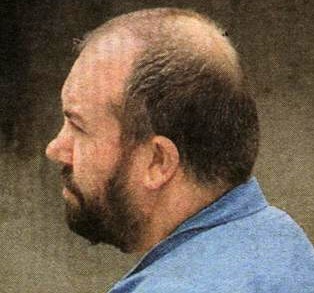 Mark Errin Rust
Murderer · Australia · 1999
Mark Errin Rust Mark Errin Rust was described as having started following prett…
2 victims
Mark Errin Rust
Murderer · Australia · 1999
Mark Errin Rust Mark Errin Rust was described as having started following prett…
2 victims
 Asuncion Avila-Villa
Murderer · USA · 2009
Asuncion “Suzie” Avila-Villa was a Hamilton mother accused of killing her infan…
1 victim
Asuncion Avila-Villa
Murderer · USA · 2009
Asuncion “Suzie” Avila-Villa was a Hamilton mother accused of killing her infan…
1 victim
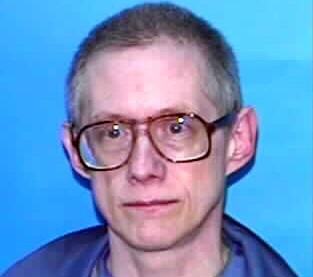 John Crutchley
Serial killer ? · USA · 1977
June 1986 — Crutchley plea-bargained to guilt on kidnap and rape charges in exc…
10 victims
John Crutchley
Serial killer ? · USA · 1977
June 1986 — Crutchley plea-bargained to guilt on kidnap and rape charges in exc…
10 victims
- Gender
- male
- Country
- USA
- Location
- Raleigh, North Carolina, USA
- Date of birth
- 1961
- Age at first offence
- 34
- Characteristics
- rape, drug addict, mentally ill
- Victim profile
- Patricia Ashe / Debra Elliott / Dawn Grandy / Cynthia Brown
- Method of murder
- St abbing with knife / Beating
- Date(s) of murder
- 1995 - 1996
- Years active
- 1995–1996
- Date of arrest
- —
- Status
-
Sentenced to death
Sentenced to death on March 4, 1998
Case overview
John Williams Jr. was a Georgia drifter who was picked up for assaulting a woman about a month before he was arrested. He was believed to be a serial killer responsible for at least four slayings in downtown Raleigh, North Carolina. Williams was 36. He was charged with the killing of Patricia Ashe in January 1996, and he was also charged for the murder of Debra Elliott in December while in jail on the assault charge.
Police conducted 6,000 interviews and beefed up patrols in the Moore Square area downtown after investigators started suspecting that a serial killer might be loose. An officer talked briefly with Williams, but he was not identified as a suspect until his arrest on the assault charge. Police believed Williams met his victims downtown and that they willingly went with him to secluded spots where "he felt comfortable to make the attacks."
Williams was charged with sexual assaults of four other women since October 1995.
Timeline
- 4 February 1997 — John Williams was arrested after attempted sexual assault of victim Shelly Jackson in the 600 block of West Hargett Street.
- 24 February 1997 — John Williams was indicted for assault with a deadly weapon with intent to kill Shelly Jackson.
- 23 December 1996 — Deborah Jean Elliot spoke with one of her sisters about her plans for Christmas.
- 24 December 1996 — Elliot was supposed to go to another sister’s house about 1:00 p.m. to stay for Christmas, but she never arrived.
- 26 December 1996 — The body of Deborah Jean Elliot was found in the second bay of a building formerly part of Pine State Creamery.
- 27 December 1996 — Dr. D.E. Scarborough performed an autopsy on Deborah Jean Elliot.
- 25 October 1995 — Jacqueline Crump left her boyfriend’s house to buy a pack of cigarettes and later an incident occurred in a concrete tunnel that goes under Martin Luther King Boulevard.
- 26 October 1995 — Raleigh Police Officer David German was dispatched to the scene where Jacqueline Crump was found.
- 7 January 1996 — Officer G.M. Wright was dispatched to the 1500 block of South Blount Street after a report of a person around the back of the building with no clothes on.
- 4 January 1996 — Evidence relating to the incident involving a prostitute found strangled but alive on Jones Sausage Road was referenced at trial.
- 25 May 1996 — Audrey Hall went to Jerry Jones' house about 5:00 p.m.
- Sunday (after 25 May 1996) — Defendant arrived at Jones' house around 10:00 or 11:00 on Sunday morning and later brought Hall to a wooded area adjacent to South Wilmington Street near railroad tracks.
- 31 March 1997 — Defendant was additionally indicted for the first-degree murders of Deborah Jean Elliot and Patricia Ann Ashe, first-degree rapes of Jacqueline Crump and Audrey Marie Hall, first-degree sexual offense against Audrey Marie Hall, and two counts of assault with a deadly weapon with intent to kill inflicting serious injury on Jacqueline Crump and Audrey Marie Hall.
- 4 August 1997 — Defendant was indicted in superseding indictments for attempted first-degree rapes of Vicki LaVerne Whitaker and Kimberly Yvonne Warren, assault with a deadly weapon with intent to kill Kimberly Yvonne Warren, and assault with a deadly weapon with intent to kill inflicting serious injury Vicki LaVerne Whitaker.
- 20 October 1997 — Defendant was indicted in superseding indictments for an attempt to commit the first-degree rape of Shelly Jackson and for the first-degree rape of Patricia Ann Ashe.
- 4 March 1998 — A jury recommended the death penalty and the trial court entered judgments accordingly; the appeal was heard in the Supreme Court afterward, and on this date judgments imposing sentences of death were entered by Farmer, J.
- 19 February 1998 — A jury view of the crime scene at the old Pine State building was held.
- 13 September 2001 — The Supreme Court heard the appeal.
- 28 June 2002 — The opinion was filed as State of North Carolina v. John Williams, Jr., No. 278A99.
- 6 October 2000 — The Supreme Court allowed defendant's motion to bypass the Court of Appeals as to his appeal of additional judgments.
Investigation and police work
Police conducted 6,000 interviews and beefed up downtown patrols in Raleigh after investigators suspected a serial killer might be loose. Police refused to link any of the murders together until just recently, but after Williams' arrest they said they had a serial killer behind bars.
Police believed that the slayings were not tied together until Williams was arrested and women he allegedly assaulted helped officers.
Criminologist Dr. Margaret Zahn said it was understandable that police would put off making such an announcement because "the portrait of a serial killer is often difficult to figure out."
Police Capt. Dennis Ford stated: "We have our man,'' said police Capt. Dennis Ford. "We have him off the street at this point. People should feel comfortable at this point that we have our perpetrator.'' Ford said the slayings were not tied together until Williams was arrested and women he allegedly assaulted helped officers.
Arrest and charges
Williams was arrested on the assault charge and was believed to be connected to multiple attacks and murders in downtown Raleigh.
He was indicted:
- 24 February 1997 — assault with a deadly weapon with intent to kill Shelly Jackson.
- 31 March 1997 — first-degree murders of Deborah Jean Elliot and Patricia Ann Ashe; first-degree rapes of Jacqueline Crump and Audrey Marie Hall; first-degree sexual offense against Audrey Marie Hall; two counts of assault with a deadly weapon with intent to kill inflicting serious injury on Jacqueline Crump and Audrey Marie Hall.
- 4 August 1997 — attempted first-degree rapes of Vicki LaVerne Whitaker and Kimberly Yvonne Warren; assault with a deadly weapon with intent to kill Kimberly Yvonne Warren; assault with a deadly weapon with intent to kill inflicting serious injury on Vicki LaVerne Whitaker.
- 20 October 1997 — an attempt to commit the first-degree rape of Shelly Jackson and first-degree rape of Patricia Ann Ashe.
Williams pleaded innocent to killing Elliott and did not enter a plea in the second slaying.
He was charged with sexual assaults and various assault counts in relation to crimes occurring between October 1995 and November 1996.
The offences
Offences relating to Jacqueline Crump
Williams was charged with and convicted of first-degree rape and assault with a deadly weapon with intent to kill inflicting serious injury as to Jacqueline Crump.
Crump had been using cocaine off and on for about thirteen years and sometimes exchanged sex for crack or money.
On 25 October 1995, Crump left her boyfriend’s house to buy a pack of cigarettes. She testified that she could recall being at a concrete tunnel that goes under Martin Luther King Boulevard and connects Chavis Park to an area of Old Garner Road. She recalled walking past the tunnel with two men; one suggested they go into the tunnel; when she refused, she was pushed into the tunnel. One man grabbed her by the throat and started choking her while she was backed up against the wall; he got on top of her and started pushing down her pants while still keeping one hand on her throat. She blacked out at this point.
Raleigh Police Officer David German was dispatched and arrived at 9:13 a.m. on 26 October. Crump had no clothing on the bottom half of her body except for a white sock on her left foot. There was blood on the wall and on the floor of the tunnel. Crump suffered a fractured nose and facial bone fractures; her eyes were swollen shut; she had gashes on the side of her head and cuts and bruises on her arms and legs. The evidence appeared to indicate that Crump was beaten with a beer bottle.
DNA testing was conducted and a match was present between Williams and the vaginal swabs taken from Crump.
Offences relating to Patricia Ashe
Williams was charged with and convicted of first-degree murder based on premeditation and deliberation and first-degree rape as to Patricia Ashe.
Ashe was a habitual crack cocaine user and possibly a prostitute.
On Sunday, 7 January 1996, Officer G.M. Wright of the Raleigh Police Department was dispatched to the 1500 block of South Blount Street after a black male, Rodney Bass, was waving to get the officer's attention. Bass stated that he had seen a person around the back of the building with no clothes on. Snowing and sleeting occurred off and on throughout the day. Officer Wright found Ashe's body covered with snow on a bench. The officer observed a set of footprints near the body that did not get close enough to the body to indicate that the person who left them could have touched the body. Bass told another officer he had been drinking in a nearby vehicle and decided to go for a walk. As he walked behind the building, he saw Ashe's body and got within twenty or thirty feet and then called the police.
Ashe’s body was on the lower portion of the bench, with her feet and lower body hanging off the edge; her legs were completely off the end of the bench, slightly spread, and her knees were bent. She had no clothes on except white socks. A thermal long-sleeve T-shirt was folded up under her buttocks, and a pair of jeans was folded under her head. A couple of crack pipes and a lighter were underneath or just to the side of the bench. Snow and ice were on Ashe’s body, but no snow and ice were underneath her body.
Dr. John Butts performed an autopsy and concluded Ashe died as a result of strangulation. She had scrapes and scratches on both sides of her neck as well as some on the front part of her neck; linear scrapes on her back; scratches on her left arm; and a small tear in the skin on the right groin area. The multiple scratches and scrapes on Ashe’s neck indicated she had struggled against the perpetrator.
DNA testing was conducted on vaginal swabs taken by Dr. Butts, and a DNA match was found with Williams.
Offences relating to Audrey Marie Hall
Williams was charged with and convicted of first-degree rape, first-degree sexual offense, and assault with a deadly weapon with intent to kill inflicting serious injury as to Audrey Hall.
Hall had used crack cocaine off and on since 1985 and was actively involved in using crack in May 1996 while living in Raleigh. She exchanged sex for money on various occasions.
Hall had a friend, Jerry Jones, who lived in southeast Raleigh. On occasions when Hall visited Jones at his home, she would use crack.
On Saturday, 25 May 1996, Hall went to Jones’ house about 5:00 p.m., got high later that night from smoking crack at Jones’ house, and stayed overnight. Williams arrived at Jones’ house around 10:00 or 11:00 on Sunday morning and asked if Hall was in the house. Jones woke Hall to tell her Williams was looking for her. Williams came into the house and sat down beside Hall, asked if Hall wanted to smoke cocaine, and Hall responded affirmatively.
Williams asked Hall if she knew where he could buy some cocaine. Hall agreed to take Williams to a crack house; they left Jones’ house about 3:00 p.m. Hall intended to take Williams to a crack house about two blocks from Jones’ house, but Williams said he still had some cocaine and asked for a place where they could smoke it. Hall took Williams to a wooded area adjacent to South Wilmington Street near railroad tracks. When they got to the woods, Hall took a “hit” from Williams’ cocaine. Williams motioned for Hall to walk in front of him, grabbed her by the throat, squeezed tightly, and threw her on the ground. Williams began choking Hall, told her to take her clothes off, and threatened Hall with a box cutter. He made her walk farther into the woods and get on her knees. Over a relatively short period of time, Williams made Hall put his penis in her mouth while she was on her knees; he told her to do exactly what he said if she wanted to get out alive. Williams pushed Hall onto her back, stuffed his penis down her throat, and ejaculated. Williams continued to choke Hall while holding the box cutter and raping her.
Raleigh Police Officer Kevin Carswell and two other officers were dispatched to the wooded area. The officers found clothing, a purse, a watch, and a gold necklace along a path. When officers eventually found Hall, her arms were stretched over her head and she was nude except for a dirty white sock on her right foot. Officer Carswell testified it was apparent Hall was dragged to where she was found.
Hall described her attacker as a black male with black jeans and a black shirt carrying a backpack and said Williams was at Jones’ house at 203 Bragg Street. Hall was taken to Wake Medical Center, where she described her assault and her attacker to a nurse. Injuries included cuts on her hand and face and abrasions on her back, and very obvious scratches and bruises on her neck.
Vaginal swabs and subsequent blood samples from Williams were subjected to DNA analysis. SBI lab revealed a DNA banding pattern consistent with a mixture of Hall and Williams’ DNA profiles. Additional testing showed sperm from the vaginal swabbing had genetic characteristics consistent with Williams. Ultimately, this testing excluded 99.99% of the population from having the same DNA as found in the sperm.
Offences relating to Vicki LaVerne Whitaker
Williams was charged with attempted first-degree rape and assault with a deadly weapon with intent to kill inflicting serious injury as to Vicki LaVerne Whitaker but the jury found Williams not guilty of both counts.
Whitaker had prior experience with crack. She testified she met Williams at a store on Davie Street around 8:00 p.m. one night in July 1996. Whitaker was walking toward a bar on Hillsborough Street when Williams came up behind her and walked with her. Whitaker testified that she told Williams she had to use the bathroom; Williams took her to a location near a warehouse where a trailer was situated. When Whitaker said she would not use the bathroom there, Williams grabbed her by the throat. They ended up on the ground; Williams told her to take her pants off. Whitaker testified that he ripped her shirt and unbuttoned her pants and put both hands around her neck, choked her, and told her he would kill her if she did not take her pants off. She managed to kick him in the genitals, and Williams ran away. Whitaker had many scratches on her neck from the incident. She testified she did not report it to police until six or seven months later because she was on probation at the time and was not supposed to be drinking or out that night.
Offences relating to Kimberly Yvonne Warren
Williams was charged with attempted first-degree rape and assault with a deadly weapon with intent to kill inflicting serious injury as to Kimberly Warren. The jury found Williams not guilty of attempted rape and guilty of assault with a deadly weapon, a misdemeanor.
Warren was homeless and unemployed in November 1996. She stayed at the A.S.K. store that offered services as a temporary employment agency. She slept in the van belonging to the business. William Hargrove, Warren’s friend, drove people to work in the van. Hargrove introduced Warren and Williams in the van; Williams was one of the persons Hargrove would drive to job sites. Warren used crack cocaine daily during this time.
When Warren met Williams, Williams indicated he wanted oral sex in exchange for crack; Warren told him no because she already had crack.
Two or three weeks later, Warren saw Williams on Harrington Street near the Greyhound Bus Station. Williams asked if she wanted to get high or get some money. Warren responded that she wanted to get high. Williams told her to wait down the street near the 42nd Street Oyster Bar. Williams met her there a few minutes later; they walked to a warehouse on Hargett Street. They climbed a fence, went toward a parked trailer, and Williams opened the sliding door on the back of the trailer. They climbed inside; Williams closed the door halfway. Williams began to unwrap crack and then said: "Bitch take your clothes off." When Warren refused, Williams put his hands around her neck, lifted her up, slammed her against the wall of the trailer, kept one hand around her neck, and produced a sharp object in the other hand. She struggled, managed to get his hand away from her throat, screamed, and Williams ran away. Warren went back to Harrington Street and told Hargrove, who corroborated at trial. Warren did not report it to police. Her neck was scratched as a result.
Three or four months later, Hargrove pointed Warren out to an officer and told the officer Warren said Williams attacked her. Warren identified Williams as her attacker from a photograph and a photographic lineup.
Offences relating to Deborah Jean Elliot
Williams was charged with and convicted of first-degree murder of Deborah Jean Elliot based on felony murder as well as premeditation and deliberation.
On 23 December 1996, Elliot spoke with one of her sisters about her plans for Christmas. Elliot was supposed to go to her other sister’s house about 1:00 p.m. on 24 December 1996 to stay for Christmas, but she never arrived. Her sister told police that Elliot used crack and was a prostitute.
Cleon Gibbs, owner/manager of the Martin Street Mini Mart in Raleigh near Moore Square, was the only person the State could produce as a witness and last person to see Elliot alive. Elliot went into the store on the morning of 24 December 1996 to purchase items.
On 26 December 1996, Oliver Parrish was working at a building on North West Street near downtown Raleigh; it was formerly part of Pine State Creamery. Parrish ensured doors were locked. In a section of the building with three bays, he found Elliot’s body in the second bay lying face-down. She was naked except for shoes and socks.
After Williams was arrested on 4 February 1997 for assault on Shelly Jackson, Marty Ludas, a latent print examiner accepted by the trial court as an expert in footwear identification, received a pair of tennis shoes taken from Williams. Ludas compared the shoes to a shoe print taken from glass pieces assembled at the Elliot crime scene. Ludas formed the opinion that only one shoe could have made that shoe print: Williams’ left shoe.
Dr. D.E. Scarborough performed an autopsy on Elliot on 27 December 1996. Elliot had a large laceration over the right side of her forehead and underlying skull fracture; hemorrhaging over the surface of her brain; tearing of the brain relating to the laceration and fracture; numerous abrasions and scrapes on her arms and legs; substantial bruising, hemorrhaging, and swelling around both eyes; multiple scratches over the front and right side of her neck; and a small amount of hemorrhaging on the left side of her larynx in the neck.
Offences relating to Shelly Jackson
Williams was charged with and convicted of assault with a deadly weapon with intent to kill and attempted first-degree rape as to Shelly Jackson.
On 4 February 1997, Jackson was at the A.S.K. Store near Moore Square. She had been drinking and using crack during the day. Around 7:00 p.m., Jackson saw Williams leaving William Hargrove’s van. Jackson did not know Williams, but they met and talked. Williams mentioned he had cocaine and said: “Come go with me to my secret place that I go to.” Jackson agreed to go, and she testified sex was not discussed in the conversation. Williams led Jackson to a fenced-in lot with abandoned vehicles off West Hargett Street. They climbed into an abandoned truck through a rear roll-up door. When Jackson bent down to put her purse on the floor, Williams stood behind her, grabbed her around the neck and held her from behind, and had what Jackson thought was a razor in his right hand. Williams demanded she take her clothes off; she refused. As Jackson screamed, Williams said: “Shut up bitch. I gotyou now. I'm going to kill you.” Jackson saw a police car coming and managed to break loose, jump out of the truck, and run to the police car.
Sergeant T.C. Earnhart of the Raleigh Police Department testified he was working downtown around 8:00 p.m. and heard a woman's scream near 612 West Hargett Street. He got out and saw a woman, Shelly Jackson, jump out of a truck and run toward his vehicle. Earnhart testified Jackson was very “frantic” and “hysterical” and said something to the effect that Williams tried to cut her and rape her. Jackson’s hand was dripping blood. Jackson testified Williams was about to cut her throat, so she brought her hand up and her hand was cut.
Earnhart saw someone get out of the back of the truck and run away. He radioed for assistance and within ten minutes Williams was spotted and apprehended. Williams was brought back and Jackson identified him as her attacker. Police found a box cutter in Williams’ pants pocket, and one officer observed Williams’ fingernails were particularly long for a male. Williams had a cut on his right hand and blood on his shirt, and his blood was found inside the truck where the attack took place.
Trial and verdicts
A jury convicted Williams of first-degree murder of Patricia Ashe and Deborah Elliot on the basis of premeditation and deliberation and under the felony murder rule.
The jury also convicted Williams of:
- two counts of first-degree rape of Jacqueline Crump and Audrey Hall,
- first-degree sexual offense of Audrey Hall,
- assault with a deadly weapon on Kimberly Warren (misdemeanor),
- two counts of assault with a deadly weapon with intent to kill inflicting serious injury on Jacqueline Crump and Audrey Hall,
- attempted first-degree rape of Shelly Jackson,
- assault with a deadly weapon with intent to kill Shelly Jackson.
The jury found Williams not guilty of:
- two counts of attempted first-degree rape of Vicki Whitaker and Kimberly Warren,
- assault with a deadly weapon with intent to kill inflicting serious injury of Vicki Whitaker.
Sentencing
Following a capital sentencing proceeding, the jury recommended a sentence of death for each of the murders, and the trial court entered judgments accordingly.
Williams received additional concurrent-to-death, but consecutive-to-each-other, sentences:
- 480 to 585 months’ imprisonment for first-degree rape of Audrey Hall,
- 480 to 585 months’ imprisonment for first-degree sexual offense of Audrey Hall,
- 168 to 211 months’ imprisonment for assault with a deadly weapon with intent to kill inflicting serious injury on Audrey Hall,
- 480 to 585 months’ imprisonment for first-degree rape of Jacqueline Crump,
- 145 to 183 months’ imprisonment for assault with a deadly weapon with intent to kill inflicting serious injury on Jacqueline Crump,
- 313 to 385 months’ imprisonment for attempted first-degree rape of Shelly Jackson,
- 59 to 80 months’ imprisonment for assault with a deadly weapon with intent to kill on Shelly Jackson,
- 150 days’ imprisonment for assault with a deadly weapon of Kimberly Warren.
Appeals
The case proceeded to appeal as State of North Carolina v. John Williams, Jr., No. 278A99, filed 28 June 2002.
Consolidation and joinder of charges
The trial court did not abuse its discretion by granting the State’s motion under N.C.G.S. § 15A-926(a) to join charges involving seven different victims over a fifteen-month span because a transactional connection was established through factors including similar modus operandi, similar victim circumstances, similar location, and a DNA match between Williams and several victims.
Evidence issues: alternative perpetrators and related rulings
- The trial court ruled Williams’ evidence implicating three other men as possible perpetrators was inadmissible.
- The trial court did not err by excluding hearsay testimony of a detective about an interview with an unavailable witness.
- The trial court sustained state objections in cross-examination because Williams failed to make an offer of proof and because the interview status did not raise credibility/bias issues.
Identification and suppression issues
- The defendant did not preserve show-up identification and photographic lineup suppression issues for appellate review due to failures to object or preserve.
- The trial court did not err in denying suppression of a photographic lineup identification and in-court identification by the victim.
Jury selection issues
The trial court did not err in denying motions to dismiss jury panels based on alleged underrepresentation and did not violate constitutional rights in allowing peremptory challenges against African-American prospective jurors Marion Hairston and Henry Smith on race-neutral reasons supported by voir dire responses.
The trial court did not err by denying a motion to allow jurors opposed to the death penalty to sit in the guilt-innocence phase.
Substantive trial sufficiency and evidentiary rulings
The appellate opinion addressed extensive assignments of error, including DNA testing, Rule 404(b) evidence, corroboration testimony, admission of exhibits and crime-scene media, and motions to dismiss based on sufficiency of evidence. The appellate court generally found no prejudicial error in these areas, including:
- denial of motions to dismiss the murder and rape charges in the Patricia Ashe case,
- denial of motions to dismiss the murder charge and attempted rape basis in the Deborah Elliot case,
- and proportionality review.
Mitigation, death qualification, and execution-related treaty claim
The appellate court found no plain error in the capital sentencing proceeding relating to the mitigating circumstance under N.C.G.S. § 15A-2000(f)(1) and rebuttal evidence. It overruled a claim that execution would violate provisions of the International Covenant on Civil and Political Rights.
Noncapital sentencing error and remand
The appellate court found error in determining Williams’ prior record level for noncapital felony convictions: the trial court erred by determining prior record level VI rather than V, and the case was remanded for resentencing on noncapital felony convictions at prior record level V.
Outcome and final disposition
The appellate court concluded that there was no error meriting reversal of Williams' capital convictions or death sentences, and it left them undisturbed.
It remanded certain noncapital cases for resentencing due to the prior record level error:
- NO. 97CRS8388, NO. 97CRS17582, FIRST-DEGREE MURDER: NO ERROR.
- NO. 97CRS17583, NO. 97CRS17584, FIRST-DEGREE RAPE: REMANDED FOR RESENTENCING.
- NO. 97CRS17587, FIRST-DEGREE SEXUAL OFFENSE: REMANDED FOR RESENTENCING.
- NO. 97CRS17588, ASSAULT WITH A DEADLY WEAPON: REMANDED FOR RESENTENCING.
- NO. 97CRS17590, NO. 97CRS17591, ASSAULT WITH A DEADLY WEAPON WITH INTENT TO KILL INFLICTING SERIOUS INJURY: REMANDED FOR RESENTENCING.
- NO. 97CRS8000, ATTEMPTED FIRST-DEGREE RAPE: REMANDED FOR RESENTENCING.
- NO. 97CRS8001, ASSAULT WITH A DEADLY WEAPON WITH INTENT TO KILL: REMANDED FOR RESENTENCING.
Other details
Defense background and mental disturbance argument
Williams’ defense attorney argued that Williams had been reared in poverty and abuse and that Williams had an IQ in the low 80s. The defense argued Williams suffered from a mental disturbance caused by having watched his sister being repeatedly sexually abused when he was between 7 and 10. The molestations triggered a mental disturbance called dissociation, described with the quote:
"We run away, only the running away is mental, and you're functioning on automatic pilot."
Quotes reported in relation to police and victims
Police Capt. Dennis Ford stated:
"We have our man,'' said police Capt. Dennis Ford. "We have him off the street at this point. People should feel comfortable at this point that we have our perpetrator.''
The statements attributed to Shelly Jackson during the assault included:
“Come go with me to my secret place that I go to.” “Shut up bitch. I gotyou now. I'm going to kill you.”
During Hall’s assault account, Williams was described as making threats including using a box cutter and telling Hall to do what he said to remain alive.
During Warren’s assault account, Williams was quoted:
"Bitch take your clothes off."
Spotted an error, or have more information about this case?