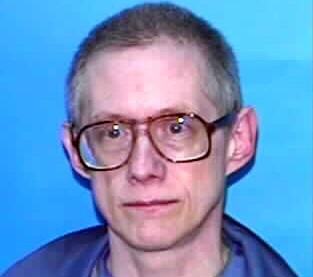
John Crutchley
Serial killer ? Robert MacGregor
Serial killer ? · USA · 1909
Robert MacGregor was a doctor who established his practice in the Ubly area in…
4 victims
Robert MacGregor
Serial killer ? · USA · 1909
Robert MacGregor was a doctor who established his practice in the Ubly area in…
4 victims
 Thomas Huskey
Serial killer ? · USA · 1991
Thomas Huskey, also known as “Zoo Man,” was a former zoo elephant trainer. Loca…
4 victims
Thomas Huskey
Serial killer ? · USA · 1991
Thomas Huskey, also known as “Zoo Man,” was a former zoo elephant trainer. Loca…
4 victims
 Donald Henry Gaskins
Serial killer · USA · 1969
Donald Henry Gaskins, also known as Donald “Pee Wee” Gaskins, was a serial kill…
200 victims
Donald Henry Gaskins
Serial killer · USA · 1969
Donald Henry Gaskins, also known as Donald “Pee Wee” Gaskins, was a serial kill…
200 victims
 John Bodkin Adams
Serial killer ? · United Kingdom · 1935
John Bodkin Adams was a British general practitioner and euthanasia enthusiast,…
163 victims
John Bodkin Adams
Serial killer ? · United Kingdom · 1935
John Bodkin Adams was a British general practitioner and euthanasia enthusiast,…
163 victims
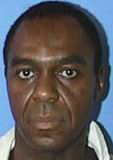 Carl Eugene Watts
Serial killer · USA · 1974
Carl Eugene Watts (born November 7, 1953; died September 21, 2007), also known…
100 victims
Carl Eugene Watts
Serial killer · USA · 1974
Carl Eugene Watts (born November 7, 1953; died September 21, 2007), also known…
100 victims
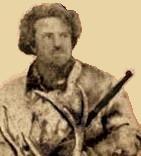 Walter Earl Durand
Spree killer · USA · 1939
Walter Earl Durand (1913-1939) was an only son of Walter W. and Effie Durand. H…
5 victims
Walter Earl Durand
Spree killer · USA · 1939
Walter Earl Durand (1913-1939) was an only son of Walter W. and Effie Durand. H…
5 victims
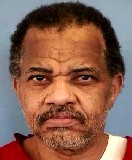 Ronnie Lee Conner
Murderer · USA · 1990
Ronnie Lee Conner was convicted of capital murder for the kidnap, robbery and m…
1 victim
Ronnie Lee Conner
Murderer · USA · 1990
Ronnie Lee Conner was convicted of capital murder for the kidnap, robbery and m…
1 victim
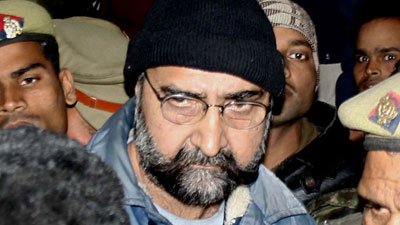 Moninder Singh Pandher
Serial killer ? · India · 2005
Moninder Singh Pandher was a Punjabi businessman arrested in connection with th…
18 victims
Moninder Singh Pandher
Serial killer ? · India · 2005
Moninder Singh Pandher was a Punjabi businessman arrested in connection with th…
18 victims
 Kathleen Folbigg
Murderer · Australia · 1989
Kathleen Megan Folbigg (née Donovan) was an Australian child killer. She was co…
4 victims
Kathleen Folbigg
Murderer · Australia · 1989
Kathleen Megan Folbigg (née Donovan) was an Australian child killer. She was co…
4 victims
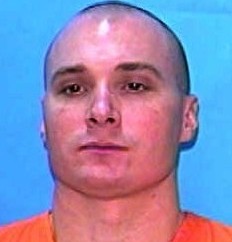 Jack Sliney
Murderer · USA · 1992
Jack Sliney was sentenced to death on February 14, 1994. Sliney was sentenced a…
1 victim
Jack Sliney
Murderer · USA · 1992
Jack Sliney was sentenced to death on February 14, 1994. Sliney was sentenced a…
1 victim
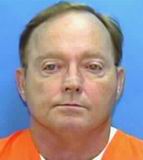 Fred Lewis Way
Murderer · USA · 1983
Fred Lewis Way was sentenced to death on January 23, 1984, resentenced to death…
2 victims
Fred Lewis Way
Murderer · USA · 1983
Fred Lewis Way was sentenced to death on January 23, 1984, resentenced to death…
2 victims
- Gender
- male
- Country
- USA
- Location
- Virginia/Florida, USA
- Date of birth
- October 1, 1946
- Age at first offence
- 31
- Characteristics
- rape, kidnapping, sexual assault, abuse, torture
- Victim profile
- Women
- Method of murder
- Strangulation
- Date(s) of murder
- 1977 - 1985
- Years active
- 1977–1985
- Date of arrest
- —
- Status
-
Died in custody
Died in prison of autoerotic asphyxiation on March 30, 2002
Case record: John Brennan Crutchley
Timeline
- June 1986 — Crutchley plea-bargained to guilt on kidnap and rape charges in exchange for dropping the “grievous bodily harm” charge for extracting the victim’s blood and for drug possession.
- June 1986 — During the sentencing phase, the judge exceeded state guidelines and sentenced Crutchley to 25 years to life in prison with 50 years of subsequent parole.
- August 8, 1996 — Crutchley was released from Union Correctional Institution in Raiford, Florida.
- August 1996 — Less than a day after release, he was arrested again for violating his parole after being tested positive for marijuana.
- January 31, 1997 — He was sentenced to life in prison under the “three strikes law.”
- March 30, 2002 — Crutchley died in prison of autoerotic asphyxiation.
- April 2, 2002 — Corrections officials reported that he was found dead in his cell at Hardee Correctional Institute with a plastic bag over his head; the cause of death reported was asphyxiation.
- April 2, 2002 — Corrections officials reported that doctors were unable to revive him and that he died of asphyxiation.
Background
John Brennan Crutchley was born on October 1, 1946 and died on March 30, 2002. He was called the “Vampire Rapist” because he drained the blood of his victim almost to the point of death while he repeatedly sexually assaulted her.
Early life and career facts included that he was born to a well-to-do family in Pittsburgh, preferred to spend most of his time tinkering with electronic gadgets at the basement of his home, and earned money repairing and rebuilding complex radio and stereo systems even before graduating from high school. He graduated with a bachelor’s degree in physics at Defiance College in Ohio in 1970 and earned a master’s degree in engineering administration at George Washington University in Washington, D.C. He married his first wife in 1969, and his first marriage showed strains by the time he graduated from college and nearly ended by the time he moved to Kokomo, Indiana to work at Delco Electronics Corporation.
He had been working at General Motors’ Central Foundry Division in Defiance, Ohio, responsible for the installation of a new plant security system. He applied for a transfer to Delco Electronics in Kokomo where systems were designed and built and worked there for several years as an electrical systems engineer. His departure from Kokomo came after an investigation by plant security into missing materials.
He moved to Fairfax County, Virginia in the mid-1970s and remarried. He worked for high-tech firms in the Washington, D.C. area, including TRW, ICA and Logicon Process Systems. At about that time, several teenaged girls disappeared in and around that area.
Crutchley was described as friendless and bookish, and exceptionally controlling in his dealings with other people. His wife was described as having substantial involvement in his sexual escapades, and his first wife described his sexual exploits as numerous and tending to revolve around sadism.
At the time of his arrest, he was found to be in possession of a great deal of highly-classified information regarding naval weaponry and communications. Unnamed federal agencies other than the FBI considered opening an espionage case against him.
His employer Harris Corporation was described as involved with NASA research and launch facilities at Cape Canaveral and with other naval contractors and subcontractors.
The offence
Kidnapping and sexual assault of a hitchhiker (Brevard County, Florida)
In late November 1985, in Malabar, Brevard County, Florida, a nude teen woman was passed by several trucks before someone stopped. The woman was 19, was handcuffed at both feet and ankles, and was described as filthy and exhausted. She had been crawling along the side of the road and begged the driver to not take her “back ‘to that house,’” and when asked where, she told him to remember a certain house.
The driver took her home and called for police and an ambulance. The hospital determined she was missing between 40 and 45 percent of her blood and had ligature marks on her neck. She had been hitchhiking the day before, and the man who gave her a ride said he had to stop off at home first. He invited her in, and when she refused, he got into the back seat of the car and choked her unconscious.
After she awoke, she was tied to a kitchen countertop with her arms and legs immobilized. A video camera had been set up, along with lights. The man raped her and videotaped the action. He then inserted needles into her arm and wrist, extracted blood, and began to drink it, telling her that he was a vampire. After that, he handcuffed her and put her in the bathtub, returning later for another round of sexual assault and blood extraction.
The next morning, after a third round, the man handcuffed the hitchhiker and left her in the bathroom, saying he would be back later for further assaults and that if she tried to escape in the interim, “his brother would come and kill her.” It was after the attacker left the house that she pushed out of the bathroom window and crawled to the road.
Had she not escaped then, doctors believed, she might well have died from a further round of blood extraction.
In the kidnapping and sexual battery summary, he tied her to his kitchen counter and used needles and tubing to drain her blood into a jar, then drank from it. She escaped through a bathroom window and was handcuffed and naked, and was hospitalized for loss of about half of her blood.
Investigation
An arrest warrant was served and evidence was collected. A search warrant was served for John Brennan Crutchley whose wife and child were away for the Thanksgiving holiday. The search took place at 2:30 a.m. During a first search, photographs showed, among other things, a stack of credit cards several inches thick. A videotape in the camera was partially erased, which according to the victim would otherwise have contained footage of her rape and the extraction of her blood. The police had noted women’s necklaces concealed in a closet but did not confiscate them during the first search. A second, later, search did not turn up the credit cards; their whereabouts remained unknown. The second search also did not find the necklaces noted during the first search.
Robert K. Ressler, an FBI profiler who was later described as having coined the term “serial killer,” was convinced that Crutchley had almost certainly killed before and identified him as a “serial killer of the organized type.” Ressler instigated a second search with wider scope and detail than the first.
Ressler noted that there had been four female bodies found in Brevard County in the previous year and that unexplained bodies had been found and missing women reported in Pennsylvania while he lived there. No evidence was found to link these deaths to Crutchley.
Investigative interest also included Crutchley’s possible involvement in the 1978 disappearance of Debbora Fitzjohn, a secretary whom he met in Fairfax, Virginia. Police identified Crutchley as the last person to see her alive. Other disappearances in the area were described as not definitely linked to Crutchley.
Other investigators linked Crutchley with the disappearance of two teenaged girls, the Lyon Sisters in Wheaton, Maryland, and a possible rape-murder of teenager Kathy Lynn Beatty in nearby Aspen Hill, both in Montgomery County, where his second wife’s family lived. Crutchley’s wife’s family lived in Maryland.
A “stack of 72 3x5 cards” was found during the second search in the Brevard County teen case, on which Crutchley had recorded women’s names and described their sexual performances. When contacted, some partners indicated that he crossed the line from “kinky” consensual acts into sexual assaults involving restraint.
It was also stated that Crutchley fit the profile of a serial killer, even though he was convicted of only a single non-fatal kidnapping and sexual assault. Investigators tracking down partners were mostly told that they had been willing participants in kinky sex, often described as bondage-and-dominance, and some partners indicated his conduct began as “consensual acts” but turned into assaults when “stop phrases” were ignored.
A further statement described that he was found to be in possession of several women’s IDs and several different women’s necklaces kept concealed in a closet, with the claim that they were the property of his wife; the fact they were kept separately indicated special meaning and possibly trophies.
Arrest and searches
Crutchley was arrested during the search that took place at 2:30 a.m. After being contacted by local authorities for input, Ressler instigated the second, wider search.
Crutchley was arrested again less than a day after his August 8, 1996 release, after being tested positive for marijuana.
Trial
Guilty plea and sentencing for kidnapping and rape (June 1986)
Crutchley plea-bargained to guilt on kidnap and rape charges in exchange for dropping the “grievous bodily harm” charge for extracting the victim’s blood and for drug possession. The blood issue came up nonetheless during the sentencing phase. Crutchley claimed he was introduced to blood drinking by a nurse in roughly 1970 as part of a sexual ritual. He argued it should not be considered in sentencing because he did not drink the blood in this case, as it coagulated before he could, and “and he couldn’t get it down.”
His wife did not testify but told reporters that his husband “wasn’t guilty, but was just ‘a kinky sort of guy’.” His wife characterized the incident to reporters as “a gentle rape, devoid of any overt brutality.”
Based on testimony from Ressler at the sentencing hearing, the judge exceeded state guidelines and sentenced Crutchley to 25 years to life in prison with 50 years of subsequent parole.
Parole violation trial and sentencing (three strikes law)
Less than a day after release, prosecutors later showed Crutchley confessing to a corrections inspector that he smoked the substance because he was nervous about his impending release and he thought the drug would make him relaxed. He had denied smoking marijuana, saying inmates blew marijuana smoke in his face.
This parole violation led to a life imprisonment sentence being imposed on January 31, 1997 under the “three strikes law.” This was stated as his third conviction, after kidnapping and rape of the Brevard teen.
Sentencing
Crutchley was sentenced to 25 years to life in prison in June 1986 with 50 years of subsequent parole after pleading guilty to kidnap and rape.
He was released on August 8, 1996 from Union Correctional Institution in Raiford, Florida, and transferred to the Orlando Probation and Restitution Center, a halfway house, to undergo counseling and pay restitution even while serving 50 years of parole.
He received a life sentence on January 31, 1997 under the “three strikes law” following his parole violation after testing positive for marijuana.
Appeals
No appeal information was provided.
Outcome
Crutchley died in prison on March 30, 2002. Corrections officials reported on April 2, 2002 that he was found dead in his cell at Hardee Correctional Institute with a plastic bag over his head. The cause of death reported was asphyxiation. Subsequent reporting around August 1, 2003 from the Florida Department of Corrections declared that the “Florida Vampire Rapist” died of autoerotic asphyxiation.
Aftermath
Officials in Fairfax County, Virginia, where his mother lived, did not want him, nor did people in Malabar and Melbourne, leading to his transfer to the Orlando Probation and Restitution Center.
A classified-information detail was included stating that unnamed federal agencies other than the FBI considered opening an espionage case against him, and that his employer Harris Corporation was involved with NASA research and launch facilities at Cape Canaveral as well as naval contractors and subcontractors.
A later statement described naval investigators exploring a possible link between unsolved slayings of two local Navy women and a blood-drinking rapist in a Florida prison. The investigators were NCIS agents sharing information with Florida police. The report included that Crutchley had access to the Norfolk Naval Air Station during the time two Navy women were slain at the base more than a decade earlier, and that Crutchley had been in the Florida prison since 1986.
Wayne Bailey, special agent in charge of the local office, declined to elaborate on the information but said:
“At this juncture, it is very preliminary,” Bailey said. “The information in its current state has piqued our interest for a variety of reasons.”
The later statement listed:
- Pamela Anne Kimbrue, a 23-year-old Navy messenger, disappeared from the base on March 25, 1982, and was later found dead in her car submerged at the end of a seaplane ramp; her killer tied her arms behind her with clothesline and tried to strangle her; left behind was a green ski-type mask and fingerprints that didn’t belong to the victim or her boyfriend.
- Carol Ann Molnar, a 21-year-old Navy clerk, disappeared on Feb. 6, 1983, and her decomposed body was found three months later partially buried under rocks of a sea wall at the Norfolk base; she had been strangled.
The report included statements that Bailey declined to say whether the unsolved slayings bore similarities or rape-for-which he had been convicted, and included:
“The investigations are open and are being actively pursued,” Bailey said. “We are sharing information and obtaining information to make an informed decision as to viability (of Crutchley) as a suspect.”
A “Vampire Rapist” suicide report dated April 2, 2002 described guards finding John Crutchley, 55, in his cell with a plastic bag over his head on Saturday. It stated that doctors were unable to revive him and he died of asphyxiation. It recapped that he kidnapped a 19-year-old hitchhiker in 1985 and raped her repeatedly, tied her to his kitchen counter, used needles and tubing to drain her blood into a jar, and drank from it. It also stated she escaped through a bathroom window, handcuffed and naked, and was hospitalized for loss of about half of her blood. The report stated he pleaded guilty to kidnapping and sexual battery, was released to a halfway house in Orlando in 1996 after serving 10 years of his 25-year prison sentence, and was sent back to prison one day later after a drug test showed he had used marijuana; it also said he admitted he had smoked it during a going-away party in prison the night before his release, and he was sent back to prison for life for violating parole.
Other details
Crutchley was never convicted of murder and was convicted of kidnapping and rape. Prosecutors tried unsuccessfully to pursue murder charges against Crutchley. His former lawyer said in 1989 that Crutchley was prepared to confess to at least three murders and lead police to burial sites, but negotiations fell through.
Charges of robbery—for taking the woman’s blood—were dropped as part of a plea agreement.
Crutchley’s first defense at arrest was that the hitchhiker was “a Manson girl” who had solicited kinky sex from him.
The victim was initially described as not wishing to press charges even after passing a lie detector test and tests indicating the presence of semen, and she was convinced to press charges only after a rape counselor convinced her of her duty to other women.
Writing in 1992 about the 1986 conviction, Ressler predicted that Crutchley’s “25 to life” sentence would result in release as soon as 1998. In fact, Crutchley was released two years earlier than that.
Crutchley’s parole violation was described as being less than a day after his release on August 8, 1996, when he was tested positive for marijuana. He denied smoking marijuana, saying inmates blew marijuana smoke in his face, but he confessed to a corrections inspector that he smoked it.
At his pre-sentencing hearing, Crutchley maintained that the actions for which he was convicted were private and consensual and outside the jurisdiction of the court, and that he was just a sexual experimenter, according to Ressler.
It was stated that his extensive sexual exploits had been meticulously recorded.
A description of evidence and investigation included that a videotape in the camera was partially erased.
A description included that photographs of the house taken at the time of the first search showed, among other things, a stack of credit cards several inches thick.
A description included that a second, later search did not turn up the credit cards and that their whereabouts remained unknown.
A description included that some women’s necklaces were concealed in a closet; these were noted during the first search but not confiscated.
Crutchley was described as possessing women’s IDs and necklaces kept concealed in a closet.
A note about his employment included that he worked for several high-tech firms in the Washington, D.C.
An additional workplace-related description included that from 1979 through 1983, he worked for a Washington-based defense contractor and had access to the Norfolk Naval Air Station.
Spotted an error, or have more information about this case?