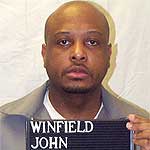
John Winfield
Murderer Russell Ellwood
Murderer · USA · 1991
Russell Ellwood was a former taxi driver. Authorities suspected him of killing…
20 victims
Russell Ellwood
Murderer · USA · 1991
Russell Ellwood was a former taxi driver. Authorities suspected him of killing…
20 victims
 Robert Martines Perez
Murderer · USA · 1994
Name: Robert Martines Perez · Other name used in proceedings: Robert Martinez P…
15 victims
Robert Martines Perez
Murderer · USA · 1994
Name: Robert Martines Perez · Other name used in proceedings: Robert Martinez P…
15 victims
 Billy Frank Vickers
Murderer · USA · 1993
Billy Frank Vickers Vickers was executed by lethal injection in Texas on Januar…
14 victims
Billy Frank Vickers
Murderer · USA · 1993
Billy Frank Vickers Vickers was executed by lethal injection in Texas on Januar…
14 victims
 William Horncy
Mass murderer · United Kingdom · 2003
William Horncy (born 1954) was a British murderer. He was convicted of murderin…
5 victims
William Horncy
Mass murderer · United Kingdom · 2003
William Horncy (born 1954) was a British murderer. He was convicted of murderin…
5 victims
 Júlia Fazekas
Serial killer · Hungary · 1911
Júlia Fazekas was a midwife in Nagyrév, Hungary, who arrived in Nagyrév in 1911…
45 victims
Júlia Fazekas
Serial killer · Hungary · 1911
Júlia Fazekas was a midwife in Nagyrév, Hungary, who arrived in Nagyrév in 1911…
45 victims
 Nadiyah Venable
Murderer · USA · 2010
On September 27, 2013, Nadiyah Venable was sentenced to 55 years in prison with…
1 victim
Nadiyah Venable
Murderer · USA · 2010
On September 27, 2013, Nadiyah Venable was sentenced to 55 years in prison with…
1 victim
 Granville Riddle
Murderer · USA · 1988
April 1985 — Granville Riddle committed the burglary and vandalism of the Oakda…
1 victim
Granville Riddle
Murderer · USA · 1988
April 1985 — Granville Riddle committed the burglary and vandalism of the Oakda…
1 victim
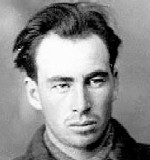 Charles Bannon
Mass murderer · USA · 1930
January 29, 1931 — A mob seized Charles Bannon from the Schafer jail and hanged…
6 victims
Charles Bannon
Mass murderer · USA · 1930
January 29, 1931 — A mob seized Charles Bannon from the Schafer jail and hanged…
6 victims
- Gender
- male
- Country
- USA
- Location
- St. Louis County, Missouri, USA
- Date of birth
- August 18, 1970
- Age at first offence
- 26
- Characteristics
- jealousy
- Victim profile
- Arthea Sanders and Shawnee Murphy (friends of his ex-girlfriend)
- Method of murder
- Shooting
- Date(s) of murder
- September 9, 1996
- Years active
- 1996
- Date of arrest
- Next day
- Status
-
Executed
Sentenced to death on September 18, 1998; executed by lethal injection on June 18, 2014
Case identification
- Name: John Winfield
- Case name (Missouri Supreme Court): State of Missouri, Respondent, v. John E. Winfield, Appellant
- Case number (Missouri Supreme Court): No. SC 81165
- Decided (Missouri Supreme Court): November 9, 1999
- Appeal details referenced: United States Court of Appeals For the Eighth Circuit; United States Supreme Court; Supreme Court of Missouri (en banc); “John E. Winfield v. Don Roper, Superintendent” and “John E. Winfield v. Donald P. Roper”
Timeline
- September 9, 1996 — event: Armed rampage occurred during which Winfield shot multiple people in the St. Louis County apartment setting.
- September 18, 1998 — sentence: Winfield was sentenced to death.
- November 9, 1999 — decision: The Supreme Court of Missouri, en banc, affirmed Winfield’s convictions.
- June 18, 2014 — execution: Missouri executed Winfield by lethal injection.
Background
In September 1996, John E. Winfield lived in a St. Louis County home one block from a second floor apartment where his ex-girlfriend and mother of his children, Carmelita Donald, lived. Carmelita Donald lived with her children and her sister, Melody Donald, and her friend Arthea Sanders. In the apartment below them lived their friend Shawnee Murphy and her three children.
Winfield began dating Carmelita in 1989 and continued to have an on-and-off relationship with her through the spring of 1996. During that time, they had two children over whom they shared physical custody.
In the late summer of 1996, Carmelita began dating Tony Reynolds. The relationship was kept secret from Winfield for about a month.
The offence
On the night of September 9, 1996, Carmelita went out for the evening with Tony Reynolds. Meanwhile, Winfield made a series of calls to Carmelita's apartment asking Melody about her sister's whereabouts and instructing her to have Carmelita call him when she returned home. Melody told Winfield she did not know where Carmelita was. Winfield went to the apartment and began inquiring further about Carmelita. Melody again replied that she did not know where Carmelita could be found. He made a phone call and left the apartment for approximately ten minutes, then returned with Arthea who had been drinking. He tried once more to find out where Carmelita had gone. Melody informed him one last time that she did not know.
At some point, Arthea knew Carmelita was out with Tony Reynolds. Arthea took Melody aside and told her where Carmelita was and to lie to Winfield by telling him that Carmelita was at Arthea's mother's house.
Melody eventually went downstairs to Shawnee's apartment to call Arthea's parents to tell them of the story Melody and Arthea had concocted. In Shawnee's apartment, Melody found Shawnee, her three children, and a guest, James Johnson. While Melody was in Shawnee’s apartment, Melody heard a crashing sound coming from her upstairs apartment. When Melody returned upstairs, she found the entertainment center “knocked over” and broken. Winfield asked Melody how she could do this to him; she denied knowing what he was talking about. Melody returned to Shawnee's apartment and reported that Winfield was upstairs turning over furniture because he was angry about Carmelita being absent.
The two women decided to go back upstairs. Winfield began pacing the apartment and became increasingly agitated and angry, including making threats toward Carmelita.
Around midnight, Carmelita returned to the apartment with Tony Reynolds. They saw Winfield's white Cadillac parked in front. To avoid trouble with Winfield, Carmelita and Reynolds drove to Reynolds' female cousin's house. They persuaded her to drive Carmelita home.
When the two women arrived back at Carmelita's apartment, Winfield's car was still there. As Carmelita started to climb the stairs to her apartment, Winfield came down, said he needed a word, and pushed her down the stairs. They walked outside, and Winfield asked Carmelita about her relationship with Tony Reynolds.
Meanwhile, Arthea walked outside and slashed the tires on Winfield's car. After Arthea returned to the downstairs apartment, Arthea told Melody to call the police and yelled outside, asking Carmelita if she was alright. Carmelita said she was fine. Despite Arthea’s request, Melody did not call the police. A car door “slammed” shut. Melody assumed it was Winfield leaving.
However, Winfield ran into the downstairs apartment with Carmelita in pursuit. From outside, Arthea warned Carmelita to run because Winfield was armed and coming to get her. Winfield entered Shawnee's downstairs apartment and began chastising Arthea. He shot Arthea in the head. Winfield then walked outside and pointed the gun at Carmelita. Carmelita pleaded with him; Winfield shot her several times. Although permanently blinded, Carmelita survived.
Melody and James ran into Shawnee's kitchen, hoping to escape through the back door. The door was jammed and would not open. Shawnee, while attempting to collect her children, began pleading with Winfield. Winfield shot Shawnee in the head. Next, Winfield turned and pointed the gun at Melody, and Melody fell to the floor. Winfield pointed the gun at James and said, “[Y]ou next.” James grabbed the gun and began wrestling with Winfield. During this time, James heard the gun “click.” Winfield broke free and struck James with the gun.
Winfield fled. James attempted to follow. Melody escaped while James struggled with Winfield and ran to a neighbor's house to call the police.
As a result of their wounds, Arthea Sanders and Shawnee Murphy died, and Carmelita Donald was permanently blinded.
Firearms evidence described at trial
A firearms examiner employed by the St. Louis County Police Department Crime Laboratory testified that he analyzed six spent shell casings and five recovered rounds from the crime scene and from the body of Shawnee Murphy. He concluded that they were most likely .380 caliber bullets fired by a Davis pistol. He explained that the weapon would hold six rounds if one was loaded into the chamber and the magazine was full, and that when empty, pulling the trigger causes the gun to make a clicking sound.
Defendant’s trial testimony
Winfield testified in his own defense. He said that when he retrieved the gun from his car, he “just snapped.” He stated that he did not intend to hurt anyone. He testified that he did not even remember shooting either Shawnee or Carmelita. He also maintained that his memory failed when trying to recall his fight with James Johnson.
Investigation and arrest
An officer with the University City Police Department arrested Winfield at his home.
Trial
Charges and verdict
Winfield was convicted by a St. Louis County jury of:
- two counts of first degree murder
- two counts of first degree assault
- four counts of armed criminal action
Sentences imposed at trial
The circuit court sentenced Winfield to:
- two death sentences
- life and fifteen years
- four seventy-five year sentences
Penalty phase findings
During the penalty phase, the jury recommended that Winfield be sentenced to death for the murders of Arthea Sanders and Shawnee Murphy. To sustain a sentence of death, the jury found that the murder of Shawnee Murphy was committed while Winfield was engaged in the unlawful commission of another unlawful homicide, that of Arthea Sanders, and vice-versa.
Appeals
Winfield challenged his convictions. The Supreme Court of Missouri affirmed the judgment.
Point I: Venireperson excluded for cause during death qualification
Winfield argued that the trial court improperly sustained the state's motion to strike a venireperson for cause due to her views on capital punishment, contending that it deprived him of rights to an impartial jury, due process, and freedom from cruel and unusual punishment under the United States and Missouri Constitutions.
The court applied the standard from Wainwright v. Witt and State v. Barnett. It found no abuse of discretion. The claim was denied.
The record excerpts included the venireperson’s statements:
- “That's tough.”
- “I probably would have to say no.”
- “No. No. I'm a nurse. I been [sic] a nurse for 35 years. It would be extremely difficult for me under any circumstance cause [sic] I spent my life taking care of people. To say that I could impose the death penalty, I just don't think I could.”
Additional exchange excerpts included:
- “I believe I could.”
- “Um-hum.”
- “All right. And then finally, in my death penalty case there will be - well, let me put it this way: if on Saturday morning as Ms. Constantin's saying, she believes she's going to be up here asking for the death penalty. Is there anyone that feels just because we've gotten that far that the imposition of the death penalty must then follow?”
- “Another way, Ms. Brown, if we get to the second stage you don't believe that automatically is the death penalty?”
- “I would consider both.”
- “Yes.”
The trial court’s reasoning included:
- “It is, but, you know, at the very beginning she made a point about being a nurse and that she felt she couldn't. I felt that she was very strong on that, so I'm going to strike her for cause.”
Point II: Adequacy of fact findings regarding confession
Winfield argued that the trial court failed to make sufficient fact findings regarding the nature of his confession, specifically whether his statements were made knowingly, intelligently, and voluntarily. The Supreme Court of Missouri held that the issue was not preserved and reviewed it under a plain error standard. It concluded that the record reflected constitutional validity of the waiver and found no plain error. The claim was denied.
The court described that the arresting officer Mirandized Winfield, that Winfield indicated he understood his rights, and that Winfield replied that he had thrown the gun in a creek. After processing at the police department, another officer Mirandized Winfield again, and Winfield acknowledged understanding. The record described Miranda form procedures including initialing each point, signing the form, and circling “yes” under the question “do you wish at this time to talk or give a statement.”
The court also addressed claims about lack of videotaping or audiotaping and absence of a signed written waiver, and it concluded that the record reflected constitutional validity and that no requirement existed for prior homicide investigation experience.
The court stated:
- “Schnick, 819 S.W.2d at 336.”
- “If one is informed of the right to remain silent under Miranda, understands the right to remain silent under Miranda, and thereafter makes voluntary statements, it is absurd to say that such person has not made a knowing and intelligent waiver of his right to remain silent.”
Point III: Jury instruction issues
Winfield challenged the adequacy of jury instructions in multiple ways.
Lesser included offense: voluntary manslaughter
Winfield argued that the trial court should have submitted instructions on the lesser included offense of voluntary manslaughter for the two homicide counts. The court discussed Sec. 565.023.1 and the definition of “adequate cause,” including that adequate cause meant cause that would reasonably produce a degree of passion sufficient to substantially impair an ordinary person's capacity for self control, citing State v. Redmond.
The court concluded it was doubtful a person of ordinary temperament would have killed two people and shot a third multiple times under these facts. It noted the jury received an instruction on conventional second degree murder offering an option if it believed first degree murder elements were not met, and it found no reasonable basis to contend the jury would have found differently had voluntary manslaughter instructions been submitted, given the jury convicted him of first degree murder on both homicide counts.
Mitigating circumstances instruction
Winfield argued the trial court erred by refusing Instruction C listing statutory and non-statutory mitigating circumstances. The court held the issue was not preserved because it was not included in the motion for a new trial and found no plain error.
Point IV: Denial of severance of charges
Winfield asserted trial court error in failing to sever the first degree murder charges from the assault and armed criminal action charges sua sponte. The Supreme Court of Missouri held the issue was not preserved and reviewed under plain error. It addressed statutory joinder language and the prior offender provision, and it concluded that the offenses were properly joined because they were part of the same transaction or common scheme or plan, given that in a matter of minutes Winfield retrieved a pistol, shot three women, ran out of bullets, tried to fire on another person, and fought with him over a gun all in the same apartment.
Point V: Evidence ruling on use of a police report to cross-examine Officer Crowley
Winfield challenged the trial court’s decision to sustain the state’s objection to use of a police report to cross-examine Officer Crowley. The report included a statement by James Johnson to Sgt. Minaeff indicating Johnson chased Winfield following the murders. Johnson testified at trial that he did no such thing.
The Supreme Court of Missouri concluded the issue was not preserved and also that Winfield failed to show why statements made to an officer other than Crowley would not be hearsay when reported by Crowley. It also found Claypool inapposite unless Crowley was present when Johnson made the statement.
Point VI: Carmelita’s testimony about uncharged incidents during penalty phase
Winfield argued the trial court plainly erred in permitting Carmelita to testify about two incidents for which he was never charged. The court held the point was unpreserved because it was absent from the motion for new trial, but it addressed the objection.
The trial court overruled defense counsel's objection to Carmelita testifying about one incident where Winfield struck her, resulting in a black eye, and another event where he threatened her with a gun. The Supreme Court of Missouri held this was permissible evidence during punishment phase and declined to reconsider the controlling Missouri law.
Point VII: State’s closing argument about children
Winfield complained that the trial court erred in permitting the state to argue during the penalty phase that he would have killed Shawnee's children had he not run out of bullets. The Supreme Court of Missouri held the issue was not preserved and found no plain error. It referenced that plain error will seldom be found in unobjected-to closing argument and concluded that the record did not suggest the comment had decisive effect.
Point VIII: Challenges to death sentence
Winfield attacked the death sentence on several fronts, including excessiveness and disproportionality; alleged passion and prejudice; and the adequacy of proportionality review.
The Supreme Court of Missouri discussed that proportionality review considered whether the death sentence was excessive or disproportionate in light of similar cases as a whole, considering the crime, the strength of evidence, and the defendant. It noted that a sentence of death had often been imposed where a defendant murdered more than one person and cited multiple Missouri cases. The court addressed Winfield’s argument that jealousy and domestic context warranted a more lenient sentence, and it stated that while he shot Carmelita multiple times, he also murdered two other women having nothing to do with any relationship he continued to have with Carmelita beyond being in the same apartment, and Shawnee pled for her life before she was killed as her children sat in the next room.
The court also addressed the jury’s statutory aggravator findings, stating:
- for Arthea Sanders, the jury found the murder was committed while Winfield was engaged in the commission of another unlawful homicide
- for Shawnee Murphy, the jury found the murder was committed while Winfield was engaged in the commission of another unlawful homicide
It rejected claims that imposition resulted from passion, prejudice, arbitrary factors, or problems with proportionality review database and notice.
The court concluded:
- “Having determined that none of Mr. Winfield's claims on appeal have merit, the judgment is affirmed.”
Outcome
Winfield’s conviction judgment was affirmed by the Supreme Court of Missouri.
Execution and aftermath
Missouri carried out the execution of John Winfield on June 18, 2014.
The execution proceeded after the United States Supreme Court declined two applications for stays filed by Winfield’s attorneys:
- one application asked for a stay until resolution of an appeal pending in the 8th Circuit Court of Appeals related to Missouri’s execution protocol
- the other asked for a stay while the Court reviewed the 8th Circuit Court’s records and considered the argument that consideration of his petition for clemency was interfered with by Department of Corrections officials
Governor Jay Nixon denied Winfield’s petition for clemency. Nixon’s statement included:
- “John Winfield’s violent rampage on the night of Sept. 9, 1996, left two women dead and another permanently blinded. The two murder victims, Arthea Sanders and Shawnee Murphy, were killed while trying to help Carmelita Donald escape from the armed Winfield. Carmelita Donald herself was shot and permanently blinded by Winfield, who showed no mercy that night on his victims. The jury in this case properly found that these heinous crimes warranted the death penalty, and my denial of clemency upholds the jury’s decision. “I ask that the people of Missouri remember the victims of John Winfield, both those who were killed and those who survived, and keep them and their families in their thoughts and prayers.”
Attorney General Chris Koster also issued a statement including:
- “Nearly two decades have passed since John Winfield’s cowardly acts of rage and jealously changed the lives of three families forever. He brutally murdered two defenseless young women, one in front of her children, and attempted to murder the mother of his own children, leaving her permanently disabled. For his actions, a court lawfully sentenced him to death under Missouri law, and tonight that sentence has been carried out.”
Execution procedure and observed details included:
- Winfield received a lethal injection of pentobarbital at 12:01 Wednesday morning and was pronounced dead at 12:10.
- After the curtains were opened to the execution chamber, Winfield appeared to tell the witnesses that were there for him, “I love you,”.
- After the 5 grams of the drug was administered, Winfield took a series of deep breaths and then stopped moving.
- The execution appeared to take less than a minute.
- Winfield declined to make a final statement and did not accept food prior to the execution.
- His body was released to one of his attorneys.
Witnesses included five members of the family of one of the women he killed, Shawnee Murphy, as well as his ex-girlfriend Carmelita Donald whom he shot four times leaving her blind, three members of her family, his mother, his daughter, and two of his friends. There were no representatives present of the other woman he fatally shot, Arthea Sanders.
The materials also described Missouri’s use of pentobarbital compounded by a pharmacy that the Department of Corrections will not officially confirm the identity of, and that Winfield was the seventh man executed in Missouri since November and the seventh since the state began using pentobarbital.
The execution was described as one of three scheduled executions within 24 hours from Tuesday to Wednesday evening, and as the second execution since one widely regarded as “botched” in Oklahoma; that of Clayton Lockett in April. An independent autopsy was described as revealing that an execution team failed to set a properly functioning intravenous tube in Lockett’s leg, and that Lockett died of a heart attack 43 minutes after the first drugs were administered.
The materials also described another execution:
- Marcus Wellons was executed late Tuesday night by lethal injection for the 1989 rape and murder of a 15-year-old girl.
- In Florida, John Ruthell Henry was scheduled to be executed Wednesday evening for murdering his wife in 1985.
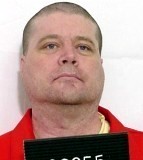
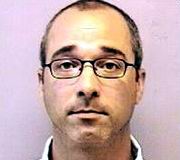
Spotted an error, or have more information about this case?