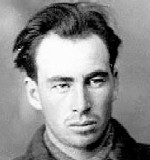
Charles Bannon
Mass murderer Andrew Kehoe
Mass murderer · USA · 1927
Andrew P. Kehoe committed suicide the same day by killing himself in the explos…
44 victims
Andrew Kehoe
Mass murderer · USA · 1927
Andrew P. Kehoe committed suicide the same day by killing himself in the explos…
44 victims
 Leung Ying
Mass murderer · USA · 1928
Leung Ying (also known as Loy Yeung, Wong Gay, and Lim Onn) pleaded guilty to k…
11 victims
Leung Ying
Mass murderer · USA · 1928
Leung Ying (also known as Loy Yeung, Wong Gay, and Lim Onn) pleaded guilty to k…
11 victims
 Henry Layer
Mass murderer · USA · 1920
Henry Layer Henry Layer was born Heinrich C. Layer on November 12, 1884 in Eige…
8 victims
Henry Layer
Mass murderer · USA · 1920
Henry Layer Henry Layer was born Heinrich C. Layer on November 12, 1884 in Eige…
8 victims
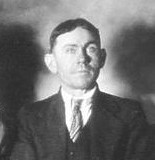 Charles Davis Lawson
Mass murderer · USA · 1929
Charles Davis Lawson was an American tobacco farmer from Stokes County, North C…
7 victims
Charles Davis Lawson
Mass murderer · USA · 1929
Charles Davis Lawson was an American tobacco farmer from Stokes County, North C…
7 victims
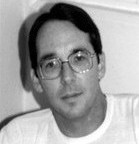 William Zeigler
Mass murderer · USA
William Thomas Zeigler Jr. was prosecuted in Florida for the murders of four pe…
1975 victims
William Zeigler
Mass murderer · USA
William Thomas Zeigler Jr. was prosecuted in Florida for the murders of four pe…
1975 victims
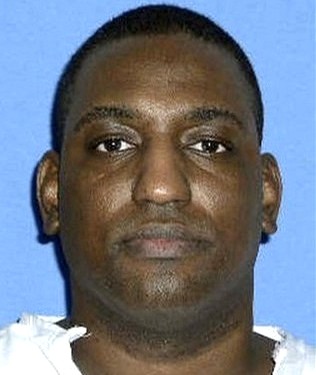 Allen Winslow Bridgers
Murderer · 1997
Allen Winslow Bridgers (also listed as Allen W. Bridgers and Allen Winslow Brid…
1 victim
Allen Winslow Bridgers
Murderer · 1997
Allen Winslow Bridgers (also listed as Allen W. Bridgers and Allen Winslow Brid…
1 victim
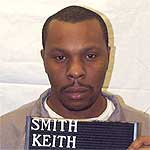 Keith Smith
Murderer · USA · 1991
Keith Smith was prosecuted in the case styled State of Missouri v. Keith A. Smi…
2 victims
Keith Smith
Murderer · USA · 1991
Keith Smith was prosecuted in the case styled State of Missouri v. Keith A. Smi…
2 victims
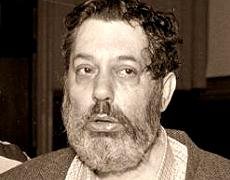 Joseph Kallinger
Murderer · USA · 1974
Joseph Kallinger was an American serial killer who murdered three people and to…
3 victims
Joseph Kallinger
Murderer · USA · 1974
Joseph Kallinger was an American serial killer who murdered three people and to…
3 victims
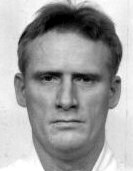 Jeffrey Doughtie
Murderer · USA · 1993
Jeffrey Doughtie was executed by lethal injection in Texas on August 16, 2001.…
3 victims
Jeffrey Doughtie
Murderer · USA · 1993
Jeffrey Doughtie was executed by lethal injection in Texas on August 16, 2001.…
3 victims
- Gender
- male
- Country
- USA
- Location
- Schafer, North Dakota, USA
- Date of birth
- 1909
- Age at first offence
- 21
- Characteristics
- domestic violence, rape?, dismemberment, torture
- Victim profile
- Albert Haven, 50, his wife Lulia, 39, and their children Daniel, 18, Leland, 14, Charles, 2, and Mary, 2 months old
- Method of murder
- Shooting
- Date(s) of murder
- February10, 1930
- Years active
- 1930
- Date of arrest
- December 12, 1930
- Status
-
Hanged by a lynch mob on January 29, 1931
Timeline
- January 29, 1931 — A mob seized Charles Bannon from the Schafer jail and hanged him from a bridge over Cherry Creek.
- June 29, 1931 — James Bannon was admitted to the state penitentiary.
- May 18, 1939 — Attorney General Alvin Strutz issued a report concluding the community believed James was guilty at the very least of helping cover up the murders.
- Sept. 12, 1950 — James Bannon was released by the state Pardon Board.
- August 23, 1932 — The North Dakota Supreme Court affirmed James F. Bannon’s conviction.
Background
Charles Bannon was 22 years old at the time of his lynching. He had spent only a few days in the Schafer jail before the break-in. He was moved from the larger and more secure jail in Williston to Schafer on January 23, 1931, so he could be arraigned in Schafer on charges that he murdered the six members of the Haven family. His father, James Bannon, was also confined in the Schafer jail, awaiting arraignment as an accomplice to the murder.
The Haven family lived on a farm about a mile north of Schafer, a village east of Watford City. The family had five members plus an infant: Albert, 50, Lulia, 39, Daniel, 18, Leland, 14, Charles, 2, and Mary, 2 months old. As of February 1930, the family had lived on their farm more than ten years. They owned household goods including a piano and a radio as well as “considerable livestock, feed and machinery.”
No member of the family was seen alive after February 9, 1930.
Charles Bannon had worked as a hired hand for the Havens. He stayed on the Haven farm after the family disappeared, claiming he had rented the place. He told neighbors that the family had decided to leave the area. James Bannon joined him at the farm in February 1930, and together they worked the land and cared for the Haven family’s livestock through the spring, summer and fall of the year.
Neighbors became suspicious by October 1930 after Bannon started selling off Haven family property and crops. James then left the area saying he was going to try to find the Haven family. James went to Oregon, where Bannon said the Haven family had gone.
James wrote a letter on December 2, 1930, to Bannon from Oregon, advising Bannon to “watch [his] step and ‘do what is right.’”
The offence
Charles Bannon was accused of murdering Albert, Lulia, Daniel, Leland, Charles, and Mary Haven.
The early-morning lynching occurred after Bannon was being held for murder charges in Schafer.
Investigation
On December 12, 1930, Bannon gave a statement to a deputy sheriff in which he admitted involvement in killing the Haven family, but claimed that a “stranger” acted as instigator.
The next day, in a lengthy confession to his attorney and his mother, Bannon admitted killing the Haven family in a violent fracas that followed Bannon’s accidental shooting of the eldest child, Daniel. In that confession, Bannon suggested he was forced to kill Leland, Lulia and Albert Haven because they tried to kill Bannon after he shot Daniel. After Bannon’s confession, authorities tracked down his father James in Oregon.
In a final confession written by Bannon himself in January 1931, he again admitted killing the rest of the Haven family after accidentally shooting Daniel. In that final confession, Bannon did not claim self-defense when he killed the other members of the family; he said he killed them because he was scared. In his last two confessions, Bannon stressed that he acted alone in killing the Havens. Bannon also tried to convince authorities that his parents, in particular his father James, knew nothing about the murders, but authorities kept James in custody.
Parts of the Haven family bodies were found during the investigation:
- Authorities found parts of small Charles Haven’s decomposed body in a manure pile.
- In a nearby straw pile, they uncovered the overall-clad bodies of Albert and Leland Haven and the body of Daniel.
- The tiny legs of Mary Haven were uncovered with a wide-tined fork.
- Authorities found the gray hair of Lulia Haven.
- Some remains of Lulia and Charles Haven were later found in a nearby wolf den, where they had been dragged by horseback.
The sheriff discovered the discovery setting described as “dusty, silent evidence” in the Haven house after Bannon’s arrest.
A later discussion of the bodies included testimony about injuries:
- An undertaker testified about fractures of the skull and crushing of the upper maxillary, and that a thorough examination failed to disclose bullet wounds for Mrs. Haven’s body at that stage.
- The state introduced examinations showing a hole in the skull of Daniel Haven about 5/16 of an inch in diameter, a broken left clavicle and skull fracture with an indentation of the left parietal bone and a hole about 5/16 of an inch in diameter for Leland Haven, and a circular fracture about two and one-half inches on the left side in front of and above the ear for Mrs. Haven.
A letter from James Bannon to Charles Bannon was introduced in evidence. It was postmarked at Oswego, Oregon, on December 2, and included verbatim text:
“Dear Charles Will drop you a few lines hoping you are well and getting along all right as this leaves me at preasent writing thair is nice weather hear only for a little rain i see by the paper thair is Bad weather Back thair Well Charles our friend Mr. Haven can not be found as yet the atorities of Cluchmes Co. has looked the country over looking for then they can not find any track of a family of thet name ever came hear I have Ben up to Colten and inquired all around the contry But no one ever herd of sutch a name thair is 101 inquires for havens when I got to Colten thay got it whair you brought then to Willeston in thair car and that is the last track that got of them how are you getting along with the stock are you going to have plenty of feed Chales I got that slip that was in the paper that your mother sent to Elmer if havens relations have taking over thair property see that thay pay for all feed But they probily have made som arrangement with you and look out and see that you get Paid for what you do thair was a letter in the postoffice at Colten from you to havens Mailed in Montana it will be returned well i will close for this time i remain as ever Father goodby excuse poor ritting for I cant see very well”
On a separate sheet in the same handwriting, but unsigned, the following was introduced:
“now Charles watch your Sep and see that every thing is right and do what is right and then thair will be no com Back you no your Bisnes Better then any one els write and let me now how every thing is i will be looking for a letter from you every day it took me a weak to make the trip had very good look good cows are selling from $35 to 50 i will tell you more next time good By address your letters General Delivery Portlen Oregon and then I will get them P.S. write at once for I may leave hear in a few days.”
Arrest
In December 1930, Bannon was jailed on grand larceny charges.
It was noted that Bannon was brought from the Williston jail to the Schafer jail for a court appearance because the murder charges were in McKenzie County.
Lynching and custody events
Bannon, his father James Bannon, Deputy Sheriff Peter Hallan, and Fred Maike were present in the Schafer jail on the night of January 28–29, 1931.
A crowd of men in masks arrived between 12:30 and 1:00 a.m. on January 29, looking for Bannon. Sheriff Syvert Thompson, who lived near the jail, was awakened by lights flickering through his windows and went to investigate. The mob captured him and led him away from the jail.
Thompson and Hallan stated that the crowd numbered at least 75 men in at least 15 cars. The mob battered down the front door of the jail and overpowered Deputy Hallan. After Hallan refused to tell the crowd where the keys to Bannon’s cell were located, the mob escorted Hallan out of the jail. The mob used timbers to batter down the cell door. Witnesses said the mob appeared disciplined and well-organized, working as if under strict orders.
Maike told investigators that the mob had difficulty breaking down the cell door and nearly gave up. After the cell door broke down, Bannon surrendered and pleaded that his father not be harmed. The mob brought in a rope and placed a noose around Bannon’s neck. They dragged Bannon from the jail.
The mob put Deputy Hallan in a cell with Bannon’s father and Maike, who had been left alone. Outside, Sheriff Thompson heard the men demanding that Bannon “tell the truth” or face hanging. Bannon told them that he had told the truth. The mob shoved Sheriff Thompson into the jail cell with Hallan and barricaded the door. Thompson and Hallan were not able to free themselves until after the mob dispersed.
The mob took Bannon first to the nearby Haven farm, planning apparently to hang him on the spot the family died. The caretaker of the farm ordered the crowd off the property, threatening to shoot if the mob did not leave. The mob then took Bannon to the bridge over Cherry Creek, a half-mile east of the jail. The bridge had been built in the summer of 1930.
Bannon was pushed over the side of the bridge with the noose still around his neck. Authorities said the lynchers used a half-inch rope, with one end tied to a bridge railing and the other tied in a standard hangman’s knot by someone with “expert knowledge.”
Bannon was buried in Riverside Cemetery in Williston.
Legal outcome for Charles Bannon
Charles Bannon was hanged by a lynch mob on January 29, 1931.
Governor George Shafer called the lynching “shameful” and ordered an immediate investigation. Attorney General James Morris (later a Supreme Court justice), Adjutant General G.A. Fraser, and Gunder Osjord, head of the Bureau of Criminal Apprehension, were sent to the scene. Morris interviewed witnesses and examined evidence from the lynching, including the rope used.
Morris concluded that:
- “the lynching was well-planned in advance”
- “three or more leaders . . . kept the mob organized and under control.”
Morris also reported that the governor had ordered the investigators to “go to the bottom” of the lynching.
No member of the lynch mob was arrested. Morris concluded after less than a week of investigation that it would be impossible to identify any member of the lynch mob.
The Federal Council of Churches investigated in the spring of 1931 and found that even though feelings ran high against Bannon, authorities “took the prisoner back to the scene of the crime, put him in a makeshift jail, and thus gave every chance to a mob.”
Frank Vrzralek later noted in 1990 that a similarity among several lynching cases was “grossly inadequate” protection for prisoners.
Morris wrote Rev. Howard Anderson of Williston. Anderson responded:
“It did not come within the scope of my investigation to try to discover who the members of the lynching mob were. That, it seems to me, is the duty of the sheriff and state's attorney of McKenzie County. Whether or not these duly constituted officials have performed their duty in this, or to the full in their holding of Bannon, is something you know as well, or better, than I.”
Morris wrote further in the 1939 report thoughts, including:
“There is no doubt in my mind but that some prosecution should have been commenced for the lynching of Charles Bannon. No conviction could have been had in McKenzie County, it is true, but the State might have secured a change of venue and, even though no conviction could have been had it seems to me that such a crime should not be allowed to have been committed without at least an attempt to punish those who perpetrated the same. It may not have been a popular thing to do in McKenzie County but on the other hand it would have been the right thing.”
James F. Bannon trial and appeals (related proceedings)
After escaping the lynch mob, Bannon’s father James was tried for the Haven murders.
Attorney W.A. Jacobsen asked Morris what steps would be taken “to see that this man is kept alive during the time he is in the county.”
The trial moved to Divide County. James was convicted and sentenced to life in prison. Jacobsen and E.J. McIlraith argued on appeal that James was not involved in the murders and that evidence did not support charges. The attorneys argued that:
“witnesses for the State were so anxious to convict the defendant . . . that they made their testimony to suit the situation, and made the testimony so positive as to convict him, if there was any possibility of doing so.”
The North Dakota Supreme Court upheld James’ conviction and affirmed the judgment of conviction and the order overruling the motion for a new trial.
In the opinion delivered by Birdzell, the court described that James F. Bannon was tried for the murder of Albert E. Haven, found guilty of murder in the first degree, and sentenced to life imprisonment. The Supreme Court addressed the motion for a new trial and analyzed sufficiency of the evidence connecting James Bannon with participation in the crime. The Supreme Court concluded that the evidence was sufficient to support the verdict and affirmed the judgment appealed from.
Other details
People and relationships
- Charles Bannon was the son of James Bannon.
- James Bannon was the father of Charles Bannon.
- James Bannon’s wife and mother of Charles Bannon taught school and attended summer school at the University of Oregon at Eugene in July and August, 1930.
- Albert E. Haven was described as having owned the farm and living with his wife, Lulia, and children Daniel, Leland, Charles, and Mary.
Confessions by Charles Bannon included in the case record
Two admissions taken in writing by deputy sheriff and introduced by the defense are quoted in full as they appeared:
First confession dated: “12-12-1930 Chas. Bannon”
It included narrative admissions about killings, burial, and a confrontation involving “Daniel was shot first as he was milking cow.” It also described the use of firearms and a role for “Fawcett,” and included details about shooting Leland, shooting Mrs. Haven, shooting Albert Haven, and later killing babies. The confession also included details about burial, cleaning, burning clothing, and accounts of how the Haven family disappeared and how property was disposed of. It included an ending statement: “I am sorry I lied to everybody and officers, as they seemed to be helping me and was only wanting the truth. I did not realize it then but do now.”
Second confession written by Charles Bannon in January 1931 included a narrative of the events leading to the killing and his description of shooting Daniel “then Leland jumped up,” his subsequent killing of Leland and Mrs. Haven, and the killing of Mr. Haven and the children. It also included a statement that the confession was written and then he continued with a description of burial and later activity at the farm, including: “Well I had every thing covered up then I went home and talked to Dad awhile and told him I was working for Haven and that I had rented the place so then I went back and went in the house and I see Slim had been there.”
Additional background and community response
A bill was introduced by State Sen. James P. Cain to revive capital punishment for murder in North Dakota. Supporters argued that the lynching would not have occurred if Bannon could have faced a death sentence. The North Dakota Senate rejected the bill on a 28 to 21 vote.
Schafer jail and later commemoration
The Schafer jail building remained in later years, along with an abandoned school. A sign next to the jail outlined history of the jail and the events of January 29, 1931, when Charles Bannon “was taken by an angry mob and lynched.”
James Bannon statements and incarceration
James Bannon told a guard as he left the jail in Minot, “you are seeing an innocent man go to prison.”
When James sought parole in 1939, Attorney General Alvin Strutz investigated and issued the May 18, 1939 report stating that the community believed James was guilty at the very least of helping cover up the murders.
James was released by the state Pardon Board on Sept. 12, 1950. He was 76-years-old.
Spotted an error, or have more information about this case?