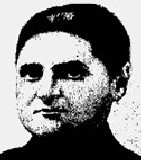
Júlia Fazekas
Serial killer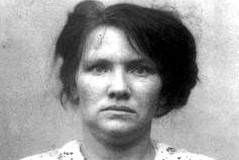 Dagmar Overbye
Serial killer · Denmark · 1913
Dagmar Johanne Amalie Overbye (April 23, 1887 – May 6, 1929) was a Danish seria…
25 victims
Dagmar Overbye
Serial killer · Denmark · 1913
Dagmar Johanne Amalie Overbye (April 23, 1887 – May 6, 1929) was a Danish seria…
25 victims
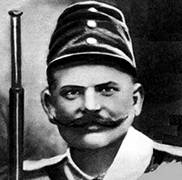 Bela Kiss
Serial killer · Hungary · 1900
Béla Kiss (1877 – ?) was a Hungarian serial killer. He murdered at least 24 you…
24 victims
Bela Kiss
Serial killer · Hungary · 1900
Béla Kiss (1877 – ?) was a Hungarian serial killer. He murdered at least 24 you…
24 victims
 Bertha Gifford
Serial killer · USA · 1909
Bertha Gifford (1872- August 20, 1951) was a farmwife in rural Catawissa, Misso…
17 victims
Bertha Gifford
Serial killer · USA · 1909
Bertha Gifford (1872- August 20, 1951) was a farmwife in rural Catawissa, Misso…
17 victims
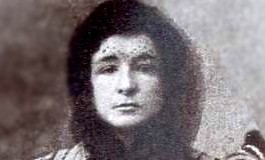 Enriqueta Martí
Serial killer · Spain · 1902
Enriqueta Martí i Ripollés was a Spanish child murderer, kidnapper and procures…
10 victims
Enriqueta Martí
Serial killer · Spain · 1902
Enriqueta Martí i Ripollés was a Spanish child murderer, kidnapper and procures…
10 victims
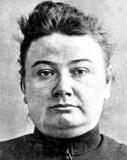 Jeanne Weber
Serial killer · France · 1905
Jeanne Weber (born 7 October 1874) was a French child-care provider and serial…
10 victims
Jeanne Weber
Serial killer · France · 1905
Jeanne Weber (born 7 October 1874) was a French child-care provider and serial…
10 victims
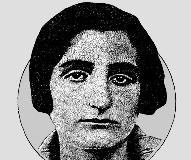 Della Sorenson
Serial killer · USA · 1918
Della Sorenson was a Nebraska woman who killed relatives by poisoning. She was…
8 victims
Della Sorenson
Serial killer · USA · 1918
Della Sorenson was a Nebraska woman who killed relatives by poisoning. She was…
8 victims
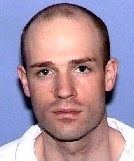 Randy Halprin
Murderer · USA · 2000
Randy Halprin (Randy Ethan Halprin), TDCJ Number 999453 · Date of birth: 09/13/…
1 victim
Randy Halprin
Murderer · USA · 2000
Randy Halprin (Randy Ethan Halprin), TDCJ Number 999453 · Date of birth: 09/13/…
1 victim
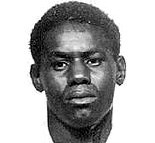 Sammie Felder
Murderer · USA · 1975
March 13, 1975 — Felder worked his usual day shift, 6:00 a.m. to 2:00 p.m., whi…
1 victim
Sammie Felder
Murderer · USA · 1975
March 13, 1975 — Felder worked his usual day shift, 6:00 a.m. to 2:00 p.m., whi…
1 victim
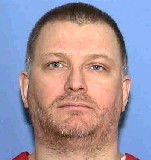 Gary Carl Simmons
Murderer · USA · 1996
Gary Carl Simmons, Jr. was sentenced to death and executed in Mississippi by le…
1 victim
Gary Carl Simmons
Murderer · USA · 1996
Gary Carl Simmons, Jr. was sentenced to death and executed in Mississippi by le…
1 victim
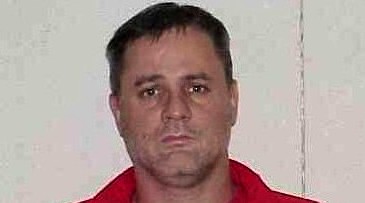 Karu White
Murderer · USA · 1979
Karu White was sentenced to death on March 29, 1980 in Powell County for the mu…
3 victims
Karu White
Murderer · USA · 1979
Karu White was sentenced to death on March 29, 1980 in Powell County for the mu…
3 victims
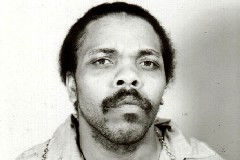 Vincent James
Murderer · USA · 1989
Vincent James instructed Gayle Taylor, an employee, to give him her ring, and s…
1 victim
Vincent James
Murderer · USA · 1989
Vincent James instructed Gayle Taylor, an employee, to give him her ring, and s…
1 victim
 Lonnie Weeks
Murderer · USA · 1993
Lonnie Weeks was convicted of murdering a state trooper during a 1993 traffic s…
1 victim
Lonnie Weeks
Murderer · USA · 1993
Lonnie Weeks was convicted of murdering a state trooper during a 1993 traffic s…
1 victim
- Gender
- female
- Country
- Hungary
- Location
- Nagyrév/Tiszakurt, Satolnok, Hungary
- Date of birth
- ????
- Characteristics
- poisoner, serial rapist
- Victim profile
- Men (husbands, fathers, brothers)
- Method of murder
- Poisoning (arsenic)
- Date(s) of murder
- 1911 - 1929
- Years active
- 1911–1929
- Date of arrest
- November 1929
- Status
-
Died in custody
Committed suicide by hanging herself in November 1929
Background
Júlia Fazekas was a midwife in Nagyrév, Hungary, who arrived in Nagyrév in 1911. Her husband was missing without explanation when she arrived. During the period between 1911 and 1921, she was imprisoned 10 times for performing illegal abortions, but she was consistently acquitted by judges supporting abortion.
The offence
Júlia Fazekas was described as a supplier of arsenic and as an instigator who encouraged women in the village to use poison to kill husbands and other family members. Women were supplied arsenic and encouraged to poison, using arsenic made by boiling flypaper and skimming off the lethal residue.
A nickname developed for the area during the poisoning period: Nagyrév was called “the murder district,” and the events were sometimes described as a “murder district” connected to the “Angel Makers of Nagyrév.” Crimes attributed to Fazekas included poisoning husbands, parents who had become a burden, lovers, and in some cases sons, as the midwife allegedly told the poisoners: “Why put up with them?”.
The first poisoning in Nagyrév took place in 1911 and was not described as the work of Fazekas. Deaths of other husbands, children, and family members followed, and the poisoning was described as becoming a fad by the mid 1920s. The deaths were described as often going undetected through the lack of proper medical supervision and through the filing of death certificates by a cousin who was described as the clerk.
An estimated number of victims varied across accounts. One account described an estimated 300 people being poisoned to death by the group of women between 1914 and 1929. Another figure attributed to the same narrative described by Béla Bodó put the number of victims at 45–50. Another set of reports described an area total “as high as 300.”
Investigation
Three conflicting accounts were described to explain how the women were eventually detected. In one account, Mrs. Szabó was caught in the act by two visitors who survived her poisoning attempts; she fingered a Mrs. Bukenoveski, who named Fazekas. In another account, a medical student in a neighboring town found high arsenic levels in a body that washed up on the riverbank, leading to an investigation. Another account credited Béla Bodó described that the murders were made public in 1929 through an anonymous letter to the editor of a small local newspaper accusing women from the Tiszazug region of poisoning family members. Authorities then exhumed dozens of corpses from the local cemetery.
Additional narrative details described arsenic being detected through exhumations and through a microscopic test used on finger nails, and described that the poison could still be detected even after burial long enough that flesh had disappeared.
Arrest
After authorities exhumed dozens of corpses, 34 women and one man were indicted. Later narratives described “nearly a hundred women” being arrested and being in custody in Szolnok, with further arrests following as confessions came out and more bodies were examined. Another narrative described that in one incident police made 38 arrests, with more to follow, leading to multiple trials.
Trial
A total of 26 of the Angel Makers were tried, including Susi Oláh. In one account, eight of the women were sentenced to death but only two were executed. In another account, eight received the death sentence, and seven received life imprisonment, with others receiving prison sentences.
Sentencing
Sentencing outcomes described in the narrative included: eight death sentences with only two executions, and additional prison sentences including life imprisonment for some of the defendants. A separate account described that “Eight received the death sentence, the rest went to prison, seven of them for life.”
Appeals
No appeal information was present in the provided material.
Outcome
Júlia Fazekas committed suicide by hanging herself in November 1929.
Other details
Fazekas was described as the “closest thing to a doctor” the village had, and her cousin was described as the clerk who filed death certificates, allowing murders to go undetected.
Fazekas was described as being involved with “wise woman” activity and as boiling flypaper to produce arsenic residue used for poisonings.
A narrative described her death: “When she saw the gendarmes approaching, she realised that it was all over for her. By the time they reached the house, she was already dead - she took some of her own poison.”
In the same narrative, Fazekas was described as being arrested and later allowed to go home under the impression that she had bluffed the authorities, after two days when the judge had gotten no admissions from her. Another account described her being brought in for questioning and that she denied involvement and said they could prove nothing, followed by authorities setting a trap and Fazekas warning her customers as she moved house to house.
The material included a note that gave conflicting first names for Fazekas in different sources: one article gave her first name as Zsuzsi, while other sources gave Susanna or Suzanne.
Spotted an error, or have more information about this case?