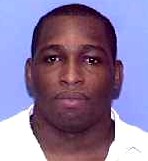
Robert Lee Woodard
Murderer Russell Ellwood
Murderer · USA · 1991
Russell Ellwood was a former taxi driver. Authorities suspected him of killing…
20 victims
Russell Ellwood
Murderer · USA · 1991
Russell Ellwood was a former taxi driver. Authorities suspected him of killing…
20 victims
 Robert Martines Perez
Murderer · USA · 1994
Name: Robert Martines Perez · Other name used in proceedings: Robert Martinez P…
15 victims
Robert Martines Perez
Murderer · USA · 1994
Name: Robert Martines Perez · Other name used in proceedings: Robert Martinez P…
15 victims
 Billy Frank Vickers
Murderer · USA · 1993
Billy Frank Vickers Vickers was executed by lethal injection in Texas on Januar…
14 victims
Billy Frank Vickers
Murderer · USA · 1993
Billy Frank Vickers Vickers was executed by lethal injection in Texas on Januar…
14 victims
 Charles Cullen
Serial killer · USA · 1984
Charles Cullen (born February 22, 1960) was a former nurse and the most prolifi…
45 victims
Charles Cullen
Serial killer · USA · 1984
Charles Cullen (born February 22, 1960) was a former nurse and the most prolifi…
45 victims
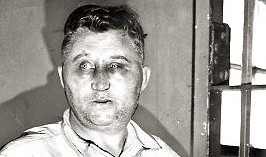 Herman Drenth
Murderer · USA · 1931
Herman Drenth was also known by the aliases Harry F. Powers and Cornelius O. Pi…
5 victims
Herman Drenth
Murderer · USA · 1931
Herman Drenth was also known by the aliases Harry F. Powers and Cornelius O. Pi…
5 victims
 Reyes Miranda
Murderer · USA · 1987
Reyes Miranda was born on 12/20/59. He was convicted in state court of murder a…
1 victim
Reyes Miranda
Murderer · USA · 1987
Reyes Miranda was born on 12/20/59. He was convicted in state court of murder a…
1 victim
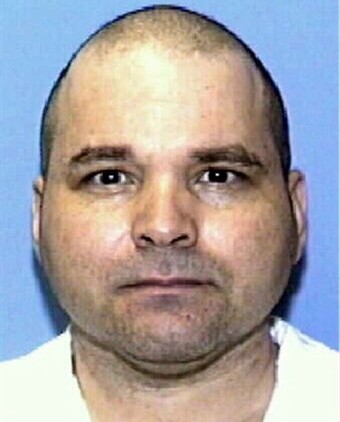 Michael Anthony Rodriguez
Murderer · USA · 1994
Michael Anthony Rodriguez was executed by lethal injection in Texas on August 1…
2 victims
Michael Anthony Rodriguez
Murderer · USA · 1994
Michael Anthony Rodriguez was executed by lethal injection in Texas on August 1…
2 victims
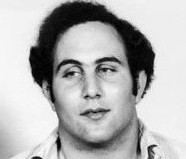 David Berkowitz
Serial killer · USA · 1976
David Berkowitz (born June 1, 1953) was known by the nicknames “Son of Sam” and…
6 victims
David Berkowitz
Serial killer · USA · 1976
David Berkowitz (born June 1, 1953) was known by the nicknames “Son of Sam” and…
6 victims
- Gender
- male
- Country
- USA
- Location
- Harris County, Texas, USA
- Date of birth
- J une 17, 1980
- Age at first offence
- 20
- Characteristics
- robbery, convicted rapist
- Victim profile
- Thankachan Mathai (convenience store owner) and his wife, Achamma
- Method of murder
- Shooting
- Date(s) of murder
- February 12, 2000
- Years active
- 2000
- Date of arrest
- —
- Status
-
Sentenced to death
Sentenced to death on June 20, 2001
Case identity
Robert Lee Woodard (TDCJ Number 999388) was born on 06/17/1980. He was a black male with black hair. His height was 5 ft 10 in and his weight was 202. His eye color was brown and he was native to Native County, Native State. He had been educated to the level recorded as “06/20/2001 21 11,” and his prior occupation was recorded as “Cook Illinois laborer.” His prior prison record was recorded as none.
Timeline
- 02/12/2000 — In Houston, Woodard attempted to rob a convenience store; during the robbery he shot and killed Thankachan Mathai and Achamma Mathia; he took lottery scratch off tickets and fled; outside he took the vehicle of a customer and drove away.
- 02/18/2000 — Cory Calloway viewed a lineup and made a strong tentative identification, qualified by his wish to see the lineup members wearing hoods.
- (Approximately one month later) — Cory Calloway viewed a photospread in which all individuals appeared to be wearing hoods and positively identified Woodard.
- 06/20/2001 — Woodard was sentenced to death (TDCJ record and age-at-receipt information).
- 03/08/2001 — Woodard was sentenced to death (as stated in the appeal narrative).
- 10/20/2004 — The Court of Criminal Appeals of Texas delivered an en banc decision affirming the judgment of the trial court.
Background
The Mathais owned and operated a convenience store in Houston. Thankachan Mathai worked at the store, and Achamma had brought him dinner.
The offence
On the night of February 12, 2000, Thankachan was working at the store, and Achamma had brought him dinner. Between 10 and 11 p.m., Cory Calloway bought gasoline from the store’s pumps for his 1989 Lincoln. Leaving the engine running at the gas pumps, Calloway went to a pay telephone at the side of the building. While Calloway talked on the phone, Garvina Sadiki came in the store to buy merchandise. As Sadiki paid for her items, a man dressed in a hooded jacket entered the store with a gun in his hand.
The man fired a shot and said, “This is a robbery. Don’t anybody move.” He ran behind the counter where Thankachan and Achamma stood, and ordered Thankachan to open the register. He ordered Sadiki not to look at him, and she obeyed.
When Thankachan could not get the register open, the robber shot him. He then ordered Achamma to open the register and threatened to shoot Thankachan again if she did not. Achamma cried and screamed, begging the man not to hurt them. As she fumbled with the register, the man pointed the gun toward Thankachan and fired another shot.
Hearing police sirens, the robber cursed and ran from behind the counter to the front door only to discover that it had been locked. He screamed for Achamma to open the door. Sadiki heard the lock open, and she saw the man push open the door. Then the robber returned to the counter where Achamma and Sadiki were standing. He backed up to Sadiki, keeping his face hidden, and demanded her keys. Sadiki handed the man her keys.
The man said to Achamma, “Bitch,” and he shot her in the head. He then ran out the front door. Outside the store, Calloway was still talking on the telephone. He heard the gunshots and then “a loud bust through the door.” He looked up and saw a person wearing a hooded sweater run toward his Lincoln. Calloway ran toward the man, who pointed a gun at him. Calloway retreated to safety, and the man drove away in Calloway’s Lincoln. Calloway went in the store and called for help.
Police officers arrived quickly. Achamma was already dead. Thankachan died shortly after being taken to a hospital.
Woodard attempted to rob a convenience store on 02/12/2000. The owners of the store, a male and female from India, were unable to open the cash register fast enough to suit Woodard. Woodard shot and killed them. He took lottery scratch off tickets and left the store. Once outside, he took the vehicle of a customer and fled the scene.
Co-defendants: none. Race and gender of victims: Indian male and female.
Victims:
- Thankachan Mathai — victim; husband of Achamma Mathai; convenience store owner/operator; shot and killed.
- Achamma Mathia/Mathai — victim; wife of Thankachan Mathai; shot and killed.
Investigation
A vehicle connected to the robbery and murders was identified as being parked at an apartment complex several miles from the crime scene after someone reported to police that it was there. Police seized the vehicle.
About five days after the crime, an individual gave investigators information that they used to get a warrant to search an apartment near the place where the stolen automobile had been found. In the apartment, investigators found property that had been taken from Calloway’s automobile.
At the apartment were three people (one of whom was the appellant’s brother) who said the appellant told them he had shot and killed some people at a store and stolen a customer’s car. They said that the appellant had brought stolen property with him and that he had asked one of the occupants to hide his gun for a few days. The appellant’s brother told investigators where the appellant lived.
While investigators were preparing an affidavit for a warrant to arrest the appellant, other officers kept a watch on the apartment building where the appellant lived. After midnight, the officers saw the appellant walking near the apartment building and seized him. They had no warrant. Investigators abandoned their efforts to get a warrant when they heard that the appellant had been arrested.
The appellant gave officers written consent to search the apartment, described as “apartment 414” in the brief. Andrea Nero opened the door, said it was her apartment, and officers testified that she and the appellant lived there together. She consented to the search and added her signature to the written consent that the appellant had signed.
In the apartment, officers found a gym bag/canvas bag that contained a box of ammunition, admitted in evidence as State’s Exhibit 111. Also in the bag were clothing, a camera and film, two telephones, some jewelry, and “some I.D. cards attached to a neck strap and had Reginald Willis and looked like an I.D. number of some type on each card.”
Later that day, investigators put the appellant in a lineup for viewing by Garvina Sadiki and Cory Calloway. State’s Exhibit 4 was a copy of a videotape recording of the lineup shown to the jury.
Arrest and search issues raised on appeal
The trial court denied Woodard’s motion to suppress the appellant’s arrest and search as violating Article I, Section 3 of the Texas Constitution and Articles 14.04 and 38.23 of the Code of Criminal Procedure. A separate argument invoked the Fourth, Fifth, and Fourteenth Amendments of the United States Constitution.
The court explained that the motion could not be taken literally because the suppression of the arrest and search themselves occurred months before the motion was filed. Instead, it could suppress evidence obtained as a result of an illegal arrest or search.
Woodard’s brief specified three kinds of evidence challenged as allegedly obtained as a result of the arrest:
- evidence seized from apartment 414 (State’s Exhibit 111),
- the lineup (State’s Exhibit 4),
- Calloway’s “strong tentative” identification.
The appellate court held that the constitutional complaints about state and federal provisions were inadequately briefed for review. It overruled point of error two.
The appellate court also held that complaint about the evidence seized from Apartment 414 had no merit on state-law grounds because Andrea Nero’s consent to search the apartment was sufficient authority for the officers’ search.
The appellate court held that Woodard had not preserved complaints about Calloway’s identification because there was no timely objection at trial to Calloway’s testimony about his identification of Woodard in the lineup or to the police investigator’s testimony about Calloway’s identification in the lineup.
For the lineup videotape, the appellate court held the trial court erred in admitting State’s Exhibit 4. It held Woodard’s arrest was illegal because it was not authorized by Article 14.04 of the Code of Criminal Procedure. It concluded there was no evidence the illegal arrest was ever cured, and no evidence Woodard was taken before a magistrate or his detention at the lineup was under a magistrate’s authority rather than any authority for arrest without a warrant. The appellate court held the admission of State’s Exhibit 4 was harmless under Rule 44.2(b).
Identification evidence
Cory Calloway viewed the lineup and recognized Woodard in the lineup. On direct examination, Calloway testified that he strongly agreed that Woodard was the person who stole his automobile. He requested to see Woodard in a hood because the person who stole his car was wearing a hooded sweatshirt, but the police could not find a hooded sweatshirt to put on the people in the lineup.
On cross-examination, Calloway testified: “I was strongly tentative. � I said I would be 100 per cent sure if I see the hood,” that “I strongly believed that it was” the appellant, and that “I would be more sure if I had the hood. � But that's what I meant by saying positive, is being strongly tentative about it. The only reason I had doubt was the hood.”
A police investigator who conducted the lineup gave similar testimony about Calloway’s identification of Woodard at the lineup.
Woodard argued that identification procedures were impermissibly suggestive due to:
- seeing Woodard in a live lineup with dissimilar individuals,
- viewing a photospread of the appellant during the investigation (State’s Exhibit 2),
- then seeing Woodard in court while wearing a hooded garment without other individuals for comparison.
The court held differences did not render the lineup impermissibly suggestive. It also held that viewing another display was not impermissibly suggestive because Calloway had previously identified Woodard. It further held that Calloway’s in-court identification while wearing a hood could not have affected Calloway’s previous identification. It also held that because the points related to denial of a pretrial motion, the trial court could not have erred based on a fact that had not yet occurred.
Woodard challenged an in-court demonstration requiring him to put on a hooded sweatshirt during Cory Calloway’s testimony. The court overruled the point.
Reginald Willis accomplice-instruction issue
Woodard argued that the trial court erred in failing to submit a jury instruction that Reginald Willis was an accomplice witness as a matter of law.
An accomplice witness was defined as an individual who participated with the defendant before, during, or after the commission of the crime for which the defendant was on trial, and participation must involve an affirmative act committed by the witness to promote the commission of the offense.
The appellate court described Willis’s testimony: Willis testified that Woodard told him that he had committed the robbery, stolen Lotto tickets, shot someone, robbed a man of his car, and then went to Willis’s house with the stolen goods. Willis saw Woodard with a gun and heard Woodard say that he wanted to get rid of it.
The court noted that Willis took and sold some of the stolen items and cashed the stolen Lotto tickets, and that various items stolen from the car were recovered from Willis’s apartment. It held that complicity with an accused in the commission of one offense does not make a witness an accomplice in a different offense. It concluded the evidence was insufficient to have placed the judge under a duty to instruct the jury that Willis was an accomplice to the murder as a matter of law.
Trial and conviction
A Harris County jury convicted Woodard of capital murder and sentenced him to death.
The appellate court stated that Woodard was found guilty of the capital murders of Thankachen Mathai and Achamma Mathai, who were husband and wife. The appellate narrative also stated Woodard was sentenced to death on March 8, 2001.
Appeals
Woodard raised eleven points of error in the appeal.
Guilt-stage issues included:
- two points about illegal search and seizure,
- two points about improper identification procedures before trial,
- a point about improper identification procedures during trial,
- a point about the court’s charge.
For search and seizure and identification matters, the appellate court addressed issues including:
- inadequately briefed constitutional complaints,
- admission of State’s Exhibit 111 (box of ammunition) after consent to search,
- failure to object to Calloway’s identification testimony,
- admission of State’s Exhibit 4 (videotape recording of the lineup) after an illegal arrest,
- harmless error regarding admission of State’s Exhibit 4.
For identification matters, the appellate court addressed:
- denial of the motion to suppress identification,
- alleged suggestiveness from lineup composition, photospread viewing, and courtroom hood demonstration,
- an in-court demonstration requiring Woodard to put on a hooded sweatshirt.
For the jury charge, the appellate court overruled the accomplice-instruction issue regarding Reginald Willis.
Punishment-stage issues included:
- two points about victim-impact evidence,
- three points about the mitigation special issue.
The appellate court overruled:
- Woodard’s points seven and eight regarding victim-impact testimony by Garvina Sadiki and Cory Calloway because there were no preserved objections and because the motions described did not present the complaints raised on appeal as to persons other than the deceased victims’ friends and family.
- Woodard’s points of error nine, ten, and eleven regarding the mitigation special issue.
The court affirmed the judgment of the trial court en banc and delivered the opinion on October 20, 2004.
Outcome
The Court of Criminal Appeals of Texas affirmed the judgment of the trial court en banc.
Other details
Woodard’s court of criminal appeals case reference appeared as “Robert Lee Woodard v. State [No. 74,080]” with an appeal from Harris County. The opinion narrative stated that Womack, J., delivered the opinion for an unanimous Court. The appellant was found guilty by a Harris County jury and sentenced to death.
The case narrative included references to the victims’ identities as husband and wife and to the convenience store setting in Houston. It also described that Woodard attempted to rob the store and shot and killed the owners, took lottery scratch off tickets, stole a customer’s Lincoln, and fled.
Woodard raised arguments that included illegal arrest tainting state evidence and improper identification procedures, and arguments challenging Texas death penalty scheme and victim impact and mitigation special issue on constitutional grounds, which the appellate court rejected on the addressed issues.
Spotted an error, or have more information about this case?