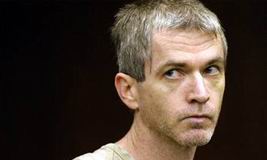
Charles Cullen
Serial killer Carl Eugene Watts
Serial killer · USA · 1974
Carl Eugene Watts (born November 7, 1953; died September 21, 2007), also known…
100 victims
Carl Eugene Watts
Serial killer · USA · 1974
Carl Eugene Watts (born November 7, 1953; died September 21, 2007), also known…
100 victims
 Rodney Alcala
Serial killer · USA · 1977
Rodney James Alcala (born August 23, 1943) was also known as Rodrigo Jacques Al…
100 victims
Rodney Alcala
Serial killer · USA · 1977
Rodney James Alcala (born August 23, 1943) was also known as Rodrigo Jacques Al…
100 victims
 Glen Edward Rogers
Serial killer · USA · 1993
Glen Edward Rogers was a spree killer whose cross-country rampage in 1994-95 le…
70 victims
Glen Edward Rogers
Serial killer · USA · 1993
Glen Edward Rogers was a spree killer whose cross-country rampage in 1994-95 le…
70 victims
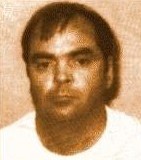 Donald Leroy Evans
Serial killer · USA · 1975
Donald Leroy Evans (born July 5, 1957) was an American serial killer who murder…
60 victims
Donald Leroy Evans
Serial killer · USA · 1975
Donald Leroy Evans (born July 5, 1957) was an American serial killer who murder…
60 victims
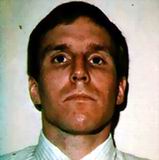 Michael Swango
Serial killer · USA · 1981
Michael Swango (Joseph Michael Swango) was a physician and American serial kill…
60 victims
Michael Swango
Serial killer · USA · 1981
Michael Swango (Joseph Michael Swango) was a physician and American serial kill…
60 victims
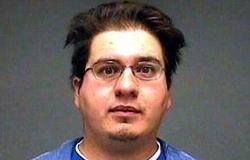 Efren Saldivar
Serial killer · USA · 1989
Efren Saldivar (born 30 September 1969) was an American serial killer who murde…
50 victims
Efren Saldivar
Serial killer · USA · 1989
Efren Saldivar (born 30 September 1969) was an American serial killer who murde…
50 victims
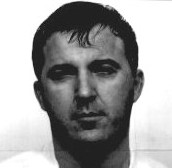 Jerry Lee Hogue
Murderer · USA · 1979
Jerry Lee Hogue was executed by lethal injection in Texas on March 11, 1998. He…
1 victim
Jerry Lee Hogue
Murderer · USA · 1979
Jerry Lee Hogue was executed by lethal injection in Texas on March 11, 1998. He…
1 victim
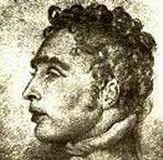 John Williams
Mass murderer · United Kingdom · 1811
John Williams (also known as Murphy) was a 27-year-old Scottish or Irish seaman…
7 victims
John Williams
Mass murderer · United Kingdom · 1811
John Williams (also known as Murphy) was a 27-year-old Scottish or Irish seaman…
7 victims
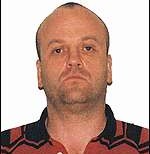 Allan Grimson
Serial killer · United Kingdom · 1986
December 1997 — Nicholas Wright met Allan Grimson, who had given him a telephon…
3 victims
Allan Grimson
Serial killer · United Kingdom · 1986
December 1997 — Nicholas Wright met Allan Grimson, who had given him a telephon…
3 victims
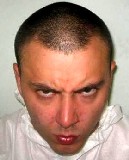 Dano Sonnex
Murderer · United Kingdom · 2008
Dano Sonnex was convicted of murder and sentenced to life in prison with a mini…
2 victims
Dano Sonnex
Murderer · United Kingdom · 2008
Dano Sonnex was convicted of murder and sentenced to life in prison with a mini…
2 victims
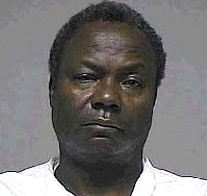 Said Ali Biyad
Mass murderer · USA · 2006
Said Ali Biyad — defendant. · Christie Foster — representing the Commonwealth's…
4 victims
Said Ali Biyad
Mass murderer · USA · 2006
Said Ali Biyad — defendant. · Christie Foster — representing the Commonwealth's…
4 victims
- Gender
- male
- Country
- USA
- Location
- New Jersey/Pennsylvania, USA
- Date of birth
- February 22, 1960
- Age at first offence
- 24
- Characteristics
- nurse, angel of death
- Victim profile
- John W. Yengo Sr., 72 / Lucy Mugavero, 90 / Mary Natoli, 85 / Helen Dean, 91 / LeRoy Sinn, 71 / Earl Young, 76 / Catherine Dext, 49 / Frank Mazzacco, 66 / Jesse Eichlin, 81 / Ottomar Schramm, 78 / Matthew Mattern, 22 / Irene Krapf, 79 / William Park, 72 / Samuel Spangler, 80 / Daniel George, 82 / Edward O'Toole, 76 / Eleanor Stoecker, 60 / Joyce E. Mangini, 74 / Giacomino J. Toto, 89 / John J. Shanagher, 83 / Dorthea K. Hoagland, 80 / Melvin T. Simcoe, 66 / Michael T. Strenko, 21 / Florian J. Gall, 68 / Pasquale M. Napolitano, 80 / Christopher B. Hardgrove, 38 / Krishnakant Upadhyay, 70 / James R. Strickland, 83 / Edward P. Zizik, 73 (patients)
- Method of murder
- Poisoning (lethal overdose of medication)
- Date(s) of murder
- 1984 - 2003
- Years active
- 1984–2003
- Date of arrest
- December 14, 2003
- Status
-
Life imprisonment
Sentenced to 11 consecutive life terms on March 1, 2006; sentenced to seven life sentences for seven murders in Pennsylvania
Case record: Charles Cullen
Background
Charles Cullen (born February 22, 1960) was a former nurse and the most prolific serial killer in New Jersey history.
Cullen was born in West Orange, New Jersey, the youngest of eight children in a deeply religious Catholic family. His father was a bus driver and his mother stayed at home to raise his children. His father died when Cullen was an infant. Two of his siblings also died in adulthood. Cullen stated that his father, Meme Cullen, raped him as a child. He described his childhood as miserable.
Cullen first attempted suicide at the age of nine by drinking chemicals taken from a chemistry set. He later described that as the first of 20 such suicide attempts throughout his life. As a nurse, Cullen fantasized about stealing drugs from the hospital where he worked and using them to commit suicide. In one attempt he took a pair of scissors and jabbed them through his head, which led to major surgery.
When Cullen was 17, his mother died in an automobile accident, with his sister at the wheel. Cullen dropped out of high school and enlisted in the U.S. Navy in 1978. He was assigned to the submarine corps and served aboard the ballistic missile sub USS Woodrow Wilson. Cullen rose to the rank of petty officer third class as part of the team that operated the ship’s Poseidon missiles.
Cullen showed signs of mental instability during his service. He once served a shift in a green surgical gown, surgical mask and latex gloves stolen from the ship’s medical cabinet. He was transferred to the supply ship USS Canopus. Cullen tried to kill himself several times over the next few years, and his last attempt led to his discharge from the Navy in March 1984.
After leaving the Navy, Cullen attended Mountainside School of Nursing and got a job at St. Barnabas Medical Center in Livingston, New Jersey, in 1987.
That same year he married Adrienne Taub. The couple had two daughters.
The offence
Cullen murdered patients by administering lethal overdoses of medication while working as a nurse.
At St. Barnabas Medical Center, he administered a lethal overdose of medication intravenously to Judge John W. Yengo Sr., who had been admitted suffering from an allergic reaction to a blood-thinning drug. Cullen also admitted to killing 11 patients at St. Barnabas, including an AIDS patient who died after being given an overdose of insulin.
At Warren Hospital in Phillipsburg, New Jersey, Cullen murdered three elderly women by giving them overdoses of the heart medication digoxin.
At Hunter Medical Center in Rarity Township, New Jersey, Cullen worked in the intensive care/cardiac care unit for three years, and investigators later considered that he murdered patients there, while Cullen claimed he did not murder anyone during his first two years. Cullen admitted to murdering five patients in the first nine months of 1996. He again administered overdoses of dioxin.
Cullen became a licensed nurse in Pennsylvania in 1994. After employment changes, he continued to administer overdoses, including digoxin and dioxin.
At Lehigh Valley Hospital in Allentown, Pennsylvania, Cullen murdered one patient and attempted to murder another. During his later work, he volunteered that he murdered sick patients to end their suffering.
At St. Luke’s Hospital in Bethlehem, Pennsylvania, Cullen worked in the cardiac care unit. Over the next three years, he murdered five more patients and attempted to murder two. An attempted suicide in January 2000 occurred when Cullen put a charcoal grill in his bath tub, lit it, and hoped carbon monoxide gas would kill him; neighbors smelled the smoke and called the fire department and police.
Cullen was employed at Somerset Medical Center in Somerset, New Jersey, and worked in the critical care unit. He murdered eight more patients and attempted to murder another by June. His drugs of choice were dioxin and insulin.
On June 18, 2003, Cullen attempted to murder Philip Gregor, a patient at Somerset. Gregor survived and was discharged and died six months later of natural causes. Soon afterward, hospital systems showed that Cullen was accessing the records of patients he was not assigned to. Co-workers were seeing him in patients’ rooms, and computerized drug-dispensing cabinets showed Cullen requesting medications that patients had not been prescribed.
The executive director of the New Jersey Poison Information and Education System warned Somerset Medical Center officials in July 2003 that at least four of the suspicious overdoses indicated the possibility that an employee was killing patients. The hospital postponed contacting authorities until October. By then, Cullen had killed another five patients and attempted to kill a sixth.
State officials penalized the hospital for failing to report a nonfatal insulin overdose in August, which had been administered by Cullen. When Cullen’s final victim died of low blood sugar in October, the medical center alerted state authorities.
Cullen also attempted to commit suicide on multiple occasions before his arrest.
Investigation
After a co-worker accidentally found vials of unused medications in a disposal bin while Cullen worked at St. Luke’s Hospital, an investigation showed that Cullen had taken the medication. He was fired and escorted from the building in June 2002.
Seven St. Luke’s nurses who worked with Cullen met with the Lehigh County district attorney to alert authorities of their suspicions that Cullen had used drugs to kill patients. They pointed out that, between January and June 2002, Cullen had worked 20 percent of the hours on his unit but was present for nearly two-thirds of the deaths. Investigators did not look into Cullen’s past, and the case was dropped nine months later for lack of evidence.
At Somerset, after the medical center alerted authorities, an investigation into Cullen’s employment history revealed past suspicions about his involvement with prior deaths.
Arrest
Cullen was arrested on one count of murder and one count of attempted murder at a restaurant on December 14, 2003.
On December 14, 2003, Cullen admitted to the murder of Rev. Florian Gall and the attempted murder of Tin Kyushu Han, both patients at Somerset.
As authorities investigated, they kept Cullen under surveillance for several weeks until they had finished their investigation.
Trial
In April 2004, Cullen pleaded guilty in a New Jersey court to killing 13 patients and attempting to kill two others by lethal injection while employed at Somerset. As part of his plea agreement, he promised to cooperate with authorities if they did not seek the death penalty for his crimes.
A month later, Cullen pleaded guilty to the murder of three more patients in New Jersey.
In November 2004, Cullen pleaded guilty in a Pennsylvania court to killing six patients and trying to kill three others.
As of July 2005, Cullen remained in the Somerset County Jail in New Jersey as authorities continued to investigate the possibility of his involvement in other deaths.
Sentencing
Cullen received multiple life sentences based on his guilty pleas.
He was serving a sentence of life in prison without parole for 30 years, to be served consecutively with his other sentences in Pennsylvania.
On March 2, 2006, Cullen was sentenced to 11 consecutive life sentences in New Jersey, making him ineligible for parole for 397 years. He was held at New Jersey State Prison in Trenton, New Jersey.
On March 10, 2006, Cullen was brought into the courtroom of Lehigh County President Judge William Pratt for a sentencing hearing. Cullen was upset with the judge and kept repeating: “Your honor, you need to step down” for 30 minutes until Pratt had Cullen gagged with cloth and duct tape. Even after being gagged Cullen continued to try to repeat the phrase.
In that hearing, Pratt gave him an additional six life sentences. In addition to other sentences pronounced on the same day in another county, Cullen faced 18 life sentences.
In another account of the March 2, 2006 sentencing: Cullen received 11 consecutive life terms at a tense and sometimes turbulent hearing after relatives of victims attended the sentencing and branded him “vermin,” “garbage” and a “monster.” Superior Court Judge Paul Armstrong said: “You betrayed the ancient foundations of the healing professions,” while Cullen stood motionless, his eyes closed. Cullen pleaded guilty to murdering 22 people in New Jersey and trying to kill three others, and he was to be sentenced later for seven murders and three attempted murders in Pennsylvania.
Cullen declined to make a statement and told the judge he had “nothing to say”.
Appeals
No appeals were described.
Outcome
Cullen pleaded guilty to murdering 22 people in New Jersey and trying to kill three others, and he pleaded guilty in Pennsylvania to killing six patients and trying to kill three others. He was sentenced to 11 consecutive life sentences in New Jersey and additional life sentences in Pennsylvania.
Aftermath
Investigations were described as remaining open in two New Jersey counties. Twenty lawsuits were described as filed against the facilities where Cullen worked.
Legislation prompted by the case was described as adopted by Pennsylvania, New Jersey, and 35 other states, strengthening reporting and employer disclosure requirements and protections for employers and health care facilities. The laws passed in 2004 and 2005 encouraged employers to give honest appraisals of workers’ job performance, provided employer immunity when truthful employee appraisal was provided, strengthened disclosure requirements for health care facilities, bolstered legal protections for facilities that reported improper patient care, and required licensed health care professionals to undergo criminal background checks and be fingerprinted at their own cost.
Other details
Employment and hospital history
Cullen took a job at St.
He quit his job at St. Barnabas in January 1992 when hospital authorities began investigating who might have tampered with bags of intravenous fluid.
He took a job at Warren Hospital in Phillipsburg, New Jersey, in February 1992 and murdered three elderly women there by overdosing them with digoxin.
In January 1993, Adrienne Cullen filed for divorce. She later filed two domestic violence complaints against him depicting Cullen as an alcoholic and described him abusing pets by placing them in bowling bags and trash cans, pouring lighter fluid into other people’s drinks and making prank calls to funeral homes.
Cullen moved into a basement apartment on Shaffer Avenue in Phillipsburg and had shared custody of his daughters. He stated he wanted to quit nursing in 1993 but court-ordered child support payments forced him to keep working.
In March 1993, Cullen broke into a co-worker’s home while she and her young son slept, but left without waking them. He started phoning her frequently, leaving numerous messages and following her at work and around town. The woman filed a complaint; Cullen pleaded guilty to trespassing and was placed on a year’s probation. The day after his arrest, Cullen attempted suicide. He took two months off work and was treated for depression in two psychiatric facilities. He attempted suicide two more times before the end of the year.
Cullen left Warren Hospital in December 1993 and took a job at Hunter Medical Center in Rarity Township, New Jersey, early the next year.
Cullen worked at Morris Memorial Hospital in Morris, New Jersey, and was fired in August 1997 for poor performance. He remained unemployed for six months and stopped making child-support payments.
In October 1997, Cullen appeared in the Warren Hospital emergency room and sought treatment for depression. He was admitted to a psychiatric facility but left a short time later.
Neighbors described him as chasing cats down the street in the dead of night, yelling or talking to himself, and making faces at people when he thought they weren’t looking.
In February 1998, Cullen was hired by Liberty Nursing and Rehabilitation Center in Allentown, Pennsylvania, working in a ward for patients who needed ventilators to breathe. In May, he filed for bankruptcy claiming nearly $67,000 in debts. Liberty fired Cullen in October 1998 after he was seen entering a patient’s room with syringes in his hand. The patient ended up with a broken arm, but apparently no injections were made. He was accused of giving patients drugs at unscheduled times.
Cullen worked at Elston Hospital in Elston, Pennsylvania, from November 1998 to March 1999. On December 30, 1998, Cullen murdered a patient with digoxin. A coroner’s blood test showed lethal amounts of dioxin in the patient’s blood, but an investigation was inconclusive and nothing pointed definitively to Cullen as the murderer.
Cullen took a job at a burn unit at Lehigh Valley Hospital in Allentown, Pennsylvania, in March 1999. He voluntarily resigned from Lehigh Valley Hospital in April 1999 and took a job at St. Luke’s Hospital in Bethlehem, Pennsylvania, where he worked in the cardiac care unit.
In January 2000, Cullen attempted suicide again by placing a charcoal grill in his bath tub, lighting it, and hoping carbon monoxide gas would kill him. Neighbors smelled the smoke and called the fire department and police. He was taken to a hospital and a psychiatric facility but was back home the following day.
No one suspected Cullen was murdering patients at St. Luke’s Hospital until a co-worker accidentally found vials of unused medications in a disposal bin. The drugs were described as not valuable outside the hospital and as not used by recreational drug users, so their theft seemed curious. Cullen was fired and escorted from the building in June 2002.
He worked for a short time at Sacred Heart Hospital in Allentown and left because he did not get along with his co-workers.
In September 2002, he found a job at Somerset Medical Center in Somerset, New Jersey.
Quotations and remarks recorded in the materials
Judge John W. Yengo Sr. was described as admitted suffering from an allergic reaction to a blood-thinning drug, and Cullen administered a lethal overdose of medication intravenously.
Cullen repeated: “Your honor, you need to step down”.
Superior Court Judge Paul Armstrong said: “You betrayed the ancient foundations of the healing professions”.
Cullen told the judge he had “nothing to say”.
Potential causes and stated motive
Cullen said he administered overdoses to patients to spare them from being “coded” (going into cardiac or respiratory arrest and being listed as a “Code Blue” emergency). Cullen told detectives that he could not bear to witness or hear about attempts at saving a victim’s life. Cullen also claimed he gave patients overdoses so that he could end their “suffering” and prevent hospital personnel from “de-humanizing” them.
Investigators said Cullen may have caused patients to suffer and appeared not to realize that contradicted his claims.
Cullen told investigators that although he often thought about murdering his victims over several days as he witnessed their “suffering,” the decision to commit murder was performed on impulse. He told detectives in December 2003 that he lived most of his life in a fog, and that he had blacked out the memory of murdering most of his victims. He said he could not recall how many victims there were or why he chose them.
In some cases, Cullen denied committing murders at a given facility but after reviewing medical records he later admitted he was involved in patient deaths there.
Victims listed by name, age, residence, and hospital (as provided)
Murder victims (New Jersey, in order of death as listed)
- John W. Yengo Sr., 72, of Jersey City, N.J., died June 11, 1988, at St. Barnabas Hospital in Livingston.
- Lucy Mugavero, 90, of Phillipsburg, N.J., died March 9, 1993, at Warren Hospital in Phillipsburg, N.J.
- Mary Natoli, 85, of Phillipsburg, N.J., died July 23, 1993, at Warren Hospital.
- Helen Dean, 91, of Lopatcong Township, N.J., died Sept. 1, 1993, at Warren Hospital.
- LeRoy Sinn, 71, hometown not disclosed, died Jan. 21, 1996, at Hunterdon Medical Center.
- Earl Young, 76, hometown not disclosed, died May 31, 1996, at Hunterdon Medical Center.
- Catherine Dext, 49, hometown not disclosed, died June 9, 1996, at Hunterdon Medical Center.
- Frank Mazzacco, 66, hometown not disclosed, died June 24, 1996, at Hunterdon Medical Center.
- Jesse Eichlin, 81, hometown not disclosed, died July 10, 1996, at Hunterdon Medical Center.
- Ottomar Schramm, 78, of Bethlehem, Pa., died Dec. 30, 1998, at Easton Hospital in Easton, Pa.
- Matthew Mattern, 22, of Shamokin, Pa., died Aug. 31, 1999, at Lehigh Valley Hospital in Salisbury Township, Pa.
- Irene Krapf, 79, of Tamaqua, Pa., died June 22, 2001, at St. Luke’s Hospital in Fountain Hill, Pa.
- William Park, 72, of Lehighton, Pa., died Nov. 8, 2001, at St. Luke’s Hospital.
- Samuel Spangler, 80, of Bethlehem, Pa., died Jan. 9, 2002, at St. Luke’s Hospital.
- Daniel George, 82, of Bethlehem, Pa., died May 5, 2002, at St. Luke’s Hospital.
- Edward O’Toole, 76, of Bethlehem, Pa., died June 2, 2002, at St. Luke’s Hospital.
- Eleanor Stoecker, 60, Bedminster, N.J., died Feb. 12, 2003, at Somerset Medical Center in Somerville, N.J.
- Joyce E. Mangini, 74, Raritan, N.J., died Feb. 23, 2003, at Somerset Medical Center.
- Giacomino J. Toto, 89, Bridgewater, N.J., died Feb.
- John J. Shanagher, 83, Bridgewater, N.J., died March 11, 2003, at Somerset Medical Center.
- Dorthea K. Hoagland, 80, Middlesex, N.J., died April 6, 2003, at Somerset Medical Center.
- Melvin T. Simcoe, 66, Green Brook, N.J., died May 5, 2003, at Somerset Medical Center.
- Michael T. Strenko, 21, Manville, N.J., died May 15, 2003, at Somerset Medical Center.
- Florian J. Gall, 68, Whitehouse Station, N.J., died June 28, 2003, at Somerset Medical Center.
- Pasquale M. Napolitano, 80, Peapack-Gladstone, N.J., died July 13, 2003, at Somerset Medical Center.
- Christopher B. Hardgrove, 38, Somerville, N.J., died Aug. 11, 2003, at Somerset Medical Center.
- Krishnakant Upadhyay, 70, Bridgewater, N.J., died Sept. 20, 2003, at Somerset Medical Center.
- James R. Strickland, 83, Bowie, Md., died Sept.
- Edward P. Zizik, 73, Three Bridges, N.J., died Oct. 21, 2003, at Somerset Medical Center.
Attempted murder victims (names, ages, and dates as provided)
- Stella Danielczyk, 73, of Larksville, Pa., attempted murder in February 2000 at Lehigh Valley Hospital.
- John Gallagher, 90, of Bethlehem, Pa., attempted murder on Feb. 8, 2001, at St. Luke’s Hospital.
- Paul Galgon, 72, of Bethlehem, Pa., attempted murder on Dec. 28, 2001, at St. Luke’s Hospital.
- Jin Kyung Han, 40, Basking Ridge, N.J., attempted murder on June 29, 2003, at Somerset Medical Center.
- Frances Agoada, 83, Franklin Township, N.J., attempted murder on Aug. 27, 2003, at Somerset Medical Center.
- Philip Gregor, 48, South Bound Brook, N.J., attempted murder at Somerset Medical Center on June 18, 2003.
Spotted an error, or have more information about this case?