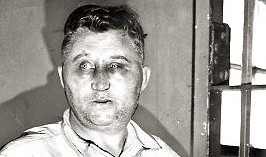
Herman Drenth
Murderer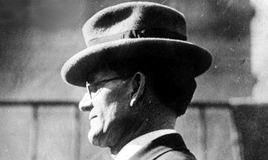 William Hale
Murderer · USA · 1921
Name: William Hale · Known as: the so-called "King of the Osage Hills" · Occupa…
24 victims
William Hale
Murderer · USA · 1921
Name: William Hale · Known as: the so-called "King of the Osage Hills" · Occupa…
24 victims
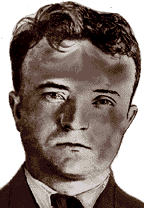 Paul Jaworski
Murderer · USA · 1926
Paul Jaworski was born in Poland as Paul Poluszynski in 1900. He later immigrat…
20 victims
Paul Jaworski
Murderer · USA · 1926
Paul Jaworski was born in Poland as Paul Poluszynski in 1900. He later immigrat…
20 victims
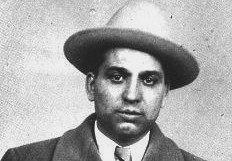 Harry Maione
Murderer · USA · 1937
Harry “Happy” Maione (1908 – February 19, 1942) was a New York mobster who serv…
12 victims
Harry Maione
Murderer · USA · 1937
Harry “Happy” Maione (1908 – February 19, 1942) was a New York mobster who serv…
12 victims
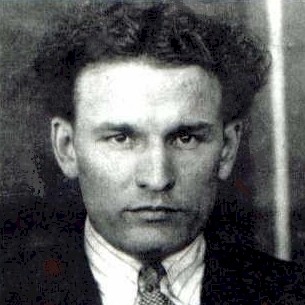 William Kenneth Wagner
Murderer · USA · 1924
William Kenneth (Kinnie) Wagner (born February 18, 1903 in Scott County, VA) wa…
6 victims
William Kenneth Wagner
Murderer · USA · 1924
William Kenneth (Kinnie) Wagner (born February 18, 1903 in Scott County, VA) wa…
6 victims
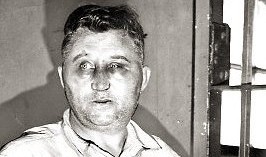 Harry Powers
Murderer · USA · 1931
Harry Powers was executed by hanging on March 18, 1932, at the West Virginia Pe…
5 victims
Harry Powers
Murderer · USA · 1931
Harry Powers was executed by hanging on March 18, 1932, at the West Virginia Pe…
5 victims
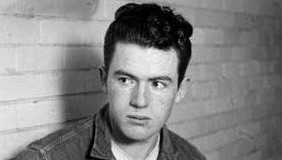 William Edward Hickman
Murderer · USA · 1926
William Edward Hickman was a man who tried to solve his financial problems by k…
5 victims
William Edward Hickman
Murderer · USA · 1926
William Edward Hickman was a man who tried to solve his financial problems by k…
5 victims
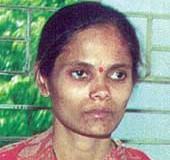 Seema Gavit
Murderer · India · 1990
Seema Mohan Gavit and her sister Renuka Shinde received death sentences. The se…
9 victims
Seema Gavit
Murderer · India · 1990
Seema Mohan Gavit and her sister Renuka Shinde received death sentences. The se…
9 victims
 Kenneth Baumruk
Murderer · USA · 1992
Kenneth Baumruk came to the St. Louis County courthouse for a hearing in his di…
1 victim
Kenneth Baumruk
Murderer · USA · 1992
Kenneth Baumruk came to the St. Louis County courthouse for a hearing in his di…
1 victim
 John Gilbert Graham
Mass murderer · USA · 1955
John “Jack” Gilbert Graham was born on January 23, 1932, at Denver, Colorado. H…
44 victims
John Gilbert Graham
Mass murderer · USA · 1955
John “Jack” Gilbert Graham was born on January 23, 1932, at Denver, Colorado. H…
44 victims
 Billy Ray Hamilton
Murderer · USA · 1980
Billy Ray Hamilton died on October 22, 2007. He was convicted of murder in thre…
3 victims
Billy Ray Hamilton
Murderer · USA · 1980
Billy Ray Hamilton died on October 22, 2007. He was convicted of murder in thre…
3 victims
- Gender
- male
- Country
- USA
- Location
- Quiet Dell, West Virginia, USA
- Date of birth
- 1889
- Age at first offence
- 42
- Characteristics
- bluebeard
- Victim profile
- Asta Buick Eicher, 50, a widow with three children - Greta, 14; Harry, 12, and Anabel, 9 / Dorothy Lemke, 50
- Method of murder
- Hanging - Hitting with a hammer
- Date(s) of murder
- July 1931
- Years active
- 1931
- Date of arrest
- —
- Status
-
Executed
Executed by hanging at the West Virginia Penitentiary in Moundsville on March 18, 1932
Case identification
Herman Drenth was also known by the aliases Harry F. Powers and Cornelius O. Pierson.
STATUS and execution
Herman Drenth was executed by hanging at the West Virginia Penitentiary in Moundsville on March 18, 1932.
Background
Herman Drenth was a rural resident from Clarksburg, Virginia. He constructed a sound-proof concrete underground chamber in his house. He used lonely-hearts advertising to find widows. When women answered his ads and came to his ranch, sometimes with children, he would throw them down into the chamber and retrieve them by buckets for them to sign letters withdrawing any money they had in bank and liquidating other assets they had. He killed children quickly with a hammer and let women starve or beat them to death.
Postal inspectors caught up with him, and he was sentenced to death by hanging.
He was described as using many aliases and luring women to an underground chamber located beneath his garage. He wrote tantalizing letters as a “Bluebeard” style offender. After an anonymous tip, his murder dungeon was searched and many items were found that suggested many women had not escaped his control. He was suspected of perhaps as many as 50 victims, described as widowed women who answered his lonely heart ads for courtship and possible marriage.
The offence
Herman Drenth’s conduct involved killing women and children after luring them through courtship advertisements and correspondence. He confided to police that the chamber gave him sexual excitement to hear his victims’ screams from within at night. He was described as gassing victims and then cashing in their fortunes. His setup was described as including a killing chamber, where victims were bound and lethal gas was piped in, and an adjoining “operations room” where he sat behind a plate glass window to watch their agony. The killing chamber floor was described as caked with blood, and he had used a claw hammer to bludgeon young children of a last victim prior to gassing her as usual.
He was arrested in connection with killings including those of Asta Eicher and her three children and Dorothy Lemke. He was sentenced based on the murders proved through the bodies found. The narrative also stated that it could never be proved that he killed more than the five buried in his yard.
Investigation
Investigators found clues including love letters and correspondence. Trunks and letters from more than one country were described as being found. Jewelry and clothing items belonging to victims were found in his garage. After his arrest, a number of women came forward with stories about how he had wooed them and taken their cash after proposing marriage.
Five bodies were described as being unearthed from a garden, including Aster Eicher and her three children from Park Ridge, Illinios, and Dorothy Lemke from Northboro, Massachusetts.
He was also described as breaking down and confessing after rotted corpses were found in a ditch near the “lab.” He was said to have admitted deriving sexual pleasure from watching victims gag to death, and one quoted remark was included: “it beat any cathouse I was ever in”.
When questioned concerning items whose owners were unknown, he muttered: “You've got me on five, what good would fifty more do?”. He also reminded his jailers: “You got me on five”, and “What good would fifty more do?”.
Arrest and pre-trial custody
Herman Drenth was arrested after an anonymous tip. Another account described that police traced a name to a Clarksburg post office box and used this to connect him to the disappearance of victims. He was described as being uncooperative regarding recovering bodies.
Trial
Proceedings and verdict
The trial was held in Clarksburg. It was described as being moved to a specially constructed courtroom at Moore’s Opera House in Clarksburg. The defence attorney was identified as J. E. Law. The prosecuting attorney was identified as Will E. Morris, with an assistant identified as William G. Stathers.
In one account, the jury was described as deliberating for one hour and 47 minutes, and verdict deliberations were described as including consideration for mercy. A guilty verdict was returned for first degree murder as charged in the indictment.
The court clerk at one stage was Benjamin B. Jarvis, and the person who replied to the verdict question was Nathan Richards, Bridgeport farmer.
The verdict language was stated as follows:
“We, the jury, find the defendant, Harry F. Powers, alias Cornelius O. Pierson, guilty of first degree murder as charged in the within indictment.”
Defence and motions
J. E. Law pleaded for “sympathy, justice, and mercy.” A motion for new trial was asked for after the verdict, and the hearing and arguments were described as to occur before Judge John C. Southern of Harrison county criminal court.
In the transcript excerpt, the motion to set aside the verdict returned on December 10, 1931 and to grant a new trial was argued and then overruled.
Sentencing
Sentence and order
The sentencing order described that the defendant had nothing urged in delay when asked if there was anything he knew or had to say why sentence should not be pronounced. The court ordered that he be hung by the neck until he is dead.
The order stated that execution would be done by the Warden of the penitentiary at Moundsville on Friday, the 18th day of March, in the year Nineteen Hundred and Thirty-two, within the walls of the penitentiary according to law.
In the transcript excerpt, the execution was ordered to be suspended and the defendant had leave to apply for a writ of error and supersedeas until the first day of the March Term, 1932 of the court to enable the defendant to make such application.
Appeals
The transcript excerpt stated that the motion to set aside the verdict returned on December 10, 1931 and to grant a new trial was argued and was overruled; it also recorded that a new trial was denied and that the defendant excepted to this ruling.
The transcript excerpt also recorded that the defendant “expressing a desire to apply for a writ of error and supersedeas” resulted in suspension of execution until the first day of the March Term, 1932.
Outcome
Herman Drenth was convicted and sentenced to death by hanging, and he was executed at the West Virginia Penitentiary in Moundsville on March 18, 1932.
Victims and locations named in the record
The record included bodies described as:
- Aster Eicher and her three children from Park Ridge, Illinios.
- Dorothy Lemke from Northboro, Massachusetts.
Other details
Names and aliases
Herman Drenth was described as being known chiefly by his last alias, Harry F. Powers, and he also used the name Cornelius O. Pierson.
Confessions and remarks
A police-related confession narrative included that he was said to have confessed after two rotted corpses were found in a ditch near the “lab.” In a narrative of his interrogation and jail communications, he said:
- “You've got me on five”
- “What good would fifty more do?”
A remark attributed to him about sexual pleasure was:
- “it beat any cathouse I was ever in”
During a pre-execution exchange, he answered the warden’s question about a farewell statement with:
- “No”
In a description of his protest while his wife’s and her sister’s names were discussed, he stated:
- “Sure, I'll sign it.”
He also cried with his hand on the Bible:
- “With my hand on this Book of God, I swear by the teachings of my mother, that I know nothing about it.”
He protested his innocence in a letter opened after his body was removed from the death chamber. The letter protested capital punishment and claimed his trial was “unfair,” held in an opera house “where people go to be entertained.” The letter also recalled having been twice menaced by a mob and having been refused a change of venue. It further said falsehoods had been published about him.
Execution witnesses and death procedure details
One account described forty-two spectators in the death chamber, with five physicians declaring him dead eleven minutes later after the trap was sprung. The trap was said to be sprung at 9:00 o’clock and he was officially pronounced dead eleven minutes later. The prison physician was identified as Dr. R. A. Ashworth and the assistant as Dr. O. P. Wilson. A doctor named Dr. H. H. Haynes witnessed the hanging and helped make examinations. Another account described physicians stepping behind the railing and one using a stop watch.
The warden at the execution was identified as A. C. Scroggins. The prison chaplain at the execution was identified as E. M. Giesey. The deputy who signaled the trap opening was identified as Deputy E. C. Brill, captain of the prison guards. A deputy warden voice warning in the execution crowd included:
- “Any person who is armed will leave his guns at the desk until he returns,”
- “Cameras will be left at the desk also”.
Religion and belief
One account stated that he expressed belief in a Supreme Being and sought solace in religion. During the Clarksburg jail period, it said he claimed to be an atheist.
Additional individuals and roles mentioned
The record named:
- Luella as his wife of four years.
- Luella Struthers as a wife whom he had not killed and who still lived with him.
- William O’Boyle as a boarder who called police.
- Andrew Moore as deputy sheriff and turnkey at the county jail.
- Sheriff W. B. Grimm as sheriff and jailer of Harrison County.
- Dr. R. A. Ashworth, Dr. O. P. Wilson, Dr. H. H. Haynes, Dr. W. A. Marsh.
- T. A. Hoganson as a coroner from Grundy county, Illinois.
- Barratt O’Hara as a criminal attorney who flew to Clarksburg to defend the prisoner.
- Alienist Edward Everett Mayer and his reported evaluation as “Powers is a psychopathic personality ... of the hypopituitary type—squat, pig-eyed, paunchy, with weakened sexual powers. He is not insane, but he has been a borderline case all his life. Powers is capable of knowing right from wrong.”
- Warden A. C. Scroggins and the prison chaplain E. M. Giesey.
- Clerk Ben B. Jarvis and Judge Birk S. Stathers as circuit court judge mentioned in connection with new trial.
- Judge John C. Southern as the judge for new trial argument and sentencing context.
Other disputes and suggestions
The record included statements that he contradicted himself regarding whether he had been in Illinois, and a coroner T. A. Hoganson said he was convinced he killed an unidentified woman at Morris, Ill. The record stated that he had many times admitted being in Illinois.
The record also included details about a carpet sweeper salesman Dudley C. Wade (disappearance on May 10, 1928) and that a doctor said Powers admitted to the murder of Wade in one statement.
Publications and labels mentioned
The record included descriptions of the local press calling him “America’s Worst Bluebeard” and other “Bluebeard” references including “Bluebeard of Quiet Dell.” It also included mentions of books and pamphlets connected to Harry F. Powers, including:
- Love Murders of Harry F. Powers: Beware Such Bluebeards (1931)
- “Love Secrets of Bluebeard” (undated, 14 pages)
A Time Magazine entry and other quoted advertisements for matrimonial bureaus appeared in the record as background context.

Spotted an error, or have more information about this case?