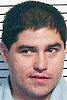
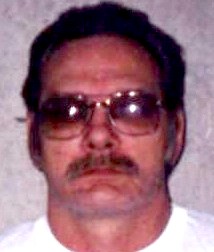
Jack Dale Walker
Murderer Brian Kevin Rosenfeld
Murderer · USA · 1985
Brian Kevin Rosenfeld Brian Kevin Rosenfeld was sentenced to three concurrent l…
23 victims
Brian Kevin Rosenfeld
Murderer · USA · 1985
Brian Kevin Rosenfeld Brian Kevin Rosenfeld was sentenced to three concurrent l…
23 victims
 Yahweh ben Yahweh
Murderer · USA · 1980
Yahweh ben Yahweh was born and legally named Hulon Mitchell Jr. (October 27, 19…
23 victims
Yahweh ben Yahweh
Murderer · USA · 1980
Yahweh ben Yahweh was born and legally named Hulon Mitchell Jr. (October 27, 19…
23 victims
 Russell Ellwood
Murderer · USA · 1991
Russell Ellwood was a former taxi driver. Authorities suspected him of killing…
20 victims
Russell Ellwood
Murderer · USA · 1991
Russell Ellwood was a former taxi driver. Authorities suspected him of killing…
20 victims
 Robert Martines Perez
Murderer · USA · 1994
Name: Robert Martines Perez · Other name used in proceedings: Robert Martinez P…
15 victims
Robert Martines Perez
Murderer · USA · 1994
Name: Robert Martines Perez · Other name used in proceedings: Robert Martinez P…
15 victims
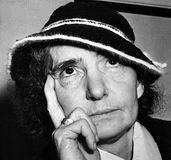 Juanita Spinelli
Murderer · USA · 1940
Juanita Spinelli was known as "The Duchess". She was first woman to die in San…
1 victim
Juanita Spinelli
Murderer · USA · 1940
Juanita Spinelli was known as "The Duchess". She was first woman to die in San…
1 victim
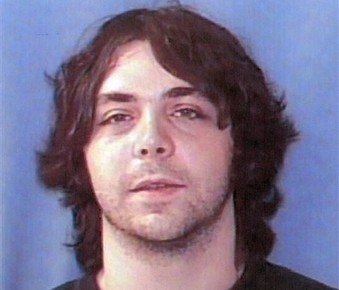 Wesley Higdon
Mass murderer · USA · 2008
Wesley Neal Higdon was a 25-year-old press operator from Henderson. He was desc…
5 victims
Wesley Higdon
Mass murderer · USA · 2008
Wesley Neal Higdon was a 25-year-old press operator from Henderson. He was desc…
5 victims
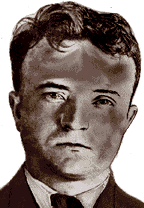 Paul Jaworski
Murderer · USA · 1926
Paul Jaworski was born in Poland as Paul Poluszynski in 1900. He later immigrat…
20 victims
Paul Jaworski
Murderer · USA · 1926
Paul Jaworski was born in Poland as Paul Poluszynski in 1900. He later immigrat…
20 victims
 Walter Kelbach
Spree killer · USA · 1966
Walter Kelbach was 28 years old. Myron Lance was 25 years old. Kelbach and Lanc…
6 victims
Walter Kelbach
Spree killer · USA · 1966
Walter Kelbach was 28 years old. Myron Lance was 25 years old. Kelbach and Lanc…
6 victims
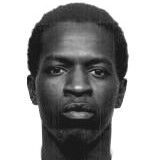 Raymond Landry
Murderer · USA · 1982
Raymond Landry Sr. was the person convicted in a Texas capital case. Raymond La…
1 victim
Raymond Landry
Murderer · USA · 1982
Raymond Landry Sr. was the person convicted in a Texas capital case. Raymond La…
1 victim
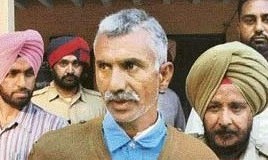 Darbara Singh
Serial killer · India · 2004
Darbara Singh was sentenced to death on January 7, 2008. His death sentence was…
17 victims
Darbara Singh
Serial killer · India · 2004
Darbara Singh was sentenced to death on January 7, 2008. His death sentence was…
17 victims
- Gender
- male
- Country
- USA
- Location
- Tulsa County, Oklahoma, USA
- Date of birth
- March 10, 1966
- Age at first offence
- 22
- Characteristics
- argument, alcohol
- Victim profile
- Shelly Ellison, 17 ( his ex-girlfriend) and Donald Epperson, 30 (her uncle )
- Method of murder
- St abbing with knife
- Date(s) of murder
- December 30, 1988
- Years active
- 1988
- Date of arrest
- Same day
- Status
-
Executed
Executed by lethal injection in Oklahoma on August 28, 2001
Case overview
Jack Dale Walker was executed by lethal injection in Oklahoma on August 28, 2001.
Walker was executed for the Dec. 30, 1988, stabbing deaths of 17-year-old Shelly Ellison and her uncle, 30-year-old Donald Gary Epperson. Walker was the estranged boyfriend of Shelley Ellison and the father of her 3-month old son, Joshua.
Timeline
- December 30, 1988 — Walker stopped at the trailer home where Shelly Ellison was staying and attacked Shelly and Donald Epperson with a hunting knife; Shelly made a 911 call during the attack; Walker was arrested at the scene.
- 1989 — Walker was convicted.
- August 28, 2001 — Walker was pronounced dead in Oklahoma state custody following execution by lethal injection.
- October 11, 2000 — The U.S. Court of Appeals for the Tenth Circuit affirmed the federal district court’s denial of habeas corpus relief.
The offence
On December 30, 1988, at approximately 8:00 a.m., Walker stopped at the trailer home where Shelly Ellison, the mother of his baby son, was staying. The trailer belonged to Juanita Epperson, Shelly’s grandmother. At the time, Shelly, the baby, Juanita, Juanita’s son Donnie Epperson, Donnie’s wife Linda, and four other grandchildren of Juanita’s were staying there.
Hansel Norton, Walker’s co-worker, drove Walker to the trailer. Walker told Norton he was upset, had a knife, and asked Norton to talk to him. Walker told Norton he had something to do before going to work. Walker told Juanita he wanted to talk to Shelly, talked to Shelly, and apparently sought to take the baby. Juanita explained the baby was sick and Walker could not take him. Walker then attacked Shelly with a knife.
Shelly cried for Donnie to help her. Donnie emerged from a bedroom during the attack. A fight broke out. Walker stabbed both Donnie and Shelly with the large, sharpened knife he brought with him. Walker also stabbed Shelly with an ice pick. Shelly made a 911 call during the attack and told the dispatcher: “I need help,” and: “He's stabbing me. I'm dead. Please.”
Juanita tried to stop Walker by hitting him with a pipe wrench. Walker hit Juanita, breaking her arm, and also stabbed her.
Walker threatened Linda and one of the grandchildren, Brian Epperson, with the knife and chased them out of the trailer.
After the attacks, Walker tried to stab himself in the throat with a paring knife, but the knife broke. Walker then slashed his wrist.
Shelly suffered more than thirty-two stab wounds. Donald Epperson sustained eleven stab wounds. Ellison’s grandmother, Juanita Epperson, was wounded, suffering a broken arm and a stab wound after trying to stop Walker by hitting him with a pipe wrench. Donald Epperson was conscious when police arrived at the home but later died from his wounds.
Investigation and arrest
After the attacks, police arrived at the trailer home. Shelly was dead and Walker was lying unconscious on the front porch of the trailer. Donnie was alert and conscious, but he died thereafter. Walker was arrested at the scene.
Trial
Walker was tried for the deaths of Shelly and Donnie and for assaults involving other family members at the trailer home.
The jury found Walker guilty of:
- two counts of first degree murder for the deaths of Shelly and Donnie,
- one count of assault and battery with a deadly weapon with respect to Juanita,
- two counts of assault with a deadly weapon with respect to Linda and Brian.
At the second stage of trial, the jury found three aggravators:
- Walker created a great risk of death to more than one person;
- the murders were especially heinous, atrocious, or cruel;
- Walker constitutes a continuing threat to society.
Walker received the death penalty for the murders and a total of forty years' incarceration for the other offenses.
Sentencing
Walker received death sentences for the murders. He also received prison sentences totaling 40 years for felony assaults involving other family members of Ellison’s.
Appeals and post-conviction
Direct appeal
Walker’s conviction was appealed. In Walker v. State, 887 P.2d 301 (Okl.Cr. 1994) (Direct Appeal), the Oklahoma Court of Criminal Appeals affirmed on direct criminal appeal.
U.S. Supreme Court
Walker v. Oklahoma, 116 S.Ct. 166 (1995) (Cert. Denied).
Post-conviction and further review
Walker v. State, 933 P.2d 327 (Okl.Cr. 1997) (PCR), and Walker v. Oklahoma, 117 S.Ct. 2524 (1997 (Cert. Denied).
Federal habeas
Walker v. Gibson, 228 F.3d 1217 (10th Cir. 2000) (Habeas). Walker v. Gibson, 121 S.Ct. 2560 (2001) (Cert. Denied).
U.S. Court of Appeals for the Tenth Circuit (habeas decision)
On October 11, 2000, the U.S. The court described that Walker was convicted of two counts of first degree murder and sentenced to death, and that the Oklahoma Court of Criminal Appeals affirmed on direct criminal appeal and denied post-conviction relief, including discovery and an evidentiary hearing.
The court described the certificate of appealability issues as including:
- substantive and procedural due process competency;
- ineffective assistance of trial counsel;
- failure to instruct on the presumption of innocence;
- improper admission of a sheriff's deputy's testimony;
- lack of notice of aggravating circumstances;
- prosecutorial misconduct.
The court expanded the certificate of appealability to include an additional issue: failure to give a first degree manslaughter instruction.
The Tenth Circuit addressed:
- Walker’s procedural and substantive due process competency claims,
- ineffective assistance of trial counsel claims,
- the presumption of innocence instruction issue,
- the refusal to instruct on first degree manslaughter,
- admission of statements overheard by Deputy Fritz,
- notice of evidence to support aggravators,
- prosecutorial misconduct.
In its discussion of competency, it stated that Walker’s history of mental illness and substance abuse alone did not establish incompetency to stand trial, and that Dr. Nicholson testified at the competency hearing that Walker was competent. The court also stated that no expert had found Walker incompetent before or during trial, and that at no time prior to or during trial did defense counsel raise concerns about Walker’s competency.
In its discussion of the presumption of innocence instruction, it stated that the trial court instructed the jury that Walker was “presumed to be not guilty” and that it did not decide whether the instruction was unconstitutional, concluding that any error was not structural and was harmless under the applicable standard it applied.
In its discussion of manslaughter, it described the Oklahoma Court of Criminal Appeals’ reasoning that evidence did not support a first degree manslaughter instruction because Walker went to the trailer with a concealed, sharpened knife, became angry with Shelly, attacked her, and later stabbed Shelly with an ice pick, and that Walker’s evidence did not show killings in a heat of passion and without a design to effect their deaths.
In its discussion of Deputy Fritz testimony, it described that Walker made certain statements to a medical doctor that were overheard by Deputy Fritz while Walker was hospitalized for self-inflicted wounds, including statements about killing Shelly and being glad he had done so, regretting he had killed Donnie, planning to kill his parents with a gun two months before the murders, and taking steroids. The court concluded admission of the evidence did not deprive Walker of a fair trial and described any error as harmless in light of other overwhelming evidence.
Execution
On August 28, 2001, Walker was pronounced dead following execution by lethal injection in Oklahoma.
Walker’s age was described as 35 in multiple parts of the provided material. He was described as pronounced dead at 9:09 or 9:08 Tuesday night (two different times were presented in the material). The blinds to the execution chamber were raised and Walker was described as grinning widely and nodding toward people who had come to witness the execution on his behalf, including witnesses including two attorneys, one defense investigator, a friend and an aunt.
When asked if he had any last words, Walker said: “I'd just like to tell my family and friends good-bye.”
Walker then said to two women whose shoulders shook as they cried softly: “I love you and I hope to see you soon,” and: “Take care.” Walker spoke no more.
Impact on family and related statements
Joshua Ellison, the son of Walker and Shelly Ellison, was three months old at the time of the murders. Joshua later wrote a letter to the state Pardon and Parole Board in support of Walker’s execution. Joshua wrote: “Sometimes I think about what life would be like if my mom were alive, but then I come to my senses and realize that was destroyed by one man, Jack Walker,” and: “I think Jack Walker should pay for what he did to my mother. I think he should die for taking my mom away from me.”
Juanita Epperson was also wounded in the attack, suffering a broken arm and a stab wound after trying to stop Walker by hitting him with a pipe wrench.
The provided material also contained remarks by Kathy Ellison, the mother of one of Walker’s victims and the sister of the other: “The laws of Oklahoma would never allow for the type of death we would have chosen for Walker,” and: “We believe if you live by the sword, you should die by the sword. An eye for an eye, a tooth for a tooth.”
Other details
The provided material included extensive discussion of Walker’s post-conviction litigation and claims, including competency, ineffective assistance of counsel, presumption of innocence instruction, admission of statements overheard by Deputy Fritz, notice of aggravating circumstances, prosecutorial misconduct, and the refusal to instruct on first degree manslaughter.
The provided material also included references to Walker’s history of drug and alcohol abuse and to psychiatric conditions discussed in the appellate decision, including Borderline Personality Disorder and a condition called Paradoxical Benzodiazapine Rage.
During the execution period, vigils and protests were described, including a vigil outside the gates of Oklahoma State Penitentiary in McAlester and protesters outside a building that housed offices of the attorney general's office in Oklahoma City. The Rev. Steve Austin was described as saying protesters pray “for the inmate being executed and for his family, as well as for the family and souls of the inmate's victims,” and that five protesters were arrested outside a building in Oklahoma City.
Spotted an error, or have more information about this case?