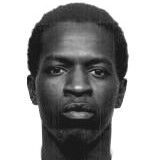
Raymond Landry
Murderer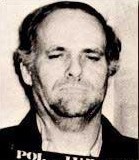 Ervil LeBaron
Murderer · USA · 1972
Ervil Morrell LeBaron (1925 to August 16, 1981) was the leader of a polygamous…
35 victims
Ervil LeBaron
Murderer · USA · 1972
Ervil Morrell LeBaron (1925 to August 16, 1981) was the leader of a polygamous…
35 victims
 Brian Kevin Rosenfeld
Murderer · USA · 1985
Brian Kevin Rosenfeld Brian Kevin Rosenfeld was sentenced to three concurrent l…
23 victims
Brian Kevin Rosenfeld
Murderer · USA · 1985
Brian Kevin Rosenfeld Brian Kevin Rosenfeld was sentenced to three concurrent l…
23 victims
 Marvin Gray
Murderer · USA · 1975
Marvin Gray was convicted killer who claimed responsibility for 23 slayings and…
23 victims
Marvin Gray
Murderer · USA · 1975
Marvin Gray was convicted killer who claimed responsibility for 23 slayings and…
23 victims
 Yahweh ben Yahweh
Murderer · USA · 1980
Yahweh ben Yahweh was born and legally named Hulon Mitchell Jr. (October 27, 19…
23 victims
Yahweh ben Yahweh
Murderer · USA · 1980
Yahweh ben Yahweh was born and legally named Hulon Mitchell Jr. (October 27, 19…
23 victims
 Russell Ellwood
Murderer · USA · 1991
Russell Ellwood was a former taxi driver. Authorities suspected him of killing…
20 victims
Russell Ellwood
Murderer · USA · 1991
Russell Ellwood was a former taxi driver. Authorities suspected him of killing…
20 victims
 Jesusa Tatad
Murderer · USA · 2011
Jesusa Tatad was 41 years old at the time of her sentencing. She had divorced R…
1 victim
Jesusa Tatad
Murderer · USA · 2011
Jesusa Tatad was 41 years old at the time of her sentencing. She had divorced R…
1 victim
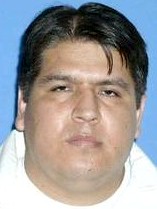 Ruben Ramirez Cardenas
Murderer · 1997
Ruben Ramirez Cardenas (TDCJ Number 999275) was a Mexican national. He was Hisp…
1 victim
Ruben Ramirez Cardenas
Murderer · 1997
Ruben Ramirez Cardenas (TDCJ Number 999275) was a Mexican national. He was Hisp…
1 victim
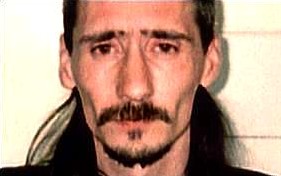 Lee Ford
Mass murderer · United Kingdom · 2000
Lee Ford · Lesley Ford (wife) · Michael Tranter (natural father of four childre…
5 victims
Lee Ford
Mass murderer · United Kingdom · 2000
Lee Ford · Lesley Ford (wife) · Michael Tranter (natural father of four childre…
5 victims
 Barbara Burns
Murderer · USA · 2004
Name: Barbara Burns · Status: Plead guilty to manslaughter and receive 15 years…
1 victim
Barbara Burns
Murderer · USA · 2004
Name: Barbara Burns · Status: Plead guilty to manslaughter and receive 15 years…
1 victim
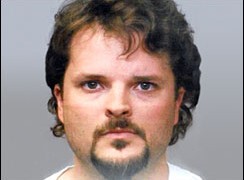 Christopher Vaughn
Mass murderer · USA · 2007
Christopher Vaughn was sentenced to four consecutive life terms on November 26,…
4 victims
Christopher Vaughn
Mass murderer · USA · 2007
Christopher Vaughn was sentenced to four consecutive life terms on November 26,…
4 victims
 Karthik Rajaram
Mass murderer · USA · 2008
Karthik Rajaram was found dead in his Porter Ranch home along with his wife, mo…
5 victims
Karthik Rajaram
Mass murderer · USA · 2008
Karthik Rajaram was found dead in his Porter Ranch home along with his wife, mo…
5 victims
- Gender
- male
- Country
- USA
- Location
- Harris County, Texas, USA
- Date of birth
- May 14, 1949
- Age at first offence
- 33
- Characteristics
- robbery, drugs, abuse
- Victim profile
- Kosmas Prittis, 33 (restaurant owner)
- Method of murder
- Shooting
- Date(s) of murder
- August 6, 1982
- Years active
- 1982
- Date of arrest
- 3 days after
- Status
-
Executed
Executed by lethal injection in in Texas on December 13, 1988
Case identification
Raymond Landry Sr. was the person convicted in a Texas capital case.
Background
Raymond Landry Sr. was 37 years old. He had completed 11th grade. The execution account stated that Landry’s arms were very muscular and that the veins were so scarred from years of drug abuse that the syringe came out of his vein during the lethal injection procedure.
The offence
On the night of August 6, 1982, Raymond Landry confronted the Prittis family in the parking lot outside a Dairy Maid store run by the family.
- Raymond Landry pointed a gun at Kosmas Prittis.
- Landry ordered the family to turn over their money, including the money left in the store.
- During the robbery, Landry shot Kosmas Prittis in the head and killed him. The robbery occurred as the Prittis family prepared to close their East Bellfort business for the day.
Kosmas Prittis was identified as a restaurateur, aged 33, and as the husband and father. Landry struck his wife, identified as Kelly, in the face with his gun and pointed the gun at the children.
Investigation
The United States Court of Appeals for the Fifth Circuit described the confrontation and robbery in the parking lot outside a Dairy Maid store outside the Prittis family business.
Trial
The State of Texas convicted Raymond Landry of capital murder and sentenced him to death. The Texas Court of Criminal Appeals affirmed the conviction and sentence on direct appeal.
Landry raised fourteen claims in his habeas petition. Five of these related to the State’s use of allegedly improper hypotheticals during the extended voir dire at his trial.
- The State concedes that, in an attempt to illustrate to veniremembers the meaning of the term “deliberately” under the Texas capital sentencing statute, it posed hypothetical situations some of which did not constitute capital murder.
- The prosecutor asked a veniremember to consider a hypothetical case in which a defendant shoots someone in the foot who then declines to seek medical attention and so dies of gangrene.
Landry argued that the use of this hypothetical and others like it led the jurors to believe that the only situations in which they might decide that a defendant acted without the deliberateness requisite for imposition of a death sentence were situations not involving capital murder at all. Landry also argued that the hypotheticals hopelessly confused the venire about the distinction between a finding of “intentional” homicide at the guilt phase of his capital trial and a finding of “deliberate” conduct at the sentencing phase. Landry asserted that the improper hypotheticals resulted in a denial of his Eighth and Fourteenth Amendment rights by:
- distracting the jury from the mandatory consideration of his individual record, character, and the particular facts of his case;
- improperly expanding the class of persons eligible for the death penalty;
- suggesting that proof of the elements of the crime of capital murder led inexorably to a finding of deliberateness at sentencing; and
- lowering the State’s burden of proof.
The State pointed out that the defense never objected to the use of the hypotheticals, challenged a juror for cause on this basis, or even exhausted its peremptory challenges. The Texas Court of Criminal Appeals held Landry’s challenges to the hypotheticals procedurally barred.
Landry also challenged as ineffective assistance of counsel the failure to object to the admission of a bank bag and pistol holster. The State found these items during an allegedly illegal search of Landry’s wife’s home and offered them at trial as implements of the crime. The court found no incompetence because the record revealed that the search was legal:
- Landry’s wife signed a form consenting to the search; and
- a state court hearing on the consent, subsequent to trial, produced no evidence that the police coerced or tricked her into signing the form.
Sentencing
Landry claimed that the evidence was insufficient to support the jury’s findings at sentencing that:
- the murder was deliberate; and
- Landry would pose a continuing threat to society.
The court applied the standard from Jackson v. Virgina: it considered whether, viewing the evidence in the light most favorable to the jury’s findings, any rational trier of fact could have found these facts beyond a reasonable doubt. The prosecution presented evidence at the guilt and sentencing phases that:
- Landry robbed the Prittises;
- Landry shot Kosmas Prittis in the head;
- Landry struck his wife Kelly in the face with his gun; and
- Landry pointed the gun at the children.
The State also presented evidence of:
- a former felony conviction for burglary; and
- Landry’s history of violent acts against his family.
The court stated that based on this and other evidence, a rational jury could have found that Landry committed his crimes deliberately and that he would continue to endanger others.
Landry also challenged the trial court’s failure to define the term “deliberate,” stating it compounded the confusion caused by the improper voir dire and left the jury without constitutionally sufficient guidance. The court noted that defense counsel failed to request an instruction on the meaning of deliberateness and lodged no objection on this ground to the charge delivered at the punishment stage. Landry offered no explanation for the default.
Landry challenged the admission at sentencing of evidence of a prior felony conviction for which he was sentenced without representation by counsel. The court noted first that the evidence showed Landry lacked representation at sentencing on his 1975 burglary conviction because he failed to appear, having fled the court’s jurisdiction. The court further stated that his lack of representation at sentencing did not undermine the constitutionality of his conviction on the prior felony, and that it was the conviction, not the sentence, that the jury considered at the punishment phase of his capital trial. The court found no due process violation in the jury’s consideration at sentencing of the defendant’s prior valid conviction.
Landry made a more serious due process challenge to the admission at sentencing of evidence of prior unadjudicated offenses, including wife and child abuse, without formal notice from the State of its intention to offer such evidence. The court recognized that admission of evidence of crimes for which Landry was never charged may present due process problems, and that admission in capital cases when Texas excludes it in non-capital cases may raise equal protection problems. However, the court stated it was bound by prior decisions of the circuit holding such evidence admissible at the sentencing phase of capital trials. The court found no authority for requiring the state to notify the defendant before offering this admissible evidence and stated Landry had not shown how the lack of notice prejudiced his defense.
Landry also argued that the Texas death penalty statute was unconstitutional because:
- it failed adequately to narrow the class of persons eligible for the penalty; and
- it permitted proof of the elements of the crime to serve also as proof of the aggravating factors warranting a death sentence.
The court discussed the Supreme Court’s decision in Lowenfield v. Phelps as upholding the Louisiana death penalty statute and, by express analogy, the Texas statute against challenges identical to Landry’s. Landry asserted that the Texas death penalty scheme did not permit the jury to give full consideration to mitigating circumstances. The Texas Court of Criminal Appeals held this claim procedurally barred because Landry failed to object to the death penalty statute on this ground at trial or to request a jury charge on mitigating evidence.
Landry urged that the novelty of the jurisprudence on mitigating circumstances excused his defaults. The court referred to Selvage v. Lynaugh and held that the petitioner could not establish cause for a procedural default on the ground that the law on mitigating circumstances was new. The court cited that in 1980 Texas courts faced and rejected the contention that the death penalty scheme prevented adequate consideration of mitigating circumstances. The court stated that the state court’s prior rejection did not constitute cause for the default. The court also cited Jurek v. Texas as indicating that whether the Texas courts would construe the statute so as to allow full consideration of mitigating circumstances remained an open question. The court concluded that at his trial in 1982, Landry had a reasonable basis to formulate an objection and that his argument was barred because of failure to do so. The court explained that in Selvage, in the absence of a procedural bar, it would have granted a stay based on the petitioner’s claim that the death penalty scheme unconstitutionally restricted the jury’s consideration of mitigating factors, but the court stated that this issue was not before it and it expressed no opinion about it.
Appeals
After pursuing post-conviction remedies in Texas courts, Landry unsuccessfully applied to federal district court for a writ of habeas corpus and a stay of execution. The appellate court described:
- “We grant Landry’s application for a certificate of probable cause, but, finding his claims either without merit or barred by the law of this circuit, we affirm the district court’s decision and deny relief.”
Landry raised fourteen claims in his habeas petition, including claims about improper hypotheticals during extended voir dire, ineffective assistance of counsel, insufficiency of evidence at sentencing, jury instructions, due process challenges related to sentencing evidence and prior convictions, and challenges to the Texas death penalty statute.
The court discussed procedural default for the hypotheticals claim, stating that it could not reach claims procedurally barred by state courts unless the petitioner offered good cause and demonstrated prejudice. The court described Landry’s argument that counsel’s failure to object should be excused due to novelty of a constitutional claim at the time of trial, referencing Reed v. Ross. The appellate court determined that Landry did not show adequate cause for the default and also did not show prejudice for an ineffective assistance claim related to counsel’s failure to object.
The court also addressed Landry’s challenge about the admission of a bank bag and pistol holster, finding no incompetence because the search was legal.
The court rejected Landry’s evidence insufficiency claims, found no due process violation regarding consideration of a prior valid conviction, and rejected the due process challenge regarding admission of prior unadjudicated offenses due to circuit precedent and lack of demonstrated prejudice.
The court addressed the constitutionality arguments regarding the death penalty statute and mitigating circumstances and held the mitigating circumstances claim procedurally barred.
The court concluded:
“For these reasons, we DENY habeas corpus and VACATE the stay of execution granted by this court on January 27, 1988.”
W. Eugene Davis concurred in the judgment.
“I concur in the judgment of the court. I also concur in all of Judge Rubin’s careful opinion except the single sentence that expresses reservations about the correctness of our holding in Williams v. Lynaugh, 814 F.2d 205 (5th Cir.1987). For reasons stated in that opinion, I do not share the concern of my colleagues that the State of Texas may not constitutionally permit the State to admit evidence of prior unadjudicated offenses of the accused in the penalty phase of a capital case.”
Outcome
Landry was executed by lethal injection on December 13, 1988 in Texas.
During the execution procedure, witnesses reported that the syringe came out of Landry’s vein and that lethal chemicals sprayed across the room toward witnesses. The curtain separating witnesses from the inmate was then pulled and not reopened for fourteen minutes while the execution team reinserted the catheter. The execution was delayed for 14 minutes because of the syringe blowout, and prison staff reinserted the catheter. Landry was pronounced dead 40 minutes after being strapped to the execution gurney and 24 minutes after the drugs first started flowing into his arms.
A spokesperson for the Texas Department of Correction, Charles Brown (sic), stated:
“There was something of a delay in the execution because of what officials called a ‘blowout.’ The syringe came out of the vein, and the warden ordered the (execution) team to reinsert the catheter into the vein.”
Witnesses reported “at least one groan.”
Timeline
- August 6, 1982 — Raymond Landry confronted the Prittis family in a parking lot outside a Dairy Maid store, pointed a gun at Kosmas Prittis, ordered the family to turn over money, and shot Kosmas Prittis in the head, killing him.
- March 29, 1988 — The United States Court of Appeals for the Fifth Circuit decided Landry v. Lynaugh.
- January 27, 1988 — A stay of execution was granted by the court and later vacated.
- December 13, 1988 — Raymond Landry was executed by lethal injection in Texas.
Other details
The United States Court of Appeals for the Fifth Circuit cited:
- Landry v. Texas, 706 S.W.2d 105 (Tex.Crim.App.1985)
- Tex.Code Crim.Proc.Ann. art. 37.071(b)(1) (Vernon 1981)
- Smith v. Murray, 477 U.S. 527 (1986)
- Wainwright v. Sykes, 433 U.S. 72 (1977)
- Reed v. Ross, 468 U.S. 1 (1984)
- Strickland v. Washington, 466 U.S. 668 (1984)
- Jackson v. Virgina, 443 U.S. 307 (1979)
- Lowenfield v. Phelps, --- U.S. ----, 108 S.Ct. 546 (1988)
- Selvage v. Lynaugh, 842 F.2d 89 (5th Cir.1988)
- Jurek v. Texas, 428 U.S. 262 (1976)


Spotted an error, or have more information about this case?