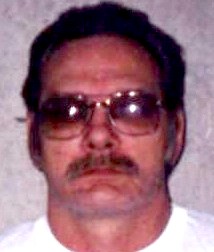
Gary Alan Walker
Spree killer Paul John Knowles
Spree killer · USA · 1974
Paul John Knowles (April 17, 1946 – November 18, 1974) was an American spree ki…
35 victims
Paul John Knowles
Spree killer · USA · 1974
Paul John Knowles (April 17, 1946 – November 18, 1974) was an American spree ki…
35 victims
 Bobby Joe Maxwell
Spree killer · USA · 1978
Name: Bobby Joe Maxwell Sex: M Race: B Type: T Motive: PC-nonspecific Method of…
11 victims
Bobby Joe Maxwell
Spree killer · USA · 1978
Name: Bobby Joe Maxwell Sex: M Race: B Type: T Motive: PC-nonspecific Method of…
11 victims
 Manuel Pardo
Spree killer · USA · 1986
Manuel Pardo, Jr. was a former police officer who was convicted of nine counts…
9 victims
Manuel Pardo
Spree killer · USA · 1986
Manuel Pardo, Jr. was a former police officer who was convicted of nine counts…
9 victims
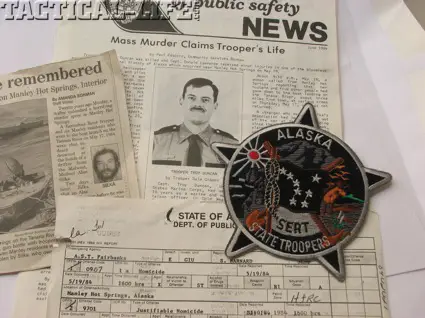 Michael Alan Silka
Spree killer · USA · 1984
Michael Alan Silka was killed during a shoot-out with the police on May 19, 198…
9 victims
Michael Alan Silka
Spree killer · USA · 1984
Michael Alan Silka was killed during a shoot-out with the police on May 19, 198…
9 victims
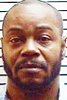 John Michael Hooker
Murderer · USA · 1988
John Michael Hooker was executed by lethal injection in Oklahoma on March 25, 2…
2 victims
John Michael Hooker
Murderer · USA · 1988
John Michael Hooker was executed by lethal injection in Oklahoma on March 25, 2…
2 victims
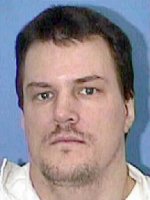 Troy Albert Kunkle
Murderer · USA · 1984
Troy Albert Kunkle was convicted of capital murder and sentenced to death for t…
1 victim
Troy Albert Kunkle
Murderer · USA · 1984
Troy Albert Kunkle was convicted of capital murder and sentenced to death for t…
1 victim
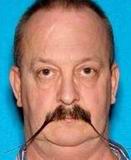 William Clyde Gibson
Serial killer · USA · 2002
October 26, 2013 — A jury in New Albany found William Clyde Gibson guilty of th…
3 victims
William Clyde Gibson
Serial killer · USA · 2002
October 26, 2013 — A jury in New Albany found William Clyde Gibson guilty of th…
3 victims
 Todd Warzecha
Murderer? · USA · 1972
Todd Warzecha was a prime suspect in two unsolved Mid-Michigan murders. Michiga…
6 victims
Todd Warzecha
Murderer? · USA · 1972
Todd Warzecha was a prime suspect in two unsolved Mid-Michigan murders. Michiga…
6 victims
 Antoinette Pelzer
Murderer · USA · 2012
Antoinette Pelzer was homeless and had been diagnosed with schizophrenia. Her f…
2 victims
Antoinette Pelzer
Murderer · USA · 2012
Antoinette Pelzer was homeless and had been diagnosed with schizophrenia. Her f…
2 victims
- Gender
- male
- Country
- USA
- Location
- Tulsa, Oklahoma, USA
- Date of birth
- September 25, 1953
- Age at first offence
- 31
- Characteristics
- rape, robbery
- Victim profile
- Jayne Hilburn, 35 / Janet Dee Jewell, 32 / Valerie Shaw-Hartzell, 25 / Margaret Bell Lydick, 37 / DeRonda Gay Roy, 24 / Eddie O. Cash (male, 63)
- Method of murder
- Strangulation
- Date(s) of murder
- May 1984
- Years active
- 1984
- Date of arrest
- June 2, 1984
- Status
-
Executed
Executed by lethal injection in Oklahoma on January 13, 2000
Case Overview
Gary Alan Walker was a Tulsa County death row inmate who was executed by lethal injection in Oklahoma on January 13, 2000.
Walker was convicted and sentenced to death for the 1984 murder of Eddie O. Cash, 63, of Broken Arrow. The jury rejected the insanity defense.
Walker was also found guilty of the 1984 murder of Tulsa radio reporter Valerie Shaw-Hartzell, 25. His death sentence in that murder was overturned on appeal, and at a second trial he received life without parole plus 500 years for kidnapping.
Walker confessed to multiple other killings from the 1984 spree, including the killings of Jayne Hilburn, Janet Jewell, and Margaret Bell Lydick.
Timeline
- May 6, 1984 — Eddie O. Cash, 63, was killed at his Broken Arrow home after Walker was given a ride earlier that day while hitchhiking.
- May 8, 1984 — Pricilla Crane discovered the body of Eddie Cash dead on the livingroom floor of his Broken Arrow home.
- May 7, 1984 — The killing of Eddie Cash was described as being found dead at his home.
- May 8, 1984 — Margaret Bell vanished, with her car, from a Poteau, Oklahoma tavern.
- May 14, 1984 — Jayne Hilburn, 35, was strangled in her home in Vinita; her black Camaro was reported stolen from the scene.
- May 15, 1984 — A young woman in Oakhurst accepted a ride from the bushy-haired driver of a black Camaro who introduced himself as “Gary Edwards”; the driver pulled a knife and demanded that she shed her pants, and she escaped unharmed.
- May 20, 1984 — A 17-year-old girl was abducted in the oil field section of Hominy by a man driving a black Camaro; she was raped at knife point but scrambled free.
- May 22, 1984 — The Camaro was found abandoned.
- May 23, 1984 — Janet Jewell, 32, disappeared near Beggs; Walker later confessed to abducting and killing her.
- May 24, 1984 — Valerie Shaw-Hartzell, 25, was kidnapped and raped; her body was later found in a rural area near Claremore in Rogers County.
- May 25, 1984 — Valerie Shaw-Hartzell was sighted at two different drive-up banks in the company of an unidentified man while attempting to cash personal checks.
- May 26, 1984 — A young woman was kidnapped at knifepoint from a bar in Vinita, was raped, and was released and reported the crime to police.
- May 27, 1984 — The hostage taken on May 26 was driven back to her neighborhood and released; she telephoned police after being released.
- May 28, 1984 — Agents of the Oklahoma State Bureau of Investigation announced fingerprints recovered from Jayne Hilburn’s abandoned Camero belonged to ex-convict Gary Alan Walker.
- May 29, 1984 — Surviving victims from Oakhurst, Vinita, and Skiatook identified Walker’s prison mug shots.
- May 30, 1984 — Two young girls were abducted in Van Buren, Arkansas.
- May 31, 1984 — The girls identified Gary Walker as their abductor.
- June 2, 1984 — Walker barged into another Van Buren home, threatening the female tenants with a pistol, and took a car; he later directed police to bodies of missing victims.
- June 3, 1984 — Walker’s first interrogation occurred from about 1:00–1:50 a.m.; he was read Miranda rights and stated he did not want a lawyer.
- June 6, 1984 — A Tulsa County Public Defender, Pete Silva, was appointed to represent Walker.
- June 7, 1984 — Pete Silva represented Walker in an arraignment in Tulsa County on an information alleging three counts of First Degree Murder.
- June 8, 1984 — Walker was taken into the Rogers County Sheriff’s office; video equipment was already set up; he was advised of Miranda rights, signed a waiver, and gave a full confession.
- Nov. 14, 1984 — A jury convicted Walker of killing Eddie Cash and sentenced him to die.
- June 1, 1985 — Walker’s death sentence in the Shaw-Hartzell murder was overturned on appeal.
- January 13, 2000 — Walker was executed by lethal injection in Oklahoma at the Oklahoma State Penitentiary; he was pronounced dead at 12:21 a.m.
The offence
Eddie O. Cash (Broken Arrow)
Walker gave a confession to police regarding the killing of Eddie O. Cash, 63, of Broken Arrow.
Walker stated that he met Mr. Cash on May 6, 1984, when Mr. Cash gave him a ride to Owasso. During the trip, Walker decided to go to Mr. Cash’s home and burglarize it. Mr. Cash had informed him that he lived in Broken Arrow. Walker obtained Mr. Cash’s address by calling directory assistance and went to the residence. As Walker stood on the front porch and knocked on the door to make sure no one was home, Mr. Cash pulled into his driveway. Walker ran, fearing Mr. Cash would call the police. Walker discovered a brick at the side of the residence, and returned to the front door. He knocked on the door, gained entry to the house, and killed Mr. Cash with the brick and vacuum cleaner cord. Walker took several items from Mr. Cash’s residence, including the victim’s van and shoes. The van was later recovered by the Oklahoma State Bureau of Investigation.
A crime scene investigation revealed several lacerations on Mr. Cash’s head, and the cord to a vacuum cleaner tied tightly around his neck. A brick covered with blood was found on a coffee table near the body. An autopsy revealed that Mr. Cash died from multiple blunt force injuries to the head and ligature strangulation. The head injuries were consistent with those which might be inflicted with a brick.
Walker was convicted by a jury of killing Broken Arrow resident Eddie Cash. The jury found only one aggravating circumstance but assessed the death penalty.
Other offences and confessions
Walker confessed to multiple 1984 killings and other violent crimes described in the case record.
Valerie Shaw-Hartzell (Tulsa radio reporter)
Walker was convicted and sentenced to death for the 1984 murder of Tulsa radio reporter Valerie Shaw-Hartzell, 25, after she was killed following being kidnapped and raped on May 24. Her body was later found in a rural area near Claremore in Rogers County.
In the second trial for Ms. Shaw-Hartzell, Walker received a sentence of life without parole plus 500 years for kidnapping.
Jayne Hilburn (Vinita)
Walker confessed to killing Jayne Hilburn of Vinita. She was strangled, and her car was stolen.
Janet Jewell (Beggs)
Walker confessed to killing Janet Jewell of Beggs. She was raped and murdered.
The case record described Janet Jewell as having three children, and it described her as a divorcee who was searching for a job in Tulsa.
Margaret Bell Lydick (Poteau)
Walker confessed to killing Margaret Bell Lydick of Poteau. The case record described her as having been raped, tortured, and murdered. The case record also described an execution-related identification involving Margaret Bell Lydick, including that her body was found in an abandoned barn beneath a haystack near Princeton, Kentucky.
Investigation
After the arrest, Walker gave a detailed confession and led police to locations of bodies.
A crime scene investigation of Eddie Cash’s home resulted in the arrest of Walker. Following his arrest, he gave a detailed confession to police and led them to bodies of missing victims over the subsequent period.
Agents of the Oklahoma State Bureau of Investigation announced fingerprints recovered from Jayne Hilburn’s abandoned Camero belonged to ex-convict Gary Alan Walker.
Arrest
Walker was arrested in Tulsa County by Tulsa municipal police at about 11:00 p.m. on June 2, 1984.
Following arrest, Walker led officers to Shaw-Hartzell’s and Jewell’s bodies.
Trial
Counts and verdict (Eddie Cash murder)
Walker’s direct appeal record described that the appellant, Gary Alan Walker (a/k/a Gary Alan Edwards), was charged in the District Court of Tulsa County, Case No. CRF-84-2088, with the offense of Murder in the First Degree.
He was convicted by a jury, and punishment was assessed at death by lethal drug injection.
Judgment and sentence were imposed in accordance with the jury’s verdict, and the appellate court affirmed the conviction and death sentence.
Insanity defence and jury decision
Walker raised the insanity defense and produced testimony alleging abuse he suffered at the hands of his stepfather, Otis Walker, psychological trauma resulting from the recent death of his brother, his various prior convictions, and his past record of mental illness.
Dr. Thomas Goodman, a psychiatrist, concluded that although Walker had the ability to know right from wrong at the time of the killing, Walker believed the victim to be his step-father, and that it was not wrong to kill him.
Aggravating circumstances (Shaw-Hartzell and Cash matters)
In the Eddie Cash trial record, at the second stage of trial the State alleged two aggravating circumstances in support of the death sentence:
- the murder was committed for the purpose of avoiding or preventing a lawful arrest or prosecution; and
- the existence of a probability that the defendant would commit criminal acts of violence that would constitute a continuing threat to society.
The jury found only the second aggravating circumstance and assessed the death penalty.
In the Shaw-Hartzell case record, the jury found that two aggravating circumstances existed: 2. the defendant presented a continuing threat to society.
Jury rejection on lesser included offence instruction claim (federal appeal)
In a federal habeas record, Walker argued that the trial court refused to instruct the jury on lesser included offences of second degree murder and first degree manslaughter. The federal appellate record stated that a capital defendant is constitutionally entitled to instructions on offenses recognized as lesser included offenses, but only when supported by the evidence.
The federal appellate record stated that Oklahoma law defined first degree manslaughter as a homicide perpetrated without a design to effect death, and it found no evidence supporting that instruction. It also found that the abandonment of second degree burglary was established by undisputed facts as construed by the Oklahoma Court of Criminal Appeals.
The federal appellate record stated:
“Having carefully considered Mr. Walker's claims, we are not persuaded that constitutional errors infected his state court trial. We AFFIRM the judgment of the district court denying Mr. Walker's petition for a writ of habeas corpus.”
Sentencing
Death sentence for Eddie Cash
Walker was sentenced to death by lethal drug injection for the Murder in the First Degree conviction for Eddie Cash.
The jury sentenced him to die on Nov. 14, 1984.
Shaw-Hartzell retrial
The death sentence Walker received June 1, 1985, for the strangulation death of Shaw-Hartzell was overturned on appeal.
Walker pleaded guilty in a subsequent retrial and received life without parole and 500 years for kidnapping.
Appeals and post-conviction
Oklahoma Court of Criminal Appeals
The Oklahoma Court of Criminal Appeals set the execution date after determining that Walker, 46, had exhausted his appeals. The same record described that the Shaw-Hartzell conviction and sentence were remanded for retrial and that Walker received life without parole and 500 years for kidnapping in the second trial.
Federal habeas corpus
Walker filed a petition for federal habeas corpus relief pursuant to 28 U.S.C. 2254, alleging multiple constitutional infirmities, including competency proceedings, denial of funds for neurological testing, refusal to instruct on lesser included offenses, and challenges to the “continuing threat” aggravating circumstance.
The federal appellate record described the appeal and stated that it affirmed the judgment denying habeas relief.
Outcome
Walker was executed by lethal injection in Oklahoma on January 13, 2000, shortly after midnight.
The record described that Walker was pronounced dead at 12:21 a.m.
Aftermath and related statements
Walker’s last words
Walker’s parting words to his victim’s relatives were:
“I’m sorry for what I’ve done. I hope when I go the hate you have, and it’s natural for you to hate me, that you would let it go with me.”
The execution was described as attended by relatives of victims, including Cash family members watching through a large window in a room adjacent to the execution chamber, and other victims’ family members watching via closed-circuit television.
Additional contested matter described in the case record
Walker’s defence involved testimony about abuse as a child at the hands of his stepfather, Otis Walker, psychological trauma from the recent death of his brother, his prior convictions, and past record of mental illness, including that he believed his dead brother was “speaking to him” and that he suffered from schizophrenia and paranoia.
Statements attributed to individuals in the case record
Doug Hilburn said:
“I’d like to hear him admit that he done wrong. Maybe ask for forgiveness,”
and later also:
“I don’t know whether I’ve forgiven him or not.”
Emilie Pearson, Shaw-Hartzell’s mother, said:
“I’m hoping it will close this long, long chapter of our lives,”
and:
“We'll never forget Valerie, and this certainly won't bring her back.”
Eileen Stephens, Shaw-Hartzell’s cousin, defined the execution as:
“the end to the ultimate battle of good and evil -- good triumphant over evil finally 15 years later.”
She also said:
“The death penalty is the ultimate protection for the-law abiding citizens of our society from murderous and violent criminals,”
and:
“we need to use our energies to prevent child neglect and abuse and promote better mental health care for all our citizens.”
Dorna Cash, wife of Eddie Cash’s grandson Lewis Cash, said:
“The protesters of the Walker execution should be given the chance to be scared to death and tortured and bought near to death by strangulation, then right before death be allowed to live. Then see if they still feel the same way.”
James Crane said:
“I don’t know if killing Walker is right or wrong, justice or vengeance. All I know is that he will never kill anyone ever again.”
Walker said during a confession:
“I knew what I was doing, but I don't know why ... I know right from wrong. I don't know why I did it, but I know I did do it.”
In custody, Walker also launched a confession including:
“I'm sorry I killed five people, okay?”
Other details
Age and identity details
Walker was described in multiple places as “Gary Alan Walker” and as “Gary Alan Edwards” (as an alias in the case record). He was described as being 46 at the time of execution.
Attorney and legal representatives mentioned
Walker’s lawyer was Gloyd McCoy, who fought for 14 years to win a reprieve. A Tulsa County Public Defender, Pete Silva, was appointed to represent Walker on June 6, 1984.
Witnesses at the execution
Walker did not want his attorney, Gloyd McCoy, to witness the execution. The record stated that Walker had his sister and a cousin as witnesses.
Procedural history referenced in the case record
The Shaw-Hartzell death sentence was described as overturned on appeal after being remanded for retrial; at the second trial Walker received life without parole plus 500 years for kidnapping.
The case record also referenced Walker v. State (Okl.Cr. 1986) and Walker v. State (Okl.Cr. 1990) in the context of direct appeals and related issues.
Competency and neurological testing matters (federal record)
In the federal appellate record, Walker alleged issues relating to competency proceedings and neurological testing, including that the state refused to provide funds for neurological testing.
The federal appellate record described that Walker’s trial counsel did not request funds to pay for further neurological testing, while funds were denied in another proceeding involving Dr. Goodman. The appellate record concluded that lack of additional neurological testing was not grounds for federal habeas relief.
Spotted an error, or have more information about this case?