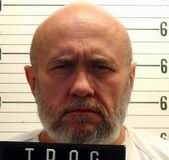
Edmund Zagorski
Murderer Brian Kevin Rosenfeld
Murderer · USA · 1985
Brian Kevin Rosenfeld Brian Kevin Rosenfeld was sentenced to three concurrent l…
23 victims
Brian Kevin Rosenfeld
Murderer · USA · 1985
Brian Kevin Rosenfeld Brian Kevin Rosenfeld was sentenced to three concurrent l…
23 victims
 Marvin Gray
Murderer · USA · 1975
Marvin Gray was convicted killer who claimed responsibility for 23 slayings and…
23 victims
Marvin Gray
Murderer · USA · 1975
Marvin Gray was convicted killer who claimed responsibility for 23 slayings and…
23 victims
 Yahweh ben Yahweh
Murderer · USA · 1980
Yahweh ben Yahweh was born and legally named Hulon Mitchell Jr. (October 27, 19…
23 victims
Yahweh ben Yahweh
Murderer · USA · 1980
Yahweh ben Yahweh was born and legally named Hulon Mitchell Jr. (October 27, 19…
23 victims
 Russell Ellwood
Murderer · USA · 1991
Russell Ellwood was a former taxi driver. Authorities suspected him of killing…
20 victims
Russell Ellwood
Murderer · USA · 1991
Russell Ellwood was a former taxi driver. Authorities suspected him of killing…
20 victims
 Stephen Lewis Farrar
Murderer · USA · 1986
Stephen Lewis Farrar was sentenced to death on March 1987. His sentence was com…
1 victim
Stephen Lewis Farrar
Murderer · USA · 1986
Stephen Lewis Farrar was sentenced to death on March 1987. His sentence was com…
1 victim
 Howard Willis
Murderer · USA · 2002
Howard Willis was accused and later convicted in a capital murder case involvin…
2 victims
Howard Willis
Murderer · USA · 2002
Howard Willis was accused and later convicted in a capital murder case involvin…
2 victims
 Sarah Pender
Murderer · USA · 2000
Sarah Jo Pender (also referred to as Sarah Pender; later used the name Ashley T…
2 victims
Sarah Pender
Murderer · USA · 2000
Sarah Jo Pender (also referred to as Sarah Pender; later used the name Ashley T…
2 victims
 Anthony Nathaniel Bonham
Murderer · USA · 1981
Anthony Nathaniel Bonham (also shown as Antonio Nathanial Bonham) was executed…
1 victim
Anthony Nathaniel Bonham
Murderer · USA · 1981
Anthony Nathaniel Bonham (also shown as Antonio Nathanial Bonham) was executed…
1 victim
 Derek Bentley
Murderer? · United Kingdom · 1952
Derek William Bentley (30 June 1933 – 28 January 1953) was a British teenager h…
1 victim
Derek Bentley
Murderer? · United Kingdom · 1952
Derek William Bentley (30 June 1933 – 28 January 1953) was a British teenager h…
1 victim
 Pascal Payet
Murderer · France · 1997
Pascal Payet was born 7 July 1963. He was a French criminal. Payet spent his ch…
1 victim
Pascal Payet
Murderer · France · 1997
Pascal Payet was born 7 July 1963. He was a French criminal. Payet spent his ch…
1 victim
- Gender
- male
- Country
- USA
- Location
- Robertson County, Tennessee, USA
- Date of birth
- December 27, 1954
- Age at first offence
- 29
- Characteristics
- murder for hire, robbery, torture, mutilation
- Victim profile
- John Dale Dotson and Jimmy Porter
- Method of murder
- Shooting ( HK 91 .308 semi-automatic rifle)
- Date(s) of murder
- April 23, 1983
- Years active
- 1983
- Date of arrest
- May 26, 1983 (after a shoot-out with police)
- Status
-
Sentenced to death
Sentenced to death on March 27, 1984; death sentences to be carried out as provided by law on March 12, 1986 unless stayed by appropriate authority
Case record: Edmund Zagorski
Background
Edmund George Zagorski was convicted in 1984 of the first degree premeditated murders of John Dale Dotson and Jimmy Porter. He appealed his convictions and the resulting two sentences of death.
During the events leading to the killings, the defendant called himself "Jesse Lee Hardin" and claimed to have been working as a mercenary in Honduras and El Salvador. He was wearing camouflage clothing and carried a survival knife, an HK 91 .308 semi-automatic rifle, and other weapons and survival gear. Although he claimed to have made as much as $100.00 a day as a mercenary, he did not seem to have any money.
The defendant’s friend at the Trout Farm was Jimmy Blackwell.
The offence
On April 5, 1983, the defendant appeared at the Lakeland Trout farm in Bucksnort in Hickman County, Tennessee. During his stay, he met John Dale Dotson and his wife Marsha. Dotson and the defendant arranged a marijuana purchase involving them and a third man, Jimmy Porter, who lived in nearby Dickson, Tennessee.
According to Marsha Dotson, Porter was to pay $23,000.00 for one hundred pounds of marijuana that the defendant would arrange to have dropped from an airplane into the woods. Dotson was to receive $10,000.00 from Porter for his part of the deal. In a statement to investigating officers, the defendant stated the sale was to be of 200 pounds of marijuana at $150.00 per pound. The date of the transaction was to be April 23, 1983.
At about midnight on April 21, 1983, an airplane flew very low over the Trout Farm. Zagorski, who was with Blackwell, commented "It's here," and left. He later told Dotson the marijuana had arrived and was in the woods with a man called Dave. Dotson and no more than two other men were to meet Zagorski, who would be on foot, at 6:00 p.m. at Spot, Tennessee, which was within walking distance of the Trout Farm. Zagorski also told Dotson to come armed.
On the afternoon of April 23, 1983, Porter and Dotson were together at the Eastside Tavern in Dickson, Tennessee. Porter showed the tavern operator a bank bag containing cash and a .357 Magnum pistol. Dotson and Porter left the tavern in Porter's red Datsun pick-up at about 4:30 p.m. They were never seen alive again. Also on April 23, 1983, Zagorski left the trout farm, taking his gear. He had been heard to tell Dotson that he would meet him at 6:00 p.m. on the road "up behind Spot."
At around 5:30 p.m., Blackwell and his girlfriend heard gunshots from the general area where the defendant had walked into the woods. Blackwell said it was not unusual to hear gunshots on a daily basis in that part of Hickman County because of the frequency of deer hunting in the area.
On May 6, 1983, the badly decomposed bodies of Porter and Dotson were discovered in a secluded, wooded area near I-65 in Robertson County. The men had been shot in the chest and abdomen and their throats had been cut.
Ballistic tests showed that a .308 cartridge found on the ground between the bodies of the victims had been fired from Zagorski's HK 91 semi-automatic rifle. A search of the area turned up a military snake-bite kit, a knife scabbard later identified as Zagorski’s, a case for "Red Specs" glasses (the type worn by Zagorski), six flares, three size "C" Duracel flashlight batteries, and an ink pen.
An autopsy was performed on the bodies, but because of advanced decomposition the time of death could not be fixed with any degree of certitude. The pathologist stated the time of death could be any time from a week to a month prior to the time the autopsies were performed. The pathologist also testified that he could not determine whether the victims were shot or cut first, but that the actual cause of death of each victim was the gunshot wounds. He testified that neither Porter nor Dotson would have died immediately upon being shot but they would have lived five to seven minutes.
At the time of death, Porter had a blood alcohol level of .10 and Dotson had a blood alcohol level of .25.
Johnny Baggett, who found the bodies, testified that a week to ten days before at around 7:00 or 8:00 p.m., he had heard gunshots in the area. When questioned closer about the gunshots, he fixed the time at around April 25 or 26, 1983.
The jury found the defendant guilty of murder in the first degree for the killing of John Dotson and Jimmy Porter. The jury imposed the sentence of death on each killing based on findings that: (1) the murders were committed while the defendant was engaged in committing robbery of the victims; (2) the murders were especially heinous, atrocious or cruel because they involved torture or depravity of mind; and (3) there was no mitigating circumstance sufficiently substantial to outweigh the statutory aggravating circumstances found by the jury.
Investigation
The record showed that at the time of death, the victims were found in Robertson County, Tennessee, and that their deaths resulted from gunshot wounds and throat cutting. A .308 cartridge was recovered and linked by ballistic testing to Zagorski's HK 91 semi-automatic rifle.
The defense challenged the convicting evidence on venue, asserting that the killings did not occur in Robertson County. One witness, Ruby Winters, testified that at about 4:00 p.m. on April 23, 1983, she heard loud music and four shots coming in a wooded area near Spot. Another witness testified as to how the HK 91 rifle fired and how far cartridges were expelled from the gun; this testimony contradicted testimony of state witnesses on that issue.
Arrest and capture
Zagorski showed up at the home of Rodney Bruce in Ironton, Ohio, at about the time fixed by Baggett’s testimony. He drove Porter’s Datson truck. Zagorski had with him the deceased men’s coveralls and Porter’s .357 Magnum pistol. While in Ironton, Zagorski spent large sums of cash on survival gear, weapons, horses, a four-wheel drive pick-up, and a motorcycle. He showed Bruce what he said was $25,000.00 in cash at one point. He first claimed he had earned the money working off-shore and later said he had earned it working as a mercenary in South America. He also said he had made a "quick" $10,000.00 in Nashville.
Zagorski told Bruce and an army surplus dealer that he had lost his knife scabbard.
On May 26, 1983, Zagorski, armed and wearing a bullet-proof vest, was apprehended by Ohio law enforcement officers after a shoot-out in which Zagorski rammed a police car and shot a special deputy five times. Over $9,000.00 in cash was found in Zagorski's fatigue jacket and suit.
At the time of his capture, he also gave a statement as he was handcuffed.
Statements to police
Zagorski gave different versions of his role in the killings of Dotson and Porter.
On June 1, 1983, he told police that he and another mercenary in their own vehicle had met Dotson and Porter near Spot. Two other mercenaries in a third vehicle had joined them as they drove up I-40. When they stopped on I-65 in Robertson County, the other mercenaries took Zagorski's rifle, silencer and gear and went into the woods with Dotson and Porter. He said he was instructed to drive Porter's pick-up to a Welcome Center at the Kentucky border and watch for law enforcement officers. Thirty to forty-five minutes later the other mercenaries met him, gave him $5,000.00 and Porter's .357 Magnum and returned his rifle and gear. Zagorski then left in Porter's pick-up, since he said it was not unusual to trade cars in a drug deal.
In statements made on July 27 and August 1, 1983, he claimed he was hired to kill Porter but that Dotson's death was a mistake. He also said two other men had been hired to kill Porter, that the deaths occurred in Humphreys County, and that the bodies were put in plastic bags and carried to Robertson County. He never admitted killing the men and refused to tell the identities of the other men he claimed were involved.
Zagorski told some visitors at the jail that he had only been at the killings to "blow away" FBI agents.
The defendant’s statements that were challenged as admitted in evidence were those of June 1, July 27, and August 1, 1983.
The defendant insisted he had been questioned after having asked for an attorney and that he was coerced into making statements by the circumstances of his confinement and his physical and mental condition. The appellate court found no merit in those arguments and stated that it supported the trial court’s finding that the defendant initiated the interrogations, that he was not subject to any coercive action on the part of the state, and that he knowingly and intelligently waived his right to have counsel present during the interrogations.
The appellate court also referenced that he had asked for a lawyer and discussed whether later statements were initiated by him and whether there was a knowing and intelligent waiver of the request for counsel.
The record included that Zagorski talked with police officers on May 27, 1983. It was not used in the trial. The appellate court described that Zagorski stated he was not going "to make no statements or answer any question," and finally said "[l]ike I said, I guess I really should talk to a lawyer."
Physical evidence and search/seizure
The defendant argued that the trial judge erred in failing to suppress physical evidence taken from the property of a private citizen in Ohio.
The record showed that prior to the shoot-out with Ohio officers, Zagorski had been staying in a barn on property owned by Steven Boggs. On hearing of the shoot-out, Boggs telephoned the chief investigator of the Lawrence County, Ohio Sheriff’s Department and told him that property belonging to the defendant was at Boggs’ place and that he was going to "get rid of" it unless someone came after it. The investigator responded to the telephone call, found that Boggs had removed the property from the barn and had placed it in the driveway, inventoried the property, and seized it after giving Boggs a receipt. The inventoried property included the defendant’s HK 91 .308 rifle.
The defendant argued the officer conducted an unlawful warrantless search and seizure. The appellate court held that Fourth Amendment protections were inapplicable to a search or seizure effected by a private individual not acting as an agent of the government or with participation or knowledge of any government official.
The defendant also argued the officers were required to obtain a warrant before testing the HK 91 rifle taken from the Boggs’ property. He argued testing expanded beyond the scope of the private search under Walter v. United States. The appellate court concluded that under its analysis in United States v. Jacobsen, the subsequent testing did not compromise legitimate privacy interests and did not constitute a search under the Fourth Amendment.
Trial
Conviction and evidentiary rulings
The appellate court affirmed that there was sufficient evidence for a rational trial of fact to find beyond a reasonable doubt that the defendant killed John Dotson and Jimmy Porter in Robertson County during the course of a robbery.
The appellate court affirmed that the jury’s finding that the murders were "especially heinous, atrocious or cruel" accorded with the evidence. It stated that although the victims died from gunshot wounds, the defendant also slit their throats, leaving them to bleed to death in the woods, which it described as evincing depravity of mind and a form of torture. It also stated the actions involved gratuitous violence and needless mutiliation of victims already helpless from fatal wounds.
The appellate court found that the evidence justified the jury’s finding that there was no mitigating circumstance sufficiently substantial to outweigh the statutory aggravating circumstances.
The appellate court addressed the defendant’s challenges to admissions of: statements given to police, testimony about his stay in Ohio and the circumstances of his capture (including the shoot-out and arrest), photographs of the victims, and exclusions of certain opinion testimony.
Witnesses, evidence, and instructions
The defendant argued the testimony concerning his stay in Ohio and circumstances of his capture should have been excluded due to prejudice outweighing probative value. The trial court instructed the state to limit testimony to facts directly probative of flight and showing desperation, and instructed the jury to consider testimony only on flight. The appellate court found no indication state or jury ignored instructions and found probative value not outweighed by potentially prejudicial effects.
The defendant challenged admission of photographs of the victims as found lying in the woods. The appellate court held the photographs were not gruesome or horrifying, though showing bodies blackened from decomposition. It held the photographs showed more than physiological causes of death and were relevant to resolving issues of venue, felony murder, premeditation, and intent.
The defendant challenged the exclusion of testimony of Marsha Dotson and former Sheriff Atkinson giving their opinion as to where the killings occurred. The appellate court held the trial judge properly sustained the state’s objections because defendant sought opinion testimony from lay witnesses on an ultimate issue of fact jurors were as competent as the witnesses to determine.
Voir dire
The defendant argued issues involving voir dire, including that prospective jurors were examined in groups of three and later six, that individual voir dire should have occurred, and that two jurors were improperly excused for cause under Witherspoon v. Illinois.
The appellate court found no prejudice from examining prospective jurors in small, controlled groups. It found the two jurors excused for cause made it clear they would vote against imposition of the death penalty regardless of circumstances, satisfying what Witherspoon requires for juror disqualification. It also found that the court’s and prosecutor’s comments and questions during voir dire were not misleading or improper and were part of ascertaining whether jurors could accept the law’s mandate that both life and death were appropriate punishments depending on circumstances proven.
The defendant also argued he was entitled to two separate juries: one for guilt and another for sentence, based on the theory that a "death qualified" jury skews toward guilt. The appellate court rejected that theory citing State v. McKay and found no basis to change its view.
The defendant argued that Mrs. Dotson and Mrs. Porter were improperly allowed to be present in the courtroom despite his request they be excluded. The appellate court found no indication in the record that their presence was disruptive or affected jurors. It stated they heard no testimony and there was no showing that statements by the parties affected either woman’s testimony, and it held exclusion decisions were within trial judge discretion without abuse.
The defendant argued Assistant District Attorney General Gay should have been disqualified as he was a potential witness and had made pre-trial statements to the media. The appellate court found no violation of DR 5-102, noting the state did not intend to call Gay and he was not called. It stated some statements may have bordered on violation of DR 7-107(B), but that recusal was not necessary and failure to disqualify did not prejudice the defendant.
The defendant also argued for a change in venue due to pre-trial publicity and community excitement. The appellate court held the decision to address venue was within trial judge discretion and found no abuse of discretion, citing voir dire procedures that allowed individual voir dire whenever jurors had been exposed to pre-trial publicity.
Sentencing phase
The defendant argued sentencing phase errors, including refusal to give requested instructions on mitigating circumstances and refusal to allow argument in mitigation based on victims’ participation in a drug deal, the defendant’s lack of a prior record of violent criminal activity, and the defendant’s youth as mitigating circumstances.
The appellate court stated that the requested instructions were not in accord with the evidence and were not among delineated statutory mitigating circumstances in Tenn. Code Ann. § 39-2-203(j). It held the jury could consider them under the statute’s "catchall" provision directing jurors to consider "any mitigating circumstances which shall include, but not be limited [to circumstances set out in the statute]." It also described the trial court’s sentencing instructions that mitigation was within the jury’s province if there were any and that the jury could consider all evidence presented in the entire case because no additional evidence was produced at sentencing.
The appellate court quoted from the sentencing-phase colloquy where the trial judge promised the defense “great leeway” regarding whether they would go far afield and stated:
.. I'm going to give the defense great leeway as to whether or not they would go far afield. You would feel free to object. It would not be discourteous, and I'd rule on it at that time, but I do not want to limit them in their argument in a case like this.
[emphasis supplied]
The appellate court found no error in rulings on scope of argument and jury instructions in sentencing.
The defendant also challenged: the constitutionality of the death penalty statute, the fact that the sentencing hearing began late in the afternoon of the fifth day of trial, and the state’s closing argument. The appellate court found no merit.
It stated that bases of challenge to the Tennessee Death Penalty Act had been considered and rejected in other cases, including arguments that the death penalty was cruel and unusual punishment (State v. Dicks), that the underlying felony may not be used as an aggravating circumstance (State v. Pritchett), and that the statute failed to specify burden of proof or standard of proof (State v. Teague). It also addressed the argument that Tenn. Code Ann. § 39-2-203(i)(5) was unconstitutionally vague, referencing State v. Pritchett.
On the exhaustion argument from the late start of sentencing, the appellate court found no indication in the record and noted defense counsel did not voice concerns at sentencing. On the prosecution’s closing argument, the appellate court noted no contemporaneous objection was made, but it considered the statements in context and found they were within bounds of propriety and in accord with the evidence and did not prejudice the defendant or deprive him of any rights.
Appeals
Edmund Zagorski appealed his convictions and death sentences. He questioned sufficiency of the convicting evidence and evidence supporting aggravating circumstances found by the jury, and rulings by the trial court on pretrial motions, voir dire, admission of evidence, and objections to argument by the state in the sentencing phase. He also insisted that the Tennessee Death Penalty Act was unconstitutional.
The appellate court considered issues and concluded that no reversible error was committed in the trial, that the verdicts and sentences were sustained by the evidence, and that the death sentences under the circumstances of the case were not arbitrary or disproportionate. It therefore affirmed the convictions and sentences of death.
Outcome
The appellate court affirmed the convictions of first degree murder and the sentences of death.
The death sentences were to be carried out as provided by law on March 12, 1986 unless stayed by appropriate authority. Costs were adjudged against the defendant.
The appellate court noted judicial participation: Mr. Justice Brock concurred in affirmance of conviction but dissented from imposition of the death penalty for the reasons expressed in his dissent in State of Tennessee v. Dicks, 615 S.W.2d 126, 132 (Tenn. 1981). FONES, HARBISON and DROWOTA, JJ., concur. BROCK, J., dissents.
Other details
The opinion referenced that on April 23, 1983, Porter and Dotson left the Eastside Tavern in Porter's red Datsun pick-up at about 4:30 p.m.
The opinion referenced that on April 21, 1983, Zagorski commented "It's here" when an airplane flew very low over the Trout Farm.
The opinion referenced that Zagorski was apprehended on May 26, 1983 after a shoot-out in which he rammed a police car and shot a special deputy five times.
The opinion referenced that Zagorski stated he was not going "to make no statements or answer any question," and later said "[l]ike I said, I guess I really should talk to a lawyer."
The appellate court cited United States v. Webb, 755 F.2d 382, 392 (5th Cir.1985) for harmless error analysis applying to Edwards violations, and it discussed Smith v. Illinois and Edwards v. Arizona in relation to counsel requests and interrogations.
The appellate court also cited: Sotka v. State, 503 S.W.2d 212, 221 (Tenn. Crim. App. 1972) and State v. Scott, 687 S.W.2d 592, 593 (Mo. App. 1985) regarding relevance of flight and circumstances of arrest; State v. Workman, 667 S.W.2d 44, 51 (Tenn. 1984) regarding lay opinion on ultimate issues; State v. Henderson, 220 Tenn. 701, 423 S.W.2d 489, 491 (1968) and Nance v. State, 210 Tenn. 328, 358 S.W.2d 327, 330 (1962) regarding exclusion decisions; State v. Laney, 654 S.W.2d 383 (Tenn. 1983) and State v. Campbell, 664 S.W.2d 281 (Tenn. 1984) and State v. Morris, 641 S.W.2d 883 (Tenn. 1982) on proportionality comparisons; Witherspoon v. Illinois, 391 U.S. 510, 88 S.Ct. 1770, 20 L.Ed.2d 776 (1968) regarding juror disqualification; and Rippy v. State, 550 S.W.2d 636, 638 (Tenn. 1977) on change of venue discretion.
Spotted an error, or have more information about this case?