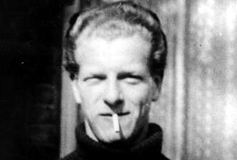
Derek Bentley
Murderer?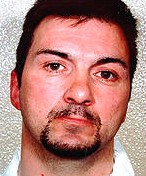 Barry George
Murderer? · United Kingdom · 1999
Barry George was also known as Barry Bulsara. He was born on 15 April 1960 in H…
1 victim
Barry George
Murderer? · United Kingdom · 1999
Barry George was also known as Barry Bulsara. He was born on 15 April 1960 in H…
1 victim
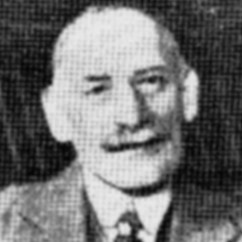 Harold Greenwood
Murderer? · United Kingdom · 1919
Harold Greenwood (1874 – 17 January 1929) was an English solicitor who was accu…
1 victim
Harold Greenwood
Murderer? · United Kingdom · 1919
Harold Greenwood (1874 – 17 January 1929) was an English solicitor who was accu…
1 victim
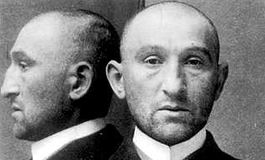 Oscar Slater
Murderer? · United Kingdom · 1908
Oscar Joseph Slater (8 January 1872 – 1948) was a victim of miscarriage of just…
1 victim
Oscar Slater
Murderer? · United Kingdom · 1908
Oscar Joseph Slater (8 January 1872 – 1948) was a victim of miscarriage of just…
1 victim
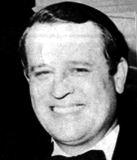 Dr. John Robert Hill
Murderer? · USA · 1950
Dr. John Robert Hill was a prominent Houston surgeon. His wife was Joan Robinso…
5 victims
Dr. John Robert Hill
Murderer? · USA · 1950
Dr. John Robert Hill was a prominent Houston surgeon. His wife was Joan Robinso…
5 victims
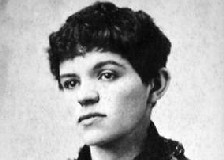 Adelaide Bartlett
Murderer? · United Kingdom · 1886
Adelaide Bartlett was tried for the murder of her husband, Thomas Edwin Bartlet…
1 victim
Adelaide Bartlett
Murderer? · United Kingdom · 1886
Adelaide Bartlett was tried for the murder of her husband, Thomas Edwin Bartlet…
1 victim
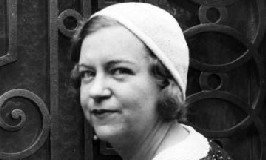 Elvira Barney
Murderer? · United Kingdom · 1932
Elvira Barney Elvira Barney was found not guilty on July 5, 1932. Michael Scott…
1 victim
Elvira Barney
Murderer? · United Kingdom · 1932
Elvira Barney Elvira Barney was found not guilty on July 5, 1932. Michael Scott…
1 victim
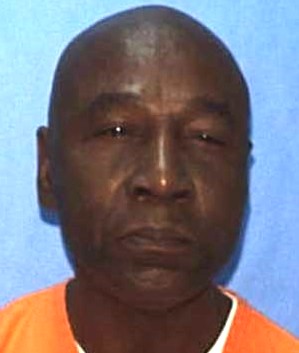 Freddie Lee Hall
Murderer · USA · 1978
Freddie Lee Hall was indicted on one count of First-Degree Murder in Sumter Cou…
2 victims
Freddie Lee Hall
Murderer · USA · 1978
Freddie Lee Hall was indicted on one count of First-Degree Murder in Sumter Cou…
2 victims
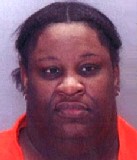 Donetta Hill
Murderer · USA · 1990
Donetta Hill, also referred to as Doneta Hill, was born in 1966. She was a Sout…
2 victims
Donetta Hill
Murderer · USA · 1990
Donetta Hill, also referred to as Doneta Hill, was born in 1966. She was a Sout…
2 victims
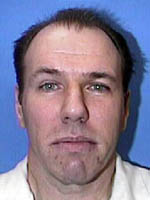 Craig Neil Ogan
Murderer · USA · 1989
Craig Neil Ogan worked as a confidential informant for the Drug Enforcement Adm…
1 victim
Craig Neil Ogan
Murderer · USA · 1989
Craig Neil Ogan worked as a confidential informant for the Drug Enforcement Adm…
1 victim
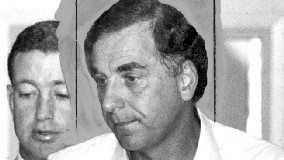 Andrew Kalajzich
Murderer · Australia · 1986
Andrew Kalajzich was convicted in relation to the murder of his wife, Megan Kal…
1 victim
Andrew Kalajzich
Murderer · Australia · 1986
Andrew Kalajzich was convicted in relation to the murder of his wife, Megan Kal…
1 victim
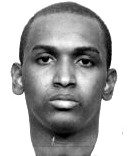 Robert Earl Carter
Mass murderer · USA · 1992
Aug. 18, 1992 — Firefighters responded to a house fire in Somerville, Texas; th…
6 victims
Robert Earl Carter
Mass murderer · USA · 1992
Aug. 18, 1992 — Firefighters responded to a house fire in Somerville, Texas; th…
6 victims
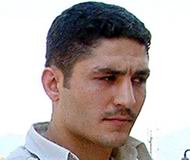 Ali Kaya
Serial killer · Turkey · 1997
Ali Kaya was a Turkish serial killer. He was nicknamed "The Babyface Killer" (T…
10 victims
Ali Kaya
Serial killer · Turkey · 1997
Ali Kaya was a Turkish serial killer. He was nicknamed "The Babyface Killer" (T…
10 victims
- Gender
- male
- Country
- United Kingdom
- Location
- Croydon, London, England, United Kingdom
- Date of birth
- June 30, 1933
- Age at first offence
- 19
- Characteristics
- robbery, history of mental illness
- Victim profile
- Police Constable Sidney George Miles, 42
- Method of murder
- Shooting (Colt New Service .455 Eley calibre revolver)
- Date(s) of murder
- November 2, 1952
- Years active
- 1952
- Date of arrest
- Same day
- Status
-
Executed by hanging at Wandsworth Prison, London, on January 28, 1953; granted a royal pardon in respect of the sentence of death on 29 July 1993; Court of Appeal quashed conviction for murder on 30 July 1998
Case record: Derek William Bentley
People
- Derek William Bentley (30 June 1933 – 28 January 1953) was a British teenager hanged for the murder of a police officer.
- Christopher Craig (aged 16) was Bentley’s friend and accomplice; he opened fire with a revolver and was ordered to be detained at Her Majesty’s Pleasure.
- Police officer: Detective Sergeant Frederick Fairfax was wounded in the right shoulder during the incident.
- Police Constable Sidney George Miles (age 42) was immediately killed by a shot to the head.
- Police Constable Sidney Miles was also identified in some parts of the text as Police Constable Sidney Miles; he was posthumously awarded a medal.
- Police Constable Sidney Miles and Detective Sergeant Frederick Fairfax were part of the police officers involved on the night of 2 November 1952.
- Lord Chief Justice Lord Goddard presided over the trial at the Old Bailey in London.
- Lord Chief Justice Lord Thomas Bingham of Cornhill ruled on the appeal that the trial had been unfair and the conviction was unsafe.
- Lord Bingham also ruled that Lord Goddard had misdirected the jury and had put unfair pressure on the jury to convict.
- Home Secretary David Maxwell Fyfe refused to request clemency from the Queen.
- Home Secretary Kenneth Clark rejected a report by the Metropolitan Police in 1991 stating that there were “reasonable doubts in this case” for a review.
- Albert Pierrepoint carried out the hanging.
- Dr Matheson was the Principal Medical Officer who referred Bentley to Dr Hill.
- Dr Hill was a psychiatrist at the Maudsley Hospital.
- Malcolm Coulthard conducted linguistics analysis of a recorded “confession”.
- David Yallop wrote To Encourage the Others (1971).
Background
Bentley had a very difficult childhood. In April 1938, Bentley apparently fell 15 feet from a lorry and hit his head on the pavement, which caused his epilepsy. During World War II, the house Bentley lived in as a child was bombed and collapsed around him, leaving Bentley with serious head injuries and concussed.
Bentley attended Norbury Secondary modern school in 1944, after failing the eleven-plus examination.
In March 1948, Bentley and another boy were arrested for theft. In September that year, Bentley was sentenced to serve three years at Kingswood approved school, near Bristol. At Kingswood, Bentley was found to have a mental age of 11 and lower than average intelligence, having scored 66 in December 1948 and 77 in 1952 IQ tests. At the time of his arrest in early November 1952, Bentley was found to be illiterate.
Bentley was released from Kingswood school on 28 July 1950, and he was a recluse for the rest of the year. In March 1951, Bentley found a job working for a furniture removal firm, but he injured his back 12 months later, in March 1952, forcing him to leave the job.
In May 1952, Bentley worked for the Croydon Corporation as a waste collector, but two months later, with his work being unsatisfactory, he was demoted to street cleaning. Two months after that, Bentley was sacked from the Corporation.
On 11 February 1952, Bentley was deemed unfit for National Service due to his EEG test findings and low intelligence. He earlier had an EEG reading which confirmed he was epileptic on 16 November 1949, and another one at Bristol which was abnormal on 9 February 1950.
The offence
On the night of 2 November 1952, Bentley and Christopher Craig tried to break into the warehouse of confectionery manufacturers and wholesalers Barlow & Parker on Tamworth Road, Croydon, England.
A nine-year-old girl in a house across the road spotted both Craig and Bentley climbing over the gate and up a drain pipe to the roof of the warehouse. She alerted her parents, and her father called the police from the nearest telephone box.
When the police arrived, the two youths hid behind the lift-housing. Craig taunted the police. Detective Sergeant Frederick Fairfax climbed the drain pipe onto the roof and grabbed hold of Bentley. Bentley broke free.
Bentley was alleged by a number of police witnesses to have shouted "Let him have it, Chris". Both Craig and Bentley denied that those words were ever spoken. The denial was also made by Christopher Craig in an interview in September 1991.
Craig, who was armed with a revolver, opened fire and shot Fairfax in the shoulder.
Following the arrival of uniformed officers, a group was sent onto the roof. The first to reach the roof was Police Constable Sidney Miles, who was immediately killed by a shot to the head.
After exhausting his ammunition and being cornered, Craig jumped some thirty feet from the roof, fracturing his spine and left wrist when he landed on a greenhouse.
One account in the text described the police situation as follows: Bentley and Craig were seen climbing over the side gate of a warehouse at Tamworth Road, Croydon, and to reach the flat roof of the building about 22 feet above. The alarm was given and police officers went to the premises in a police van. It also described that one of the youths fired at the detective constable Fairfax and wounded him in the right shoulder, and that several more shots were fired as officers tried to corner the two men on the roof, and that Police Constable Miles was shot dead.
Investigation
After Fairfax was wounded, he did not give up the chase. Fairfax continued the chase until both men were captured, repeatedly risking death to do so.
Medals were awarded to the participating police officers. A George Cross was awarded to Fairfax, and Miles received a posthumous award. The text also lists:
- One medal posthumously to Miles
- the George Cross to Fairfax
- in January 1953, various medals were awarded, with the specific list including:
- Police Constable Norman Harrison and Police Constable James McDonald awarded the George Medal (London Gazette 6 January 1953, Page 167)
- Police Constable Robert Jaggs awarded the British Empire Medal
- Police Constable Miles posthumously awarded the Queen’s Police Medal for Gallantry
Arrest and detention
The text described that Fairfax grabbed hold of Bentley on the roof; Bentley broke free and was later arrested by Fairfax after Craig fired and then after PC Miles was shot.
A later description in the text stated Bentley was “effectively under arrest” when PC Miles was killed, while also describing a dispute in terminology about whether Fairfax had formally arrested him.
Trial
Bentley was convicted as a party to the murder under the doctrine of “joint enterprise” (the English law principle of joint enterprise). The murder of PC Miles was committed by Craig, an armed accomplice.
The trial took place before Lord Chief Justice of England and Wales, Lord Goddard, at the Old Bailey in London between 9 December 1952 and 11 December 1952.
The doctrine of “constructive malice” meant a charge of manslaughter was not an option, because the “malicious intent” of the armed robbery was transferred to the shooting.
Bentley’s defence was that he was effectively under arrest when PC Miles was killed. The text also described that this defence arose after an attempt to escape, during which a police officer had been wounded.
The prosecution’s case was described as uncertain during trial. It said:
- The prosecution was unsure how many shots were fired and by whom.
- A forensic ballistics expert cast doubt on whether Craig could have hit Miles if he had shot deliberately.
- The fatal bullet was not found.
- Craig used bullets of different under-sized calibres, and the sawn-off barrel made it inaccurate “to a degree of six feet” at the range from which he fired.
There was also debate about what Bentley meant by the words "Let him have it, Chris".
- Craig and Bentley denied the words were spoken.
- One interpretation in the text was that the gangster movie expression could mean “shoot”, while another interpretation was that it could signify that Bentley wanted Craig to surrender the gun.
Medical evidence featured:
- Dr Matheson was the Principal Medical Officer responsible and referred Bentley to Dr Hill, a psychiatrist at the Maudsley Hospital.
- Dr Hill’s report stated Bentley was illiterate and of low intelligence, almost borderline retarded.
- Matheson was of the opinion that while Bentley was of low intelligence, he was not suffering from epilepsy at the time of the alleged offence, and that he was not a “feeble-minded person” under the Mental Deficiency Acts.
- Matheson said Bentley was sane and fit to plead and stand trial.
The text stated that English law at the time did not recognize diminished responsibility due to retarded development, though it existed in Scottish law and was introduced to England by the Homicide Act 1957. It further stated criminal insanity (inability to distinguish right from wrong) was then the only medical defence to murder, and that Bentley was not insane despite severe debilitation.
The jury deliberated for 75 minutes and decided that both Craig and Bentley were guilty of PC Miles’s murder.
Sentence:
- Bentley was sentenced to death with a plea for mercy on 11 December 1952.
- Craig was ordered to be detained at Her Majesty’s Pleasure.
- The text stated that Craig was eventually released in May 1963 after serving 10 years’ imprisonment and had been a law abiding citizen ever since.
Bentley’s lawyers filed appeals highlighting:
- ambiguities in the ballistic evidence,
- Bentley’s mental age,
- and the fact Bentley did not fire the fatal shot. The text stated these efforts failed to reverse conviction and that the death sentence was mandatory.
Bentley’s execution schedule:
- Bentley was originally scheduled to be hanged on 30 December 1952, but as he launched an appeal, it was postponed.
- Bentley’s appeal was unsuccessful on 13 January 1953.
On 28 January 1953, Home Secretary David Maxwell Fyfe refused to request clemency from the Queen after reading the Home Office psychiatric reports, despite a petition signed by over 200 of his fellow MPs. Parliament was not allowed to debate Bentley’s sentence until it had been carried out. The Home Office also refused Dr Hill permission to make his report public.
Execution
At 9am on 28 January 1953, Derek Bentley was hanged for murder at Wandsworth Prison, London by Albert Pierrepoint.
When the execution was announced as carried out, there were protests outside the prison and two people were arrested and later fined for damage to property.
Posthumous pardon and appeal outcomes
After the execution, there was a public sense of unease and a long campaign mostly led by Bentley’s sister Iris to secure a posthumous pardon.
The text stated that in March 1966 Bentley’s remains were removed from Wandsworth Prison and reburied in a family grave.
On 29 July 1993, Bentley was granted a royal pardon in respect of the sentence of death passed upon him and carried out. However, it said that in English law this did not quash his conviction for murder.
Eventually, on 30 July 1998, the Court of Appeal quashed Bentley’s conviction for murder.
The text also states that Lord Bingham ruled that Lord Goddard had not made it clear to the jury that the prosecution required proof that Bentley had known Craig was armed, and had failed to raise the question of Bentley’s withdrawal from their joint enterprise. It stated this would require the prosecution to prove the absence of any attempt by Bentley to signal to Craig that he wanted him to surrender his weapons to the police.
Lord Bingham further ruled that Bentley’s trial had been unfair due to jury misdirection and unfair pressure on the jury in the summing-up. It stated Lord Bingham did not rule that Bentley was innocent, only that there had been defects in the trial process and that the conviction was unsafe.
The text also discussed a “confession” recorded by Bentley. It said:
- the prosecution claimed it was a “verbatim record of dictated monologue”
- forensic linguistics methods showed it had been largely edited by policemen
- Malcolm Coulthard showed patterns in the recording were not consistent with Bentley’s use of language (his idiolect) as evidenced in court testimony
- the patterns fitted better the recorded testimony of the policemen involved It described this as one of the earliest uses of forensic linguistics on record.
Lord Bingham’s and the Court of Appeal’s decision was described in another section as:
- the summing-up had denied Bentley “that fair trial which is the birthright of every British citizen”
- “It must be a matter of profound and continuing regret that this mistrial occurred and that the defects we have found were not recognised at the time.”
The text also included an account of later campaign and referral steps:
- The case was presented to the Criminal Cases Review Commission on 1 April 1997
- The Commission referred it to the Court of Appeal on 6 November 1997
- The appeal was heard from 20 July 1998 to 24 July 1998, and judgment was given on 30 July 1998 It also stated that the appeal hearing took place before Lord Chief Justice Lord Thomas Bingham, sitting with Lord Justice Kennedy and Mr Justice Collins.
Other details
Property entry and weapon details
On the night of 2 November 1952, the text stated Craig was armed with a revolver and that he had made the knuckle-duster himself and gave both weapons to Bentley.
The text described the weapons in Bentley’s pocket as:
- a sheath knife and
- a spiked knuckle-duster, while also stating he did not use either on the night.
Craig’s revolver was described as a Colt New Service .455 Eley calibre revolver, with a variety of undersized rounds, some modified to fit the gun. The text stated Craig had sawn off half the weapon’s barrel so it would fit in his pocket.
A separate description also stated the gangster movie expression “Let him have it, Chris” could have multiple meanings, including “shoot” or wanting Craig to surrender the gun.
Age and execution eligibility
The text stated that Craig would not have faced execution if found guilty because he was below 18 when PC Miles was shot. It said Bentley was over 18 and could be sentenced to death.
Claims about ballistics and the bullet size
The text discussed debates about ballistics and the missing fatal bullet:
- The fatal bullet was not found during trial.
- Craig used bullets of different under-sized calibres; sawn-off barrel made it inaccurate “to a degree of six feet”.
- There was also the question of what Bentley meant by the words “Let him have it, Chris”, if indeed he said them.
The text also presented later discussion based on David Yallop’s work:
- In To Encourage the Others (1971), David Yallop documented Bentley’s mental deficiencies, inconsistencies in police and forensic evidence, and the conduct of the trial.
- Yallop proposed a theory that PC Miles was killed by a bullet from a gun other than Craig’s sawn-off .455 revolver.
- Yallop said he drew this conclusion from an interview with Dr David Haler, the pathologist who carried out Miles’s autopsy; Yallop reported the head wound was inflicted by a bullet of between .32 and .38 calibre, fired from between six to nine feet away.
- Yallop stated Craig fired from just under 40 feet and used under-sized .41 and .45 calibre rounds; Yallop asserted it would have been impossible for him to use a bullet of .38 or smaller calibre.
- The text stated Haler did not offer in trial evidence any estimate of the size of the bullet that killed Miles.
- It stated that in July 1970, Craig accepted that the bullet that killed Miles came from his gun but maintained that all his shots were fired over the rear garden of a house adjacent to the warehouse, approximately 20 degrees to the right of Miles’s location.
- It stated the standard Metropolitan Police pistol at the time was the .32 Webley automatic, and that a number of these were issued on the night; it also stated it was claimed they arrived on the scene after Miles was killed and that only ammunition not returned was two rounds fired by Fairfax.
- It stated that at least one witness claimed to have seen armed officers on the scene before Miles was shot.
- It stated that in The Scientific Investigation of Crime, prosecution ballistics expert Lewis Nickolls stated four bullets were recovered from the roof: two of .45, one of .41, and one of .32 calibre.
- It stated the last .32 bullet was not entered as an exhibit in the trial, nor mentioned in Nickolls’ evidence.
After Yallop’s publication, the text said that after the BBC Play for Today adaptation of To Encourage the Others (directed by Alan Clarke and starring Charles Bolton), Haler sought to deny that he had given any specific estimate of the size of the bullet that killed Miles beyond being “of large calibre”.
A further section described that Craig accepted the bullet that killed Miles came from his gun, and reiterated the dispute about angles and distances.
Confession editing and forensic linguistics
The text included analysis by Malcolm Coulthard of a “confession” recorded by Bentley and described the work as showing editing by policemen and patterns inconsistent with Bentley’s idiolect but consistent with the recorded testimony of the policemen involved.
Posthumous pardon campaign and family references
The text stated the campaign for a pardon was led by Bentley’s sister Iris. It also stated that Craig welcomed the pardon granted to Bentley, while Bentley’s parents and sister had died by 1998.
It stated in one section that Iris died the previous year before the 1998 appeal was concluded, and that Iris had fought all those years for Bentley’s pardon, including being supported by her daughter Maria Bentley Dingwall.
Statement attributed to Christopher Craig
The text quoted a statement attributed to Christopher Craig after the Court of Appeal decision:
"Today, after 46 years, the conviction of Derek Bentley has been quashed and his name cleared. While I am grateful and relieved about this, I am saddened that it has taken those 46 years for the authorities in this country to admit the truth. "I am truly sorry that my actions on 2 November 1952 caused so much pain and misery for the family of Pc Miles, who died that night doing his duty. Also, for the Bentley family, I regret that Iris, Derek's sister, who fought all those years for Derek's pardon, died recently before this appeal was concluded. Finally, I apologise to my family, who have had to endure Press attention over the years. Innocence proved "At the end of the day, the lawyers decided it was not necessary for me to give evidence at the appeal hearing but I was ready and willing to do so in the interests of justice. "A day does not go by when I don't think about Derek and now his innocence has been proved with this judgment. "Now at last this case is over. My gratitude goes to those who have fought so tirelessly for justice."
Criminal Cases Review Commission and court scheduling
The text included that the Criminal Cases Review Commission referred the case to the Court of Appeal and that the appeal was heard between 20 July 1998 and 24 July 1998, with judgment on 30 July 1998.
Related joint enterprise precedent mentioned
The text discussed a House of Lords judgment of 17 July 1997 clearing Philip English of murdering Sergeant Bill Forth in March 1993. It stated the reasons were given by Lord Hutton and that proof of knowledge of a concealed knife was necessary for conviction. The text stated it may have influenced the allowing of a posthumous referral of the Bentley case, and that Lord Mustill had asked for new laws on homicide at the time of Lord Hutton’s ruling on English’s appeal.
Grave stone wording and age at execution
One section stated that words “A victim of British justice” appeared on Bentley’s grave stone, that Bentley was hanged on “the 28th of January 1953” at the age of 19, and that on “the 30th of July 1998” the Appeal Court ruled his conviction was unsafe after 45 years of campaigning. It also stated Bentley was illiterate and alleged to have had a mental age of 11 and suffered from epilepsy as a result of head injury received during the war.
Outcome
Bentley was hanged for murder on 28 January 1953. He received a royal pardon in respect of the sentence of death on 29 July 1993. The Court of Appeal quashed Bentley’s conviction for murder on 30 July 1998.
Spotted an error, or have more information about this case?