
Daniel Lee Zirkle
Murderer Russell Ellwood
Murderer · USA · 1991
Russell Ellwood was a former taxi driver. Authorities suspected him of killing…
20 victims
Russell Ellwood
Murderer · USA · 1991
Russell Ellwood was a former taxi driver. Authorities suspected him of killing…
20 victims
 Robert Martines Perez
Murderer · USA · 1994
Name: Robert Martines Perez · Other name used in proceedings: Robert Martinez P…
15 victims
Robert Martines Perez
Murderer · USA · 1994
Name: Robert Martines Perez · Other name used in proceedings: Robert Martinez P…
15 victims
 Billy Frank Vickers
Murderer · USA · 1993
Billy Frank Vickers Vickers was executed by lethal injection in Texas on Januar…
14 victims
Billy Frank Vickers
Murderer · USA · 1993
Billy Frank Vickers Vickers was executed by lethal injection in Texas on Januar…
14 victims
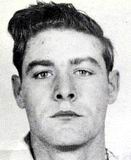 Edgar Smith
Murderer · USA · 1957
Edgar Smith Edgar Smith was born in 1934. He had been an unemployed mechanic at…
1 victim
Edgar Smith
Murderer · USA · 1957
Edgar Smith Edgar Smith was born in 1934. He had been an unemployed mechanic at…
1 victim
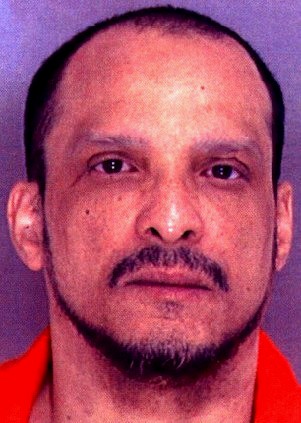 Orlando Baez
Murderer · USA · 1987
Orlando Baez was convicted of stabbing Janice "Sissy" Williams to death. Baez r…
1 victim
Orlando Baez
Murderer · USA · 1987
Orlando Baez was convicted of stabbing Janice "Sissy" Williams to death. Baez r…
1 victim
 Robert Ira Peede
Murderer · USA · 1983
Robert Ira Peede was prosecuted in the Ninth Judicial Circuit, Orange County, F…
1 victim
Robert Ira Peede
Murderer · USA · 1983
Robert Ira Peede was prosecuted in the Ninth Judicial Circuit, Orange County, F…
1 victim
- Gender
- male
- Country
- USA
- Location
- Rockingham County, Virginia, USA
- Date of birth
- August 10, 1968
- Age at first offence
- 31
- Characteristics
- parricide, revenge, kidnapping
- Victim profile
- Christina Zirkle, 4 (his daughter); Jessica Shifflett , 14 (his stepdaughter)
- Method of murder
- St abbing with knife
- Date(s) of murder
- August 2, 1999
- Years active
- 1999
- Date of arrest
- Same day (suicide attempt)
- Status
-
Executed
Executed by lethal injection in Virginia on April 2, 2002
Case record: Daniel Lee Zirkle
Background
Daniel Lee Zirkle had an ongoing relationship with Barbara Schifflett, who was the mother of their 4-year-old daughter, Christina Zirkle. Barbara Schifflett later broke off the relationship due to abuse and obtained protective orders against Zirkle. Zirkle repeatedly violated four protective orders after the breakup and was eventually ordered to serve time behind bars for those violations.
While in jail, Zirkle stewed for 2 months and planned deadly revenge on Barbara Schifflett and her daughters, according to testimony from a fellow inmate.
Zirkle lived with ex-girlfriend Barbara Shifflett in Rockingham County from 1992 until April 3, 1999. Barbara Shifflett was the mother of two children, Jessica L. Shifflett and Christina M. Zirkle. Daniel Zirkle was Christina’s biological father.
In 1988, Zirkle was convicted of armed robbery. Nancy Berry, the victim of the robbery, testified that Zirkle entered a store where she was employed as a cashier, displayed a butcher knife, and demanded that she “[g]ive [him] some money.” Berry gave Zirkle money from a cash register, and he left the store.
Zirkle pled guilty in 1999 to possession of marijuana and was convicted of that offense.
The Commonwealth presented evidence that Zirkle had also threatened and abused members of Barbara Shifflett’s family.
The offence
On August 2, 1999, Zirkle broke into the home where Christina was being babysat by Zirkle’s step-daughter, 14-year-old Jessica Schifflett, at the Shifflett home in Mount Crawford.
Jessica told Zirkle that he wasn’t supposed to be in the home. Jessica refused to let Zirkle take Christina from the home, and Zirkle stabbed her in the neck with a serrated knife.
Zirkle then kidnapped the 4-year-old, Christina Zirkle. On his way to Page County, Zirkle stopped to call Barbara at her job in Harrisonburg and told her to “Live in hell, bitch.”
Zirkle drove Christina to a mountain overlook in the George Washington National Forest, where he stabbed her to death with the same kitchen knife used against Jessica. Zirkle then tried to kill himself, cutting his own throat. He recovered from his self-inflicted wound.
Zirkle’s motive in the murders was to get back at Barbara Shifflett.
Investigation
After Jessica’s death was discovered, Barbara Shifflett called 911.
Peter Monteleone, an investigator with the Page County Sheriff’s Department, was dispatched to Storybook Trail in Page County on August 2, 1999. He was informed by the dispatcher that a 30-year-old male who had threatened to commit suicide had taken his daughter and gone to the trail. As Monteleone walked down the paved trail, he observed that the wooden deck area at the end of the trail contained “fresh blood stains.”
Monteleone saw “the upper part of a male torso” and a child’s leg. The child’s body was lying face down on the male’s chest, the male’s left arm was over the child, and there was a knife lying “right off of [Zirkle’s] right hand.” Monteleone determined that Zirkle was alive and kicked the knife away from his hand. Monteleone tried to determine whether the child had a pulse, and she did not. Monteleone observed wounds to Christina’s body.
Michael Todd Foltz, a member of a rescue squad, arrived at the scene, checked Christina’s vital signs, and pronounced her dead.
Zirkle, who had a self-inflicted wound to his neck, was transported to a hospital for treatment.
Detective Daniel Comer of the Rockingham County Sheriff’s Department interviewed Zirkle. The defendant stated that he had taken a knife from his mother’s home and that he used the knife to kill Jessica and Christina.
An inmate who was incarcerated with Zirkle, Ronald J. Jackson, testified about Zirkle’s statements. Ronald J. Jackson testified:
“An officer came in, when Mr. Zirkle first entered into the pod. Maybe a week or two after he had entered, an officer came in to let [Zirkle] know that he was going to contribute to the car wash that was being given for his daughters’ grave site and the stones. And as the officer came over and explained what he was going to do, Mr. Zirkle said, 'Well, tell that bitch I said checkmate.' And he ran his thumb across his throat, and looked dead at the officer.”
Evidence and medical findings
Christina Zirkle
Dr. Frances Patricia Field, the assistant chief medical examiner for the Northern Virginia Medical Examiner’s Office, qualified as an expert witness on forensic pathology. She performed an autopsy on the body of Christina Zirkle.
Dr. Field testified:
“[Christina] had a superficial incised, or cut wound under her chin. She had a gaping incised stab wound on the front of her neck. She had some abrasions on the front of her left shoulder, or lower neck region; a bruise at the back of her right neck; a small bruise on her right abdomen; some abrasions, or scraping of the skin, on the right hand and right knee; and a bruise on her lower right leg. And there was a pressure mark on her left knee.”
Dr. Field stated that the stab wound to Christina’s neck extended “to a depth of approximately two and three quarter inches.” It went through the tracheal, “between two cervical vertebrae, between the bony parts, and cut the spinal cord in half.” Dr. Field opined that this type of stabbing motion involved “considerable force.” She testified that Christina would have lived “for a very short period of time[,][o]nly a few minutes” after the wound was inflicted. Dr. Field opined that the cause of Christina’s death was the stab wound to the neck and testified that the abrasions and bruises on the back of Christina’s neck and the base of her head indicated that she struggled when Zirkle stabbed her with the knife.
Jessica Shifflett
Dr. William Massello, the assistant chief medical examiner for Western Virginia, qualified as an expert witness in forensic pathology. He performed an autopsy on Jessica Shifflett’s body.
Dr. Massello testified that Jessica’s body had five stab wounds to the neck. Two wounds were on the left side and extended into the neck approximately three to five inches. Dr. Massello testified:
“cut through a major artery, a major vein, and the back portion of the windpipe in the front of the neck. And in doing so, they created ... they would have caused a lot of external bleeding, bleeding into the windpipe, or the airway, and also bleeding into the supporting tissue and the muscles of the neck.”
Dr. Massello testified that Jessica’s body had two additional wounds on the front of the neck. Those wounds extended “into the muscle of the neck, and into a glandular structure ... called the thyroid gland, which regulates your metabolic rate.”
When asked whether he was able to determine which of the five wounds would have been lethal to Jessica, Dr. Massello responded:
“I couldn't tell you which one. But I can tell you that one of the two, or both on the left side of the neck, were terribly, terribly lethal, and either one of those wounds would have caused death within many seconds, or a few minutes, after being inflicted.”
Dr. Massello testified that the types of injuries on the child’s neck were consistent with the blade size and type of knife taken from Zirkle.
Arrest and prior proceedings
Before the August 2, 1999 murders, Zirkle and Barbara Shifflett had separated around April 1999, and Barbara obtained several restraining orders due to abuse. Zirkle violated several protective orders in visits to Barbara’s home in Mount Crawford.
On April 3, 1999, when Barbara Shifflett returned home at about 9:00 p.m., Zirkle was there in bed. Barbara Shifflett described that he “jump[ed] up out of the bed, and he bump[ed]” her in the chest and stated that he wanted his “f'ing girls home now.” Barbara Shifflett and Zirkle began to argue. She “picked up” a telephone and tried to call for help by “call[ing] 911.” Zirkle “jerked” the telephone from her hand and pushed her against a fish tank. When Barbara Shifflett tried to use a different telephone to call for help, Zirkle “jerked the phone out of [her] hand” and shoved her against a sofa.
Barbara Shifflett went into Jessica’s bedroom and used a telephone to call the police. After the police arrived, Barbara Shifflett left the home to spend the evening with her sister, Peggy Shifflett. Zirkle placed a telephone call to Peggy Shifflett’s home, and Peggy Shifflett answered the telephone and hung up the receiver.
Barbara Shifflett described the call:
“And he called back, and [Peggy] told him that he could not speak to me, to please not call back. He calls again, and I told her to let me speak to him. So I spoke to him. And he said that he wanted his f'ing daughters home, and he wanted them home now. And I told him no, that we wasn't coming home. And he said ... [h]e said, 'Do you want a war? Have a war. You'll pay, you f'ing b--.' ”
Barbara Shifflett obtained a protective order which police officers served on Zirkle that night, directing Zirkle to stay away from Barbara Shifflett and the home they shared.
The next day, Barbara Shifflett and her sister went to retrieve some items. While they were in the home, Zirkle entered the house and attacked Barbara Shifflett. Zirkle eventually fled. Police officers arrived, and Barbara Shifflett obtained arrest warrants against Zirkle for assault and battery and for violating the protective order. After the warrants were issued, Zirkle continued to place telephone calls to Barbara Shifflett and, during one conversation, he told her that she “would be sorry, that [she] would pay.”
Zirkle was arrested and convicted of assault and battery and violating the protective order. He was sentenced to incarceration in the Rockingham County Jail.
Ricky Lee Dean, who was confined in the Rockingham County Jail with Zirkle, testified:
“[H]e was going to take care of all three of them when he got out of there. If he couldn't have them, nobody else would. He said he was going to kill them, all three.”
Trial and pleas
Capital murder charge in Page County: Christina Zirkle
A grand jury in Page County issued an indictment against Daniel Lee Zirkle charging him with the capital murder of Christina Marie Zirkle pursuant to Code § 18.2-31(12) for “the willful, deliberate and premeditated killing of a person under the age fourteen by a person age twenty-one or older.”
Before impaneling a jury on the morning of the scheduled trial, Zirkle’s counsel informed the circuit court that Zirkle desired to enter a plea of guilty to the indictment and that he had instructed counsel not to present any evidence. After consulting with counsel, Zirkle was arraigned, and he entered a plea of guilty to the indictment.
Before accepting the plea, the circuit court considered a proffer of the evidence that the Commonwealth would have adduced during the guilt phase of the capital murder trial. Zirkle concurred in the proffer. The circuit court conducted an inquiry incident to the tendered plea and concluded that Zirkle was mentally competent and fully capable of understanding the proceedings, that he fully understood the nature and effect of his plea of guilty and the possible penalties that could be imposed, and that the guilty plea was made freely, intelligently, and voluntarily. The court accepted the plea and found Zirkle guilty of capital murder.
Under Code § 19.2-264.4, the circuit court proceeded with the penalty phase of the capital murder trial. At the beginning of the penalty phase, Zirkle’s counsel informed the court that Zirkle directed them not to present any mitigation evidence and that such direction was made against the advice of counsel. The circuit court asked whether Zirkle understood he could introduce evidence in mitigation and whether he instructed his counsel not to present mitigation evidence. Zirkle responded, “I have.”
The Commonwealth presented its evidence. After considering the evidence and a report prepared by a probation officer pursuant to Code § 19.2-299, the circuit court found that there was a probability that Zirkle would commit criminal acts of violence in the future that would constitute a continuing serious threat to society, and that his conduct was outrageously or wantonly vile, horrible, or inhuman with depravity of mind and an aggravated battery to the victim. The circuit court entered final judgment fixing Zirkle’s sentence at death.
Zirkle directed his counsel not to appeal the judgment of the circuit court.
After the trial court found the waiver to be voluntary and intelligent, this Court reviewed the imposition of the sentence of death and stated that it would review the evidence in the light most favorable to the Commonwealth, the prevailing party below.
Capital murder charge in Rockingham County: Jessica Shifflett and breaking and entering
A grand jury in Rockingham County issued three indictments against Daniel Lee Zirkle. The indictments charged him with:
- the capital murder of Jessica Shifflett “as part of the same act or transaction in which he unlawfully, feloniously, willfully, deliberately and with premeditation killed Christina Zirkle” in violation of Code § 18.2-31(7);
- the capital murder of Jessica Shifflett “within the three year period in which he unlawfully, feloniously, willfully and deliberately with premeditation killed Christina Zirkle” in violation of Code § 18.2-31(8);
- breaking and entering in the daytime of a dwelling house with the intent to commit murder while armed with a deadly weapon in violation of Code § 18.2-90.
Zirkle was convicted of the capital murder of Christina Zirkle and sentenced to death. See Zirkle v. Commonwealth, 262 Va. 320, 551 S.E.2d 601 (2001).
On August 16, 2000, Zirkle’s counsel informed the circuit court that Zirkle desired to enter pleas of guilty to the indictments and request that the court impose a sentence of death. Counsel told the circuit court that they discussed the pleas with Zirkle “in great length” and that they disagreed with him, but that he desired to enter the guilty pleas over their objections. Zirkle further advised counsel that he would not permit them to participate in the penalty phase by presenting mitigating evidence.
The circuit court examined Zirkle extensively regarding counsel’s representations to the court, which Zirkle confirmed. Zirkle was arraigned and entered pleas of guilty to the indictments. The circuit court considered a proffer of the evidence that the Commonwealth would have adduced during the guilt phase of the capital murder charges and the non-capital charge. Zirkle agreed with the Commonwealth’s proffer. The circuit court concluded Zirkle was mentally competent, fully capable of understanding the proceedings, fully understood the nature and effect of his guilty pleas and possible penalties, found the pleas were made freely, intelligently, and voluntarily, accepted the pleas, and found him guilty of capital murder as charged in the indictments and guilty of breaking and entering with the intent to commit murder while armed with a deadly weapon.
Zirkle received a life sentence for his conviction of breaking and entering with the intent to commit murder while armed with a deadly weapon. Even though he filed a notice of appeal from that conviction, he did not challenge that conviction or sentence on appeal.
Under Code § 19.2-264.4, the circuit court proceeded with the penalty phase. Zirkle instructed his counsel not to present mitigation evidence. The court directed counsel to prepare to present mitigation evidence in the event Zirkle changed his mind, and on numerous occasions the court asked whether he desired to present evidence in mitigation; Zirkle responded in the negative each time.
After considering the evidence and a report prepared by a probation officer pursuant to Code § 19.2-299, the circuit court found that the Commonwealth proved beyond a reasonable doubt a probability based on prior history and the circumstances that Zirkle would commit violent criminal acts constituting a continuing serious threat to society, and that his conduct in committing the offense was outrageously and wantonly vile, horrible and inhuman because it involved torture, depravity of mind, or aggravated battery to the victim, Jessica Shifflett. The circuit court entered a final judgment fixing Zirkle’s punishment at death.
Zirkle apparently directed counsel not to appeal the judgment of the circuit court. Counsel filed “a motion for direction and guidance” in the clerk’s office of this Court. The circuit court conducted a hearing to determine whether Zirkle’s decision not to pursue an appeal was voluntary and intelligent, and directed the circuit court to obtain Zirkle’s written waiver under oath. After the hearing, the circuit court found that Zirkle’s directions to counsel not to participate and his decision not to participate in the appeal process were intelligently, voluntarily, and knowingly made and that Zirkle was mentally competent to waive his appeal rights. The circuit court obtained an executed written waiver of Zirkle’s right of appeal, signed by Zirkle in open court and under oath.
Sentencing
In September 2000, Circuit Judge Porter R. Graves Jr. ordered Zirkle put to death for the August 1999 knife slaying of 14-year-old Jessica Shifflett. Zirkle was ordered to serve time behind bars for repeatedly violating four protective orders before the murders.
A Page County judge sentenced Zirkle to death for stabbing Christina to death atop a mountain overlook on August 2, 1999. A Rockingham County judge sentenced him to death for the murder of Jessica Shifflett. Graves handed Zirkle one death sentence for killing Jessica Shifflett and another for a separate count of killing within 3 years of committing another murder.
Zirkle received a life sentence for breaking and entering with the intent to commit murder while armed with a deadly weapon, and he does not challenge that conviction or sentence on appeal.
Zirkle directed his counsel not to appeal the judgments, and his waivers were found to be voluntary and intelligent.
Appeals
Zirkle v. Commonwealth, 551 S.E.2d 601 (Va. 2001) (Direct Appeal) (Page County). Zirkle v. Commonwealth, 553 S.E.2d 520 (Va. 2001) (Direct Appeal) (Rockingham County).
This Court reviewed the imposition of the sentence of death after Zirkle waived his right of appeal.
Outcome
Daniel Lee Zirkle was executed in Virginia by lethal injection on April 2, 2002.
After apologizing for the killings, Zirkle made final remarks while being led into the death chamber. Zirkle said:
“I would just like to say that I'm sorry to everyone who's been hurt in this tragedy that I've had. I also want to thank my family for their love and support, my lawyers, my preacher, for their help in getting me through this. I want my soulmate Gracie to know that I love her with all of my heart and soul and I will always be with her.”
As he received lethal drugs, Zirkle said, “Thank you, Jesus.”
Aftermath
During trial proceedings in Page County, after Zirkle’s sentencing, authorities removed relatives from the courtroom.
A statement from Governor Mark R. Warner regarding the scheduled execution of Daniel Lee Zirkle stated:
“Mr. Zirkle pled guilty to the capital murder of his four year old daughter, Christina M. Zirkle, in Page County Circuit Court. He pled guilty to the capital murder of his former girlfriend's 14 year old daughter, Jessica L. Shifflett. The evidence shows that on August 2, 1999, Mr. Zirkle murdered both girls by slashing and stabbing them in the neck. The death sentences imposed on Mr. Zirkle were reviewed and affirmed by the Virginia Supreme Court.”
“I have not been asked to intervene in the case of Daniel Lee Zirkle, there are no legal challenges to this scheduled execution, and accordingly, I expect the court-ordered sentence to be carried out.”
Amnesty International condemned the impending execution. Mona Cadena, Field Organizer for the Mid-Atlantic Regional Office of Amnesty International USA, said:
“Cases of ‘consensual’ executions represent about one in eight of the more than 700 men and women executed since 1977, and serve to reiterate the cruelty and brutalizing futility of a government policy which toys with human life and responds to killing with further killing,”
Amnesty International also stated:
“Amnesty International is opposed to all executions as a violation of human rights standards; the death penalty is not merely an act, but a process of dehumanization, brutalization, and extermination,”
“Society should not be numbed into accepting a process that classifies certain people as unworthy of life.”
Other details
A grand jury in Page County issued the indictment charging capital murder of Christina Marie Zirkle under Code § 18.2-31(12).
Authorities responded to several domestic violence calls from the residence before the August murders.
The murders occurred on August 2, 1999. Jessica Shifflett was babysitting Christina at their home in Mount Crawford.
Zirkle was 31 years old when the crime was committed. Zirkle was 32 during sentencing in Page County, and Zirkle was 33 at execution.
Zirkle drove Christina to an overlook in the George Washington National Forest, and the site was associated with “Story Book Trail on Massanutten Mountain” in Page County.
In his confession to police, Zirkle said he sent Jessica to “a special place.” In testimony from Ronald J. Jackson, Zirkle said, “Well, tell that bitch I said checkmate.”
Zirkle told Barbara Shifflett to “Live in hell, bitch.” In testimony from Barbara Shifflett, she said: “I was at work.... At 2:30 [Zirkle] calls me and tells me to live in hell, bitch.”
Barbara Shifflett planned to obtain another protective order from a magistrate on the day of the murders.
A witness described Zirkle’s statement on jail release: Zirkle said he was “going to take care of all three of them when he got out of there. If he couldn't have them, nobody else would. He said he was going to kill them, all three.”
On the day of the murders, a rescue squad member pronounced Christina dead at the scene.
Zirkle directed his lawyers not to present evidence in mitigation and waived his appeal rights.
Zirkle was the second person executed that year in Virginia and the 85th since the U.S. Supreme Court allowed states to resume capital punishment in 1976.
The death occurred at the Greensville Correctional Center at 9:07 p.m. on April 2, 2002, after a spiritual adviser accompanied him into the death chamber.


Spotted an error, or have more information about this case?