Benjamin Brewer
Murderer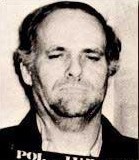 Ervil LeBaron
Murderer · USA · 1972
Ervil Morrell LeBaron (1925 to August 16, 1981) was the leader of a polygamous…
35 victims
Ervil LeBaron
Murderer · USA · 1972
Ervil Morrell LeBaron (1925 to August 16, 1981) was the leader of a polygamous…
35 victims
 Brian Kevin Rosenfeld
Murderer · USA · 1985
Brian Kevin Rosenfeld Brian Kevin Rosenfeld was sentenced to three concurrent l…
23 victims
Brian Kevin Rosenfeld
Murderer · USA · 1985
Brian Kevin Rosenfeld Brian Kevin Rosenfeld was sentenced to three concurrent l…
23 victims
 Marvin Gray
Murderer · USA · 1975
Marvin Gray was convicted killer who claimed responsibility for 23 slayings and…
23 victims
Marvin Gray
Murderer · USA · 1975
Marvin Gray was convicted killer who claimed responsibility for 23 slayings and…
23 victims
 Yahweh ben Yahweh
Murderer · USA · 1980
Yahweh ben Yahweh was born and legally named Hulon Mitchell Jr. (October 27, 19…
23 victims
Yahweh ben Yahweh
Murderer · USA · 1980
Yahweh ben Yahweh was born and legally named Hulon Mitchell Jr. (October 27, 19…
23 victims
 Richard Fielding
Mass murderer · United Kingdom · 1999
Richard Fielding Richard Fielding was detained indefinitely at Rampton Hospital…
7 victims
Richard Fielding
Mass murderer · United Kingdom · 1999
Richard Fielding Richard Fielding was detained indefinitely at Rampton Hospital…
7 victims
 Velma Ogden-Whitehead
Murderer · USA · 2005
Velma Ogden-Whitehead pleaded guilty to first-degree murder in the 2005 killing…
1 victim
Velma Ogden-Whitehead
Murderer · USA · 2005
Velma Ogden-Whitehead pleaded guilty to first-degree murder in the 2005 killing…
1 victim
 Clifford Sleigh
Murderer · Canada · 1992
September 6, 1992 — Corinne Gustavson (“Punky”) was kidnapped from her north Ed…
1 victim
Clifford Sleigh
Murderer · Canada · 1992
September 6, 1992 — Corinne Gustavson (“Punky”) was kidnapped from her north Ed…
1 victim
 Hank Earl Carr
Murderer · USA · 1998
Hank Earl Carr (d. 1998) was a suspected offender involved in a violence spree…
4 victims
Hank Earl Carr
Murderer · USA · 1998
Hank Earl Carr (d. 1998) was a suspected offender involved in a violence spree…
4 victims
- Gender
- male
- Country
- USA
- Location
- Tulsa County, Oklahoma, USA
- Date of birth
- 1973
- Characteristics
- rape, torture
- Victim profile
- Karen Joyce Stapleton (female, 20)
- Method of murder
- St abbing with knife
- Date(s) of murder
- August 16, 1978
- Years active
- 1978
- Date of arrest
- 3 days after
- Status
-
Executed
Executed by lethal injection in Oklahoma on April 26, 1996
Case overview
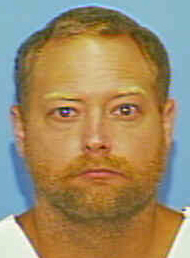
Benjamin Brewer was a white man. He was 26 when he was sentenced to death in Tulsa County. He was executed on April 26, 1996. Brewer fatally stabbed Karen Joyce Stapleton, 20, an accounting student at Tulsa Junior College.
Timeline
- August 17, 1978 — Karen Joyce Stapleton was found dead in her Tulsa apartment.
- August 16, 1978 — Death was determined to have occurred on or around this date due to twenty stab wounds.
- August 19, 1978 — Benjamin Brewer was arrested for the murder.
- August 18, 1982 — The Oklahoma Court of Criminal Appeals issued a decision: BENJAMIN BREWER, APPELLANT, v. THE STATE OF OKLAHOMA, APPELLEE, Case No. F-79-609.
- August 20, 1982 — The decision was corrected.
- December 7, 1978 — The Oklahoma Supreme Court denied Brewer’s application for issuance of writ of prohibition and/or mandamus ordering the judge to accept a guilty plea and sentence him to life imprisonment.
- 1979 — Brewer was retried in the Tulsa County District Court on first degree murder, again raising the defense of insanity; the jury convicted him and recommended death.
- April 26, 1986 — Brewer’s death sentence was affirmed by the Oklahoma Court of Criminal Appeals (execution-date procedures discussed later in related proceedings reference this affirmation and later post-conviction steps).
- October 27, 1983 — The court sentenced Brewer to death.
- September 19, 1988 — The district court denied post-conviction relief.
- September 8, 1989 — The Oklahoma Court of Criminal Appeals affirmed an unpublished opinion denying post-conviction relief.
- June 12, 1992 — Brewer filed a federal habeas corpus petition.
- April 5, 1995 — The U.S. Court of Appeals for the Tenth Circuit issued an order and judgment in Benjamin Brewer, Plaintiff-Appellant, v. Dan Reynolds, Defendant-Appellee (No. 94-5072).
- August 2, 1991 — An order was issued declining jurisdiction in State of Oklahoma v. Benjamin Brewer (declining jurisdiction over an application for an execution date).
- April 9, 1996 — The district court entered an order denying Brewer’s Rule 60(b) motion to reconsider judgment and denying a stay of execution.
- April 19, 1996 — Brewer filed notice of appeal, requested a stay, and filed a brief in the Tenth Circuit.
- April 22, 1996 — The Tenth Circuit issued an order and judgment in Benjamin Brewer appeals from an order of the district court (No. 83 F.3d 431 referenced).
- April 26, 1996 — Brewer was executed by lethal injection in Oklahoma.
Background
Benjamin Brewer was 26 when he was sentenced to death in Tulsa County. He was executed on April 26, 1996 after spending 12 years and 6 months on death row.
Brewer had been sentenced to death for killing a woman in 1978, and he was a prisoner on death row at the state penitentiary in McAlester. A New York Times report described an 80-year-old Oklahoma law that could have allowed a county sheriff to carry out an execution in the inmate’s cell if no legal reason existed to delay it.
The offence
Karen Joyce Stapleton was found dead in her Tulsa apartment on August 17, 1978. Examination of the semi-nude body revealed that death had occurred on or around August 16, 1978 as a result of twenty stab wounds.
At trial, Brewer’s confession and physical evidence corroborated that he had killed Stapleton. Physical evidence introduced at trial corroborated Brewer’s confession that he had killed Stapleton.
In the second trial and related proceedings, the State introduced evidence that Brewer stole the victim’s automobile, purse, and dog. The presence of semen in the victim’s vagina led the prosecutor to infer throughout the trial that Brewer raped her. The U.S. Court of Appeals described the semi-nude body as having been discovered in her Tulsa apartment and stated that she had been stabbed twenty-one times.
The U.S. Court of Appeals also described the State’s evidence at penalty phase as including:
- a prior conviction of a felony involving the use or threat of violence to the person; and
- that the murder was especially heinous, atrocious, or cruel.
Investigation and arrest
Benjamin Brewer was arrested on August 19, 1978 for the murder.
In the 1982 opinion, the Oklahoma Court of Criminal Appeals stated that at the time of arrest the Tulsa police knew:
- A homicide had been committed.
- The victim’s automobile and small white dog were missing.
- Brewer had been identified by a security guard as driving an automobile matching the description of the victim’s automobile and possessing a small white dog in the early morning hours of the murder; the security guard had engaged in a short conversation with Brewer and identified him from several photographs for the police prior to the arrest.
- Brewer was well-known in the area of the victim’s apartment and had once lived in that vicinity.
- A female who was known to one of the Tulsa detectives but wished to remain anonymous telephoned Tulsa police and informed them they should “look at” Brewer in the homicide.
The Oklahoma Court of Criminal Appeals found that this information collectively warranted a prudent and reasonable police officer’s belief that Brewer committed the offence and held that Brewer’s arrest was lawful and the evidence and confessions obtained pursuant to the arrest were admissible.
Trial
First trial and appellate reversal (1982)
Brewer was charged and convicted of Murder in the First Degree in the District Court of Tulsa County, Oklahoma, Case No. CRF-78-2137. He was sentenced to death by the jury.
The Oklahoma Court of Criminal Appeals described the conviction as reversed and remanded for further proceedings. It held that Brewer’s conviction was reversed because of overzealous conduct by the prosecuting attorney and other trial errors considered cumulatively.
The 1982 opinion included described prosecutorial conduct:
- During cross-examination of Brewer’s expert witness concerning Brewer’s insanity defense, the prosecutor stabbed State’s Exhibit Number 10 (a 16 inch by 20 inch photograph of the deceased victim’s body as it was found at the murder scene) four separate times with the knife used in the murder.
- The prosecutor ridiculed defense attorney’s objections before the jury, including:
- “MR. FALLIS; . . . so we know there is testimony in this case now, testimony of your own client —”
- “MR. BURNS: Objection, Your Honor.”
- “MR. FALLIS: It’s in this statement.”
- “MR. BURNS: Ask that the jury be admonished to disregard it and move for a mistrial.”
- “MR. FALLIS: So help me God is what he said, so help me God —”
- “MR. BURNS: Mr. Fallis, I have an objection —”
- “MR. FALLIS: That’s what happened, he didn’t say `I don’t know what happened.’”
- “MR. BURNS: I have an objection before the Court.”
- “MR. FALLIS: Object, object, when it gets tight, he starts objecting.”
- “MR. BURNS: Object to his comment now and ask that the jury be admonished to disregard it and move for a mistrial and ask that he be admonished.”
- “THE COURT: Motion denied.”
- “MR. FALLIS: Isn’t that interesting. They stood before you during the opening statement, they stood before you during the voir dire, `we are not going to contest that the death was occasioned by Ben Brewer'; and we have been prolonging this trial, running back and forth like a yo-yo to the bench making records, objecting to everything that ever happened in this courtroom.”
- “MR. McCARTHY: Your Honor, we object —”
- “MR. FALLIS: Rather inconsistent, isn’t it?”
- “MR. McCARTHY: We object to counsel’s comments concerning matters of law. That’s up to the court.”
- “THE COURT: I’ll sustain the objection, concerning the approach to the bench.”
- “MR. McCARTHY: I would ask that the jury be —”
- “MR. FALLIS: Thank you, Your Honor.”
- “MR. McCARTHY: Would you admonish the jury?”
- “THE COURT: They are so admonished.”
- During sentencing, the prosecutor referred to the possibility that, if acquitted, Brewer would commit similar crimes in the future.
- During sentencing, the prosecutor told the jury that the homicide rate in Oklahoma had increased 28 percent, and that no one had been put to death since 1966.
The 1982 opinion also described a motion in limine relating to Brewer’s confession. The judge sustained Brewer’s motion in limine to delete a portion of the confession in which Brewer admitted gaining entrance into the victim’s apartment by first breaking into an adjacent apartment and crawling through a common attic-way. During the hearing, the prosecutor agreed to the deletion, stating: “When taken as a whole I can see no relevance to the entry into the apartment next door at this time and I can find no exception for its use as evidence in this case, so we have no objection to the court granting that motion and we would join in the motion and the only thing left, of course, is the physical aspect of extracting that from the confession, so however counsel wants to go about that, we’ll be glad to join in that.”
The 1982 opinion held that the better practice on retrial would be for the prosecutor to either not join in such a motion and then to follow the procedure outlined in Burks v. State.
Retrial and affirmance (1986)
After reversal, Brewer was retried in 1983 and again convicted of First Degree Murder and sentenced to death. In BREWER v. STATE, 718 P.2d 354 (1986), the Oklahoma Court of Criminal Appeals affirmed the conviction and sentence.
In the 1986 opinion, the Oklahoma Court of Criminal Appeals stated that the main issue at the second trial was Brewer’s sanity at the time of the slaying. It described the facts as Karen Joyce Stapleton having been found murdered in her Tulsa County apartment on August 17, 1978 and having died as a result of twenty stab wounds. It stated that physical evidence corroborated Brewer’s confession and that the jury rejected Brewer’s insanity defense and returned a guilty verdict.
The 1986 opinion addressed assignments of error including:
- double jeopardy arguments related to prosecutor overreaching and denial of speedy trial claims;
- motions to strike the bill of particulars and accept Brewer’s plea of guilty;
- instructions on insanity and mitigating circumstances;
- evidentiary rulings on photographs and slides;
- issues with admission of evidence of other crimes, including burglaries and larcenies;
- matters regarding mistrial requests after evidence about the victim’s sexual proclivities;
- arguments concerning lawful arrest and suppression of fruits of arrest (not barred because the appeal of the first trial had already ruled arrest lawful);
- arguments concerning voir dire statements on reasonable doubt and bifurcation of the proceeding;
- arguments about exclusion of mitigating circumstances; and
- arguments about appointing expert witnesses for second stage proceedings. The 1986 opinion concluded that the judgment and sentence were affirmed.
In the 1986 opinion, the court described specific evidence introduced by the State:
- entrance to the victim’s apartment by breaking into the adjacent vacant apartment (second degree burglary), passing through a common attic way, and entering through the attic opening in the victim’s apartment (first degree burglary);
- inferences that the act of sexual intercourse claimed by Brewer was actually rape;
- after committing the murder, Brewer took the victim’s automobile (larceny), her dog (larceny), and her purse and its contents (larceny).
The 1986 opinion stated that the State gave proper Burks notice and that the jury received a limited-use instruction. The court held that admitting such evidence was not error.
Penalty phase and sentencing
The U.S. Court of Appeals for the Tenth Circuit described the Oklahoma capital sentencing scheme as a separate penalty phase, where the jury unanimously must find at least one aggravating circumstance beyond a reasonable doubt and determine that aggravating circumstance(s) outweighed mitigating factors.
The U.S. Court of Appeals described the aggravating factors alleged during penalty phase as:
- Brewer had previously been convicted of a felony involving the use or threat of violence to the person; and
- the murder was especially heinous, atrocious, or cruel.
It stated that the State introduced by motion the guilt/innocence phase prosecution evidence and that for the prior violent felony aggravator the State introduced the judgment and sentence of the 1977 rape conviction and Brewer’s stipulation that the crime involved the use or threat of violence to the person.
The U.S. Court of Appeals further described that in the penalty phase Brewer instructed counsel not to call any witnesses, and that counsel acceded to the wishes of their client and called no mitigation witnesses, but did introduce by motion the defense evidence presented during the guilt/innocence phase.
The U.S. Court of Appeals stated that on October 27, 1983 the court sentenced Brewer to death. It also stated that on direct appeal the Oklahoma Court of Criminal Appeals affirmed the conviction and sentence, and the United States Supreme Court denied certiorari.
Appeals
Oklahoma Court of Criminal Appeals (1982)
The Oklahoma Court of Criminal Appeals issued an opinion reversing Brewer’s conviction and remanding for further proceedings. It stated:
- Brewer was charged, tried, and convicted of Murder in the First Degree pursuant to the laws described in the opinion.
- Brewer was sentenced to death by the jury.
- The opinion stated that the conviction was reversed and remanded due to overzealous prosecution conduct and trial errors cumulatively requiring reversal.
The decision concluded with: “For the reasons herein stated, we REVERSE the appellant's conviction and REMAND the case for further proceedings not inconsistent with this opinion.”
It included discussion of:
- denial of a guilty plea at arraignment and a writ petition denied on December 7, 1978;
- admissibility of photographic evidence;
- lawfulness of Brewer’s arrest and admissibility of confessions;
- various issues related to instructions and aggravating circumstances proof; and
- a specific holding on procedure for proving that prior felonies involved the use or threat of violence to the person.
It held that on retrial the prosecutor’s and court’s procedures should include: notice to defendant, in camera judge review, and opportunity for personal stipulation by defendant; if no stipulation is made, the State could present evidence sufficient to prove use or threat of violence. It also emphasized that the court’s procedure would apply in future capital cases.
Oklahoma Court of Criminal Appeals (1986)
In 718 P.2d 354 (Okla. Crim. App. 1986), the Oklahoma Court of Criminal Appeals affirmed the judgment and sentence.
The 1986 opinion stated that this Court reversed the conviction on appeal because Brewer had not received a fair trial in the earlier appeal, and that upon retrial Brewer was again convicted and sentenced to death; it affirmed.
The 1986 opinion included discussion of jury instructions on insanity. It addressed an instruction dispute and reviewed the appropriateness of restricting both defense and prosecution from explaining burdens of proof to the jury, finding no reversible error.
It also addressed:
- admission of photographs and slides, noting it had ruled those exhibits admissible when the case was originally appealed, and cited stare decisis;
- medical examiner testimony involving spermatozoa presence and questions about intercourse before or after death, including an objection that was sustained and the jury was admonished to disregard;
- evidence of other crimes including burglaries and larcenies, and limited-use instruction with Burks notice;
- mistrial claims after admission of a statement about victim’s sexual proclivities, including that no timely objection was made and later objection was sustained and admonishment offered but rejected by counsel;
- sentence modification arguments and voir dire comments.
U.S. Court of Appeals for the Tenth Circuit (1995)
In **Benjamin Brewer, Plaintiff-Appellant, v. 94-5072, the U.S. Court of Appeals for the Tenth Circuit issued an order and judgment on April 5, 1995.
The Tenth Circuit described:
- Brewer had been convicted in 1983 by an Oklahoma jury and sentenced to death.
- He filed a federal petition for writ of habeas corpus under 28 U.S.C. § 2254 raising thirty-six claims.
- The district court denied the petition but issued a certificate of probable cause.
- On appeal, Brewer challenged denial of two claims only: (1) effective assistance of counsel during the penalty phase and (2) constitutional right to appointment of a mental health expert.
The Tenth Circuit affirmed the district court’s denial of habeas relief. It stated that it found no reasonable probability that mitigation evidence would have changed the sentencing outcome and that the denial of appointment of a mental health expert did not deprive due process in the penalty phase as the alleged aggravators did not place Brewer’s mental condition at issue.
Execution proceedings and aftermath
Witnesses and execution stay litigation (1991; reported 1996)
A New York Times report described a legal proceeding in Tulsa County that could have resulted in execution by the county sheriff in the inmate’s cell due to an 80-year-old Oklahoma law.
The report described:
- A district judge ordered Sheriff Stanley Glanz to execute Brewer.
- A district judge in Pittsburg County ordered penitentiary officials not to assist the sheriff because Brewer still had several appeals available.
- Another order refusal about authority led to a contention by Brewer’s defense lawyer Mitchell A. Lee that the sheriff would have to “shoot Brewer or strangle him or whatever he wants to kill him in his cell.”
- The Oklahoma Court of Criminal Appeals issued a stay about 15 minutes before the sheriff arrived at the prison.
- Sheriff Glanz and David Moss, Tulsa County District Attorney, conceded they had never expected the execution to be allowed.
The report also quoted:
- Mitchell A. Lee saying: “It’s a very odd situation.”
- Sheriff Glanz later saying: “We felt we needed to go ahead and make the arrangements.”
- Sheriff Glanz later saying: “Our main purpose was to visit with Mr. Brewer and advise him he had the right to have clergy and up to five witnesses attend the execution.”
- Representative Gary Maxey saying: “It might have worked 80 years ago.”
- Representative Gary Maxey saying: “But with the changes that have been made in capital punishment laws, I don’t think it would work today.”
Execution and victim’s family viewing (April 28, 1996)
A New York Times report dated April 28, 1996 described Brewer’s execution as occurring on Friday and stated he raped and stabbed a 20-year-old neighbor, then sat on her sofa and watched her die.
The report described Brewer as Benjamin Brewer, 38 at execution, with the additional statement that he “had nothing to say and kept his eyes shut as he was put to death by lethal injection.”
The report described five relatives of Karen Joyce Stapleton watching Brewer die from one floor below the execution chamber and stated they were first members of a victim’s family to do so under a new state law allowing them to watch on television in an area separated from other witnesses.
It quoted Mark Gregory, her brother, saying: “Karen faced him alone, and she fought hard to survive,” and: “We promised he would not go unpunished, and we wanted to be here to represent her when justice was finally carried out.”
Other details
Admission of photographs and slides; dissenting views included in the 1982 record
The 1982 appellate record included discussion of photographic evidence admission and an additional dissenting opinion. The 1986 record noted that a writer thought the photographs and slides were inadmissible but did not review due to stare decisis.
Federal habeas and Rule 60(b) proceedings (1996)
In a Tenth Circuit order and judgment dated April 22, 1996, Benjamin Brewer appealed from an April 9, 1996 district court order denying his Motion to Reconsider Judgment Pursuant to Federal Rule of Civil Procedure 60(b), and denying his application for a stay of execution. The Tenth Circuit stated it received Brewer’s notice of appeal, request for a stay, and brief on April 19, 1996. It also stated Brewer was scheduled to be executed in the early morning hours of Friday, April 26, 1996.
The Tenth Circuit described the issue as whether Findings of Fact, Conclusions of Law, and Order and Judgment entered by district court Judge Thomas Brett on February 10, 1994 dismissing Brewer’s habeas petition needed to be vacated for violation of 28 U.S.C. § 455(a). Brewer also sought a stay and transfer to a different judge for new proceedings on issues raised in an amended habeas corpus petition.
The Tenth Circuit concluded it need not decide certain questions and held that the district court acted within its discretion. It affirmed the denial of Brewer’s motion for substantially the reasons in the district court’s order and denied the request for a stay. The mandate was to issue forthwith.
Oklahoma execution-date jurisdiction order (August 2, 1991)
An order dated August 2, 1991 declined jurisdiction in a proceeding where the Attorney General and District Attorney for Tulsa County jointly filed an Application For Execution Date. The order stated:
- Petitioners alleged that the court affirmed Brewer’s death penalty on April 26, 1986, denied post-conviction relief on September 8, 1989, and that the United States Supreme Court denied certiorari on March 26, 1990.
- Petitioners requested a new execution date since all state appeals were exhausted and federal appeals were abandoned more than 60 days before the filing of the application.
The order cited Oklahoma statutes 22 O.S. 1981 §§ 1012 and 1013, and stated that the trial court was the forum for setting a new execution date and that the district attorney had the duty to seek the new date in that forum. It declined to assume jurisdiction: “For the above reasons, we decline to assume jurisdiction to grant the requested relief.”
Spotted an error, or have more information about this case?