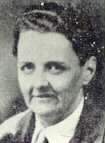
Shirley Allen
Murderer Bobbie Sue Terrell
Murderer · USA · 1984
Bobbie Sue Dudley Terrell was a Pinellas County nurse and worked as the night s…
12 victims
Bobbie Sue Terrell
Murderer · USA · 1984
Bobbie Sue Dudley Terrell was a Pinellas County nurse and worked as the night s…
12 victims
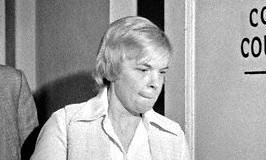 Marybeth Tinning
Murderer · USA · 1972
Marybeth Tinning (née Roe, born on September 11, 1942) was an American prisoner…
9 victims
Marybeth Tinning
Murderer · USA · 1972
Marybeth Tinning (née Roe, born on September 11, 1942) was an American prisoner…
9 victims
 Debbie Fornuto
Murderer · USA · 1972
Deborah Fornuto was the mother of six children whose deaths were initially rule…
7 victims
Debbie Fornuto
Murderer · USA · 1972
Deborah Fornuto was the mother of six children whose deaths were initially rule…
7 victims
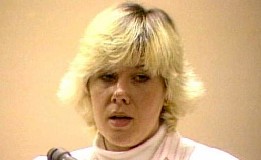 Catherine May Wood
Murderer · USA · 1987
Catherine May Wood was an American caregiver who worked at the Alpine Manor Nur…
5 victims
Catherine May Wood
Murderer · USA · 1987
Catherine May Wood was an American caregiver who worked at the Alpine Manor Nur…
5 victims
 Amy Bishop
Murderer · USA · 1986
Amy Bishop — biology professor and perpetrator · James Anderson — Bishop’s husb…
4 victims
Amy Bishop
Murderer · USA · 1986
Amy Bishop — biology professor and perpetrator · James Anderson — Bishop’s husb…
4 victims
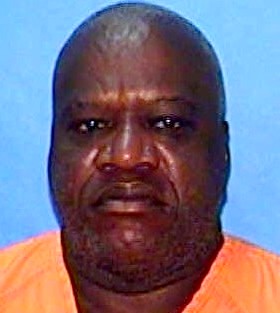 Alphonso Green
Murderer · USA · 1986
Alphonso Green (born 01/07/51) was tried in the Thirteenth Judicial Circuit, Hi…
2 victims
Alphonso Green
Murderer · USA · 1986
Alphonso Green (born 01/07/51) was tried in the Thirteenth Judicial Circuit, Hi…
2 victims
 Tucker Cipriano
Murderer · USA · 2012
Tucker Cipriano was the oldest son in the Cipriano family and was adopted when…
1 victim
Tucker Cipriano
Murderer · USA · 2012
Tucker Cipriano was the oldest son in the Cipriano family and was adopted when…
1 victim
 Huang Hu
Frustrated murderer · China · 2002
Huang Hu was born in 1973 in Wuchuan, Guangdong, China. He died on January 3, 2…
0 victims
Huang Hu
Frustrated murderer · China · 2002
Huang Hu was born in 1973 in Wuchuan, Guangdong, China. He died on January 3, 2…
0 victims
 Jiverly Wong
Mass murderer · USA · 2009
December 8, 1967 — Jiverly Antares Wong was born. · late 1980s — Wong first cam…
13 victims
Jiverly Wong
Mass murderer · USA · 2009
December 8, 1967 — Jiverly Antares Wong was born. · late 1980s — Wong first cam…
13 victims
 Liz Carroll
Murderer · USA · 2006
Liz Carroll was sentenced to 54 years to life in prison on February 22, 2007. M…
1 victim
Liz Carroll
Murderer · USA · 2006
Liz Carroll was sentenced to 54 years to life in prison on February 22, 2007. M…
1 victim
- Gender
- female
- Country
- USA
- Location
- Phelps County, Missouri, USA
- Date of birth
- 1 941
- Characteristics
- parricide, poisoner, to collect insurance money
- Victim profile
- Lloyd Allen (her husband)
- Method of murder
- Poisoning (antifreeze)
- Date(s) of murder
- November 1, 1982
- Years active
- 1982
- Date of arrest
- 5 days after
- Status
-
Died in custody
Sentenced to life imprisonment without eligibility for probation or parole for 50 years on July 6, 1984; died in prison.
Background
Shirley Allen poisoned her husband, Lloyd Allen, with ethylene glycol, commonly known as anti-freeze. Her daughter reported that she had seen Shirley spike Lloyd's drinks with the deadly substance.
Lloyd Allen was Shirley Allen's sixth husband. Four earlier husbands had divorced her. Shirley was outraged after John Gregg—her husband before Lloyd—had changed the beneficiary on his life insurance policy shortly before his death.
John Gregg died about a year after he married Shirley in 1977. Shirley believed John Gregg had made her the beneficiary of his life insurance policy. When John Gregg collapsed and died in 1978, Shirley was left without the expected benefit.
Another prior husband was Joe Sinclair. Sinclair had complained about strange taste in his beverages when his coffee tasted odd on several occasions. After Sinclair suffered internal injuries, no charges were filed; instead, he filed for a divorce.
The offence
Shirley Allen poisoned Lloyd Allen by giving him ethylene glycol. The poisoning was described as occurring between March, 1982, and November 1, 1982.
Lloyd Allen complained of a strange taste in his beverages. Shirley told him that it was an iron supplement for his health. An autopsy established that ethylene glycol was the cause of Lloyd Allen's death, and toxicology confirmed that Lloyd Allen's body tissue contained a lethal amount of ethyl glycol. The autopsy finding included antifreeze ingredients in Lloyd Allen's body. Shirley's daughter testified that Shirley had mixed antifreeze with beer and had given it to Lloyd Allen, and also that Shirley had put a substance into Lloyd Allen's drinks that she believed was anti-freeze.
Investigation
When questioned after Lloyd Allen's death, Shirley's daughter, Norma Hawkins, told law enforcement that she had seen Shirley give Lloyd Allen antifreeze in soft drinks and in small containers of “Nyquil.” She stated that Shirley had been doing this at least two months before Lloyd Allen's death.
Norma Hawkins had also contacted a police detective before Shirley was charged. She asked the detective to come to the house where she, Shirley, and Lloyd Allen had lived, and she told the officer that she had “the substance that Shirley -- that Mom has been giving to Lloyd.” The officer stated that he went there and received a wine bottle which contained antifreeze.
Although there was other evidence of poisoning from Norma Hawkins’s sister, Paula, Norma Hawkins’s testimony regarding the wine bottle and her testimony corroborating that of her sister were treated as important in the proceedings.
A jailer stated that Norma Hawkins visited Shirley in jail on at least four occasions from April through June 1983 and received money from Shirley.
The investigation followed the death of Lloyd Allen, and toxicology reports confirmed that Lloyd Allen’s body tissue contained a lethal amount of ethyl glycol.
Arrest
A capital murder prosecution followed the investigation into Lloyd Allen’s death.
Trial
Charges, venue, and trial start
Shirley Allen was charged with capital murder in St. Charles County. She was accused of killing her husband, Lloyd Allen, “by poisoning him with ethylene glycol between March, 1982, and November 1, 1982”. Venue was changed to Phelps County.
Jury trial commenced on April 23, 1984. The jurors were unaware that Norma Hawkins was called as a witness by the court.
Witnesses and related disputes
Norma Hawkins was Shirley Allen’s daughter from a previous marriage. Norma Hawkins was also described as the step-daughter of the deceased, Lloyd Allen. Evidence showed that Norma Hawkins initially told authorities shortly after Lloyd Allen’s death that Shirley had murdered her husband.
Norma Hawkins testified at a preliminary hearing held on November 22, 1982. On June 7, 1983, Shirley’s counsel took Norma Hawkins’s deposition, in which she testified she had not witnessed the incidents she had previously described and that her testimony about Lloyd Allen’s poisoning by her mother had been based on what her sister, Paula, had told her.
On July 22, 1983, a detective interviewed Norma Hawkins. Norma Hawkins stated she had lied at the deposition because, during a jail visit with her mother, Shirley had threatened to kill her if she did not change her story.
Prior to trial, the state filed a motion asking the court to call Norma Hawkins as a witness. On January 25, 1984, a hearing was held on the motion. The trial judge sustained the state’s motion and called Norma Hawkins as a court’s witness “for the reason that the witness has given contradictory statements and contradictory testimony; for the reason that the witness is the daughter of the defendant; that the witness is the step-daughter of the deceased; and that for some period of time prior to the death of the deceased, did live in the home; and that there could be a possible miscarriage of Justice if this witness were not called as a Court's witness; and do not believe under the circumstances that the State could vouch for the credibility of this witness.”
A major trial issue involved whether calling Norma Hawkins as a court’s witness was proper. The appellate opinion later discussed that procedure, including that a proper foundation should be laid showing the reasons why the party desiring the witness to testify cannot vouch for the witness’s veracity and that the testimony relates to the issues.
State questioning and nursing records
During cross-examination of Shirley Allen, the court permitted the state to ask about whether the State Board of Nursing records showed she had been a registered nurse. Shirley Allen testified that she became a registered nurse in 1971 and under a name of Goude.
The questioning included the following exchange:
Q You stated you are a registered nurse? A Yes. Q When did you become a registered nurse? A In 1971. Q Under what name? A Under a name of Goude. Q Do you know a Darla Nichols? A Darla Nichols? Q Of the State Board of Nursing. A No. Q If she said she checked the records -- MR. KUELKER: -- I object, Judge. THE COURT: He may ask the question. Q If she said she checked the State Board of Nursing records under the name -- MR. KUELKER: -- Judge, I'd object to some hypothetical person that no one knows and isn't here if she says something he's testifying to it -- THE COURT: I overruled it, he may ask the question. Q If Darla Nichols said that she checked the records of the State Board of Nursing under that name and some of your other married names and could not find any record that you were a registered nurse, would she be mistaken about that? MR. KUELKER: I object to the Conclusion. THE COURT: I do not know whether that witness is going to testify or not. I do not know if that witness may be called as rebuttal. A Pardon me? Q Would she be mistaken about that? A Could be, yes.
Shirley Allen later argued that the reference to Darla Nichols was an attempt to place hearsay before the jury. The appellate decision noted that neither Darla Nichols nor anyone else from the State Board of Nursing testified regarding whether Shirley Allen was a registered nurse, but found no prejudice in the particulars claimed.
Paula Hawkins testimony and death penalty waiver
In a separate trial issue, Shirley Allen argued the trial court erred in allowing the state to elicit from her sister, Clara Watt, that Clara Watt allowed Paula Hawkins to talk with the prosecuting attorney only after he had agreed to waive the death penalty.
The appellate decision described Paula Hawkins being called as a witness by the state. It stated that Paula had initially refused to testify against Shirley Allen. During direct examination, without objection, and also during cross-examination by Shirley Allen’s attorney, Paula Hawkins was asked why she changed her mind and testified against her mother. Paula Hawkins testified she did so because her mother and others had accused her and her niece, Tracy, of poisoning Lloyd Allen. The appellate decision stated that fear the defendant might get the death penalty may explain why Paula initially was reluctant and then cooperated when the death penalty was waived.
The appellate decision also stated that after Lloyd Allen died, Paula Hawkins was living with Clara Watt, and that the jury could consider any influence from Clara Watt not wanting Paula to testify while Shirley Allen faced the death penalty.
The appellate decision quoted the general evidentiary principle that matters tending to show witness accuracy and sincerity are proper to be shown.
Sentencing
After trial, Shirley Allen was convicted and sentenced to life imprisonment without eligibility for probation or parole until she had served fifty years.
A sentencing reference in the provided record also states: “Sentenced to life imprisonment without eligibility for probation or parole for 50 years on July 6, 1984.”
Appeals
Direct appeal (Court of Appeals of Missouri)
The case reached the Court of Appeals of Missouri, Southern District, Division Two. The opinion was dated July 21, 1986, and the motion for rehearing was overruled with transfer denied on August 13, 1986.
The appellate proceeding described the defendant’s first point as error in calling Norma Hawkins, the defendant’s daughter, as a court’s witness, which Shirley Allen argued permitted cross-examination and impeachment by the state. The appellate decision discussed State v. Davis (566 S.W.2d 437 (Mo. banc 1978)) and State v. Swingler (632 S.W.2d 267 (Mo. App. 1982)) as precedential authority on court’s witnesses.
The appellate decision denied the first point.
The appellate decision addressed the second point about permitting questioning regarding State Board of Nursing records. It stated that the reference was improper as hearsay-like, but found no prejudice to Shirley Allen under the circumstances described.
The appellate decision addressed the third point about eliciting from Clara Watt that she allowed Paula Hawkins to talk with the prosecuting attorney only after the death penalty was waived. The appellate decision found no error, plain or otherwise, and denied the third point.
The judgment was affirmed. Maus, J., James H. Keet, Sr. J., and Dorman L. Steelman, Special Judge, concur.
Postconviction appeal (Rule 27.26 proceedings)
A separate appellate proceeding is described: July 18, 1995, Shirley Elizabeth Allen, Movant-Appellant, v. State of Missouri, Respondent-Respondent, appeal from the Circuit Court of Phelps County.
In State v. Allen, 714 S.W.2d 195 (Mo. App. 1986), the conviction and sentence were affirmed. On December 28, 1987, the movant filed a pro se motion for postconviction relief pursuant to Rule 27.26 (Repealed). Appointed counsel filed an amended motion, and an evidentiary hearing was held on November 11, 1990. A December 18, 1990 order denied relief with extensive findings and conclusions.
On two subsequent occasions, Judge Long vacated and reinstated Judge Hutcheson’s order, allowing the movant’s appeal.
The movant asserted Point I that extensive pretrial publicity prejudiced the venire panel against her and prevented her from selecting a fair and impartial jury. The appellate decision rejected this, noting that assertions of trial court error alleging constitutional violations were not cognizable in a postconviction relief proceeding unless exceptional circumstances were shown that justified not raising the constitutional grounds on direct appeal.
For Point II, the movant asserted ineffective assistance of counsel due to failure to request a change of venue from St. Charles to avoid adverse publicity. The record described that the movant was charged in St. Charles County in November 1982 and that venue was changed twice, first to Marion County and then to Phelps County where the trial was conducted in late April 1984. The appellate decision rejected the ineffective assistance claim, stating there was no evidence that moving the case would have significantly diminished pretrial publicity and that the jurors selected were not affected by pretrial publicity. It cited Richardson v. State, 719 S.W.2d 912 (Mo. App. 1986) regarding ineffective assistance requirements.
For Point III, the movant complained about the calling of her daughter, Norma Hawkins, as a court’s witness at the request of the state. The appellate decision rejected the point as an attempt to relitigate an issue resolved on direct appeal and stated that such claims could not be pursued in the postconviction proceeding.
The appellate decision affirmed the judgment of the motion court.
Outcome
Shirley Allen was convicted of capital murder and sentenced to life imprisonment without eligibility for probation or parole until she had served fifty years.
Her direct appeal resulted in the judgment being affirmed. Her later postconviction appeal resulted in the judgment of the motion court being affirmed.
She died in prison.
Other details
Shirley Allen’s prior marriages included Joe Sinclair and John Gregg, and Lloyd Allen was her husband in 1981. The provided narrative stated that John Gregg walked down the aisle with Shirley in 1977, that John Gregg collapsed and died in 1978, and that Lloyd Allen waltzed down the aisle with Shirley in 1981 and died in 1982.
A life insurance policy of $25,000 was described, associated with suspicion surrounding Lloyd Allen’s death. The appellate record described trial evidence about the beneficiary change on John Gregg’s life insurance policy and the expectation that Shirley would receive benefits.
The appellate decision and the broader case narrative discussed that Norma Hawkins initially told authorities that Shirley had murdered Lloyd Allen, later testified differently in a deposition, and then testified she had lied in the deposition after a jail threat. The proceedings also discussed conflicting witness testimony involving Paula Hawkins and the role of death penalty waiver when Paula Hawkins agreed to testify.

Spotted an error, or have more information about this case?