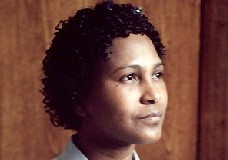
Wanda Jean Aallen
Murderess Teresa Lewis
Murderess · USA · 2002
Teresa Wilson Bean Lewis was convicted of capital murder for hire for arranging…
2 victims
Teresa Lewis
Murderess · USA · 2002
Teresa Wilson Bean Lewis was convicted of capital murder for hire for arranging…
2 victims
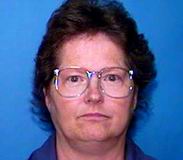 Bobbie Sue Terrell
Murderer · USA · 1984
Bobbie Sue Dudley Terrell was a Pinellas County nurse and worked as the night s…
12 victims
Bobbie Sue Terrell
Murderer · USA · 1984
Bobbie Sue Dudley Terrell was a Pinellas County nurse and worked as the night s…
12 victims
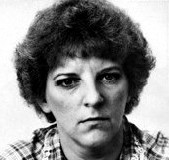 Genene Jones
Serial killer · USA · 1977
Genene Anne Jones (born July 13, 1950) was a former pediatric nurse who worked…
11 victims
Genene Jones
Serial killer · USA · 1977
Genene Anne Jones (born July 13, 1950) was a former pediatric nurse who worked…
11 victims
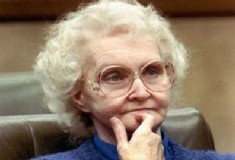 Dorothea Puente
Serial killer · USA · 1982
Dorothea Puente was a convicted serial killer. In Sacramento, California, she r…
9 victims
Dorothea Puente
Serial killer · USA · 1982
Dorothea Puente was a convicted serial killer. In Sacramento, California, she r…
9 victims
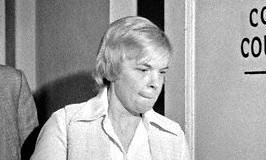 Marybeth Tinning
Murderer · USA · 1972
Marybeth Tinning (née Roe, born on September 11, 1942) was an American prisoner…
9 victims
Marybeth Tinning
Murderer · USA · 1972
Marybeth Tinning (née Roe, born on September 11, 1942) was an American prisoner…
9 victims
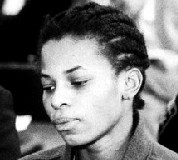 Debra Brown
Serial killer · USA · 1984
Debra Denise Brown was an African-American serial killer and the partner-in-cri…
8 victims
Debra Brown
Serial killer · USA · 1984
Debra Denise Brown was an African-American serial killer and the partner-in-cri…
8 victims
 Filip Kapisoda
Murderer · Serbia · 2010
Filip Kapisoda (3 April 1987 – 16 March 2010) was a Montenegrin male model. He…
1 victim
Filip Kapisoda
Murderer · Serbia · 2010
Filip Kapisoda (3 April 1987 – 16 March 2010) was a Montenegrin male model. He…
1 victim
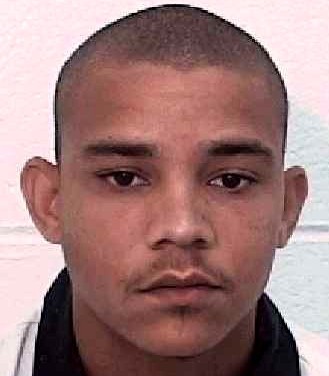 Marion Wilson
Murderer · USA · 1996
Marion Wilson Jr. was convicted of malice murder, felony murder, armed robbery,…
1 victim
Marion Wilson
Murderer · USA · 1996
Marion Wilson Jr. was convicted of malice murder, felony murder, armed robbery,…
1 victim
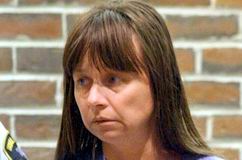 Julianne McCrery
Murderer · USA · 2011
Julianne McCrery was a Texas woman from Irving, Texas, who was 42 years old. Sh…
1 victim
Julianne McCrery
Murderer · USA · 2011
Julianne McCrery was a Texas woman from Irving, Texas, who was 42 years old. Sh…
1 victim
 Sarah Malcolm
Murderer · United Kingdom · 1733
Sarah Malcolm was a powerfully built 22-year-old Irish laundress employed in th…
3 victims
Sarah Malcolm
Murderer · United Kingdom · 1733
Sarah Malcolm was a powerfully built 22-year-old Irish laundress employed in th…
3 victims
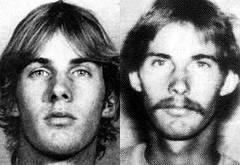 Patrick Purdy
Mass murderer · USA · 1989
January 17, 1989 — An anonymous person phoned the Stockton Police Department wa…
5 victims
Patrick Purdy
Mass murderer · USA · 1989
January 17, 1989 — An anonymous person phoned the Stockton Police Department wa…
5 victims
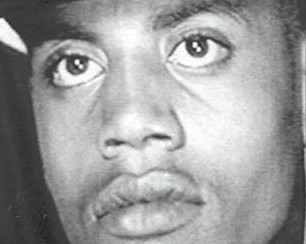 Alton Waye
Murderer · USA · 1977
Alton Waye was convicted of raping and killing Lavergne B. Marshall, a 61-year-…
1 victim
Alton Waye
Murderer · USA · 1977
Alton Waye was convicted of raping and killing Lavergne B. Marshall, a 61-year-…
1 victim
- Gender
- female
- Country
- USA
- Location
- Oklahoma City, Oklahoma, USA
- Date of birth
- August 17, 1959
- Age at first offence
- 22
- Characteristics
- jealousy, revenge
- Victim profile
- Detra Pettus (former lover) / Gloria Jean Leathers, 29 ( her girlfriend )
- Method of murder
- Shooting ( .38-caliber handgun)
- Date(s) of murder
- 1981 /1988
- Years active
- 1981–1988
- Date of arrest
- December 1, 1988
- Status
-
Executed
Executed by lethal injection in Oklahoma on January 11, 2001
Case overview
Wanda Jean Allen was born on August 17, 1959 and was executed on January 11, 2001 at Oklahoma State Penitentiary in McAlester.
Allen had been sentenced to death in 1988 for the murder of Gloria Jean Leathers, 29, and was executed for that conviction.
Timeline
- June 29, 1981 — Wanda Jean Allen and Dedra Pettus got into an argument; Allen shot and killed Dedra.
- December 1, 1988 — Gloria Jean Leathers, 29, was shot in front of The Village Police Department in northwest Oklahoma City; Leathers was driven to the police station following a domestic argument with Allen.
- December 2, 1988 — Leathers died.
- December 5, 1988 — Gloria died from the injury on December 5, 1988.
- December 6, 1988 — Allen was photographed in jail; it was after the shooting.
- December 7, 1988 — Allen was charged with first-degree murder.
- April 19, 1989 — A jury rejected Allen’s claim of self-defense and found her guilty of first degree murder.
- 1991 — A 1991 affidavit from Allen’s defense lawyer stated that at age 15 Allen’s IQ had been measured at 69 and that a neurological assessment had been recommended because she manifested symptoms of brain damage.
- 1995 — A psychologist conducted a comprehensive evaluation of Allen and found cognitive and sensory-motor deficits and brain dysfunction possibly linked to an adolescent head injury.
- February 15, 1994 — Allen’s first appeal requesting rehearing was denied.
- December 27, 1995 — An opinion affirming denial of post-conviction relief was issued.
- December 15, 2000 — The Oklahoma Pardon and Parole Board held a clemency hearing for Wanda Jean Allen at the Lexington Assessment and Reception Center.
- January 10, 2001 — A U.S. Court-related decision rejected Allen’s due process allegation and Keating later denied a stay.
- January 11, 2001 — The U.S. Supreme Court refused to intervene; Allen was executed by lethal injection and pronounced dead at 9:21 p.m.
Background
Wanda Jean Allen was the second of eight children. Her mother was an alcoholic. Her father left home after the last child was born, and the family lived in public housing and scraped by on public assistance.
At age 12, Allen was hit by a truck and knocked unconscious. At 14 or 15, she was stabbed in the left temple. An assessment found that Allen’s actual abilities were markedly impaired, her IQ was 69, and her left hemisphere was dysfunctional, impairing her comprehension, her ability to logically express herself, and her ability to analyze cause and effect relationships. It also concluded that Allen was more vulnerable than others to becoming disorganized by everyday stresses and thus more vulnerable to a loss of control under stress.
By age 17, she had dropped out of high school.
Allen met Gloria Jean Leathers in prison, where Allen was serving time for manslaughter after killing former lover Detra Pettus in 1981. Allen and Leathers had a turbulent and violent relationship. Multiple domestic disputes between them included calls to police.
Allen claimed to become a born-again Christian while in prison. The Reverend Robin Meyers served as a spiritual adviser to Allen. The Reverend Robin Meyers was quoted saying:
“I always suspected that Wanda's renunciation of lesbianism had more to do with helping to revamp herself in the most palatable way for her clemency and appeal processes. She knew perfectly well that her being a lesbian was a big strike against her and that it's an embarrassment in the black community. She was going to play the best hand that she could play at the very end.”
People
- Wanda Jean Allen — defendant; executed by lethal injection.
- Gloria Jean Leathers — victim and Allen’s girlfriend/roommate; age 29.
- Dedra Pettus (Detra Pettus) — victim; killed in 1981; killed by Allen.
- Gloria Leathers’ mother (Ruby Wilson of Edmond) — witnessed the shooting and met Allen on Oct. 13 to ask for forgiveness.
- LaToya Leathers — Leathers’ daughter.
- Robert Carpenter — Allen’s trial attorney.
- Steve Presson — one of two attorneys handling Allen’s appeal.
- Drew Edmondson — Oklahoma Attorney General.
- Frank Keating — Governor.
- Susan Bussey — chairperson of the Oklahoma Pardon and Parole Board; sole vote in favor of clemency.
- Rev. Robin Meyers — minister and spiritual adviser to Allen.
- Steve Hawkins / Michael Adams / Ruth E. Harlow / Kevin M. Cathcart / Diann Rust-Tierney / Joann Bell / Matt Coles — referenced in clemency-related advocacy statements and calls for stay.
- Jerry Massie — corrections spokesman.
- Theotis Payne — Oklahoma City black leader referenced in relation to Keating.
- Delma Pettus, Rhonda Pettus, Sherri Wilson — Detra Pettus’ family members.
- Delma Pettus — mother of Detra Pettus.
- Ajamu Baraka — acting director of Amnesty International USA’s Program to Abolish the Death Penalty (quoted).
- Rev. Jesse Jackson — civil rights leader involved in protest and discussions with Keating.
- Ruth E. Harlow — Lambda Legal Director (quoted).
- Kevin McGruder — executive director of Gay Men of African Descent (quoted).
- Tonya McClary — program director of the National Coalition to Abolish the Death Penalty (quoted).
The offence
Killing of Dedra Pettus (1981)
In 1981, Allen shared an apartment with Dedra Pettus. On June 29, 1981, they got into an argument, and Allen shot and killed Dedra.
Allen’s 1981 confession stated that she accidentally shot Pettus from roughly 30 feet away while returning fire from Pettus’s boyfriend. Forensic evidence was described as inconsistent with Allen’s story, including that a police expert believed bruises and powder burns on Pettus’s body indicated that Allen had pistol-whipped Pettus, then shot her at point-blank range.
Prosecutors cut a deal with Allen, and she received a four-year sentence in exchange for a guilty plea to a manslaughter charge. She served two years of the sentence.
Killing of Gloria Jean Leathers (1988)
Allen lived with Gloria Jean Leathers. They had an altercation history and disputes while living together.
On December 1, 1988, Leathers was shot in front of The Village Police Department in northwest Oklahoma City. Leathers had driven to the police station following a domestic argument with Allen. Leathers was picked up by her mother and taken to the police station to file a complaint against Allen.
Allen followed them and confronted them outside the station. Allen shot Leathers in the stomach at close range.
A city officer escorted Leathers and Allen to their house and stood by while Leathers collected belongings. Leathers and her mother were on their way to file a complaint against Allen. When Leathers exited the car, Allen fired a single gunshot, wounding Leathers in the abdomen. Leathers’ mother witnessed the shooting.
Two police officers and a dispatcher heard the shot fired, but no police department employee witnessed the shooting. Police recovered a .38-caliber handgun they believed was used in the shooting near the women’s home.
Leathers died from the injury on December 5, 1988.
Ruby Wilson of Edmond, Leathers’ mother, witnessed the killing. Wilson met with Leathers’ killer on Oct. 13. Wilson said:
“I wanted to tell her how sorry I was for taking her daughter's life. And I know there is no greater love than a mother's love for a child because I have a mother as well. And I asked for her forgiveness. She forgave me. We prayed together. And I let her know I loved her for coming that day.”
During the confrontation, Wilson said Allen “stuck it to my baby's ribs . . . she stuck it to her stomach and shot her. It sounded like a cap gun.”
Wilson later said:
“I don't have any grudges against her,” Wilson said. “I don't hate her, but I hate what she did. I hope she found peace with Christ about it. It does hurt. I will never forget it. I will always see it. That is in the past. I have to go on toward the future.”
Wilson also said:
“Being bitter won't solve anything,” Wilson said. “It won't help me. It can't bring my baby back.”
Leathers left behind three children, whom Wilson raised.
Investigation and arrest
Allen was arrested in Duncan on December 6, 1988. Two hours after her arrest, Gloria Jean Leathers died. Before she died, she told police that Allen was the person who shot her.
The police recovered a .38-caliber handgun they believed was used in the shooting near the women’s home.
Trial
The state charged Allen with first-degree murder and announced it would seek the death penalty.
Evidence about Leathers’ history of violent conduct, including that Leathers had stabbed a woman to death in Tulsa in 1979, was described as central to the self-defense argument.
Allen testified that she feared Leathers because Leathers had boasted to her about the killing. The defense sought to corroborate this claim with testimony from Leathers’ mother, whom Leathers had told about the stabbing. The prosecution objected, and the court prohibited the introduction of such testimony as hearsay.
The prosecutor depicted Allen as a remorseless liar.
A jury found Allen guilty of first-degree murder and sentenced her to death.
During the punishment phase, prosecutors argued Allen should be sentenced to death because she had been previously convicted of a felony involving the use or threat of violence; she was a continuing threat to society; and she committed the murder to avoid arrest or prosecution. The jury found that the first two aggravating circumstances existed in Allen’s case.
Allen’s defense presented mitigating circumstances including good relationship with her family, good work habit, and her fear of the victim.
In the sentencing phase, the prosecution presented testimony on the circumstances of the death of Detra Pettus and compared that previous crime to the death of Gloria Leathers.
A 1991 affidavit stated that after the trial, the defense lawyer learned that when Allen was 15 years old her IQ was measured at 69, placing her “just within the upper limit of the classification of mental retardation” according to the psychologist who analyzed her, and that an examining doctor had recommended a neurological assessment because she manifested symptoms of brain damage. The lawyer stated:
“I did not search for any medical or psychological records or seek expert assistance for use at the trial.”
A psychologist conducted a comprehensive evaluation of Allen in 1995 and found clear and convincing evidence of cognitive and sensory-motor deficits and brain dysfunction possibly linked to an adolescent head injury.
At sentencing and trial, prosecutors depicted Leathers as meek and timid and portrayed Allen as remorseless. The prosecution also introduced a card Allen had given Leathers. The card had a gorilla on it. The printed message said, "Patience my ass. I am going to kill something." Inside, Allen had written, "Try and leave me and you will understand this card more. Dig. For real, no joke."
Self-defense claim and jury decision
Allen testified she feared Leathers. Allen maintained she acted in self-defense.
On April 19, 1989, jurors rejected Allen’s claim of self-defense and found her guilty of first degree murder.
After learning that Allen also killed a friend in 1981, jurors took only two hours to decide Allen should be sentenced to death.
Sentencing and clemency
Allen was sentenced to death in 1988 for the murder of Gloria Jean Leathers, 29.
Allen spent 12 years on death row. Her application for clemency was refused.
A clemency hearing was held by the Oklahoma Pardon and Parole Board on December 15, at the Lexington Assessment and Reception Center. Approximately 181 people were allowed into the hearing. Prison officials turned away dozens of others and ordered them to leave the premises.
The board voted 3-1 against recommending clemency to Governor Keating. Chairperson Susan Bussey was the sole vote in favor of clemency. The Rev Robin Meyers begged the board to spare Allen’s life and asked:
“What do you think Jesus would do?”
During the hearing, it was pointed out that Allen had been found to have an IQ of 69 at age 15.
Allen’s trial attorney, Robert Carpenter, was paid only $800 to represent her.
The Board member Currie Ballard scolded Rev Meyers for suggesting the board would willingly seek to execute a mentally retarded person. Currie Ballard then went on to vote that Allen should be executed.
When Allen spoke during the hearing, she asked Leathers’ family for forgiveness and begged the board to “please let me live.”
Appeals
Allen’s first appeal requesting rehearing was denied on February 15, 1994.
An opinion affirming denial of post-conviction relief was issued on December 27, 1995.
Allen’s claimant appeal with the United States Court of Appeals for the Tenth Circuit was denied on January 11, 2000.
Later, her final appeals were denied earlier Monday by the United States Supreme Court, and Oklahoma Attorney General Drew Edmondson requested execution dates for six death row inmates including Wanda Jean Allen. Her final appeals and the last three months of her life were chronicled by filmmaker Liz Garbus in the documentary The Execution of Wanda Jean (2002).
The U.S. Supreme Court refused to intervene in Allen’s case about 7:30 p.m. Thursday. A few hours earlier, the same appeal was rejected by the 10th U.S. Circuit Court of Appeals in Denver.
In Denver, the judges concluded 3-0:
“Ms. Allen has failed to substantiate her allegation of a due process violation,”
regarding Allen’s claim that an assistant attorney general used false evidence against her at her unsuccessful Dec. 15 clemency hearing.
Execution
Allen was executed by lethal injection by the State of Oklahoma on January 11, 2001 at Oklahoma State Penitentiary in McAlester.
Twenty-four relatives of murder victim Gloria Leathers and manslaughter victim Detra Pettus traveled to McAlester for the execution. Many watched from behind a tinted window.
While lying on the execution gurney, Allen said:
“Father, forgive them. They know not what they do.”
Allen also stuck her tongue out and smiled at her appeal lawyer, Steve Presson, who had become her friend. Steve Presson said:
“dancing on the mattress, while they tried to kill her.”
Allen was pronounced dead at 9:21 p.m.
Other details
Allen was described as the first female to be executed since statehood, the first black woman to be executed in the United States since 1954, and the sixth woman to be executed since executions resumed in 1977.
Governor Frank Keating denied a request for a 30-day stay earlier in the day.
The clemency-related dispute included a claim by Allen’s attorneys that the state misled the board regarding Allen’s education. The decision described an argument that the state board had been told Allen received a high school diploma and completed two years of college, while it also described that Allen dropped out of high school.
Rev Jesse Jackson met with Keating for nearly 50 minutes after Jackson spent the night in jail following protests at Mabel Bassett Correctional Center. Corrections spokesman Jerry Massie said Jackson’s name was not on the list Allen gave prison officials two weeks earlier, so he was not authorized to witness the execution. Jackson did not travel to McAlester and instead protested outside the governor’s mansion.
Leathers’ family described closure and decried protesters. Leathers’ daughter LaToya Leathers said:
“We’re the victims, not Wanda Jean,”
and:
“We are the victims and justice has been served.”
Detra Pettus’ mother Delma Pettus and sisters Rhonda Pettus and Sherri Wilson said in a statement that Allen spent four years in prison after their loved one “was pistol whipped and shot at point-blank range” and that “The short prison stays are a part of the reason crimes are repeated.” They also said:
“It has taken 20 years and a second murder in order to get the death penalty.”
Ruby Wilson described forgiveness and said she had no grudges against Allen but hoped Allen found peace with Christ.
Robert Ferguson Jr. said it was the second time Allen had shot and killed someone and stated:
“So, I don't feel sorry for her, you know.”
Ferguson planned to witness the execution and said:
“I would say I am sorry this had to happen, but you brought it on yourself.”
Mary Ann Leathers, described as a day-care provider in Tulsa, planned to witness the execution and described her sister as sweet, friendly, and someone who would “give you anything.”
There were also calls for a stay and clemency, including statements by Lambda Legal Defense and Education Fund and the National Coalition to Abolish the Death Penalty. A letter urged the board to grant clemency and was signed by Diann Rust-Tierney (ACLU Capital Punishment Project) and Joann Bell (Executive Director ACLU of Oklahoma) and Matt Coles (Director, Lesbian and Gay Rights Project). The letter asserted that Wanda Jean Allen was scheduled to be executed on January 11, 2001 and included the following points and phrasing:
“--Wanda Jean Allen has severe mental disabilities that have gone untreated and which bear directly on the question of whether the death penalty is the appropriate punishment in this case.”
“--Although the state knew of Wanda Jean Allen's mental incapacity, it was never revealed in court proceedings-even to her attorney.”
“--Largely as a result of her financial status, Wanda Jean Allen's legal representation was alarmingly inadequate.”
“We respectfully urge you to grant clemency in this tragic case.”
In that letter, Wanda Jean Allen’s counsel arguments referenced her “IQ” scores and mental disability and claimed inadequate resources and inadequate presentation of evidence.
At the execution, witnesses described a chaplain reading aloud from the Bible while Allen smiled at her attorneys and spiritual advisers and playfully stuck her tongue out.
A documentary and commentary about the case referenced debates and public attention, including the involvement of national organizations and protests.
Spotted an error, or have more information about this case?