Elizabeth Martha Brown
Murderer Margaret Waters
Murderer · United Kingdom · 1866
Margaret Waters was an English murderess who was hanged by executioner William…
19 victims
Margaret Waters
Murderer · United Kingdom · 1866
Margaret Waters was an English murderess who was hanged by executioner William…
19 victims
 Catherine Wilson
Murderer · United Kingdom · 1854
Catherine Wilson was a British nurse who poisoned victims after befriending the…
7 victims
Catherine Wilson
Murderer · United Kingdom · 1854
Catherine Wilson was a British nurse who poisoned victims after befriending the…
7 victims
 Maria Manning
Murderer · United Kingdom · 1849
Maria Manning was also identified as Marie Manning and Marie de Roux. Maria Man…
1 victim
Maria Manning
Murderer · United Kingdom · 1849
Maria Manning was also identified as Marie Manning and Marie de Roux. Maria Man…
1 victim
 Florence Ransom
Murderer · United Kingdom · 1940
Florence Ransom was a middle-aged woman who was described as physically beautif…
3 victims
Florence Ransom
Murderer · United Kingdom · 1940
Florence Ransom was a middle-aged woman who was described as physically beautif…
3 victims
 Carol Ege
Murderer · USA · 1984
Carol Ege was imprisoned in Michigan for the 1984 slaying of Cindy Thompson. Eg…
1 victim
Carol Ege
Murderer · USA · 1984
Carol Ege was imprisoned in Michigan for the 1984 slaying of Cindy Thompson. Eg…
1 victim
 Andrew Six
Murderer · USA · 1984
Andrew Six Andrew Wessel Six was executed by lethal injection in Missouri on Au…
4 victims
Andrew Six
Murderer · USA · 1984
Andrew Six Andrew Wessel Six was executed by lethal injection in Missouri on Au…
4 victims
 David Gilroy
Murderer · United Kingdom · 2010
David Gilroy was charged with the murder of Suzanne Pilley and with attempting…
1 victim
David Gilroy
Murderer · United Kingdom · 2010
David Gilroy was charged with the murder of Suzanne Pilley and with attempting…
1 victim
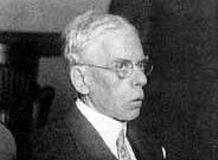 Henry Colin Campbell
Murderer · USA · 1928
Henry Colin Campbell, known as "The Torch Murderer," was executed by the State…
2 victims
Henry Colin Campbell
Murderer · USA · 1928
Henry Colin Campbell, known as "The Torch Murderer," was executed by the State…
2 victims
- Gender
- female
- Country
- United Kingdom
- Location
- Dorset, England, United Kingdom
- Date of birth
- 1810
- Age at first offence
- 46
- Characteristics
- parricide, jealousy
- Victim profile
- John Anthony Brown (her husband)
- Method of murder
- Smashing his head with an axe
- Date(s) of murder
- July 5, 1856
- Years active
- 1856
- Date of arrest
- Same day
- Status
-
Executed
Executed by hanging at Dorchester on August 9, 1856
Case information
Name: Elizabeth Martha Brown
Background
Elizabeth Martha Brown was nearly twenty years older than her husband, John Brown(e). It was claimed at the time that he had married her for money. They lived at Birdsmoorgate, near Beaminster in Dorset. The marriage was problematic, and Elizabeth caught John in bed with another woman. Rumours said John Anthony Brown, a carrier, had married Elizabeth for her money, and the rumour was partly verified by Elizabeth being some twenty years older than he was. John Brown(e) was also noted for his philandering.
The offence
Late on the evening of 5th July 1856 John returned to the matrimonial home in the Dorset village of Broadwindsor after inbibing in the local pub. His late arrival home, along with rumours of his latest affair, incensed Elizabeth. During the ensuing row John hit his wife with a whip. Elizabeth retaliated by smashing his head with an axe and she killed him. Elizabeth attempted to pass off the demise of her husband as having been caused by the kick of a horse. She was arrested and claimed her husband’s death had been caused by being kicked in the head by a horse. The police did not believe this.
Investigation
Elizabeth confessed later in the course of events, acknowledging that she had killed him with the axe.
Trial
Elizabeth was charged with murder and came to trial at Dorchester Assizes, in Dorchester. The jury did not believe the horse story and brought back a guilty verdict. Martha Brown was found guilty, and the mandatory death sentence was passed on her.
Sentencing
Elizabeth was taken to Dorchester prison to await her execution some three weeks later. The Home Secretary refused a reprieve. There was agitation for a reprieve due to mitigating circumstances, and public sympathy existed in view of the abuse Elizabeth had suffered at the hands of her husband. Diminished responsibility was not a defence open to her in 1856.
Appeals
A reprieve was refused by the Home Secretary.
Outcome
Elizabeth Martha Brown was executed by hanging at Dorchester on 9th August 1856. The execution was carried out by William Calcraft, the hangman.
Aftermath
A crowd of between 3,000 and 4,000 had gathered for the public hanging of Elizabeth, which was described as quite a rare event involving the public hanging of a woman. The gallows was erected outside the gates of Dorchester prison the evening before.
The execution caused a leading article in the Dorset County Chronicle advocating the abolition of the death penalty. Thomas Hardy was a sixteen-year-old boy when he went to watch this spectacle with a friend and was able to secure a good vantage point in a tree very close to the gallows. Hardy wrote:
"what a fine figure she showed against the sky as she hung in the misty rain, and how the tight black silk gown set off her shape as she wheeled half round and back",
Hardy noted this after Calcraft had tied her dress close to her body, and he still wrote about the event in his eighties. Elizabeth had chosen a long, tight fitting thin black silk dress for her hanging. At the prison gates she shook hands with the officials but declined to be driven to the place of execution in the prison van, even though it was raining; she chose to walk from the prison to it. She walked up a first flight of eleven steps, then up a next flight of 19 steps, across a platform, and on up the last flight of steps to the trap.
William Calcraft, in black clothes and a bushy white beard, pinioned her arms in front of her before leading her up the next flight of steps. Calcraft put a white hood over her head and a simple noose around her neck. When it was pointed out that he had not pinioned Elizabeth’s legs, he returned and put a strap around her legs outside of her dress to prevent it billowing. Elizabeth stood stoically on the gallows, supported by a male warder on each side, waiting for her death. Death was described as not instantaneous; Hardy said her body “wheeled half round and back” and she took a few moments to loose consciousness. She was left to hang for the regulation hour before being taken down and buried within the prison.
It was noted that anatomisation of the body had been ended by law some 25 years previously. It was also noted that public executions were abolished by law in 1868. James Seale became the last person to be publicly hanged in Dorset when he was executed for the murder of Sara Guppy; he was executed two years later on 10th August 1858, and Hardy also witnessed this event. Charles Dickens referred to the “fascination of the repulsive, something most of us have experienced.” The Sheriff of Dorset made preparations for Elizabeth’s execution and appointed William Calcraft as the hangman. Calcraft travelled to Dorchester by train and arrived at the prison the day before, as required by the Home Office, to make preparations.
Spotted an error, or have more information about this case?