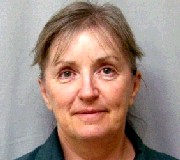
Diane Borchardt
Murderer Bobbie Sue Terrell
Murderer · USA · 1984
Bobbie Sue Dudley Terrell was a Pinellas County nurse and worked as the night s…
12 victims
Bobbie Sue Terrell
Murderer · USA · 1984
Bobbie Sue Dudley Terrell was a Pinellas County nurse and worked as the night s…
12 victims
 Megan Huntsman
Murderer · USA · 1996
Megan Huntsman was 40 at sentencing. She was a mother of three children who wer…
6 victims
Megan Huntsman
Murderer · USA · 1996
Megan Huntsman was 40 at sentencing. She was a mother of three children who wer…
6 victims
 Angela Johnson
Murderer · USA · 1993
Angela Jane Johnson was convicted in federal court of aiding and abetting the m…
5 victims
Angela Johnson
Murderer · USA · 1993
Angela Jane Johnson was convicted in federal court of aiding and abetting the m…
5 victims
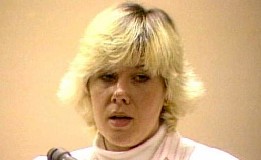 Catherine May Wood
Murderer · USA · 1987
Catherine May Wood was an American caregiver who worked at the Alpine Manor Nur…
5 victims
Catherine May Wood
Murderer · USA · 1987
Catherine May Wood was an American caregiver who worked at the Alpine Manor Nur…
5 victims
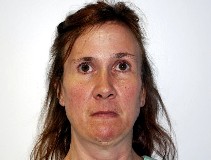 Michele Kalina
Murderer · USA · 1996
Michele Kalina pleaded guilty to murder for one of five infants she initially w…
5 victims
Michele Kalina
Murderer · USA · 1996
Michele Kalina pleaded guilty to murder for one of five infants she initially w…
5 victims
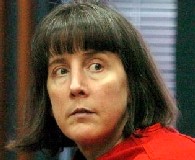 Amy Bishop
Murderer · USA · 1986
Amy Bishop — biology professor and perpetrator · James Anderson — Bishop’s husb…
4 victims
Amy Bishop
Murderer · USA · 1986
Amy Bishop — biology professor and perpetrator · James Anderson — Bishop’s husb…
4 victims
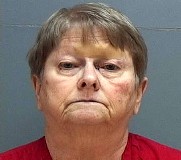 Mary Nance Hanson
Murderer · USA · 2010
Mary Nance Hanson was accused of fatally shooting her former daughter-in-law. ·…
1 victim
Mary Nance Hanson
Murderer · USA · 2010
Mary Nance Hanson was accused of fatally shooting her former daughter-in-law. ·…
1 victim
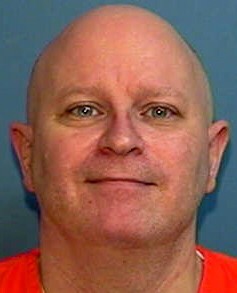 Newton Carlton Slawson
Mass murderer · USA · 1989
Newton Carlton Slawson Slawson was executed by lethal injection in Florida on M…
4 victims
Newton Carlton Slawson
Mass murderer · USA · 1989
Newton Carlton Slawson Slawson was executed by lethal injection in Florida on M…
4 victims
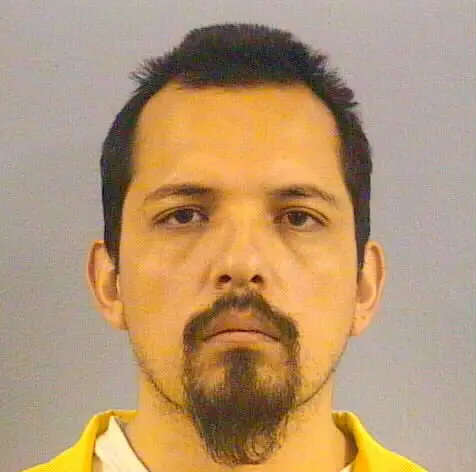 Juan Luna
Mass murderer · USA · 1993
Juan Luna was convicted of killing seven people in the Brown’s Chicken massacre…
7 victims
Juan Luna
Mass murderer · USA · 1993
Juan Luna was convicted of killing seven people in the Brown’s Chicken massacre…
7 victims
 Patrick Tissier
Murderer · Franc e · 1971
Patrick Tissier was born on 24 August 1952 in Bourges. He was one of six childr…
3 victims
Patrick Tissier
Murderer · Franc e · 1971
Patrick Tissier was born on 24 August 1952 in Bourges. He was one of six childr…
3 victims
 Trevor William Hamilton
Murderer · United Kingdom · 2003
Trevor William Hamilton was convicted of the murder of Bridgit Attracta Harron…
1 victim
Trevor William Hamilton
Murderer · United Kingdom · 2003
Trevor William Hamilton was convicted of the murder of Bridgit Attracta Harron…
1 victim
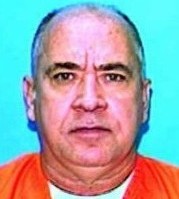 Arthur Dennis Rutherford
Murderer · USA · 1985
Name: Arthur Dennis Rutherford · DC number: 105314 · Florida Department of Corr…
1 victim
Arthur Dennis Rutherford
Murderer · USA · 1985
Name: Arthur Dennis Rutherford · DC number: 105314 · Florida Department of Corr…
1 victim
- Gender
- female
- Country
- USA
- Location
- Jefferson County, Wisconsin, USA
- Date of birth
- 1949
- Age at first offence
- 45
- Characteristics
- convicted rapist
- Victim profile
- Ruben Borchardt, 40 (her estranged husband)
- Method of murder
- Shooting (shotgun)
- Date(s) of murder
- April 3, 1994
- Years active
- 1994
- Date of arrest
- September 29, 1994
- Status
-
Life imprisonment
Sentenced to life in prison, with no possibility of parole until she had served 45 years of her sentence
Case identifiers
- Court: Court of Appeals of Wisconsin, District IV; State of Wisconsin v. Diane Borchardt
- Case number: District IV No. 96-3616-CR
- Circuit court: Jefferson County
- Circuit judge: John M. Ullsvik
- Appellate date referenced: April 23, 1998
- Panel: Before Vergeront, Roggensack, and Nichol, JJ.; Nichol, J.
Background
Diane Borchardt was a teacher’s aide and study hall monitor at Jefferson High School in Wisconsin. She was convicted of hiring three of her students to murder her estranged husband, Ruben Borchardt, on Easter morning in 1994.
At the time of the murder, Borchardt and Ruben Borchardt were in a highly contentious and very bitter divorce. Ruben had been having an affair with another woman throughout part of their marriage and throughout the divorce proceedings. Borchardt worked at Jefferson High School as a teacher’s aide and was in charge of study hall periods, where she became acquainted with students Doug Vest (a co-defendant) and Tim Quintero. Vest and Quintero were friends with co-defendants Josh Yanke and Michael Maldonado. Vest, Quintero, and Maldonado also had familial ties and were cousins.
Besides working at Jefferson High School at the time of the homicide, Borchardt had her own silk-screening t-shirt business in Jefferson, which was in financial difficulty.
An investigation into Ruben’s murder began and eventually led to a John Doe proceeding pursuant to § 968.26, Stats., convened on May 5, 1994.
The offence
At approximately 3:35 a.m. on April 3, 1994, Ruben Borchardt was shot two times with a shotgun at his rural residence in Jefferson County. Ruben’s son, Charles, age sixteen, was upstairs and was awakened. Charles found his father still conscious and able to state that two males had shot him. Ruben also stated twice, “I can’t believe she would do this to me.” After being conveyed to the hospital a short time later, Ruben died.
Borchardt was convicted of:
- Party to the crime of first-degree homicide with the use of a dangerous weapon, in violation of §§ 939.05 and 939.63, Stats., for which she was sentenced to life in prison, with a parole eligibility of forty years.
- Using a child to commit a Class A felony, in violation of § 948.36, Stats.
The appeal record described that Borchardt solicited assistance from students to murder Ruben. Vest stated that Borchardt had solicited his assistance in murdering her husband and offered $20,000 from an insurance policy, two rings, and a car.
Investigation and John Doe proceeding
Timeline of the investigation (John Doe)
- May 5, 1994 — A John Doe proceeding pursuant to § 968.26, Stats., convened.
- September 28, 1994 — Vest was interrogated and eventually confessed to Ruben’s murder, implicating Borchardt, Yanke, and Maldonado.
- September 28, 1994 — Vest was charged.
- September 29, 1994 — Borchardt, Yanke, and Maldonado were charged.
- October 12, 1994 — Quintero was interviewed twice; during an interview he provided written statements implicating Borchardt, Vest, Maldonado, and Yanke in Ruben’s homicide.
- October 13, 1994 — The John Doe proceeding reconvened; witnesses were called, including Tim Quintero.
John Doe arguments and findings
Borchardt argued that the October 13, 1994 John Doe session was improperly continued after a criminal complaint had been filed, primarily to build a case against her and the three juvenile co-defendants after they had been charged.
The Court of Appeals discussed that the purpose of a John Doe proceeding was to determine if a crime had probably been committed and who probably committed it, rather than whether a specific person committed a specific crime. The Supreme Court’s limited circumstances for continuing a John Doe after charges were filed were also discussed, including:
- Investigating other possible defendants related to the crimes that would be charged in the information filed against the original defendant.
- Investigating other crimes that could not be charged in the information but may have been committed by the defendant.
The trial court found that the primary purpose for calling Quintero to testify in the John Doe was to determine whether or not there were other parties involved in Ruben’s murder. The trial court held that a substantial portion of Quintero’s testimony confirmed his two previous statements for which he was given immunity. As Quintero was given immunity, the trial court found that the State received no benefit from having him make statements under oath.
In reviewing Detective Brunk’s testimony, the trial court found that the purpose for the subpoena renewal for phone records was not clear in the transcript; the trial court concluded that, because the phone records involved persons already charged, the John Doe was used improperly in that regard. The trial court also found that the State received no benefit and could have obtained the same information through a search warrant.
Detective Lee’s testimony was not treated as improper. Detective Lee testified that, based on his interviews with Vest, there was a possibility of Shannon Johnson having previously perjured herself and that more investigation was required to see if she was involved as another co-conspirator.
The trial court ordered the entire October 13, 1994 John Doe proceeding transcript to be made available to the defense, rather than disclosing only relevant portions.
The Court of Appeals concluded the trial court was not clearly erroneous in finding that the John Doe had a proper purpose. The Court of Appeals cited:
- Detective Lee’s testimony regarding possible perjury and potential involvement by Shannon Johnson.
- Questions asked during the October 12, 1994 interview regarding Johnson, including that Quintero asked to speak to a lawyer and terminated the interview; the next day at the John Doe, Quintero was questioned about others who may have been involved, including Johnson.
- The fact that Johnson was later charged as a co-conspirator in support of propriety of the John Doe continuation.
The Court of Appeals also addressed Borchardt’s argument that Quintero’s testimony was improperly “frozen” under oath, and that allowing potential felony perjury exposure rather than misdemeanor obstruction exposure prejudiced the defense. The Court of Appeals concluded that Borchardt suffered no prejudice because the entire John Doe transcript was provided to her ahead of trial and was consistent with Quintero’s previous statements. The Court of Appeals also noted that Quintero’s first two statements occurred before he was given immunity.
Charles and Quintero relationship detail within investigation
The appeal decision referenced that Quintero testified and provided a map drawn by Borchardt with directions to her home, which was verified as her handwriting at trial.
Arrest and charges
Borchardt was charged with:
- First-degree intentional homicide as party to the crime of first-degree homicide with the use of a dangerous weapon, and
- Using a child to commit a Class A felony.
The appeal described that Vest was charged on September 28, 1994, and Borchardt, Yanke, and Maldonado were charged on September 29, 1994.
Trial
Trial testimony and evidence
Charles, age sixteen, testified that he was awakened by one loud noise and found his father in a basement bedroom. His father first said two males had shot him and added that he believed his wife was involved. Charles also testified that Ruben stated, “I can’t believe she would do this to me.”
Borchardt’s appeal challenged admission of Ruben’s statement under the excited utterance hearsay exception.
The Court of Appeals affirmed the trial court’s admission of the statement as an excited utterance. The Court of Appeals reasoned that Ruben had been shot two times and wounded at the time of the statement, and that Ruben’s statement was made while under the stress of excitement caused by that startling event/condition.
Hearsay statement quoted
- Ruben Borchardt said: “I can’t believe she would do this to me.”
Sentencing
Borchardt was sentenced to life in prison. Parole eligibility was forty years.
- The status field also stated she had no possibility of parole until she had served 45 years of her sentence.
Appeals
Issues raised on appeal
Borchardt appealed from a trial verdict and from an order denying postconviction relief. On appeal, Borchardt contended:
- The trial court erred in finding the John Doe session on October 13, 1994, was for the purpose of learning about other potential co-conspirators.
- The trial court erred in admitting Ruben’s statement implicating Borchardt under the excited utterance exception.
- Trial counsel was ineffective.
- She was denied due process because John Doe transcripts were not produced in a timely manner.
- The trial court erred in denying a new trial based on newly discovered evidence.
- A new trial was warranted in the interest of justice.
John Doe transcript timing and due process
The Court of Appeals addressed that it had already decided in an interlocutory ruling that the State was under no obligation to produce John Doe transcripts of witnesses going to testify until the completion of their direct testimony. The Court of Appeals referenced Myers v. State as controlling for that point.
Ineffective assistance of counsel
Borchardt argued that counsel was ineffective by not eliciting testimony and not making a record implicating Ruben’s son, Charles, as the person involved in the conspiracy.
The Court of Appeals held that counsel’s performance was not deficient under the Strickland framework. The Court of Appeals described the strategic choice not to pursue a third-party theory regarding Charles and concluded there was no ineffective assistance on that matter.
Newly discovered evidence
Borchardt sought a new trial based on newly discovered evidence presented as an offer of proof. The Court of Appeals described that the offer of proof included testimony from:
- Gabe Alwin (a former cellmate of co-defendant Josh Yanke), and
- Robert Bergess (a former cellmate of co-defendant Douglas Vest).
The offer of proof was that Alwin and/or Bergess would testify that Yanke and Vest made statements that:
- Borchardt did not have anything to do with Ruben’s death, and
- Charles (Chuck) was involved in the homicide, with further statements in the offer that Yanke and Vest would deny saying certain things to Alwin and Bergess.
The trial court accepted the offer of proof and ruled that Borchardt had not met her burden to show a reasonable probability of a different result, and denied the motion for a new trial.
The Court of Appeals affirmed the denial, finding there was no reasonable probability that a jury would have a reasonable doubt as to Borchardt’s guilt even considering the proposed evidence.
Trial court ruling quoted verbatim (newly discovered evidence)
The court accepts the offer of proof made by Mr. Auerbach that Gabe Alwin or Alwin and Robert Bergess, Prison mates of Josh Yanke and Doug Vest, would come to court and testify that Yanke told Alwin that Mrs. Borchardt didn’t have anything to do with Ruben Borchardt’s death, and that Mr. Bergess would testify that Douglas Vest said that Mrs. Borchardt didn’t have anything to do with Ruben Borchardt’s death.
The court also accepts the offer of proof that Josh Yanke would say he was involved with Maldonado and Vest in Ruben Borchardt’s death going to the house, if not into the house, when Ruben Borchardt was shot; and that Doug Vest would say he was right there with Maldonado, in fact, passed the gun over to Maldonado just before Ruben Borchardt was shot; and that Diane Borchardt hired him to kill Ruben Borchardt; and Doug Vest would deny saying he said to Bergess that Mrs. Borchardt didn’t have anything to do with this killing; and Josh Yanke would deny saying to Alwin that Mrs. Borchardt didn’t have anything to do with this homicide.
The court understands that Alwin would have his credibility impeached by at least one criminal conviction and Bergess would, too.
The court concludes that upon such evidence the defendant has not met her burden to prove by clear and convincing evidence that there is a reasonable probability that there would be a different result, if she was granted a new Trial. In other words, the court concludes that such testimony by Alwin and Bergess and Yanke and Vest would certainly in a new Trial again result in a conviction of Mrs. Borchardt as a party to the first-degree intentional killing of Ruben Borchardt beyond a reasonable doubt; and, therefore, defendant’s Motion for a New Trial based on such newly discovered evidence is denied. (emphasis added)
Interest of justice
Borchardt also requested a new trial “in the interest of justice,” based on the compounded effect of trial court errors. The Court of Appeals denied the request.
Outcome
- The Court of Appeals affirmed the judgment and order of the circuit court.
- The decision stated “Affirmed” and concluded that Borchardt’s request for a new trial was denied.

Spotted an error, or have more information about this case?