
Lizzie Borden
Murderer? Patricia Allanson
Murderer? · USA · 1974
Patricia Taylor Allanson Patricia Allanson was born in 1937. She grew up as “Pa…
3 victims
Patricia Allanson
Murderer? · USA · 1974
Patricia Taylor Allanson Patricia Allanson was born in 1937. She grew up as “Pa…
3 victims
 Sandra Bridewell
Murderer? · USA · 1982
Sandra Bridewell used multiple names and aliases, including Sandra Camille (Pow…
2 victims
Sandra Bridewell
Murderer? · USA · 1982
Sandra Bridewell used multiple names and aliases, including Sandra Camille (Pow…
2 victims
 Betty Neumar
Murderer? · USA · 1986
Betty Neumar (November 1931 – June 13, 2011) was an American woman charged with…
1 victim
Betty Neumar
Murderer? · USA · 1986
Betty Neumar (November 1931 – June 13, 2011) was an American woman charged with…
1 victim
 Elicia Hughes
Murderer? · USA · 2004
Elicia Hughes was a 3rd grade teacher. She married Brian Hughes in 1999. Five y…
1 victim
Elicia Hughes
Murderer? · USA · 2004
Elicia Hughes was a 3rd grade teacher. She married Brian Hughes in 1999. Five y…
1 victim
 Kristine Bunch
Murderer? · USA · 1995
Kristine Bunch was the defendant in a case involving the 1996 arson and murder…
1 victim
Kristine Bunch
Murderer? · USA · 1995
Kristine Bunch was the defendant in a case involving the 1996 arson and murder…
1 victim
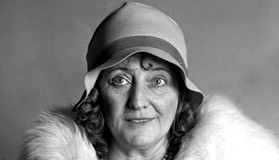 Walburga Oesterreich
Murderer? · USA · 1922
Walburga “Dolly” Oesterreich was an American homemaker and the wife of a wealth…
1 victim
Walburga Oesterreich
Murderer? · USA · 1922
Walburga “Dolly” Oesterreich was an American homemaker and the wife of a wealth…
1 victim
 Nikola Radosavljevic
Spree killer · Serbia · 2007
Nikola Radosavljevic was taken to a prison mental hospital in Belgrade, where h…
9 victims
Nikola Radosavljevic
Spree killer · Serbia · 2007
Nikola Radosavljevic was taken to a prison mental hospital in Belgrade, where h…
9 victims
 Robert Newland
Murderer · USA · 1986
Robert Newland (male) was convicted and sentenced to death in Georgia for the k…
1 victim
Robert Newland
Murderer · USA · 1986
Robert Newland (male) was convicted and sentenced to death in Georgia for the k…
1 victim
 Sammie Felder
Murderer · USA · 1975
March 13, 1975 — Felder worked his usual day shift, 6:00 a.m. to 2:00 p.m., whi…
1 victim
Sammie Felder
Murderer · USA · 1975
March 13, 1975 — Felder worked his usual day shift, 6:00 a.m. to 2:00 p.m., whi…
1 victim
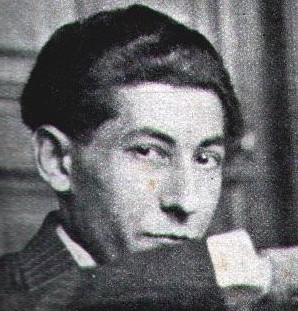 Jacques Mécislas Charrier
Murderer · France · 1922
Jacques Mécislas Charrier was a French anarchist illégaliste. He was executed b…
1 victim
Jacques Mécislas Charrier
Murderer · France · 1922
Jacques Mécislas Charrier was a French anarchist illégaliste. He was executed b…
1 victim
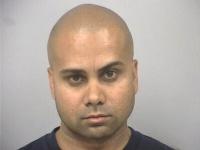 Rutendra Raghunandan
Murderer · USA · 2003
Thursday, September 11, 2003 (11:50 PM) — Rutendra Raghunandan went to his wife…
3 victims
Rutendra Raghunandan
Murderer · USA · 2003
Thursday, September 11, 2003 (11:50 PM) — Rutendra Raghunandan went to his wife…
3 victims
 Leroy Drayton
Murderer · USA · 1984
Leroy Joseph "Ricky" Drayton was executed by lethal injection in South Carolina…
1 victim
Leroy Drayton
Murderer · USA · 1984
Leroy Joseph "Ricky" Drayton was executed by lethal injection in South Carolina…
1 victim
- Gender
- female
- Country
- USA
- Location
- Fall River, Massachusetts, USA
- Date of birth
- July 19, 1860
- Age at first offence
- 32
- Characteristics
- —
- Victim profile
- Her father, Andrew Jackson Borden, 70, and her stepmother Abby Durfee Gray Borden, 64
- Method of murder
- Beating with a hatchet
- Date(s) of murder
- August 4, 1892
- Years active
- 1892
- Date of arrest
- 7 days after
- Status
-
Died in custody
Acquitted by a jury on June 20, 1893; died on June 1, 1927
Case identity
Lizzie Andrew Borden (July 19, 1860 – June 1, 1927) was an American woman who was tried and acquitted in the 1892 axe murders of her father and stepmother (Andrew Jackson Borden and Abby Durfee Gray Borden, Andrew's second wife) in Fall River, Massachusetts. The case was a cause célèbre throughout the United States.
Background
Lizzie Borden's father, Andrew Jackson Borden, despite being the descendent of wealthy and influential residents of the area, grew up in very modest surroundings and struggled financially as a young man. As he grew older he prospered through the manufacture and sales of furniture and caskets. He later became a successful property developer and directed several textile mills including the Globe Yarn Mill Company, Troy Cotton, and Woolen Manufacturing Company. By the time of the murders he owned considerable commercial property and was both president of the Union Savings Bank and a director of the Durfee Safe Deposit and Trust Co.
Despite his wealth, Andrew was known for his frugality. The Borden home, for instance, lacked indoor plumbing on its ground and first floor, and was located near Andrew's businesses. The wealthiest residents of Fall River, Massachusetts generally lived in a more fashionable neighborhood (“The Hill”) that was further away from the industrial areas of the city and much more homogenous racially, ethnically, and socioeconomically.
Lizzie and her older sister Emma had a relatively religious upbringing, attending Central Congregational Church. As a young woman Lizzie was very involved in activities related to her church, including teaching Sunday school to children of recent immigrants to America. She also was involved in Christian organizations such as the Christian Endeavor Society, where she served as its secretary-treasurer; and contemporary social movements such as the Women’s Christian Temperance Union. She was a member of the Ladies Fruit and Flower Mission.
During the inquest family live-in maid Bridget Sullivan testified that Lizzie and her sister rarely ate meals with their parents. Further during questioning by police and during the inquest Lizzie indicated that she did not call her stepmother “Mother” but rather “Mrs. Borden” and demurred on the subject of whether or not they were cordial with each other.
In May 1892, there was an incident in which Andrew, believing that pigeons Lizzie kept in the barn were attracting intruders, killed the pigeons with a hatchet. A family argument in July 1892 prompted both sisters to take extended “vacations.” Tension had been growing in the family in the months before the murders, especially over Andrew's gifts to various branches of the family. After Abby's relatives received a house, the sisters demanded and received a rental property—which they later sold back to their father for cash—and just before the murders a brother of Andrew's first wife had visited regarding transfer of another property.
The night before the murders, John Vinnicum Morse, the brother of Lizzie's and Emma's deceased mother, visited the home to speak about business matters with Andrew.
For several days before the murders the entire household had been violently ill. The family doctor blamed food left on the stove for use in meals over several days, but Abby had feared poisoning—Andrew Borden had not been a popular man.
People
- Lizzie Andrew Borden — accused; daughter of Andrew Jackson Borden; stepdaughter of Abby Durfee Gray Borden.
- Andrew Jackson Borden — victim; Lizzie’s father.
- Abby Durfee Gray Borden — victim; Lizzie’s stepmother.
- Emma Borden — Lizzie’s older sister.
- Bridget (“Maggie”) Sullivan — household maid.
- John Vinnicum Morse — household guest; Lizzie’s maternal uncle.
- Josiah C. Blaisdell — presiding judge at inquest and preliminary hearing.
- Albert Mason — Chief Justice of the Superior Court of Massachusetts (associate justice listed).
- Caleb Blodgett — associate justice.
- Justin Dewey — associate justice.
- Hosea M. Knowlton — prosecutor; later Attorney General of Massachusetts.
- William H. Moody — prosecutor; later Attorney General of the United States and Supreme Court Justice.
- Thomas Moody — prosecution (as named in the trial section).
- Andrew J. Jennings — defense counsel; Borden family lawyer.
- George D. Robinson — defense counsel; former governor of Massachusetts.
- Melvin O. Adams — defense counsel.
- Adelaide Churchill — neighbor.
- Charles Sawyer — passer-by deputized for guard duty.
- Rufus B. Hilliard — City Marshal (dispatched Officer George W. Allen).
- George W. Allen — officer dispatched.
- William Dolan — medical examiner.
- Dr. Seabury W. Bowen — Borden family physician and neighbor.
- Eli Bence — drugstore clerk.
- Alice Russell — family friend who testified regarding dress burning.
- Dr. Edward S. Wood — professor of chemistry, Harvard.
- Michael Mullaly — Deputy Marshal.
- Philip Harrington — officer.
- Dr. William A. Dolan — medical examiner.
- Dr. Benjamin Handfy — witness.
- Jubb — minister named as W. Walker Jubb, First Congregational Church, Fall River.
- Edwin A. Buck — minister named as Edwin A. Buck, Central Congregational Church, Fall River.
- Sarah Gray Whitehead — Abby Borden’s younger half-sister.
- Abby Borden Whitehead Potter — Sarah’s daughter.
- Luana Borden Harrington — Andrew Borden's sister.
- Hiram Harrington — Andrew Borden’s brother-in-law.
The offence
On August 4, 1892, Andrew Borden was attacked with a hatchet-like weapon in the downstairs sitting room. The timing of discovery and subsequent identification of Abby Borden’s body was established through witness testimony and later autopsy findings.
Andrew Borden was struck 10 or 11 times with a hatchet-like weapon. One of his eyeballs had been split cleanly in two, suggesting he had been asleep when attacked. Police found a hatchet in the basement which, though free of blood, was missing most of its handle.
Soon after, as neighbors and doctors tended Lizzie, Bridget Sullivan discovered Abby Borden in the upstairs guest bedroom, her skull crushed by 19 blows.
Investigation
Police found no poison in tests of the victims’ milk and stomach contents removed during autopsies performed in the Borden dining room.
The heads were removed during autopsy. After the skulls were used as evidence during the trial, the heads were later buried at the foot of each grave.
A hatchet was found on the Sylvia Farm in South Somerset but it proved to be covered in chicken blood.
During the investigation, speculation focused on a Portuguese laborer who had visited the Borden home earlier in the morning and asked for wages due him, only to be told by Andrew Borden to call later. Medical evidence was reported as suggesting Abby Borden was killed “by a tall man, who struck the woman from behind.”
Police concluded the murders must have been committed by someone within the Borden home because there were no signs of forced entry and no obvious murder weapon was uncovered.
Suspicion turned toward Lizzie because her older sister Emma was out of the home at the time of the murders.
Investigators considered Lizzie’s claim that during the fifteen minutes when Andrew was murdered she was out in the backyard barn “looking for irons” (lead sinkers) for an upcoming fishing excursion; the barn loft had no footprints on the dusty floor and was stiflingly hot.
Arrest
Lizzie was arrested on August 11. A grand jury began hearing evidence on November 7 and indicted on December 2.
Lizzie entered a plea of “Not Guilty” to charges of murder and was transported to the jail in Taunton, eight miles north of Fall River.
Timeline
- May 1892 — Andrew Borden killed pigeons with a hatchet after believing they attracted intruders.
- July 1892 — A family argument prompted both sisters to take extended “vacations.”
- August 3, 1892 — Abby Borden went across the street to Dr. Bowen claiming she and Andrew were being poisoned; Lizzie attempted to buy ten cents worth of prussic acid from Eli Bence; John Vinnicum Morse arrived; Lizzie visited Alice Russell and expressed fear something was going to happen.
- August 4, 1892 — Andrew Borden was attacked in the downstairs sitting room and Abby Borden was later found upstairs, her skull crushed by 19 blows.
- August 7, 1892 — Alice Russell observed Lizzie burning a dress in a kitchen stove.
- August 9 to August 11, 1892 — Josiah Blaisdell held an inquest kept secret; Lizzie was charged with murder of her father and remanded to custody; the next day she was arraigned and pleaded not guilty; she was held in Taunton Jail.
- August 11, 1892 — Lizzie Borden was arrested.
- November 7, 1892 — A grand jury began hearing evidence.
- December 1, 1892 — Alice Russell testified again about the burning of the dress.
- December 2, 1892 — Lizzie was indicted.
- June 5, 1893 — Trial began in the New Bedford Courthouse.
- June 14, 1893 — The prosecution called Eli Bence; the judges sustained the defense objection and ruled the attempt to purchase poison irrelevant and inadmissible.
- June 19, 1893 — Robinson delivered closing arguments for the defense; Knowlton began closing arguments for the prosecution.
- June 20, 1893 — The jury acquitted; after deliberating an hour and a half, the jury returned “Not guilty.”
- June 1, 1927 — Lizzie Borden died in Fall River.
- Nine days later — Emma died from chronic nephritis after a fall down the back stairs of her house in Newmarket.
Trial
Lizzie's trial took place in New Bedford the following June. Trial was before a panel of three judges.
Prosecuting attorneys included future Supreme Court Justice William H. Moody; defending were Andrew V. Jennings, Melvin O. Adams, and former Massachusetts governor George D. Robinson.
Prominent points in the trial included:
- The hatchet head found in the basement was not convincingly shown to be the murder weapon.
- Prosecutors argued the killer removed the handle because it was bloody, but one officer testified that a hatchet handle was found near the hatchet head while another contradicted this.
- No bloody clothing was found, but a few days after the murder Lizzie burned a dress in the stove, saying it had been ruined when she brushed against fresh paint.
- Evidence was excluded that Lizzie had sought to purchase prussic acid.
- The heads were used as evidence during trial; Lizzie fainted upon seeing them.
Inquest evidence and rulings
The decisive moment in the trial might have come when the three-judge panel ruled that Lizzie Borden's inquest testimony, full of contradictions and implausible claims, could not be submitted into evidence by the prosecution. The judges concluded that Lizzie, at the time of the coroner's inquest, was for all practical purposes a prisoner charged with two murders and that her testimony was not voluntary because she had not been warned of her Fifth Amendment right to remain silent.
The judges rejected the state's argument that Lizzie was only a suspect, not a prisoner, at the time of the inquest and that her statement should be admitted because it was in the nature of a denial rather than a confession.
Defense closing statement and prosecution theories
A. V. Jennings argued:
“there is not one particle of direct evidence in this case from beginning to end against Lizzie A. Borden. There is not a spot of blood, there is not a weapon that they have connected with her in any way, shape or fashion.”
Governor Robinson’s closing insisted:
“the crime must have been committed by a maniac or a devil--not by someone with the respectable background of his client.”
The jury deliberated an hour and a half before returning with its verdict.
Sentencing
No sentencing is recorded because Lizzie Borden was acquitted.
Outcome
On June 20, after deliberating an hour and a half, the jury acquitted.
The clerk asked the foreman of the jury, “What is your verdict?” and the foreman replied simply, “Not guilty.”
Lizzie let out a yell, sank into her chair, rested her hands on a courtroom rail, put her face in her hands, and then let out a second cry of joy. She announced, “Now take me home. I want to go to the old place and go at once tonight.”
The jury’s verdict was “not guilty” on all three charges.
Aftermath
After the trial, Lizzie returned to Fall River and purchased a large, modern house in the fashionable “Hill” neighborhood called “Maplecroft.” Around this time Lizzie began using the name Lizbeth A. Borden.
Because Abby was ruled to have died before Andrew, her estate went first to Andrew and then, at his death, passed to his daughters as part of his estate; a considerable settlement was paid to settle claims by Abby's family (especially Abby's two sisters).
Despite the acquittal, Lizbeth was ostracized by Fall River society.
Lizbeth’s name was brought into the public eye again when she was accused of shoplifting in 1897 in Providence, Rhode Island. In 1905, shortly after an argument over a party Lizbeth had given for actress Nance O'Neil, Emma moved out of the house.
Lizbeth was ill in her last year following the removal of her gallbladder; she died of pneumonia on June 1, 1927 in Fall River. Funeral details were not published and few attended.
Nine days later, Emma died from chronic nephritis at the age of 76 in a nursing home in Newmarket, New Hampshire, having moved to this location in 1923 both for health reasons and to get away from the public eye, which had renewed interest in the sisters at the publication of another book about the murders.
The sisters never married and were buried side by side in the family plot in Oak Grove Cemetery.
Lizbeth left $30,000 to the Fall River Animal Rescue League and $500 in trust for perpetual care of her father's grave; her closest friend and a cousin each received $6,000 at the estate distribution in 1933.
Books from Maplecroft’s library, stamped and signed by the sisters, became valuable collectors’ items.
Other details
People named in connection with the murders
Andrew Borden’s age is presented as 70 in one account and Andrew and Abby are described as having been dead and later autopsied.
Abby Borden is described as being struck 19 times.
Household dispute and property background
The narrative included that doors between certain rooms upstairs were usually locked and that the front stairs only gave access to Lizzie’s room and the guest room. Borden kept his and Mrs. Borden's bedroom locked since a burglary the year before, when Andrew reported that the house had been broken into and over $100 had been taken along with his watch and chain and other items including some streetcar tickets.
The narrative described Andrew Borden saying multiple times to a police captain, “I’m afraid the police will not be able to find the real thief.”
Burning of a dress
Lizzie was accused based on testimony that she burned a blue dress in a kitchen fire allegedly because it was covered with “old paint.” Alice Russell testified about Lizzie burning a blue dress.
The earlier warning to Lizzie while observing the burning included:
“If I were you, I wouldn't let anybody see me do that, Lizzie.”
Lizzie said the dress was stained with paint and was of no use.
Family and public interest
The case remained a cause célèbre and remained subject of ongoing research and speculation into later periods.
Folk rhyme
The case was memorialized in a popular skipping-rope rhyme:
Lizzie Borden took an axe And gave her mother forty whacks. When she saw what she had done She gave her father forty-one.
Folklore says the rhyme was made up by an anonymous writer as a tune to sell newspapers, and others attribute it to the ubiquitous but anonymous “Mother Goose.”
In reality, Lizzie’s stepmother suffered 18 or 19 blows; her father, 11 blows.
Relatives and burial
Lizbeth and Emma were buried together in the family plot, along with a sister who had died in early childhood, their mother, their stepmother, and their headless father.
Bridget Sullivan’s later life
Bridget Sullivan never worked for any of the Borden’s again after the murder and trial. She left town and lived in modest circumstances in Butte, Montana until her death in 1948.


Spotted an error, or have more information about this case?