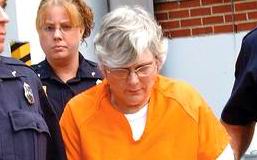
Marybeth Davis
Murderer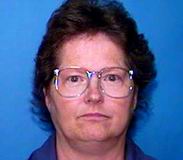 Bobbie Sue Terrell
Murderer · USA · 1984
Bobbie Sue Dudley Terrell was a Pinellas County nurse and worked as the night s…
12 victims
Bobbie Sue Terrell
Murderer · USA · 1984
Bobbie Sue Dudley Terrell was a Pinellas County nurse and worked as the night s…
12 victims
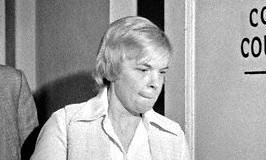 Marybeth Tinning
Murderer · USA · 1972
Marybeth Tinning (née Roe, born on September 11, 1942) was an American prisoner…
9 victims
Marybeth Tinning
Murderer · USA · 1972
Marybeth Tinning (née Roe, born on September 11, 1942) was an American prisoner…
9 victims
 Debbie Fornuto
Murderer · USA · 1972
Deborah Fornuto was the mother of six children whose deaths were initially rule…
7 victims
Debbie Fornuto
Murderer · USA · 1972
Deborah Fornuto was the mother of six children whose deaths were initially rule…
7 victims
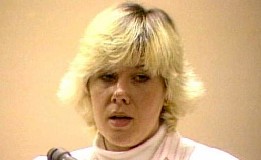 Catherine May Wood
Murderer · USA · 1987
Catherine May Wood was an American caregiver who worked at the Alpine Manor Nur…
5 victims
Catherine May Wood
Murderer · USA · 1987
Catherine May Wood was an American caregiver who worked at the Alpine Manor Nur…
5 victims
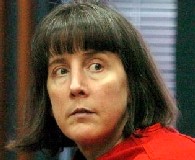 Amy Bishop
Murderer · USA · 1986
Amy Bishop — biology professor and perpetrator · James Anderson — Bishop’s husb…
4 victims
Amy Bishop
Murderer · USA · 1986
Amy Bishop — biology professor and perpetrator · James Anderson — Bishop’s husb…
4 victims
 Gig Young
Murderer · USA · 1978
On 19 October 1978, three weeks after his marriage, Gig Young and his wife were…
1 victim
Gig Young
Murderer · USA · 1978
On 19 October 1978, three weeks after his marriage, Gig Young and his wife were…
1 victim
 Thomas Wayne Mason
Murderer · USA · 1991
Thomas Wayne Mason Thomas Wayne Mason was executed by lethal injection in Texas…
2 victims
Thomas Wayne Mason
Murderer · USA · 1991
Thomas Wayne Mason Thomas Wayne Mason was executed by lethal injection in Texas…
2 victims
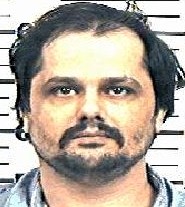 David Wayne Woodruff
Murderer · USA · 1985
David Wayne Woodruff. · July 19, 1986 — Woodruff and John Joseph Romano were ac…
2 victims
David Wayne Woodruff
Murderer · USA · 1985
David Wayne Woodruff. · July 19, 1986 — Woodruff and John Joseph Romano were ac…
2 victims
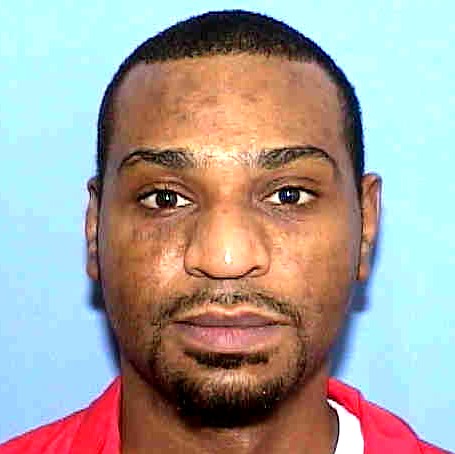 Ronald Chris Foster
Homicide · USA · 1989
Ronald Chris Foster was an African American who was 17 years of age at the time…
1 victim
Ronald Chris Foster
Homicide · USA · 1989
Ronald Chris Foster was an African American who was 17 years of age at the time…
1 victim
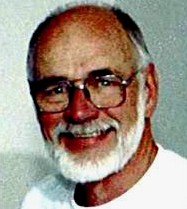 Robert Spangler
Murderer · USA · 1978
Robert Spangler was prosecuted after the deaths of his wife and children in Col…
4 victims
Robert Spangler
Murderer · USA · 1978
Robert Spangler was prosecuted after the deaths of his wife and children in Col…
4 victims
- Gender
- female
- Country
- USA
- Location
- Lewisburg, Greenbrier County, West Virginia, USA
- Date of birth
- 1952
- Age at first offence
- 29
- Characteristics
- parricide, rape, nurse
- Victim profile
- Her 10-week-old son Seth / Her 3-year-old daughter Tegan
- Method of murder
- Poisoning (insulin overdose / caffeine pill overdose)
- Date(s) of murder
- September 30, 1981 / March 11, 1982
- Years active
- 1981–1982
- Date of arrest
- December 1996
- Status
-
Life imprisonment
Released on parole on October 9, 2007 after pleading guilty to attempting to injure her children by poison; previously sentenced to life in prison without possibility of parole on September 15, 1997
Overview
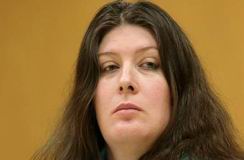
Marybeth Davis (born c. 1952) was an American nurse convicted in 1997 of the murders of her two children. Prosecutors believed she acted under Münchausen syndrome by proxy. Davis maintained her innocence for several years, then accepted a plea agreement in 2007.
Characteristics and alleged motive
Prosecutors contended that Davis exhibited Munchausen syndrome by proxy, described as a psychiatric condition in which an individual falsified sickness in their children to gain attention and sympathy. The case narrative also included claims that Davis had caused the overdose of her daughter and had injured her son.
Background
In September 1981, Davis’s infant son, Seth, was described as having suffered massive damage to his brain. Prosecutors believed the damage was caused by an injection of a large amount of insulin. Seth was later moved to a mental institution and spent the rest of his life there.
Several months after the incident involving Seth, on 11 March 1982, Davis’s three-year-old daughter, Tegan, died of a caffeine pill overdose. An autopsy was performed by Dr. Anne Hooper. Hooper reported that hundreds of capsules were found inside of Tegan’s digestive tract, and she concluded that the cause of death was likely a homicide.
Davis was also described as having maintained that her children had genetic metabolic disorders rather than being harmed by her.
People
- Marybeth Davis — defendant; registered nurse
- Seth Davis — victim; Davis’s infant son
- Tegan Davis — victim; Davis’s three-year-old daughter
- Dr. Anne Hooper — pathologist who performed the autopsy on Tegan
- Dr. Barry Wolfe — geneticist called by the defense; testified about possible genetic conditions
- Dr. Barry Wolfe (or Dr. Barry Wolf per narrative) — identified as a geneticist in the materials and as having provided defense testimony about overlapping genetic diseases
- Paul Detch — Davis’s defense lawyer mentioned in the narrative
- Kanawha County Public Defender George Castelle — defense lawyer described as taking part in the plea process
- Greenbrier County Prosecuting Attorney R. Kevin Hanson — prosecutor described as negotiating the plea agreement
- Circuit Judge Joseph C. Pomponio Jr. — judge described as overseeing the 2007 plea and sentencing
- Mark Burnette — former prosecutor and then referenced as discussing the plea agreement; also referenced regarding witness-related positions
- State Trooper Michael Spradlin — retired State Police investigator described as leading elements of the investigation in the narrative
- Dr. Joseph Aldrich — Seth’s physician in the narrative
- Dr. Dorothy Becker — pediatric endocrinologist referenced as a state expert
- Dr. Basil Zitelli — pediatrician referenced as an expert on Munchausen syndrome by proxy
- Dr. Sharon McGregor — nurse mentioned in the expanded appeal petition narrative
- Helen Pack — nurse mentioned in the expanded appeal petition narrative
- Gary Davis — Davis’s husband/ex-husband referenced throughout as a physician and as a figure in the proceedings and narrative
- Dr. Edward Friedlander — chief of pathology at the University of Health Sciences in Kansas City, Mo., referenced in connection with slides
- Jon Blevins — assistant attorney general referenced in connection with the state’s response to an appeal petition
Timeline
- September 1981 — Seth was described as having suffered massive brain damage; prosecutors believed it resulted from an injection of insulin.
- 11 March 1982 — Tegan died of a caffeine pill overdose.
- 10 October 2002 — Seth died at the age of 21; the death was recorded as a homicide.
- September 15, 1997 — Davis was convicted and sentenced to life in prison without possibility of parole.
- December 2004 — the West Virginia Supreme Court denied Davis’s appeal for a new trial by a 4-1 vote.
- 2005 — Davis filed a motion in circuit court claiming ineffective counsel and seeking a new trial.
- Oct. 5, 2007 — Davis was allowed to enter a plea agreement after the conviction was vacated; she pleaded guilty to two counts of attempt to injure her children by poison.
- October 9, 2007 — Davis was released on parole.
The offence
Alleged conduct involving Seth Davis
Prosecutors alleged that Davis attempted to injure Seth by poisoning. The narrative described prosecutors’ theory that Seth was injured by an insulin injection, linked to a concept of Münchausen syndrome by proxy. The plea description in 2007 referenced conduct involving administering insulin in an amount sufficient to cause serious bodily injury or death.
Alleged conduct involving Tegan Davis
Prosecutors alleged that Davis murdered Tegan by poisoning using caffeine diet pills. The narrative referenced an autopsy finding of hundreds of capsules in Tegan’s digestive tract and a conclusion that death was likely a homicide. The 2007 plea description referenced administering caffeine in an amount sufficient to cause bodily injury or death.
Investigation
A cold-case investigation narrative described State Trooper Michael Spradlin learning of the Davis children during a meeting of the Greenbrier County Multidisciplinary Child Abuse Task Force and beginning to investigate. The case narrative included discussion that the initial investigation had not progressed for years and that an autopsy report in 1982 had described the toddler’s death as being intentionally poisoned with diet pills.
The materials also included allegations in the appeal history narrative about police records from 1982 being reported as lost and about the case having no reported activity from 1985 to 1995. The narrative stated that in 1995 authorities in Greenbrier County created a task force for investigating child abuse cases and that the State reopened the matter with Spradlin as the investigating officer.
Trial
In 1997, Davis was put on trial for murder of Tegan and the injury to Seth. The narrative described that prosecutors believed Davis suffered from Münchausen syndrome by proxy. The narrative also described defense positions that the children had genetically linked metabolic diseases and that these details contradicted Dr. Hooper’s report that Tegan was murdered.
The narrative stated that Greenbrier County jurors convicted Davis of first-degree murder in Tegan’s death and poisoning Seth. It further stated that she received a life sentence without the possibility of parole.
Seth Davis trial evidence and dispute over diagnosis
The materials contained trial-era dispute regarding whether Seth’s condition was attributable to Leigh’s Syndrome, a growth hormone deficiency, or other genetic causes, as opposed to an insulin injection. The narrative discussed that Davis had previously stated that Seth suffered from Leigh’s Syndrome or an unspecified growth hormone deficiency, and that defense physicians disagreed with the prosecution’s interpretation of the evidence.
The expanded material also described argument about the accuracy and handling of testing related to insulin and C-peptide, and how defense witnesses disputed whether an exogenous insulin injection could have produced the sequence of blood sugar results.
Tegan Davis trial evidence and dispute over caffeine poisoning
The materials included disputed scientific testimony about toxicology results for caffeine in Tegan’s blood and tissues, and about interpretation of autopsy findings, including the presence and significance of “bead-like formations” described by Dr. Hooper as remnants of time-released pills.
The narrative also described defense assertions that the diagnosis of Reye’s Syndrome or a mimic of Reye’s Syndrome better explained symptoms and that diet pills containing caffeine did not align with other lab findings, including the absence of phenylpropanolamine (PPA) in the defense’s account.
Sentencing
Davis received a life sentence without the possibility of parole after her 1997 convictions.
The plea agreement described in 2007 then resulted in different sentencing terms: she received two prison sentences of three to 18 years, ordered to run concurrently, after the convictions were vacated.
In the expanded narrative around the plea hearing, Judge Joseph C. Pomponio Jr. was described as giving the agreed sentence, and the agreement was described as requiring that Davis admit to her guilt and promise never to assert her innocence again.
Appeals
The narrative included that Davis appealed through West Virginia’s Supreme Court, with a 4-1 denial in December 2004 of her appeal for a new trial.
The materials also included a 2005 motion in circuit court claiming ineffective counsel and seeking a new trial.
The expanded narrative also described allegations by Davis’s side about exculpatory evidence and perjured testimony, including assertions about witness compensation and alleged withholding of evidence and slides related to caffeine and Reye’s syndrome.
Outcome
Vacating the 1997 convictions and plea
After years of appeals, the narrative stated that the 1997 murder conviction was vacated after acceptance of a plea agreement drafted by prosecutor Kevin Hanson, with Davis admitting to poisoning her two children more than 25 years earlier.
Davis entered guilty pleas to two counts of attempt to injure her children by poison, including:
- administering insulin in an amount sufficient to cause serious bodily injury or death to Seth
- administering caffeine in an amount sufficient to cause bodily injury or death to Tegan
The narrative described that Pomponio overturned her convictions, vacated her life sentence, and accepted her guilty pleas. It further stated that she was remanded to prison facilities and that years of good conduct led to her immediate release without parole or further court supervision in the narrative describing the hearing, while also stating that she was released on parole on October 9, 2007.
Release
The narrative stated Davis was released in 2007 after accepting a plea deal and confessing to the crimes. It also stated her parole release date as October 9, 2007.
Other details
Seth Davis death
Seth Davis died on 10 October 2002. His death was recorded as a homicide. The narrative described that his condition included being left in a vegetative state for years.
Exhumation and slides
The expanded narrative included an account of Tegan’s exhumation in 2002 for forensic tissue testing, including a hillside grave at Mt. St. Macrina Cemetery in Uniontown. The narrative also described the defense later obtaining teaching slides and that Dr. Friedlander and others reviewed tissue slides, with conclusions discussed about brain edema and Reye’s syndrome or a mimic of Reye’s.
Media appearances
The materials described that in 1999 an A&E series “Cold Case Files” featured the case on their episode “Maternal Instinct.” The materials also stated that in 2005 a television series “Guilty or Innocent?” detailed the events on an episode titled “The Mary Beth Davis Case.”
Family relationships and children
The narrative described that Davis separated from Gary Davis in 1986 and that they divorced in 1997. It also stated they adopted a baby girl named Katybeth and that they later had another boy named Gary Richard.
Notes and quotations
The narrative included the following verbatim quotations in the plea and appeal materials:
- Paul Detch, the attorney for Davis, said: “If this is what you have to do in our system to get out of prison, then do it,” and also said: “She got out the only way she could. She had no choice but to mutter 'yes' at the end of a paragraph to get released.”
- Hanson was quoted as saying: “I felt there was "a significant chance" the judge would rule in Davis' favor.”
- Hanson was quoted as saying: “There were several grounds that I thought at least held some merit.”
- Hanson was quoted as saying: “I have a plea agreement which effectively disposes those cases.”
- Hanson was quoted as saying: “This plea agreement has been entered by myself and I have discussed it with former prosecutor Mark Burnette on three occasions and he is in total agreement not only with the resolution, but with the recommendation of the state.”
- Pomponio was quoted as saying: “I appreciate that the defendant will admit to her guilt.”
- Pomponio was also quoted as saying: “Today is the first time she ever accepted responsibility for what she did,” attributed in the narrative to Hanson: “Today is the first time she ever accepted responsibility for what she did,” Hanson said.
- Spradlin was quoted as asking: “When did the lawyer become ineffective counsel? Was it the fourth or fifth time they went to the Supreme Court?”
- Spradlin was quoted as saying: “Somebody needs to speak for these children. This is the most callous and cold-blooded case I've seen in 35 years,” and: “She's a nurse, and she knew what she was doing.”
- Davis was quoted as telling a reporter in the narrative: “Seth was born sick. Seth got sicker. Tegan got ill, and I lost my daughter,” and: “This in here is bad, but it is not as bad as burying my children. There is nothing else that can make you hurt like that.”
- Davis was quoted as saying in prison: “It's hogwash,” and also: “The Munchausen thing is what enforced all those nurses' opinions of me. Some of that's my fault, because I've always had my walls.”
Valium and thiamine allegations in expanded narrative
The expanded narrative contained an account that in 1996 Hooper wrote a note about Carol Beckett reporting witnessing a murder, and that Beckett reported Aldrich injected Tegan with 10 milligrams of Valium characterized as “much too much to give a 3-year-old.” The narrative also included Aldrich’s explanation that he gave Tegan the Valium to “calm her down.”
Prosecutor descriptions and allegations in expanded petition narrative
The expanded petition narrative included the following verbatim quotation:
- Lead prosecutor Mark Burnette called Davis a “very, very evil mother.”
- Burnette said: “You hurt your kids because they are not kids to you,” and also: “They are objects, your property.”
The expanded petition narrative also contained a verbatim quotation attributed to Detch in arguing about an alleged alternative disorder:
- “Let me tell you about an even worse mental disorder. It's called Munchausen's by prosecution. It's where a prosecuting attorney tries to poison jurors' minds by getting them to forget a lack of evidence.”
Place names included in the narrative
The narrative mentioned Uniontown, Pennsylvania; Lewisburg, West Virginia; Greenbrier County; Pruntytown Correctional Center near Grafton, West Virginia; Lakin Correctional Center; McGuire Memorial children’s home in New Brighton, Pennsylvania; Toledo, Ohio; Mt. St. Macrina Cemetery in Uniontown; Greenbrier Valley Hospital; Children’s Hospital of Pittsburgh; University of Virginia Medical Center; Yale University School of Medicine; and Roanoke, Virginia.
Disputed medical explanations included in the narrative
The narrative described Davis’s position that Seth’s symptoms were consistent with Leigh’s Syndrome or human growth hormone deficiency and other genetic diseases, and that Tegan died of Reye’s Syndrome or a mimic. The narrative also included prosecutors’ position that Davis harmed both children through poisoning consistent with Münchausen syndrome by proxy.
Spotted an error, or have more information about this case?