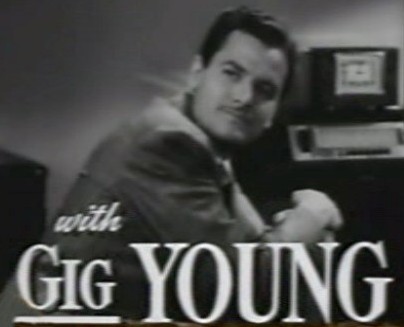
Gig Young
Murderer Ervil LeBaron
Murderer · USA · 1972
Ervil Morrell LeBaron (1925 to August 16, 1981) was the leader of a polygamous…
35 victims
Ervil LeBaron
Murderer · USA · 1972
Ervil Morrell LeBaron (1925 to August 16, 1981) was the leader of a polygamous…
35 victims
 Brian Kevin Rosenfeld
Murderer · USA · 1985
Brian Kevin Rosenfeld Brian Kevin Rosenfeld was sentenced to three concurrent l…
23 victims
Brian Kevin Rosenfeld
Murderer · USA · 1985
Brian Kevin Rosenfeld Brian Kevin Rosenfeld was sentenced to three concurrent l…
23 victims
 Marvin Gray
Murderer · USA · 1975
Marvin Gray was convicted killer who claimed responsibility for 23 slayings and…
23 victims
Marvin Gray
Murderer · USA · 1975
Marvin Gray was convicted killer who claimed responsibility for 23 slayings and…
23 victims
 Yahweh ben Yahweh
Murderer · USA · 1980
Yahweh ben Yahweh was born and legally named Hulon Mitchell Jr. (October 27, 19…
23 victims
Yahweh ben Yahweh
Murderer · USA · 1980
Yahweh ben Yahweh was born and legally named Hulon Mitchell Jr. (October 27, 19…
23 victims
 Edward Fitzgerald
Murderer · USA · 1980
Edward B. Fitzgerald Sr. was put to death in Virginia’s electric chair for the…
1 victim
Edward Fitzgerald
Murderer · USA · 1980
Edward B. Fitzgerald Sr. was put to death in Virginia’s electric chair for the…
1 victim
 Edward Zakrzewski
Murderer · USA · 1994
Edward Zakrzewski, II was convicted and sentenced to death for the murders of h…
3 victims
Edward Zakrzewski
Murderer · USA · 1994
Edward Zakrzewski, II was convicted and sentenced to death for the murders of h…
3 victims
 Ibrahim Shkupolli
Mass murderer · Finland · 2009
31 December 2009 — The Sello mall shooting occurred in the morning shortly afte…
5 victims
Ibrahim Shkupolli
Mass murderer · Finland · 2009
31 December 2009 — The Sello mall shooting occurred in the morning shortly afte…
5 victims
 David Smith
Spree killer · USA · 1980
David Smith was sentenced to death in 1983. Smith was angered because his girlf…
4 victims
David Smith
Spree killer · USA · 1980
David Smith was sentenced to death in 1983. Smith was angered because his girlf…
4 victims
 Chauncy Starling
Murderer · USA · 2001
Chauncy Starling Starling, Richard Frink, and Alfred Gaines went into a barbers…
2 victims
Chauncy Starling
Murderer · USA · 2001
Chauncy Starling Starling, Richard Frink, and Alfred Gaines went into a barbers…
2 victims
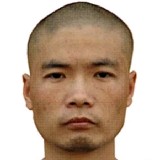 Zhou Kehua
Murderer · China · 2004
Zhou Kehua (simplified Chinese: 周克华 ; traditional Chinese: 周克華 ; pinyin: Zhōu K…
10 victims
Zhou Kehua
Murderer · China · 2004
Zhou Kehua (simplified Chinese: 周克华 ; traditional Chinese: 周克華 ; pinyin: Zhōu K…
10 victims
- Gender
- male
- Country
- USA
- Location
- New York City, New York, USA
- Date of birth
- November 4, 1913
- Age at first offence
- 65
- Characteristics
- domestic violence, parricide
- Victim profile
- Kim Schmidt , 31 ( his fifth wife )
- Method of murder
- Shooting
- Date(s) of murder
- October 19, 1978
- Years active
- 1978
- Date of arrest
- —
- Status
-
Died in custody
Committed suicide the same day
Outcome
On 19 October 1978, three weeks after his marriage, Gig Young and his wife were both found dead at home with gunshot wounds to the head in their New York City apartment. Police theorized that Young first shot his wife and then turned the gun on himself in a suicide pact. The murder/suicide occurred at The Osborne Apartments on West 57th Street between Seventh Avenue & Broadway, in a co-op building.
Timeline
- 28 December 1956 — Young married his third wife, actress Elizabeth Montgomery.
- January 1963 — Young divorced Elizabeth Montgomery amid rumors of domestic violence.
- October 1963 — Young married his fourth wife, Elaine Young née Williams.
- 27 September 1978 — Young married his fifth wife, a 31 year-old German art gallery employee named Kim Schmidt.
- 19 October 1978 — Young and Kim Schmidt were found dead at home with gunshot wounds to the head in their New York City apartment.
- April 2006 — Elaine Young died.
Background
Gig Young was born Byron Elsworth Barr in St. Cloud, Minnesota. His parents were John and Emma Barr, and they raised him in Washington DC. He developed a passion for the theatre while appearing in high school plays, then after some amateur experience, he applied for and received a scholarship to the acclaimed Pasadena Community Playhouse.
While acting in Pancho, a south-of-the-border play by Lowell Barrington, he and the leading actor in the play, George Reeves, were spotted by a Warner Brothers talent scout. Both actors were signed to supporting player contracts with the studio.
A myth developed that Young changed his given name Byron Barr to avoid confusion with another actor of the same name. The name “Gig Young” was taken from a character he played in one of his earliest films, The Gay Sisters (1942). The other Byron Barr did not make his film debut until Double Indemnity in 1944, two years after Young took his screen name.
Signed to a contract with Warner Brothers, Young appeared in supporting roles in numerous films during the 1940s. He became regarded as a popular and likeable second lead, playing the brothers or friends of the principal characters.
During World War II, Young took a hiatus from his movie career and served in the United States Coast Guard, alongside fellow Hollywood actors Cesar Romero and Richard Cromwell.
In the early 1950s, Young began to play the type of role that he would become best known for: a sardonic but engaging and affable drunk. His dramatic work as an alcoholic in Come Fill the Cup (1951) and his comedic role as a tipsy but ultimately charming cad in Teacher’s Pet (1958) each earned him nominations for an Academy Award for Best Supporting Actor.
Gig Young hosted Warner Bros. Presents, an umbrella title for three television series (Casablanca, Kings Row, and Cheyenne) that aired during the 1955–56 season on ABC Television. This show ushered the entry of the Warner Bros. Studio into television production, just as Disneyland (the TV show) had done for the Walt Disney Studios a year earlier also on ABC.
He won the Academy Award for his role as Rocky, the dance marathon emcee and promoter in They Shoot Horses, Don’t They? (1969). He was considered the ultimate victim of the Oscar curse, so-called because many Academy Award winners saw their careers decline or reach a dead-end after winning the accolade.
Other details
Quotations
Elaine, Young’s fourth wife, was quoted saying:
“What he was aching for, as he walked up to collect his Oscar, was a role in his own movie -- one that they could finally call a Gig Young movie.”
A quote attributed to Williams said:
“For Gig, the Oscar was literally the kiss of death, the end of the line,”
Young was quoted as saying to Louella Parsons after failing to win in 1951:
“So many people who have been nominated for an Oscar have had bad luck afterwards.”
Career notes
Young appeared in Blazing Saddles (1974) as the Waco Kid, but director Mel Brooks replaced him on the first day of filming with Gene Wilder because Young was suffering from delirium tremens on the set.
Personal life
Young married his third wife, actress Elizabeth Montgomery, 20 years his junior, on 28 December 1956. They divorced in January 1963 amid rumors of domestic violence.
Young’s fourth wife was Elaine Young née Williams, who married Young in October 1963. Elaine Young became a prominent Beverly Hills real estate agent in the 1970s and brokered many transactions over ensuing years to myriad Hollywood luminaries. She died in April 2006. She was also noted for overcoming disfiguring plastic surgery and for her outspoken crusade for reforms against improperly trained cosmetic surgeons.
On 27 September 1978, aged 64, Young married his fifth wife, a 31 year-old German art gallery employee named Kim Schmidt.
Death scene and immediate events
On 19 October 1978, three weeks after their marriage, both Young and Kim Schmidt were found dead at home with gunshot wounds to the head in their New York City apartment.
On the day he died, Gig Young taped an episode of the Joe Franklin TV show (which never aired) and then went home and committed the murder suicide.
New York City police found the statuette beside the bodies of Young and his wife.
Will and estate
His will covered a $200,000 estate. It left his Academy Award to his agent, Martin Baum, and Baum’s wife. The wording of the will called it “the Oscar that I won because of Martin’s help.”
Family and legal filings
Young had one daughter, Jennifer Young (b. 21 April 1964). He filed a non-paternity suit claiming he wasn’t her father and left her $10 in his will.
Mental health and investigation context
Alcoholism plagued Young’s later years. He was receiving psychiatric treatment from the controversial psychologist Dr. Eugene Landy, later to be vilified for his involvement with Beach Boy Brian Wilson.
Though the case attracted considerable media attention and speculation, Young’s motivation for the murder/suicide remains unknown because he left no suicide note and associates could provide no explanation for his action.
Spotted an error, or have more information about this case?