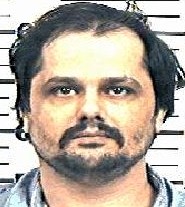
David Wayne Woodruff
Murderer Brian Kevin Rosenfeld
Murderer · USA · 1985
Brian Kevin Rosenfeld Brian Kevin Rosenfeld was sentenced to three concurrent l…
23 victims
Brian Kevin Rosenfeld
Murderer · USA · 1985
Brian Kevin Rosenfeld Brian Kevin Rosenfeld was sentenced to three concurrent l…
23 victims
 Marvin Gray
Murderer · USA · 1975
Marvin Gray was convicted killer who claimed responsibility for 23 slayings and…
23 victims
Marvin Gray
Murderer · USA · 1975
Marvin Gray was convicted killer who claimed responsibility for 23 slayings and…
23 victims
 Yahweh ben Yahweh
Murderer · USA · 1980
Yahweh ben Yahweh was born and legally named Hulon Mitchell Jr. (October 27, 19…
23 victims
Yahweh ben Yahweh
Murderer · USA · 1980
Yahweh ben Yahweh was born and legally named Hulon Mitchell Jr. (October 27, 19…
23 victims
 Russell Ellwood
Murderer · USA · 1991
Russell Ellwood was a former taxi driver. Authorities suspected him of killing…
20 victims
Russell Ellwood
Murderer · USA · 1991
Russell Ellwood was a former taxi driver. Authorities suspected him of killing…
20 victims
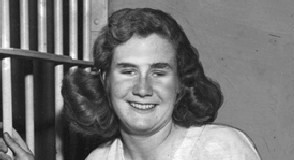 Beulah Louise Overell
Homicide? · USA · 1947
Beulah Louise Overell was charged with the homicide of her parents after a yach…
2 victims
Beulah Louise Overell
Homicide? · USA · 1947
Beulah Louise Overell was charged with the homicide of her parents after a yach…
2 victims
 Andrew DeYoung
Murderer · USA · 1993
Andrew DeYoung was convicted in Cobb County, Georgia of malice murder and was s…
3 victims
Andrew DeYoung
Murderer · USA · 1993
Andrew DeYoung was convicted in Cobb County, Georgia of malice murder and was s…
3 victims
 Amber Hilberling
Murderer · USA · 2011
Amber Hilberling was convicted of second-degree murder in connection with the d…
1 victim
Amber Hilberling
Murderer · USA · 2011
Amber Hilberling was convicted of second-degree murder in connection with the d…
1 victim
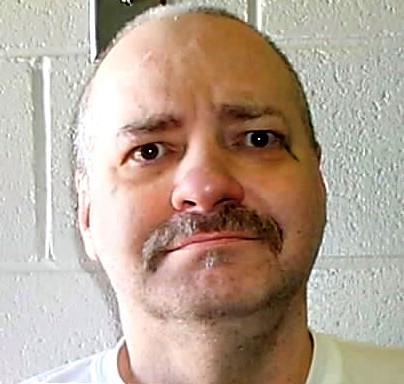 Thomas Creech
Serial killer · USA · 1967
Defendant: Thomas Creech (also referred to as Thomas Eugene Creech) Jurisdictio…
10 victims
Thomas Creech
Serial killer · USA · 1967
Defendant: Thomas Creech (also referred to as Thomas Eugene Creech) Jurisdictio…
10 victims
 Joseph Young
Murderer · USA · 2005
Joseph (Joe Black) Young was a reputed hitman for the Bonanno crime family. He…
1 victim
Joseph Young
Murderer · USA · 2005
Joseph (Joe Black) Young was a reputed hitman for the Bonanno crime family. He…
1 victim
 Paul Woodward
Murderer · USA · 1986
Paul E. Woodward was convicted of capital murder (with the underlying crime of…
1 victim
Paul Woodward
Murderer · USA · 1986
Paul E. Woodward was convicted of capital murder (with the underlying crime of…
1 victim
- Gender
- male
- Country
- USA
- Location
- Oklahoma County, Oklahoma, USA
- Date of birth
- November 19, 1959
- Age at first offence
- 26
- Characteristics
- robbery, torture, armed robbery, drug addict
- Victim profile
- Roger Joel Sarfaty, 52 (jeweler) / Lloyd Thompson, 63 (acquaintance)
- Method of murder
- St abbing with knife
- Date(s) of murder
- October 16, 1985 / July 19, 1986
- Years active
- 1985–1986
- Date of arrest
- August 1986
- Status
-
Executed
Executed by lethal injection in Oklahoma on January 31, 2002
Case identification
David Wayne Woodruff.
Timeline
- July 19, 1986 — Woodruff and John Joseph Romano were accused of murdering and robbing Romano’s friend, Lloyd Thompson; a jury later convicted both men of first degree murder and sentenced them to death.
- October 11, 1985 — Romano was out on weekend furlough from Friday evening.
- October 12, 1985 — The State’s theory placed the Sarfaty murder on Saturday, October 12, between 2:00 A.M. and 2:00 P.M.
- October 13, 1985 — Woodruff’s girlfriend observed that Woodruff had a lot of jewelry which he could not afford.
- October 15, 1985 — A friend first discovered Roger Sarfaty’s body around 11:00 P.M. Tuesday, October 15, 1985.
- October 16, 1985 — A medical examiner’s investigator recorded the apartment temperature at approximately 4:30 A.M. Wednesday, October 16.
- October 13, 1993 — Woodruff v. State, 846 P.2d 1124 (Okla. Cr. 1993) (Direct Appeal).
- 1993 — Woodruff v. Oklahoma, 114 S.Ct. 349 (1993) (Cert. Denied).
- February 13, 2001 — Romano v. Gibson, 239 F.3d 1156 (10th Cir. 2001) (Habeas).
- November 27, 2001 — Oklahoma Attorney General Drew Edmondson asked the Oklahoma Court of Criminal Appeals to set execution dates for John Joseph Romano and David Wayne Woodruff.
- January 31, 2002 — Woodruff was executed by lethal injection in Oklahoma.
- 9:12 p.m. — Woodruff was pronounced dead at the Oklahoma State Penitentiary in McAlester.
Background
Roger Sarfaty was a jeweler and Romano’s acquaintance. Sarfaty was found bound hand and foot, strangled, beaten about the head, and stabbed five times. At the time of Sarfaty’s murder, Romano was serving a prison sentence and was only free on weekends, out on weekend furlough from Friday evening, October 11 through Sunday evening, October 13.
Woodruff’s co-defendant was John Joseph Romano.
In a related matter prior to the Sarfaty trial, Woodruff and Romano were jointly tried for murdering another Romano acquaintance, Lloyd Thompson. In the Thompson case, a jury convicted both men of first degree murder and sentenced them to death. After the Sarfaty case began, the Oklahoma Court of Criminal Appeals overturned the Thompson convictions and death sentences, holding the trial court had erred in jointly trying Woodruff and Romano for that murder. The State subsequently retried Woodruff and Romano for the Thompson murder; separate juries again convicted both of first degree murder. Romano’s jury sentenced him to death, but Woodruff received a sentence of life imprisonment without parole.
The offence
Murder and robbery of Roger Sarfaty
Romano and Woodruff were convicted of killing jeweler Roger Sarfaty during the course of a robbery. Sarfaty’s body was found around 11:00 P.M. Tuesday, October 15, 1985. The juries found that Sarfaty had been bound hand and foot, strangled, beaten about the head, and stabbed five times.
The State alleged the murder occurred on Saturday, October 12, between 2:00 A.M. and 2:00 P.M. Romano and Woodruff were said not to have alibis for at least part of that time period.
Sarfaty kept as many as six large containers of quarters in his apartment, and those containers were missing after the murder. At the time of the murder, Sarfaty also had jewelry and rings; none of this jewelry was found at his home after the murder.
Earlier related offence: Lloyd Thompson
Romano and Woodruff were convicted in a separate case of murdering Lloyd Thompson during a robbery. That Thompson murder involved Lloyd Thompson’s murder by stabbing. The first trial for Thompson ended with death sentences for both men, but those convictions and death sentences were later overturned and a retrial produced a life imprisonment without parole sentence for Woodruff.
Investigation
At the time Sarfaty’s body was discovered, an October 12 edition of a newspaper was found opened on Sarfaty’s couch, while editions for October 13, 14, and 15 were left delivered but unopened on his patio. A scientific evidence component concerning the time of death was based on the apartment temperature and decomposition.
When police first entered the apartment, an officer described it as warm but not hot. A medical examiner’s investigator recorded the apartment’s thermostat at approximately 4:30 A.M. Wednesday, October 16. The medical examiner’s testimony supported a range of time since death that included the State’s proposed October 12 time frame, while other testimony allowed for later or earlier estimates under different temperatures.
Furniture and physical evidence
Investigators discovered diamond items near where the body was found and diamond papers near Woodruff’s car. Sarfaty usually carried many diamond papers, and Woodruff also used diamond papers in his work.
After Woodruff was arrested ten months after Sarfaty’s murder, he called his girlfriend and asked her to “clear” the house. In response, she removed a pair of gloves, a watch, and several pieces of rope. Medical testimony stated the rope pieces could have caused marks around Sarfaty’s neck, hands, and feet, including a rope piece fashioned like a garrote that could be used to strangle a victim.
Arrest and custody
Woodruff was arrested ten months after Sarfaty’s murder. During the arrest period, Woodruff’s girlfriend delivered Romano and Woodruff from police custody to Woodruff’s car, still parked at the mall.
At the time of Sarfaty’s death window, Romano and Woodruff attempted to purchase a television at a mall store using quarters. Mall security took them into custody for being drunk and disorderly. Romano had a “lock blade” folding knife and wore an expensive-looking gold necklace when taken into custody. Woodruff was later described as having spots of blood on his jeans, and a recent cut on his hand; Romano was limping.
Trial
Joint trial and convictions
The State jointly tried Woodruff and Romano. The jury convicted both of first degree malice murder and robbery with a dangerous weapon. Robbery sentencing included 1000 years in prison on the robbery conviction for both.
At capital sentencing, the jury found three aggravating factors pertaining to both Woodruff and Romano:
- prior violent felony convictions
- the murder was especially heinous, atrocious or cruel
- continuing threats to society The jury also found a specific circumstance that Romano committed the murder to avoid arrest or prosecution for Sarfaty’s robbery.
The jury sentenced both Woodruff and Romano to death on the first degree murder convictions in the Sarfaty case.
Evidence and alibis
The State’s theory relied on the time of death and on circumstantial evidence. The State introduced evidence that Sarfaty usually went to the Celebrity Club every night and the last time he was seen alive there was about 2:00 A.M. Saturday, October 12. The State also relied on newspaper editions opened and unopened as found in the apartment, and on Romano’s furlough during the relevant period.
Evidence supporting the State’s theory included that Romano and Woodruff possessed large numbers of quarters on October 12 and that containers of quarters and jewelry were missing after Sarfaty’s death. Witnesses estimated they had between ten and forty dollars’ worth of quarters. The State’s evidence linking Woodruff and Romano included the knife, the gold necklace, blood on Woodruff’s jeans described by a saleswoman, and the later request by Woodruff to “clear” the house by removing items including gloves, a watch, and rope that could match the strangulation marks.
Motive evidence
Romano had asked friend Tracy Greggs to help him rob Sarfaty a few weeks before the murder, stating he would have to kill Sarfaty. Greggs refused to help Romano. Romano was said to have previously stolen a former girlfriend’s rings and sold them to Sarfaty. After the jewelry theft discovery, Romano told the former girlfriend that the man who had the rings had been killed.
Supreme Court / appellate discussion of evidence from Thompson trial
In sentencing in the Sarfaty trial, the State introduced evidence of the Thompson convictions and death sentences. The Oklahoma Court of Criminal Appeals had overturned the Thompson convictions and death sentences, but the Sarfaty direct appeal outcome remained upheld. The United States Supreme Court affirmed Romano’s death sentence in a decision that held the introduction of evidence of Romano’s earlier death sentence for the Thompson murder did not diminish the Sarfaty jury’s sense of responsibility.
Sentencing
Woodruff and Romano were sentenced to death on the first degree murder convictions for Roger Sarfaty. In capital sentencing, the jury found aggravating factors: prior violent felony convictions, especially heinous, atrocious or cruel, and continuing threats to society. The jury also found Romano committed the murder to avoid arrest or prosecution for Sarfaty’s robbery.
Thompson case effect on Sarfaty sentencing
The State introduced evidence of Thompson convictions and death sentences during sentencing in the Sarfaty trial. The Oklahoma Court of Criminal Appeals later overturned those Thompson convictions and death sentences in light of an error in jointly trying Woodruff and Romano for the Thompson murder. The State retried and obtained separate jury outcomes that again convicted both men of first degree murder, resulting in Romano’s death sentence and Woodruff’s sentence of life imprisonment without parole.
Appeals
Woodruff direct appeal (Oklahoma Court of Criminal Appeals, 1992 decision)
In Woodruff v. State, 825 P.2d 273 (Okl. Cr. 1992) (Case Number: F-87-132), the Oklahoma Court of Criminal Appeals held:
- “REVERSED and REMANDED for a NEW TRIAL.”
- The court described that Woodruff was convicted in Oklahoma County District Court in Case No. CRF-86-3920 of Murder in the First Degree with punishment fixed at death according to the jury’s recommendation.
- The court held severance should have been granted, describing how the true nature of each defendant’s defenses became apparent during trial and that each was required to defend against the other’s testimony exculpating self and inculpating codefendant.
- The court stated that a mistrial should have been ordered due to exigent circumstances and prejudice from joint trial, including the prejudice of sharing peremptory challenges.
The opinion included judicial analysis of severance, peremptory challenge limits, and statutory peremptory rights.
Federal habeas appeal
In Romano v. Gibson, 239 F.3d 1156 (10th Cir. 2001) (habeas), the appeals affirmed the denial of habeas relief on first degree murder and robbery convictions and resulting death sentences.
The federal opinion addressed sufficiency of evidence for first degree malice murder and robbery with a dangerous weapon, due process limitations on evidence about uncharged individuals, Brady issues about a detective’s unrecorded temperature recollection, and Giglio/Brady claims about an alleged deal exchanging favorable disposition of pending forged check charges against Greg Myers for Myers’ testimony. The habeas court affirmed that denial of relief, including:
- determination of no prejudice from the alleged temperature nondisclosure under Brady,
- factual findings supported by the evidentiary hearing that no deal existed between Myers and the State,
- no entitlement to relief based on Myers recantation absent evidence that prosecutors knew the testimony was false.
The habeas court also addressed evidentiary sufficiency for the especially heinous, atrocious or cruel aggravating factor, the continuing threat aggravating factor, and other aggravation-related claims.
Other citations included in the record
- Woodruff v. State, 846 P.2d 1124 (Okla. Cr. 1993) (Direct Appeal)
- Woodruff v. Oklahoma, 114 S.Ct. 349 (1993) (Cert. Denied)
- Romano v. Gibson, 239 F.3d 1156 (10th Cir. 2001) (Habeas)
- Romano v. State, 847 P.2d 368 (Okla. Crim. App. 1993), aff’d, 512 U.S. 1 (1994)
- Romano v. State, 917 P.2d 12 (Okla. Crim. App. 1996)
- Woodruff v. State, 910 P.2d 348 (Okla. Crim. App. 1996)
Outcome
Woodruff was executed by lethal injection in Oklahoma on January 31, 2002. The record described that he was pronounced dead at 9:12 p.m. at the Oklahoma State Penitentiary in McAlester.
Romano was executed earlier on a separate date described as Tuesday, preceding Woodruff’s execution by two days in the scheduled execution context.
Aftermath and final statements
Final meal
Two cheeseburgers, fried potatoes and a lemon-lime slushy were listed as Woodruff’s final meal.
Final words
Woodruff’s final words were:
“We're not here for a social event, we're here for a killing. Name's David Wayne Woodruff. Let's get this show on the road.”
Related victim and witnesses mentioned around execution
Sarfaty’s only known living relative, daughter Twyla Alvarez, was described as witnessing Romano’s execution and being scheduled to see Woodruff’s. Twyla Alvarez said she still hoped to hear words of remorse. Her statement included:
“Before he died, Romano did say that he hoped anyone he had wronged would forgive him,” she said.
“But that falls far short of accepting responsibility for my father's death, much less apologizing for it. It is, I suppose, better than nothing. I am not optimistic, but perhaps David Woodruff will be more forthcoming tonight.”
Alvarez also said:
“John Romano was dead. What, exactly, had been improved by that fact? My father is still dead, and the pain and suffering he endured are no less than before Romano died.”
She further said:
“...cannot imagine a more humane way to carry out an execution.”
Thompson’s brother, Eulys Thompson, stated:
“The only ones I feel sorry for are my brother's kids and the rest of the Thompson family,” he said.
“And I do feel sorry for his (Woodruff's) mother and dad as I've met them both and they seem like good people.
"But, as far as David Woodruff is concerned, I have no feelings except it's over and he's getting exactly what he deserves. He brought it on himself."
Attorney general statement about DNA testing and execution dates
Oklahoma Attorney General W.A. Drew Edmondson stated:
“It is the practice of this office, before an execution date is requested, to examine each case to determine if the testing of DNA evidence should occur,” said Edmondson.
“We have determined, after a thorough review, that DNA testing would be of no value and would have no relevance as to actual innocence. I see nothing that should stand in the way of these executions being carried out.”
Other details
Woodruff and Romano were described as intoxicated during the mall store attempt to purchase a television using quarters.
Woodruff reportedly became a suspect after his arrest in connection with the separate Thompson case. Woodruff had been convicted in the record on the Sarfaty charges and had death-related procedural history described through appeals.
In the execution context, the record listed Woodruff as a 42-year-old condemned inmate.
The final execution date context included requested execution dates for both Romano and Woodruff, with Romano scheduled for January 29 and Woodruff scheduled for January 31.
Spotted an error, or have more information about this case?