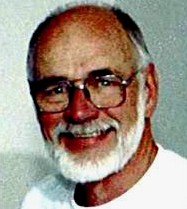
Robert Spangler
Murderer Ervil LeBaron
Murderer · USA · 1972
Ervil Morrell LeBaron (1925 to August 16, 1981) was the leader of a polygamous…
35 victims
Ervil LeBaron
Murderer · USA · 1972
Ervil Morrell LeBaron (1925 to August 16, 1981) was the leader of a polygamous…
35 victims
 Brian Kevin Rosenfeld
Murderer · USA · 1985
Brian Kevin Rosenfeld Brian Kevin Rosenfeld was sentenced to three concurrent l…
23 victims
Brian Kevin Rosenfeld
Murderer · USA · 1985
Brian Kevin Rosenfeld Brian Kevin Rosenfeld was sentenced to three concurrent l…
23 victims
 Marvin Gray
Murderer · USA · 1975
Marvin Gray was convicted killer who claimed responsibility for 23 slayings and…
23 victims
Marvin Gray
Murderer · USA · 1975
Marvin Gray was convicted killer who claimed responsibility for 23 slayings and…
23 victims
 Yahweh ben Yahweh
Murderer · USA · 1980
Yahweh ben Yahweh was born and legally named Hulon Mitchell Jr. (October 27, 19…
23 victims
Yahweh ben Yahweh
Murderer · USA · 1980
Yahweh ben Yahweh was born and legally named Hulon Mitchell Jr. (October 27, 19…
23 victims
 Steven Spader
Homicide · USA · 2009
Steven Spader was convicted in connection with the October 4, 2009 home invasio…
1 victim
Steven Spader
Homicide · USA · 2009
Steven Spader was convicted in connection with the October 4, 2009 home invasio…
1 victim
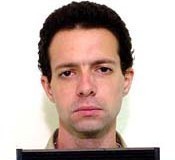 Clay Shrout
Mass murderer · USA · 1994
Clay Shrout Clay Shrout was a 17-year-old juvenile at the time of the May 26, 1…
4 victims
Clay Shrout
Mass murderer · USA · 1994
Clay Shrout Clay Shrout was a 17-year-old juvenile at the time of the May 26, 1…
4 victims
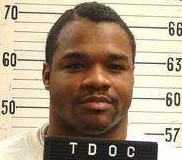 G'dongalay Berry
Murderer · USA · 1995
G'dongalay Parlo Berry (also referred to as Gdongalay P. Berry) and Christopher…
3 victims
G'dongalay Berry
Murderer · USA · 1995
G'dongalay Parlo Berry (also referred to as Gdongalay P. Berry) and Christopher…
3 victims
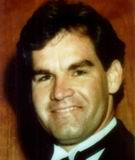 Charles Stuart
Murderer · USA · 1989
Charles Stuart was born in 1959 and died on January 4, 1990. He was described a…
1 victim
Charles Stuart
Murderer · USA · 1989
Charles Stuart was born in 1959 and died on January 4, 1990. He was described a…
1 victim
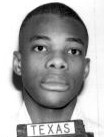 Tony Tyrone Dixon
Homicide · USA · 1994
Tony Tyrone Dixon Tony Tyrone Dixon was sentenced to death on March 8, 1995. Th…
1 victim
Tony Tyrone Dixon
Homicide · USA · 1994
Tony Tyrone Dixon Tony Tyrone Dixon was sentenced to death on March 8, 1995. Th…
1 victim
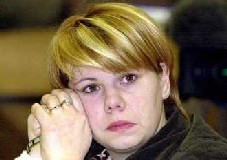 Christine Malèvre
Serial killer · France · 1997
Christine Malèvre Christine Malèvre (born 1970) was a French serial killer. She…
30 victims
Christine Malèvre
Serial killer · France · 1997
Christine Malèvre Christine Malèvre (born 1970) was a French serial killer. She…
30 victims
- Gender
- male
- Country
- USA
- Location
- Colorado/Arizona, USA
- Date of birth
- 1933
- Age at first offence
- 45
- Characteristics
- parricide
- Victim profile
- His wife, Nancy Spangler, 45, son David, 17, and daughter Susan, 15 / H is third wife, Donna Sundling, 58
- Method of murder
- Shooting ( .38-caliber handgun) / P ushed her off a 140-foot drop to her death
- Date(s) of murder
- 1978 / 1993
- Years active
- 1978–1993
- Date of arrest
- 2000
- Status
-
Died in custody
Sentenced to life imprisonment without parole in Arizona in 2000; died in prison on August 5, 2001
Case record: Robert Spangler
Background
Robert Spangler was prosecuted after the deaths of his wife and children in Colorado and after the death of his third wife in the Grand Canyon.
Over the years, he worked for Honeywell Corp.’s camera and instruments division, served as public relations director for a non profit organisation, and was a part-time disc jockey at a radio station. He was raised in Ames, Iowa, and a laboratory at Iowa State University was named after his father, a civil engineer.
The offence
On the morning of December 30, 1978, in Littleton, Colorado, deputies from the Arapahoe County, Colorado, Sheriff’s Office responded to a scene of a possible double homicide/suicide in a private residence.
A neighbor discovered the bodies of a 45-year-old woman, her 17-year-old son, and her 15-year-old daughter. All three had suffered gunshot wounds from a .38-caliber handgun. The daughter, found partially clothed in her bed, had a bullet wound in her back. The son, also in bed, had been shot once in his upper chest. The mother’s body lay slumped over a typewriter in the basement with a bullet wound high on her forehead.
A typewritten suicide note on the typewriter was signed with her initial.
Robert Spangler lured his wife Nancy into the basement with the promise of a “surprise,” then shot her in the head with a .38 handgun. He went upstairs and shot his teenage children, Susan and David. David was slow in dying, so his father finished him off by smothering him with a pillow.
He framed the scene to make it appear that his wife had shot their children and then herself, enabling him to remarry.
In April 1993, in the Grand Canyon, Spangler’s third wife died after injuries consistent with her falling; rangers located her approximately 160 feet below the trail. Spangler told a ranger that the couple had stopped to take a picture on the trail and that, when he looked back, his wife was gone.
Investigation
A surviving spouse, Robert Spangler, was interviewed as a suspect.
Spangler told investigators he was not home during the crime. He admitted marital problems with his wife and said he planned to leave her. He described leaving his house early that morning and finding sheriff’s deputies there when he returned. In a subsequent interview, his original story changed significantly.
Two separate, private polygraph examiners found his answers inconclusive to questions about his role in the deaths.
The .38-caliber weapon used in all three shootings belonged to Spangler, and evidence of gunshot residue was found on his right palm.
On January 3, 1979, the Arapahoe County coroner closed the case as a double homicide/suicide. The sheriff’s office was unable to overcome the coroner’s findings and had exhausted investigative leads, leading them to close the case. Most of the evidence was either returned to Spangler or destroyed.
In January 1999, investigators from the U.S. Department of Interior, National Park Service, and counties of Coconino, Arizona, and Arapahoe, Colorado, linked the cold case homicides in their respective jurisdictions. They met with agents from the FBI’s Flagstaff, Arizona, resident agency and requested assistance. An assistant U.S. attorney (AUSA) from the District of Arizona with experience in capital murder cases and a personal knowledge of the Grand Canyon joined the team.
The AUSA united the cases under the umbrella of federal jurisdiction as an insurance fraud/murder. An FBI agent in Flagstaff contacted the NCAVC.
NCAVC officials suggested that investigators complete a subject history on Spangler and recommended using an NCAVC Behavioral Assessment Questionnaire when interviewing some of Spangler’s associates.
An FBI agent’s lead resulted in an interview of a woman living in a small Colorado community. A few weeks after her interview, she contacted authorities and provided a copy of a letter she received from Spangler advising her that he had terminal cancer. Investigators approached Spangler with concurrence from the NCAVC.
A complete confession was described as critical for prosecution because of a lack of existing evidence.
Arrest
Spangler was approached at home and agreed to an interview at the local sheriff’s office.
Trial
Spangler pleaded guilty in federal district court in Arizona to the first-degree murder of his third wife. He also admitted killing his first wife and two children.
Sentencing
Spangler was sentenced to life imprisonment without parole. He died of cancer while in federal prison.
He was sentenced to life imprisonment without parole in Arizona in 2000.
Appeals
No appeals were described in the material provided.
Outcome
Spangler died in prison on August 5, 2001.
Aftermath
After confessing, Spangler sent the FBI agent a letter pleading with him to minimize publicity about the case. In that letter, Spangler argued that he was not like other serial killers who target people for race or sexual orientation, and he correctly assessed that some serial killers target groups they perceive as undesirable.
Spangler was also described as concerned about his public reputation, having been a radio talk show celebrity and being well respected in the community.
Neighbor Joyce Williams was quoted as saying:
“He's the kind of person you'd like as a next-door neighbour until you find out about him,” said neighbour Joyce Williams.
Nancy Spangler’s stepmother, Joan Stahlman, was quoted as saying:
“We couldn't believe it then, and we still don't believe it,'' said Nancy Spangler's stepmother, Joan Stahlman.
Joan Stahlman was further quoted:
“Robert didn't come to see her father after Nancy died. That seemed strange. We never heard a word from him.”
Roy Meiworm, who was dating Spangler’s daughter at the time of her death, was quoted as saying:
“I lost about 20 minutes of my life,” said Meiworm, now 42.
Meiworm was quoted further:
“I can't tell you how upsetting it is to find out everything you've been told was wrong. It's taken me 22 years to even enjoy Christmas again. I have a feeling this is going to be another tough one.”
Spangler’s new wife, Judy, was described as refusing to comment to journalists, and her friend was quoted:
“Judy said she was numb. Obviously there was a side to him that none of us know. Everybody was duped.”
The material included a quotation attributed to Robert Spangler:
“It requires a singular focus in committing the actual crime, quite cold-bloodedly.”1— Robert Spangler
Timeline
- December 30, 1978 — Deputies responded to a possible double homicide/suicide in Littleton, Colorado; Nancy, Susan, and David were found shot with a .38-caliber handgun.
- January 3, 1979 — The Arapahoe County coroner closed the case as a double homicide/suicide.
- 1988 — Spangler and his second wife divorced.
- April 1993 — Spangler’s third wife died in the Grand Canyon after injuries described as consistent with a fall.
- 1994 — Spangler’s second wife died of a drug overdose.
- January 1999 — Investigators linked the cold case homicides and requested FBI assistance.
- Fall 2000 — Spangler told investigators detailed information in connection with the homicides.
- August 5, 2001 — Spangler died in prison.
- 2000 — Spangler was sentenced to life imprisonment without parole in Arizona.
Other details
Spangler admitted marital problems with his wife and said he planned to leave her. Investigators described his confession as critical because of the lack of existing evidence.
In the course of the interviews, at the end of the first day, Spangler told investigators:
“Well, you’re naming one too many, remember.”
During the second interview, after silence, Spangler said:
“You’ve got your serial.”
Investigators confronted Spangler with the 1978 murders of his wife and children, the drug overdose of his second wife, and the murder of his third wife in the Grand Canyon.
He strongly denied involvement in the overdose death of his second wife and refused to discuss the death in the Grand Canyon due to fearing a civil lawsuit from his third wife’s grown children. Investigators encouraged Spangler to talk about the Grand Canyon murder by telling him that killing several people at one time did not make him a serial killer.
Spangler told investigators that he fell in love with another woman while married to his first wife and then shot his wife and two teenage children to be with her. He also said he smothered his son with a pillow after shooting him because the bullet wound was not lethal.
NCAVC provided behavioral analysis and interview strategy described as applied directly in the Spangler case, and it was said to accurately predict several of Spangler’s behaviors.
The NCAVC letter-writing and interview strategy were described as involving a medical doctor retained by the unit who analyzed Spangler’s medical records, confirmed his terminal condition, and gave advice regarding competency issues.
Spangler’s terminal cancer created special issues for the AUSA regarding mental competence and the voluntariness of a statement. The interview was videotaped.
The material described that Spangler told investigators he only had 6 months to live in August 2000.
Charles Patrick Ewing was cited for intrafamilial homicide dynamics, and other published works and endnotes were included, including citations to “Married to Murder,” “On Foot in the Grand Canyon,” and FBI Law Enforcement Bulletin materials.
Spotted an error, or have more information about this case?