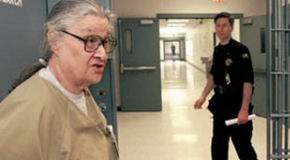
Donna Enright
Murderer Megan Huntsman
Murderer · USA · 1996
Megan Huntsman was 40 at sentencing. She was a mother of three children who wer…
6 victims
Megan Huntsman
Murderer · USA · 1996
Megan Huntsman was 40 at sentencing. She was a mother of three children who wer…
6 victims
 Angela Johnson
Murderer · USA · 1993
Angela Jane Johnson was convicted in federal court of aiding and abetting the m…
5 victims
Angela Johnson
Murderer · USA · 1993
Angela Jane Johnson was convicted in federal court of aiding and abetting the m…
5 victims
 Catherine May Wood
Murderer · USA · 1987
Catherine May Wood was an American caregiver who worked at the Alpine Manor Nur…
5 victims
Catherine May Wood
Murderer · USA · 1987
Catherine May Wood was an American caregiver who worked at the Alpine Manor Nur…
5 victims
 Michele Kalina
Murderer · USA · 1996
Michele Kalina pleaded guilty to murder for one of five infants she initially w…
5 victims
Michele Kalina
Murderer · USA · 1996
Michele Kalina pleaded guilty to murder for one of five infants she initially w…
5 victims
 Tiffany Hall
Murderer · USA · 2006
Tiffany Hall was 24 when she was charged in September 2006. She later entered a…
5 victims
Tiffany Hall
Murderer · USA · 2006
Tiffany Hall was 24 when she was charged in September 2006. She later entered a…
5 victims
 Amy Bishop
Murderer · USA · 1986
Amy Bishop — biology professor and perpetrator · James Anderson — Bishop’s husb…
4 victims
Amy Bishop
Murderer · USA · 1986
Amy Bishop — biology professor and perpetrator · James Anderson — Bishop’s husb…
4 victims
 Parramore Sanborn
Murderer · USA · 1983
Parramore Lee Sanborn was born 8-3-45. The case involved the kidnapping, rape,…
1 victim
Parramore Sanborn
Murderer · USA · 1983
Parramore Lee Sanborn was born 8-3-45. The case involved the kidnapping, rape,…
1 victim
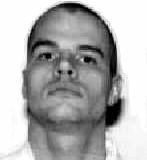 Aaron Foust
Murderer · USA · 1997
Aaron Christopher Foust (TDCJ #999268) was convicted for the capital offense of…
1 victim
Aaron Foust
Murderer · USA · 1997
Aaron Christopher Foust (TDCJ #999268) was convicted for the capital offense of…
1 victim
 Estibaliz Carranza
Murderer · Austria · 2008
Estibaliz Carranza was sentenced to life in a secure mental institution on Nove…
2 victims
Estibaliz Carranza
Murderer · Austria · 2008
Estibaliz Carranza was sentenced to life in a secure mental institution on Nove…
2 victims
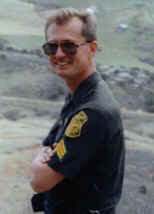 Albert Petrosky
Murderer · USA · 1995
Albert Petrosky was sentenced to life in prison without parole. He was awaiting…
3 victims
Albert Petrosky
Murderer · USA · 1995
Albert Petrosky was sentenced to life in prison without parole. He was awaiting…
3 victims
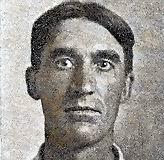 Henry Layer
Mass murderer · USA · 1920
Henry Layer Henry Layer was born Heinrich C. Layer on November 12, 1884 in Eige…
8 victims
Henry Layer
Mass murderer · USA · 1920
Henry Layer Henry Layer was born Heinrich C. Layer on November 12, 1884 in Eige…
8 victims
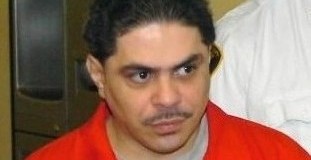 Anthony Santos
Homicide · USA · 2006
Anthony J. Santos was convicted of stabbing another man to death inside a Bethl…
1 victim
Anthony Santos
Homicide · USA · 2006
Anthony J. Santos was convicted of stabbing another man to death inside a Bethl…
1 victim
- Gender
- female
- Country
- USA
- Location
- Stanford, Judith Basin County, Montana, USA
- Date of birth
- 1934
- Age at first offence
- 62
- Characteristics
- arson, attempt to collect insurance money
- Victim profile
- Leonard Theis, 61 (her stepfather)
- Method of murder
- Fire
- Date(s) of murder
- October 17, 1996
- Years active
- 1996
- Date of arrest
- November 13, 1996
- Status
-
Sentenced to concurrent prison terms with 20 years for arson and 75 years for deliberate homicide in May 1999
Case record: Donna Enright
Status and sentences
Donna June Enright was found guilty of arson and deliberate homicide following a consolidated jury trial. She was sentenced to concurrent terms of twenty years on the arson charge and seventy-five years on the deliberate homicide charge.
A separate sentencing described Enright as receiving a sentence of 75 years in prison, and another sentencing description stated that she was ordered to serve a seventy-five-year sentence. Another later sentencing description stated that a judge sentenced her to 95 years in prison with 20 years suspended.
Timeline
- October 17, 1996 — Leonard Theis died in a trailer fire in Stanford, Montana.
- October 17, 1996 — Enright and Leonard drove to Stanford from Great Falls for laundry at the Stanford trailer; they had lunch and were at a bar until approximately 8:30 p.m.
- October 16, 1996 — Enright and Leonard turned up the furnace and covered vents, and Enright gave Leonard cold medicine; Enright later stated Leonard went to bed at approximately 11:30 p.m.
- October 17, 1996 — Enright and Leonard returned to the trailer; Enright stated she awoke to a smoke alarm, confronted smoke from the hallway, jumped out a bedroom window to escape, attempted to enter again through a back door and ran next door to Kozlowitz’s trailer, and called 911 at 3:40 a.m.
- November 6, 1996 — Agent Joe Uribe interviewed Enright.
- November 13, 1996 — Enright was charged by information with felony arson and deliberate homicide; the information was later amended to include an alternate charge of deliberate homicide pursuant to the felony murder rule.
- November 22, 1996 — Enright sent Roy Link a letter while she was in the Fergus County Jail.
- April 14, 1997 — The State filed its notice of intent to introduce evidence of other crimes, wrongs, or acts by Enright.
- June 16-20, 1997 — A five-day jury trial was conducted; Enright was convicted of arson and deliberate homicide.
- December 28, 1998 — The Supreme Court of Montana vacated the judgment in Enright’s appeal and remanded for further proceedings.
- May 1999 — A second jury convicted Enright of arson and deliberate homicide in a second trial.
- March 8, 2004 — A state judge threatened sanctions against Yellowstone County Chief Deputy Public Defender Roberta Drew for her work as a court-appointed attorney there, including a hearing set for March 25.
- March 31, 2002 — Judge John Warner filed an order allowing Enright’s case to move forward in post-conviction relief proceedings.
Background
Faye Theis and Leonard Theis were married in 1961. They had no children together. Faye had children from a previous marriage, including Margaret Distad, Donna June Enright, and Roy Link.
In 1988, Faye and Leonard purchased and moved into a trailer in Great Falls. Faye and Leonard eventually began to suffer from the effects of dementia and Alzheimer's disease. In approximately November 1993, Distad and Link acquired a power of attorney on Faye’s behalf, and Enright and Link acquired a power of attorney on Leonard’s behalf. Faye and Leonard entered a Great Falls nursing home in November 1993. Shortly thereafter, however, Leonard left the nursing home and returned to the trailer. Enright then became his guardian, and Faye remained in the nursing home.
In February 1995, Link exercised his power of attorney to transfer Faye’s interest in the trailer to John Kozlowitz. Enright also transferred Leonard’s interest to Kozlowitz. A week after Kozlowitz became the owner of the trailer, the home burned and he was paid the insurance proceeds. The Great Falls Fire Department investigated the fire but did not determine the cause of the fire and found no evidence of foul play. The insurer’s adjuster interviewed the fire department’s investigator, found nothing unusual, and saw no need to conduct an independent investigation.
A few months later, Enright, Kozlowitz, Leonard, and Tom Martin formed the Sundown Inn, Inc. corporation for the purpose of purchasing and operating a bar and restaurant in Stanford. Enright, Leonard, and Kozlowitz moved from Great Falls to Stanford, where they purchased three trailer lots. Kozlowitz owned the two trailers they kept on the lots, and he lived in one while Enright and Leonard lived in the other. Financial difficulties led the group to abandon their operation of the Sundown Inn in April 1996. Enright and Leonard continued to live in Stanford, spending considerable time at Enright’s home in Great Falls.
In July 1996, Enright applied for and eventually received on behalf of Leonard a lump sum distribution of Leonard’s remaining pension benefits worth approximately $38,000. Between July and October, six different insurance policies were purchased to insure Leonard’s life; Enright and Kozlowitz paid some premiums. Testimony at trial suggested Enright prepared the applications and forged Leonard’s signature. The policies named Martin, Enright, and Link as beneficiaries. In September 1996, Enright and Leonard moved back to Great Falls, after which Enright and Link made frequent trips to Stanford to remove furniture from the Stanford trailer and transfer it to their residence in Great Falls.
The offence
The charges against Enright and Link stemmed from the death of Enright’s stepfather, Leonard Theis, in a trailer fire on October 17, 1996 in Stanford, Montana. The State alleged Enright and Link, acting in concert, intentionally started the fire to collect on insurance policies purchased on Leonard’s life.
Enright was charged by information with one count of deliberate homicide and one count of arson. The information was later amended to include a charge of deliberate homicide (felony murder) as an alternative to the deliberate homicide charge. Link was charged with arson by accountability, deliberate homicide, and deliberate homicide by accountability.
During the first trial, both defendants pled not guilty to all charges. After a five-day trial, Enright was convicted of arson and deliberate homicide. In a separate trial, Link was convicted of arson by accountability and deliberate homicide but acquitted of the deliberate homicide by accountability charge. Enright appealed her conviction and the Supreme Court reversed and remanded for a new trial due to prior acts evidence. The Supreme Court later reversed Link’s arson and deliberate homicide convictions and remanded his case for a new trial.
After their first appeals and remands, the charges against Link were amended to arson by accountability and deliberate homicide under the felony murder rule. The District Court consolidated the trials. Following the consolidated trial, the jury found Enright guilty of arson and deliberate homicide, and Link guilty of arson by accountability and guilty of deliberate homicide under the felony murder rule.
The prosecution theory was that the fire was set so the pair could collect on an insurance policy they had bought on Leonard’s life.
Enright and Link claimed that either someone else had started the fire or it happened accidentally.
Events on the day of the fire
Enright and Leonard drove to Stanford from Great Falls on October 16, 1996 to do their laundry at the Stanford trailer; they did not have laundry facilities in Great Falls. They had lunch at a cafe and went to a bar. Enright and Leonard were met by Link and his wife, who had come to Stanford to pick up one of Leonard’s chairs from the trailer. Link and his wife were at the bar only a short while before they went to get the chair. Enright and Leonard remained at the bar until approximately 8:30 p.m.
Over the course of the evening, Enright accrued approximately $1200 in gambling losses. Enright and Leonard returned to the trailer. Enright did the laundry and Leonard watched television. Leonard was developing a cold, so Enright turned up the furnace in the trailer and covered vents to channel the heat toward Leonard’s part of the trailer. Enright gave Leonard cold medicine. Earlier in the day, Link had allegedly given Leonard Tylenol with codeine.
Enright stated Leonard went to bed in his room of the trailer at approximately 11:30 p.m., and she stated she did not fall asleep until approximately 2:30 a.m. Enright contended that she awoke shortly after she fell asleep to the sound of a smoke alarm. She opened her bedroom door but was confronted with smoke from the hallway and shut the door. She then jumped out of her bedroom window to escape the trailer. She tried to enter through the back door but was unable to do so when confronted by flames. She ran next door to Kozlowitz’s trailer and called 911 at 3:40 a.m. Enright and Kozlowitz tried to enter the burning trailer through the front door but retreated because it was too dark.
When officials arrived to fight the fire, Enright told them that Leonard was still inside the trailer in his bedroom. Fire officials later found Leonard’s body partially covered by a blanket on the living room couch, where he had apparently been asleep. An autopsy revealed Leonard died of carbon monoxide poisoning from smoke inhalation. It further revealed therapeutic doses of potentially sedative drugs, including Benadryl and codeine.
Investigation
A few days after the fire, agent Joe Uribe from the Criminal Investigation Bureau of the Montana Department of Justice was contacted by the Judith Basin County Sheriff to investigate Leonard’s death. During a search of the trailer, Uribe and other officers seized an empty bottle of sedative drugs and a battery-operated smoke alarm found in the hallway; they could not find a battery for the alarm. Uribe interviewed Enright on November 6, 1996. He testified that Enright told him she was unaware of any life insurance policies for Leonard, and that during the interview she made statements inconsistent with her earlier statements regarding the fire.
The next day, Uribe searched Enright’s home in Great Falls. He found the six life insurance policies, several bills issued to Enright, Kozlowitz, Link, Martin, and Leonard, and items of property which Enright told her insurer had been destroyed in the fire.
Six experts investigated the fire and testified at trial. They consistently testified that the fire started in a third bedroom that served as a storage room. Several witnesses testified that the cause of the fire was a collection of newspapers stored in a corner of the room. The experts agreed no accelerants were used to start the fire and there was no evidence of any deliberate act to start the fire. Based largely on inability to attribute the fire to any accidental cause, several experts opined that the cause of the fire was incendiary rather than natural or undetermined.
Arrest and charges
On November 13, 1996, Enright was charged by information in the District Court for the Tenth Judicial District in Judith Basin County with felony arson and deliberate homicide; the information was later amended to include an alternate charge of deliberate homicide pursuant to the felony murder rule at § 45-5-102(1)(b), MCA.
Link and Kozlowitz were also charged a few months later based on their alleged roles in the fire and Leonard’s death.
Trial
Enright’s first trial and appeal (1997; remand)
A five-day jury trial was conducted from June 16-20, 1997. During the trial, the District Court permitted the State’s witnesses to testify regarding the 1995 fire and the insurance claims made as a result of it. The jury convicted Enright of arson and deliberate homicide, and she was ordered to serve a seventy-five-year sentence.
The Supreme Court of Montana vacated the judgment and remanded. The Supreme Court stated it held that the district court abused its discretion when it allowed evidence of the 1995 fire. The Supreme Court concluded evidence of the 1995 fire was not relevant because there was no evidence linking Enright to the cause of that prior fire, and it concluded the admission of the 1995 fire was prejudicial.
The Supreme Court also addressed sufficiency of evidence. After excluding evidence of the 1995 fire, it held there was still sufficient evidence to support submission of the State’s charges to the jury, stating Enright purchased six insurance policies insuring Leonard’s life within the three months prior to his death; she denied their existence; Enright and her family and friends moved furniture out of the trailer prior to the fire and then claimed its loss to the insurance company; Leonard’s body revealed multiple sedative drugs; a battery could not be found for the smoke alarm nearest Enright’s bedroom and the only other smoke alarm was located inside a closed kitchen cabinet at the opposite end of the trailer; there were no signs of the clean laundry Enright claimed to have left in the living room; fire officials testified they did not smell smoke on her despite her alleged encounters; and there was expert opinion evidence that the fire was intentionally started. It vacated the judgment and remanded for a new trial.
Consolidated second trial and conviction (May 1999)
After remands, Link and Enright were tried together in a consolidated jury trial in the Tenth Judicial District Court, Judith Basin County. Both raised challenges including consolidation, sufficiency of evidence, and evidentiary issues.
At the consolidated trial:
- The jury found Enright guilty of arson and deliberate homicide.
- The jury found Link guilty of arson by accountability and guilty of deliberate homicide under the felony murder rule.
Evidence issues included denial of Link’s motions in limine and admission of a letter Enright sent to Link.
The consolidated trial’s sentencing included:
- Enright: concurrent terms of twenty years on the arson charge and seventy-five years on the deliberate homicide charge.
- Link: five years on the arson by accountability charge and twenty years on the felony murder charge.
Evidentiary rulings and legal issues on appeal
Consolidation of trials
Enright and Link alleged their trials should not have been consolidated. The Supreme Court of Montana affirmed the judgment of the District Court, holding the district court did not abuse its discretion when it consolidated the trials.
The Supreme Court described the statutory provisions for consolidation and noted judicial economy considerations. It concluded the consolidation did not produce prejudice warranting reversal. The Supreme Court noted neither defendant made a specific or compelling showing of prejudice so great as to prevent a fair trial.
Denial of Link’s motion to exclude exhibits and witnesses
Link filed a pretrial motion to exclude exhibits and witnesses he thought might be introduced to show Leonard was murdered or that there might have been a financial motive for Leonard’s death. The District Court denied this motion. The Supreme Court affirmed.
The Supreme Court reasoned that evidence of financial motive was relevant to arson by accountability and felony murder and that even if evidence were only relevant to Enright, it could be properly admitted with jury instructions to consider evidence separately for each defendant.
November 22, 1996 letter
On November 22, 1996, after Enright’s arrest and incarceration in the Fergus County Jail but prior to charges against Link, Enright sent Link a letter. In it, she referred to a “team” made up of Link and others and expressed concern that Link might be charged as a conspirator if he implicated her or himself.
Link filed a pretrial motion to exclude the letter arguing it was inadmissible hearsay under Rule 801, M.R.Evid. The District Court admitted the letter as a co-conspirator statement under Rule 801(d)(2)(E), M.R.Evid.
On appeal, Link did not challenge admission under Rule 801(d)(2)(E) or the foundation for admission. He contended admission violated his right to confront witnesses under State v. Fitzpatrick. The Supreme Court held the confrontation issue was waived because it was not raised at trial and the statutory constraints prevented review without meeting specified conditions.
Sufficiency of evidence
The Supreme Court addressed Link’s sufficiency argument regarding circumstantial evidence. It concluded the evidence in the second case was the same as evidence that had been found sufficient in the earlier Link appeal, and it held there was sufficient evidence to permit the jury to find beyond a reasonable doubt that Link was guilty of arson by accountability and deliberate homicide under the felony murder rule.
It also addressed Enright’s sufficiency arguments after her first appeal, stating that the additional evidence presented by the defense did not undermine legal sufficiency of the State’s evidence and that the jury was entitled to accept or reject additional defense evidence.
Cumulative error
Enright alleged cumulative error denied her a fair trial. The Supreme Court reviewed the doctrine of cumulative error and concluded consolidation was not an error. It also rejected other claims of error, including testimony by Mina Mae Worm and admission of evidence of debts owed by Enright’s son and her boyfriend. The Supreme Court concluded it found no cumulative error warranting reversal.
Aftermath and later proceedings
In 2004, a state judge in Dillon threatened sanctions against Yellowstone County Chief Deputy Public Defender Roberta Drew for work as a court-appointed attorney there. District Judge Loren Tucker of Beaverhead County said Drew had failed to properly represent a woman trying to appeal her murder conviction. The judge ordered a March 25 hearing for Drew to appear and explain why she should not be sanctioned by fine or jail or both or a combination of those and other sanctions for her utter failure to act and for her blatant misrepresentations.
The client was described as 69-year-old Donna June Enright, serving a 75-year sentence at the Montana Women’s Prison in Billings. Enright said Drew had come to the prison twice in the past 10 months to speak with her about her case, and each meeting lasted less than an hour. Enright said Drew had not responded to her letters or phone calls, and that her appeal had been delayed by months or years as a result. Enright said, “She's a rock around my neck.”
District Judge Tucker also made findings in court orders addressing Drew’s lack of action and advanced excuses only at the last minute, ordering Drew to appear in court or by video conference in early February and to provide corroboration from credible sources regarding family hardship asserted by Drew. Drew appeared on Feb. 5 and submitted documents including an obituary from the Oct. 17, 2003 edition of the Montana Standard newspaper in Butte, six pages of her husband’s medical record, and other documents.
Court records indicated Tucker gave Drew until Feb. 13 to file “substantive documents” in Enright’s case. In a March 8 order, Tucker said Drew failed to meet the latest deadline or respond to a telephone message left for her on Feb. 19.
Drew was described as having been chief deputy public defender in Yellowstone County for about four years before she was fired from the job in December 2002 on allegations that she lied to a judge and disobeyed her boss. She was reinstated to the job last September and awarded back pay after a county grievance commission determined she had been wrongfully terminated. She rejoined the public defender office as chief deputy on Jan. 1.
At about the same time as she was fired, Drew filed a complaint with the Montana Human Rights Bureau stating she was discriminated against when she was passed over for promotion. A hearing into that complaint began in late February and was scheduled to resume next month. Drew sought $75,000 from the county for emotional harm and $42,000 in back pay and lost benefits. Drew also filed a federal lawsuit against the county stating that her civil rights were violated; that lawsuit was pending.
In another legal matter, Drew filed a complaint in District Court in February stating that The Gazette caused her emotional distress by publishing information obtained in public records. The complaint named the newspaper, a reporter, and the newspaper’s attorney, and was served on the defendants but was not officially filed because questions arose about Drew’s status in a related case filed against the newspaper and Drew by Yellowstone County. The issue was described as unresolved, and Drew had not filed the complaint as a separate lawsuit.
Enright’s case began in October 1996 when fire swept through a mobile home in Stanford. Leonard Theis died in the blaze. Prosecutors charged Enright with deliberate homicide and arson, saying Enright drugged Theis and set the blaze to collect insurance money. A jury convicted her of the charges in July 1997. Enright appealed, and in December 1998 the Supreme Court ordered a new trial based on a judge being wrong to allow prosecutors to use evidence of a 1995 fire linked to Enright. A second jury convicted Enright of the same charges in May 1999.
In post-conviction proceedings, it was stated that Enright petitioned for post-conviction relief in April 2002, the first step in an appeal to the Supreme Court. Judge John Warner in Judith Basin County reviewed Enright’s petition, and on March 31, 2002, he filed an order allowing Enright’s case to move forward. The case was later transferred to Tucker in Beaverhead County when Warner was appointed to the Supreme Court. Enright said she learned that Drew had been appointed to represent her in early May of the prior year. Enright said Drew showed up at the prison and spoke with her for about 12 minutes, and Enright said she did not hear from Drew again until July 28.
Other details
In the Supreme Court discussion of consolidation, the court listed that the decision to join or sever a trial is within the discretion of the trial court. It also noted a test for prejudice requiring a showing that prejudice was so great as to prevent a fair trial.
In the Supreme Court discussion of cumulative error, the court noted testimony by Mina Mae Worm that Enright was upset with Leonard and had yelled at him the day before the fire. The court concluded such testimony was not character evidence under Rules 404 and 405 and may be admitted as relevant to state of mind and motive.
In the same cumulative error discussion, the Supreme Court described that other evidence showed Enright insured the trailer under her boyfriend’s name and purchased insurance polices on Leonard’s life with her son as a beneficiary. It concluded the district court properly admitted evidence of debts owed by Enright’s son and her boyfriend as relevant to Enright’s motive for arson and homicide.
The Supreme Court affirmed the judgment of the trial court. It also stated: “Justice W. WILLIAM LEAPHART delivered the Opinion of the Court,” and listed concurring justices: JIM REGNIER, KARLA M. GRAY, JAMES C. NELSON, and TERRY N. TRIEWEILER, JJ.
It also stated that in the earlier appeal, Justice TERRY N. TRIEWEILER delivered the opinion of the Court, and concurring justices included JAMES C. NELSON, WILLIAM E. HUNT, SR., JIM REGNIER and W. WILLIAM LEAPHART, JJ.
In the letter admission discussion, the Supreme Court described the letter’s contents as including Enright’s reference to a “team” made up of Link and others, and concern that Link might be charged as a conspirator if he implicated her or himself.


Spotted an error, or have more information about this case?