
Stephanie Nicole Erends
Murderer Miranda Barbour
Murderer · USA · 2013
Miranda Barbour, 19, defendant. · Elytte Barbour, 22, defendant and husband of…
100 victims
Miranda Barbour
Murderer · USA · 2013
Miranda Barbour, 19, defendant. · Elytte Barbour, 22, defendant and husband of…
100 victims
 Tiffany Hall
Murderer · USA · 2006
Tiffany Hall was 24 when she was charged in September 2006. She later entered a…
5 victims
Tiffany Hall
Murderer · USA · 2006
Tiffany Hall was 24 when she was charged in September 2006. She later entered a…
5 victims
 Banita Jacks
Murderer · USA · 2007
Banita Jacks was a Washington, DC resident convicted of murdering her four daug…
4 victims
Banita Jacks
Murderer · USA · 2007
Banita Jacks was a Washington, DC resident convicted of murdering her four daug…
4 victims
 Holly Grigsby
Murderer · USA · 2011
Holly Grigsby was sentenced to life in prison without parole on July 15, 2014.…
4 victims
Holly Grigsby
Murderer · USA · 2011
Holly Grigsby was sentenced to life in prison without parole on July 15, 2014.…
4 victims
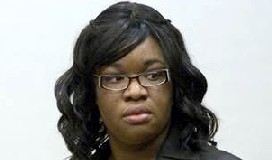 Jessica Tata
Murderer · USA · 2011
Jessica Tata was a Houston home day care owner who fled to Nigeria after a fire…
4 victims
Jessica Tata
Murderer · USA · 2011
Jessica Tata was a Houston home day care owner who fled to Nigeria after a fire…
4 victims
 Amanda Bennett
Murderer · USA · 2011
Amanda Bennett was an Indiana woman who shot her three children and set the fam…
3 victims
Amanda Bennett
Murderer · USA · 2011
Amanda Bennett was an Indiana woman who shot her three children and set the fam…
3 victims
 Kaoru Kobayashi
Murderer · Japan · 2004
Kaoru Kobayashi (小林 薫, Kobayashi Kaoru, November 30, 1968 – February 21, 2013)…
1 victim
Kaoru Kobayashi
Murderer · Japan · 2004
Kaoru Kobayashi (小林 薫, Kobayashi Kaoru, November 30, 1968 – February 21, 2013)…
1 victim
 Omar Mateen
Mass murderer · USA · 2016
Omar Mir Seddique Mateen was an American mass murderer who killed 49 people and…
49 victims
Omar Mateen
Mass murderer · USA · 2016
Omar Mir Seddique Mateen was an American mass murderer who killed 49 people and…
49 victims
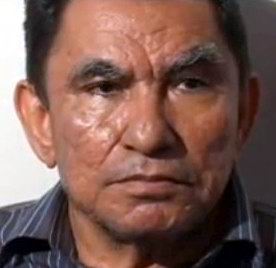 Anisio Ferreira de Sousa
Murderer · Brazil · 1989
September 4, 2003 — Anísio Ferreira de Sousa was sentenced to 77 years in priso…
19 victims
Anisio Ferreira de Sousa
Murderer · Brazil · 1989
September 4, 2003 — Anísio Ferreira de Sousa was sentenced to 77 years in priso…
19 victims
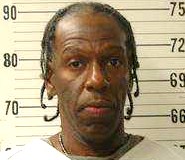 David Carl Duncan
Murderer · USA · 1981
Defendant: David Carl Duncan Victim: Ruby Evelyn Burgess, cashier at the Short…
1 victim
David Carl Duncan
Murderer · USA · 1981
Defendant: David Carl Duncan Victim: Ruby Evelyn Burgess, cashier at the Short…
1 victim
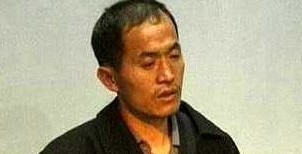 Yang Xinhai
Serial killer · China · 2000
Yang Xinhai (simplified Chinese: 杨新海; pinyin: Yáng Xīnhǎi; 17 July 1968–14 Febr…
67 victims
Yang Xinhai
Serial killer · China · 2000
Yang Xinhai (simplified Chinese: 杨新海; pinyin: Yáng Xīnhǎi; 17 July 1968–14 Febr…
67 victims
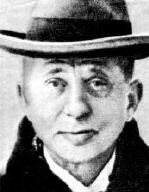 Adolf Gustav Seefeld
Serial killer · Germany · 1908
Adolf Gustav Seefeld (1871–1936) was a German tramp and religious fanatic who k…
12 victims
Adolf Gustav Seefeld
Serial killer · Germany · 1908
Adolf Gustav Seefeld (1871–1936) was a German tramp and religious fanatic who k…
12 victims
- Gender
- female
- Country
- USA
- Location
- Placer County, California, USA
- Date of birth
- 1983
- Age at first offence
- 25
- Characteristics
- jealousy, drugs, history of mental illness, torture
- Victim profile
- Alicia Ernst, 24 (her friend)
- Method of murder
- S lashing her throat with a wallpaper scraper
- Date(s) of murder
- March 8, 2008
- Years active
- 2008
- Date of arrest
- 2 days after
- Status
-
Life imprisonment
Sentenced to life without the possibility of parole on February 9, 2010
Background
Stephanie Nicole Erends was convicted of first-degree murder with special circumstances that included lying in wait and use of a deadly weapon.
Erends and Alicia Ernst had been friends since high school.
On March 7, 2008, it was Erends’s 25th birthday. Erends left home around 8:15 p.m. to celebrate with Ernst.
Erends later admitted in a confession that she planned the crime after Ernst allegedly poured “acid” down her throat while she was sleeping six to seven months before the killing. During trial testimony, Erends said she wanted police off her back and that her earlier confession about planning was a lie. She also described suicidal thoughts and seeking forgiveness in prison letters to pen pals.
The offence
On March 8, 2008, Erends drove Ernst to a remote field off Old Walerga Road.
The jury found that Erends slashed Ernst’s throat while Ernst sat buckled in the passenger’s seat. Erends got in the back seat, surprised Ernst, and then sliced Ernst’s neck and face.
Erends then tried to cut off Ernst’s fingers to keep Ernst from being identified. Erends poured ammonia on Ernst’s body and covered the body with trash after dumping it nearby. She also bought the ammonia and the blade several weeks before, intending to use them on Ernst.
At the trial, Erends admitted slashing Ernst’s throat but claimed it was a heat of passion killing resulting from a scuffle in the vehicle. She said the women had been at odds following an incident in which Ernst humiliated her in front of Ernst’s boyfriend.
Erends testified that she and Ernst went out to celebrate her birthday. After buying gas and beers, they went to Hamman’s to buy drugs. Hamman did not have any drugs, but the two hung out, then they drove to see one of Ernst’s friends from whom Ernst bought methamphetamine, and smoked methamphetamine at the friend’s house. They returned to Hamman’s and smoked methamphetamine again, and they watched an adult video. Ernst and Hamman went to the shower, where Ernst and Hamman had sex.
Ernst made remarks about Erends’s sexual habits and said she watched Ernst have sex with other men when they lived together. Erends said she felt “like crap” because it was her birthday and Ernst was supposed to be her friend, and Ernst kept insulting her even after Erends told her to stop.
Erends testified she needed to get her keys from her grandmother. Ernst suggested she go with Erends. Erends said she waited for about 20 minutes until her grandmother left for work. She asked Ernst why she treated her that way, and Erends described Ernst as trying to laugh it off. Erends said she told Ernst to “shut up” and hit Ernst in the face.
Erends testified that they started to fight, that she pulled Ernst’s sweatshirt hood over Ernst’s head, reached into a storage area of the driver’s seat, grabbed a scraper, and pressed it onto Ernst. Erends said Ernst’s feet were over the dash as they struggled. Erends said Ernst tried to get her off and the two fell out of the passenger-side door. Erends said Ernst stopped struggling at some point.
Erends testified that she slid the scraper across Ernst’s fingers, got ammonia from the back seat, and poured the ammonia over Ernst’s body. Erends said she put her gloves and the scraper into a plastic bag, put garbage on top of Ernst’s body, and tried to leave but got stuck. She testified she then panicked and drove her car into a bush and later convinced Paul White to drive her home.
A Placer County forensic pathologist determined Ernst died in the early morning hours of March 8, 2008. Ernst sustained various sharp-force injuries to the head and face, but the cause of death was multiple sharp-force wounds to the neck. The neck wounds were from the left to the right and were consistent with having come from a single-edged razor type of tool. There were also postmortem wounds on Ernst’s fingers consistent with someone trying to shave off her fingerprints. Ernst sustained limited defensive wounds. The pathologist could not conclusively determine the direction of the attack unless he was present during the assault. The other wounds were consistent with an attack from the rear.
Investigation
Ernst’s body was discovered by a Placer County road maintenance worker off Old Walerga Road near Baseline Road on March 10, 2008. The body was covered with trash, and an empty ammonia bottle was at the scene.
There was no insect activity on Ernst’s body, consistent with ammonia being poured over the body. The ammonia bottle tested positive for blood.
At the scene, there was a white plastic trash bag containing fresh blood, gloves saturated with blood, a knife-like device with a four-inch blade, and a triangle-shaped area where the handle was broken off.
Around 5:00 a.m. on March 8, 2008, Erends knocked on the door of Michelle and Paul White’s house. Erends, who had blood all over her hands, told the Whites that three men attacked her when her car broke down. Erends said she did not want law enforcement called, but asked to call her grandmother. Paul White later drove Erends to her grandmother’s house.
Michael Smith responded to a tow service call on Old Walerga Road on March 8, 2008, at around 7:30 a.m. Smith said Erends was there with her grandmother; Smith said the car was tangled in barbed wire and under an oak tree. Erends said she and her girlfriend were run off the road by another vehicle. Smith said this did not make sense given the placement of Erends’s car.
Smith noticed blood on the driver’s side door and between the seat and center console.
Erends was contacted by Placer County Sheriff’s Detective Christina Woo at around 9:10 p.m. on March 10, 2008. Woo testified Erends told her that Erends went to a bar with Ernst on March 7, Erends’s birthday. Woo testified that Ernst did not want to leave the bar, so Erends left Ernst and went to other bars by herself. Woo testified Erends went home for awhile before going to a friend’s house, where Erends left around 3:00 a.m., and was run off the road around 4:00 a.m.
Woo testified Erends took Woo and Detective Don Murchison to the bars Erends allegedly visited and to where the car got stuck. Erends claimed another car ran her off the road, and a man came up and grabbed her by the neck. Erends told Woo the man later “slipped away” when another car drove past. Woo testified that when detectives were told Ernst’s body was found in the same area, Erends suggested it was a coincidence. Erends then denied killing Ernst and demanded to be taken home.
Detectives took Erends home and arrested her after seeing Erends’s car.
Detectives Murchison and Woo interrogated Erends at the Placer County Jail at 9:57 p.m. on March 11. After being read Miranda rights, Erends said she wanted “to confess to killing Alicia Ernst,” and admitted slitting Ernst’s throat with a “single razor.”
Erends told the detectives she picked up Ernst, that they did methamphetamine at Hamman’s house, and that they left at around 3:30 a.m. Instead of going home, Erends drove Ernst to the frontage road.
While Ernst was sitting in the front passenger seat, Erends got in the back seat and said she was going to change her pants. Erends told detectives she took a knife she had already placed in the back seat and used it to slit Ernst’s throat. Erends told detectives she pulled Ernst out of the car and cut off her fingerprints as much as she could.
Erends then told detectives she poured ammonia over Ernst’s body and covered Ernst with garbage. Erends said she started to leave but panicked and drove her car into a bush. Erends told detectives she later convinced Paul White to drive her home.
Erends admitted buying the ammonia and the blade several weeks before, intending to use them on Ernst. Erends told detectives she wanted to kill Ernst for allegedly pouring “acid” down her throat while she was sleeping six to seven months before the killing.
Erends admitted her earlier story was false. Erends later helped the detectives find the ammonia bottle and the weapon.
Detective Murchison testified that he thought Erends held back some information in her confession. Detective Murchison testified that Erends’s boyfriend told him he and Erends had been to the area before, but Murchison also testified that the boyfriend could not confirm whether Ernst poured acid down Erends’s throat.
Murchison believed most of the confession was corroborated by extrinsic evidence, including bloodstains in Erends’s car. A search of Erends’s car found red stains on both the driver- and passenger-side doors, along with gouges and scratches on the roof and hood. There was blood on the steering wheel and the interior of the car, including extensive saturated bloodstains in the lower left quadrant of the passenger’s seat, and two shoe prints on the interior windshield.
Alexander Kapustin was arrested on an outstanding warrant when he tried to visit Erends in jail. Kapustin had a newspaper clipping on Erends’s case, along with a note that he intended to pass to Erends. The note read, “Tell me you don’t [sic] do that because you still think I was mess—mess around with her.”
Kapustin testified that he fought with Erends about whether he slept with Ernst, which he denied.
Hamman testified that Erends and Ernst knocked on his door on the night of March 7, 2008. Hamman testified that he was dating Ernst at the time and that Hamman once dated Erends. Hamman testified that Erends and Ernst asked Hamman if he had any drugs. Hamman said “No,” and Erends and Ernst left after 30 minutes. Hamman testified Erends and Ernst returned at around 1:30 a.m. or 2:00 a.m. with methamphetamine and that Ernst and Erends smoked methamphetamine in Hamman’s garage. Hamman testified that Ernst and Erends teased and flirted, and that at one point Erends got on Ernst’s lap. Hamman testified they later watched an adult movie, and that Ernst and Hamman went to the shower where they had sex.
Hamman testified Ernst told Erends she watched her have sex with other men when they lived together. Hamman testified Erends’s demeanor did not change after Ernst said this. Hamman testified Ernst and Erends left at 4:00 a.m.
Erends testified she had been friends with Ernst since they were 13.
Ellen Kuykendall testified as a close friend of Erends’s grandmother. Kuykendall testified that Erends cleaned her house at times and would bring ammonia and gloves.
A coworker of Erends testified that their workplace purchased a new door and employees removed the old lettering. The coworker testified there were tools on-site for the task and said she did not recall a shaver being used.
Forensic psychologist Dr. Ari Kalechstein testified that Erends suffered from methamphetamine addiction and a major depressive disorder at the time of the incident, and that Erends was suffering from posttraumatic stress disorder (PTSD). Kalechstein testified that giving a different version of a traumatic event a few days after the event was consistent with PTSD, and that the person’s ability to recall or be aware of their surroundings and what transpired is affected.
On rebuttal, Detective Murchison testified that Erends’s failure to admit certain facts did not cause him to question her confession. Murchison testified holding back or not admitting information can happen during questioning. Murchison testified he was trained to look at the totality of the evidence when evaluating the veracity of a confession. Murchison testified there were no injuries on Erends’s face consistent with Erends’s testimony that Ernst grabbed her face with both hands. Murchison testified Erends’s testimony regarding a struggle outside the car was inconsistent with the staining found inside Erends’s car. Murchison testified Erends’s testimony had not changed his belief that her confession was accurate.
Arrest
Erends demanded to be taken home during her encounter with detectives on March 10, 2008.
Erends was interrogated at the Placer County Jail at 9:57 p.m. on March 11, after being read her Miranda rights.
Trial
A jury convicted Erends of first-degree murder with a lying-in-wait special circumstance and a deadly weapon enhancement. The jury also found that the special allegation of lying in wait was true.
During the December trial proceedings, prosecutors described that Erends drove Ernst to a remote road off Old Walerga Road just outside Roseville on March 8, 2008 and attacked Ernst with a wallpaper scraper. Prosecutors said Erends initially denied involvement but later told police in a confession that she planned the crime after Ernst allegedly poured “acid” down her throat several months earlier.
Prosecutors said Erends had long been jealous of her friend, and that her jealousy was strengthened after Erends believed Ernst had slept with her boyfriend.
During her testimony, Erends described the killing as “just snapped” during a fight, rather than as planned. Erends told the jury that she “just snapped” during a fight and never plotted the murder. She said she originally confessed to get police off her back.
Erends’s mother Karen and her grandmother Janet Cross addressed the court at sentencing and claimed Erends did not plan the murder.
Quotations from the sentencing hearing included the following statements by Alicia Martens, who was the mother of 24-year-old victim Alicia Ernst:
- “I wish you would have just cut your own throat and left Alicia alone,” she said.
- “As far as I’m concerned you’re like cancer Stephanie, like AIDS, you just spread ugliness wherever you go. You must die Stephanie. And I don’t care how, just die.”
After Martens’s statement, Erends’s grandmother Janet Cross addressed the court in an aggressive tone. Cross said:
- “It could’ve been the other way around as far as I’m concerned.”
- “The drugs did this. If they hadn’t been doing drugs, this would’ve never happened.”
Cross then expressed frustration that the jury was not able to hear how her granddaughter made the Dean’s List prior to the murder.
Erends’s mother Karen spoke briefly and stated:
- “This just goes to show how things can happen.”
- “I feel sad for the other family, but we both lost our daughters. One’s dead and one’s still dying inside.”
Another confrontational moment during the hearing occurred when Erends told prosecutor Garen Horst to “shut up” while he was detailing the crime prior to sentencing. Judge Colleen Nichols scolded Erends, and Erends stayed silent thereafter.
During testimony, Erends said:
- “I didn’t know why she was treating me that way.”
- “It was just the fact she was supposed to be my friend. Heck, it was my birthday.”
Erends also said:
- “I didn’t know what I was thinking. I knew I wanted to hurt her.”
- “Then what?” and she answered that she was pressing it down on Ernst.
- “I was pressing it down on her. She was trying to get me off. She was yelling at me,” Erends said.
- “Yes. Afterward,” she said she was panicked and shocked.
- “I was panicked. Kind of shocked. I remember realizing someone was going to get severely hurt during all that.”
- “She just tried to laugh it off and said it was funny.”
- “Then what?” was asked, and Erends answered about pressing the scraper down.
Prosecutor Garen Horst asked Erends:
- “You’re coming up with this version of events for a lesser sentence, aren’t you?” Erends replied “no,” and Horst produced letters to pen pals showing she decided to “put up a little bit of a fight,” as she wrote.
During trial testimony, Erends said:
- “I felt like the evidence corroborated her initial confession,” as quoted from jury foreman Edward Millett.
- “Most people, when they confess, they do tell the truth,” said juror Ellen Lersch.
- “Her testimony was such that she mumbled – she was hard to understand,” said Edward Millett.
Trial proceedings included a discussion of provocation instructions and opinion testimony on the veracity of Erends’s confession, culminating in an appeal.
Sentencing
On February 9, 2010, Erends was sentenced to life without the possibility of parole.
At sentencing, a statement was delivered by the mother of 24-year-old victim Alicia Ernst, Alicia Martens. After Martens’s statement, Erends’s grandmother Janet Cross addressed the court, then Erends’s mother Karen spoke briefly. Another confrontational moment occurred when Erends told prosecutor Garen Horst to “shut up.” Judge Colleen Nichols scolded Erends, and Erends stayed silent thereafter.
Erends would be transported to a state correctional facility to begin her life sentence.
Appeals
The California Court of Appeals, Third District, Placer heard PEOPLE v. ERENDS, with case number C064714. The appeal was filed June 16, 2011.
The court described that following a jury trial, Erends was convicted of first degree murder (Pen. Code, § 187) with a lying-in-wait special circumstance (id., § 190.2, subd. (a)(15)) and a deadly weapon enhancement (id., § 12022, subd. (b)(1)).
The trial court initially sentenced Erends to a state prison term of 25 years to life plus one year, later correcting the sentence to life without the possibility of parole plus one year.
On appeal, Erends contended there was instructional error on provocation and improper opinion testimony from the investigating officer on the veracity of her confession. The court held:
- “We shall affirm the judgment.”
Outcome
The appellate court affirmed the judgment.
Other details
A jury foreman and jurors commented after the verdict, including:
- “Justice,” said Alicia Martens outside the courtroom.
- “It doesn’t bring my precious baby back, but it’s justice.”
- “I felt the evidence corroborated her initial confession,” said jury foreman Edward Millett.
- “Her testimony was such that she mumbled – she was hard to understand,” Millett said.
After the verdict, Brandon Ernst, Alicia’s brother, said:
- “She should have pleaded guilty.”
- “It’s the next part of grieving my sister’s loss,” he said of the guilty verdict.
Jonathan Richter, Erends’s defense attorney, declined to comment outside the courtroom.
Prosecutor Garen Horst said:
- “I’m appreciative the jury arrived at an appropriate decision.”
Prosecutors were not seeking the death penalty, and Erends faced life in prison without parole.
The court described provocation instruction issues relating to CALCRIM No. 570, including the standard instruction that:
- “A killing that would otherwise be murder is reduced to voluntary manslaughter if the defendant killed someone because of a sudden quarrel or in the heat of passion.”
- “It is not enough that the defendant was simply provoked. The defendant is not allowed to set up her own standard of conduct. In deciding whether the provocation was sufficient, consider whether a person of average disposition in the same situation and knowing the same facts, would have reacted from passion rather than from judgment.”
Defense counsel argued about modifying CALCRIM No. 570 based on People v. Najera (2006) 138 Cal.App.4th 212. The opinion discussed the requested clarification.
During the provocation instruction discussion, defense counsel said:
- “I would just add that line that they put in the use notes, that an average person need not be provoked to kill, but merely to act [rashly] and without deliberation.”
The prosecutor sought clarification and said:
- “sufficient provocation for [defendant] to then grab the razor and kill her[.]”
Defense counsel replied:
- “No. It’s sufficient provocation for her to act rationally from passion. That’s why I want the language, because even you are misreading what it says.”
In the appeal discussion of Detective Murchison’s opinion testimony, the appellate court described the prosecutor asking whether Erends’s testimony changed Murchison’s opinion that her confession statement was accurate. Murchison answered:
- “No, it has not changed.”
The appellate court concluded the error was harmless and affirmed, stating in its disposition:
- “The judgment is affirmed.”
We concur: HULL, Acting P. J. HOCH, J.


Spotted an error, or have more information about this case?