
Martha Freeman
Murderer Miranda Barbour
Murderer · USA · 2013
Miranda Barbour, 19, defendant. · Elytte Barbour, 22, defendant and husband of…
100 victims
Miranda Barbour
Murderer · USA · 2013
Miranda Barbour, 19, defendant. · Elytte Barbour, 22, defendant and husband of…
100 victims
 Megan Huntsman
Murderer · USA · 1996
Megan Huntsman was 40 at sentencing. She was a mother of three children who wer…
6 victims
Megan Huntsman
Murderer · USA · 1996
Megan Huntsman was 40 at sentencing. She was a mother of three children who wer…
6 victims
 Michele Kalina
Murderer · USA · 1996
Michele Kalina pleaded guilty to murder for one of five infants she initially w…
5 victims
Michele Kalina
Murderer · USA · 1996
Michele Kalina pleaded guilty to murder for one of five infants she initially w…
5 victims
 Tiffany Hall
Murderer · USA · 2006
Tiffany Hall was 24 when she was charged in September 2006. She later entered a…
5 victims
Tiffany Hall
Murderer · USA · 2006
Tiffany Hall was 24 when she was charged in September 2006. She later entered a…
5 victims
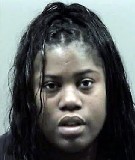 Banita Jacks
Murderer · USA · 2007
Banita Jacks was a Washington, DC resident convicted of murdering her four daug…
4 victims
Banita Jacks
Murderer · USA · 2007
Banita Jacks was a Washington, DC resident convicted of murdering her four daug…
4 victims
 Holly Grigsby
Murderer · USA · 2011
Holly Grigsby was sentenced to life in prison without parole on July 15, 2014.…
4 victims
Holly Grigsby
Murderer · USA · 2011
Holly Grigsby was sentenced to life in prison without parole on July 15, 2014.…
4 victims
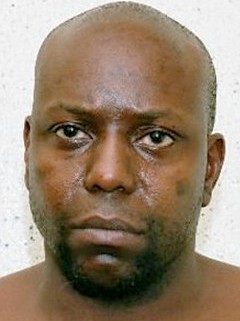 Peter Bryan
Homicide · United Kingdom · 1993
Peter Bryan was a schizophrenic cannibal who was sentenced to closed psychiatri…
3 victims
Peter Bryan
Homicide · United Kingdom · 1993
Peter Bryan was a schizophrenic cannibal who was sentenced to closed psychiatri…
3 victims
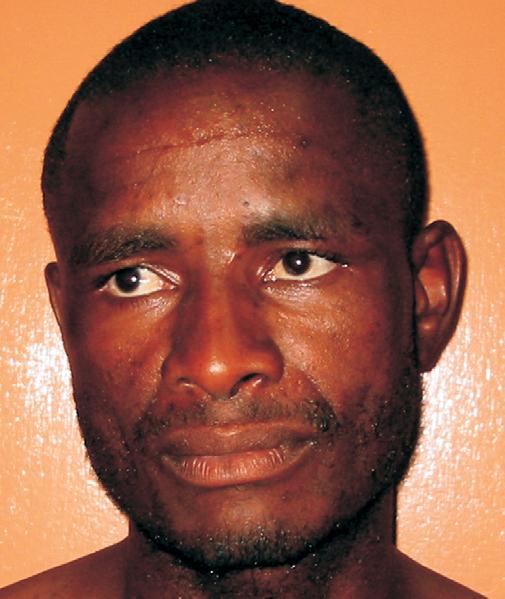 Elias Chauke
Spree killer · South Africa · 2002
Elias Chauke was accused of a spate of killings and rapes that occurred over tw…
5 victims
Elias Chauke
Spree killer · South Africa · 2002
Elias Chauke was accused of a spate of killings and rapes that occurred over tw…
5 victims
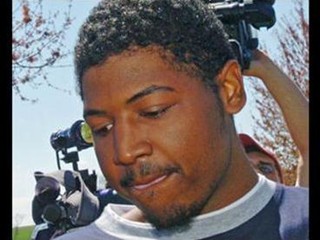 Jesse Wise
Mass murderer · USA · 2006
Jesse Dee Wise, also known as “Jay,” lived with his grandparents at the home wh…
6 victims
Jesse Wise
Mass murderer · USA · 2006
Jesse Dee Wise, also known as “Jay,” lived with his grandparents at the home wh…
6 victims
 Dean Kilgore
Murderer · USA · 1978
Dean Kilgore (DOB: 10/16/50) was the appellant in Dean Kilgore, Appellant, vs.…
2 victims
Dean Kilgore
Murderer · USA · 1978
Dean Kilgore (DOB: 10/16/50) was the appellant in Dean Kilgore, Appellant, vs.…
2 victims
 George Sodini
Murderer · USA · 2009
George Sodini committed suicide by shooting himself the same day. · August 4, 2…
3 victims
George Sodini
Murderer · USA · 2009
George Sodini committed suicide by shooting himself the same day. · August 4, 2…
3 victims
- Gender
- female
- Country
- USA
- Location
- Brentwood, Davidson County, Tennessee, USA
- Date of birth
- December 6, 1964
- Age at first offence
- 41
- Characteristics
- love triangle, history of mental illness
- Victim profile
- Jeffrey Freeman, 44 (her husband)
- Method of murder
- Strangulation
- Date(s) of murder
- April 10, 2005
- Years active
- 2005
- Date of arrest
- August 22, 2005
- Status
-
Life imprisonment
Sentenced to life in prison on September 28, 2006
Case details
Martha Freeman was convicted, together with Rafael DeJesus Rocha-Perez, of first-degree murder for killing Jeffrey Freeman, her husband.
Status and sentencing
Davidson County Criminal Court Judge Randall Wyatt sentenced Martha Freeman and Rafael DeJesus Rocha-Perez to life in prison. The sentence was automatic because they were convicted of first-degree murder. They both had to serve 51 years in prison before becoming eligible for parole.
The offence
The jury found that Martha Freeman and Rafael DeJesus Rocha-Perez beat, bound, and strangled Jeffrey Freeman. The evidence included that his body was discovered in the bathroom of the couple’s home on April 11, 2005. Jeffrey Freeman’s wet body was found partially stuffed in a sleeping bag with a black trash bag wrapped around his face. A medical examiner testified that the 44-year-old man was beaten in the head and face, bound and strangled. Police found the body lying face-down in the master bathroom, with his head wrapped in a black plastic garbage bag and the rest of his body in a sleeping bag. A detective testified that Jeffrey Freeman also appeared to have been choked with a belt and telephone cord. Prosecutors conceded that they could not pin down the exact time Jeffrey Freeman died or the specific role either defendant played in his death, but they insisted the evidence proved guilt beyond a reasonable doubt.
Prosecutors described that Jeffrey Freeman never struggled because he was subdued by the threat of a shotgun blast, and that it was Rocha-Perez who beat the husband and had the strength to strangle a 231-pound man. The prosecutor said it would have taken both Rocha-Perez and Martha Freeman to move the body. Prosecutors said the home was in an upscale south Nashville neighborhood and that the relationship between Martha Freeman and Rocha-Perez, an undocumented Mexican immigrant, coupled with their behavior after the murder, proved their guilt beyond a reasonable doubt.
Investigation
Police responded to a 911 call arranged by Martha Freeman through a neighbor. Officers found Jeffrey Freeman’s body in the upstairs bathroom/south Nashville home on April 11, 2005. Prosecutors said that during the night after the husband was killed, Martha Freeman picked up an antidepressant prescription at a Walgreen’s drug store and called her in-laws to tell them their son was too sick to talk. While Jeffrey Freeman’s body lay in the bathroom with a garbage bag wrapped around his bruised and bloodied head for nearly a day, prosecutors said the defendants cleaned up the crime scene and eliminated any blood or fingerprint evidence that would link them to his body. A detective testified that two garbage bags filled with wet bath mats and a bloody pillowcase were left behind, and that none of which was tested for trace evidence. Police also found a foam mattress, a Spanish-English translator, and clothing with Rocha-Perez’s DNA in a closet in a spare bedroom of the home. Prosecutors said they found a bag containing nude pictures of Rocha-Perez, lingerie, and a book of sexual positions, and that a towel containing both defendants’ DNA was left behind.
Detectives also found the closet that Martha Freeman claimed Rocha-Perez lived in for about a month before Jeffrey Freeman’s death. The 2-by-8-foot storage space contained a foam pad, pillows, blankets, three loaves of bread, a Nintendo GameBoy, a radio, and several adult magazines. Investigators also found an “overnight bag,” which contained lingerie and pictures of Martha Freeman in various stages of undress. Prosecutors said they believed Rocha-Perez did live in the woman’s 2-foot-by-8-foot closet off the bedroom she slept in separately from her husband, despite earlier observations made by a detective. An investigator told The Tennessean that he believed much of the crime scene had been staged, including the supposed scenario of the closet lover.
Background and relationship
Martha Freeman was 41 at the time of the verdict. She had been taking narcotics and pills to treat mental illness, and her defense described her as having bipolar disorder and mental illness. During the trial, prosecutors said she and Rocha-Perez plotted the murder while living in Jeffrey Freeman’s house.
Martha Freeman met Rafael Rocha-Perez at a July 4 celebration in 2004. She testified that her husband went home and left her to stay in a hotel room they had rented, and that she took Rocha-Perez and two of his friends back to the hotel where they “partied” and she had sex with all three men. Martha Freeman testified they conducted an on-and-off relationship with the aid of an English-Spanish translator. She testified that Rocha-Perez moved into a closet in the Freeman home in March 2005. In earlier proceedings, Martha Freeman referred to Rocha-Perez as “Christian.” She testified that she had manic-depressive disorder and medications that often left her unable to work or function.
During the preliminary hearing, Martha Freeman testified that her life in an upscale neighborhood resembled “Wisteria Lane,” the fictional street on ABC’s Desperate Housewives.
Trial
Charges and verdict
Martha Freeman and Rafael DeJesus Rocha-Perez were convicted by a Nashville jury of first-degree murder. The jury found that they beat, bound, and strangled Jeffrey Freeman. They were found guilty Thursday.
Jury and court
A panel of eight women and four men deliberated fewer than two hours before convicting them. Martha Freeman held her hands in her face after the verdict was read, while Rocha-Perez showed no emotion.
Prosecutors’ arguments
Davidson County prosecutors said the speed of the verdict reaffirmed the strength of their case, and defense attorneys criticized the case for a lack of direct evidence. Prosecutors said the evidence of a relationship and behavior after the murder proved guilt beyond a reasonable doubt.
Deputy assistant attorney general Tom Thurman said:
“This verdict is a rejection of the defense attacks on the police and on an innocent man who died in an awfully brutal manner,”
Davidson County prosecutor J. W. Hupp told the panel:
“It’s very easy to think of the steps up to committing a crime, but it’s very difficult to think about what to do after committing the offense,”
Senior Assistant District Attorney General Katy Miller said in closing arguments that Jeffrey Freeman never struggled because he was subdued by the threat of a shotgun blast, and she said:
“It was Rocha-Perez who beat the husband and had the strength to strangle a 231-pound man, she told the jury. But it would have taken both him and the wife to move the body.”
Prosecutors said Jeffrey Freeman was pulled out of a bathtub full of water and that Martha Freeman called her mother-in-law that evening and called her husband’s workplace the next day to report him sick.
Defense arguments
Martha Freeman’s attorney maintained that it was her former lover who killed her husband. Defense attorneys said she was guilty only of adultery and waiting to call police. Her defense said she did not encourage or participate in the violent death and that her decision to keep the body in the upstairs bathroom for almost a day before notifying police showed a lack of involvement. Glenn Funk said:
“Two men fought over one woman, and one man died,” and also: “We will not hear any evidence. We will not hear from any witnesses who will testify that Martha Freeman ever intended for her affair with Mr. Rocha-Perez to lead to her husband’s death.”
Funk conceded that his client kept her husband’s dead body in the upstairs bathroom for almost a day before notifying police, but insisted her decision showed a lack of involvement. He said:
“She did not hide the body, she did not flee, she did not help Rocha-Pere z flee,” and: “She does in fact delay making her own decision, but she never does anything to assist Mr. Rocha-Perez.”
Rich McGee labeled prosecutors’ theory about sex on the towel as “nasty” and “inflammatory.” McGee said:
“Every one of you is the judge of the facts in this case,” and: “When you start talking theories and not facts, you’re asking someone to make a decision based on guesses.”
McGee also said:
“If Martha Freeman was on trial for immoral conduct, this would be a pretty open-and-shut case, but an affair doesn’t lead to a murder conviction,”
Peter Strianse represented Rocha-Perez and expressed surprise with the verdict, saying:
“As far as who killed Jeffrey Freeman, I don’t think that was ever answered,” and: “I think they could have done much more to establish where people were in the relevant time period.”
Strianse also said:
“I hope not,” and: “I mean they said all the right things on Monday and Tuesday when we were selecting the jury, that they could set that aside. I thought it was important to the jury to know of his status so there was some explanation on why he fled.”
During opening statements, defense lawyer Peter Strianse suggested Martha Freeman might have set up his client for the murder. Strianse said:
“Maybe she needed a chump,” and: “Who better to blame it on than somebody who is here illegally, somebody who is truly a stranger in a strange land, someone, who, by virtue of his immigration status, once arrested, is not going to get out of jail?”
Defense counsel for Rocha-Perez characterized him as an easy and “disposable” target for the investigation because of his immigration status.
Appeals
The record did not provide appeal outcome details.
Timeline
- April 10, 2005 — Jeffrey Freeman was killed; Martha Freeman and Rafael DeJesus Rocha-Perez were later convicted of first-degree murder.
- April 11, 2005 — Jeffrey Freeman’s body was discovered in the bathroom of the couple’s home; the jury later described this as part of the evidence at trial.
- August 2005 — A grand jury indicted Martha Freeman on one count of first-degree murder.
- September 28, 2006 — Davidson County Criminal Court sentenced Martha Freeman and Rafael DeJesus Rocha-Perez to life in prison.
- September 29, 2006 — Coverage described the verdict and mandatory life sentences and parole eligibility after serving 51 years.
Other details
- Martha Freeman was arrested and charged with first-degree murder on August 24, 2005, after being indicted by a Davidson County grand jury.
- Martha Freeman surrendered to police Monday afternoon after being indicted and was released later that day on $75,000 bail.
- Rafael DeJesus Rocha-Perez was arrested on April 10, the day of the killing, after a neighbor called to report a suspicious man running into a nearby house under construction, and he was held in custody in lieu of $500,000 bail.
- Rocha-Perez did not speak English.
- Rocha-Perez was an illegal immigrant from Mexico and remained jailed with an immigration hold because he was in the U.S. illegally.
- After the verdict, one of Rocha-Perez’s attorneys said lawyers would ask for a new trial.
- Frank Slaughter Jr. represented Jeffrey Freeman’s elderly parents in a wrongful-death suit against Martha Freeman and Rocha-Perez and other litigation against the widow.
- Slaughter said:
- Tom Thurman described the verdict as rejecting attacks on police and an innocent man who died “in an awfully brutal manner.”
- The home address given in trial coverage was 5424 Incline Drive.
- Judge Casey Moreland told lawyers at the preliminary hearing:
- When Martha Freeman’s testimony was stopped during cross-examination, Moreland said:
- At the preliminary hearing, Martha Freeman invoked her Fifth Amendment right against self-incrimination.
- Metro General Sessions Judge Casey Moreland had the preliminary hearing briefly recessed due to concerns that Martha Freeman might be incriminating herself.
- At the preliminary hearing, Prosecutor Katy Miller answered a question about whether Martha Freeman would be charged:
- Martha Freeman testified that her husband of 10 years discovered Rocha-Perez in the closet after hearing snoring, and that after he returned the man “grabbed him by the shirt collar and forced him into the bathroom at gunpoint,” while Martha Freeman waited outside.
- Martha Freeman testified:
- Martha Freeman testified:
- Martha Freeman testified that her husband began to pray and that this upset Rocha-Perez; she said:
“When my husband started to pray, it upset him - Christian - and when Christian got upset is when he pulled (Jeffrey) into the bathroom and shut the door,”
“I heard water running, I heard a lot of thumping, a lot of noise,” and: “I was absolutely terrified about what was going on,” and:
“I was absolutely terrified of what was going on,” and: “Also, if he could have done this to my husband, I wasn’t sure what he would do to me.”
“She’s not charged right now.”
“It’s so bizarre,” and: “It’s hard to believe a lot of this. ... I have problems with allowing this to go any further without her getting some representation. “ and: “I can see her being charged in this case. She probably should be charged in this case. I hope the state does not believe everything she’s testifying to, because I sure don’t.”
“I’ve got a problem with allowing this to go any further without allowing her some representation because I can see her being charged in this case,” and: “This is so bizarre, it is hard to believe.”
“Now Jeffrey can rest,” and later said: “This is a new day for the Freeman family,” and: “The jury’s verdict today is a validation of Jeffrey Freeman’s life.”
- Martha Freeman testified she did not have an answer for why she did not call police immediately and attributed the delay to the medication she was taking for bipolar disorder.
- Martha Freeman testified she went to Walgreens to pick up a prescription for antidepressants during the 16 hours before the 911 call, walked her dog twice, and called her in-laws to tell them their son would not be able to talk because he was not feeling well.
- Martha Freeman said she went to a neighbor’s home around 4 p.m. the next day and told the neighbor what had happened, leading to the neighbor calling police.
- Police described finding the body about 3:30 p.m. April 11 inside a sleeping bag, with massive head injuries.
- A detective testified that Jeffrey Freeman’s body showed possible ligature marks around his neck and injuries consistent with being beaten and strangled.

Spotted an error, or have more information about this case?