John Brogdon
Murderer Ervil LeBaron
Murderer · USA · 1972
Ervil Morrell LeBaron (1925 to August 16, 1981) was the leader of a polygamous…
35 victims
Ervil LeBaron
Murderer · USA · 1972
Ervil Morrell LeBaron (1925 to August 16, 1981) was the leader of a polygamous…
35 victims
 Brian Kevin Rosenfeld
Murderer · USA · 1985
Brian Kevin Rosenfeld Brian Kevin Rosenfeld was sentenced to three concurrent l…
23 victims
Brian Kevin Rosenfeld
Murderer · USA · 1985
Brian Kevin Rosenfeld Brian Kevin Rosenfeld was sentenced to three concurrent l…
23 victims
 Marvin Gray
Murderer · USA · 1975
Marvin Gray was convicted killer who claimed responsibility for 23 slayings and…
23 victims
Marvin Gray
Murderer · USA · 1975
Marvin Gray was convicted killer who claimed responsibility for 23 slayings and…
23 victims
 Yahweh ben Yahweh
Murderer · USA · 1980
Yahweh ben Yahweh was born and legally named Hulon Mitchell Jr. (October 27, 19…
23 victims
Yahweh ben Yahweh
Murderer · USA · 1980
Yahweh ben Yahweh was born and legally named Hulon Mitchell Jr. (October 27, 19…
23 victims
 Russell Ellwood
Murderer · USA · 1991
Russell Ellwood was a former taxi driver. Authorities suspected him of killing…
20 victims
Russell Ellwood
Murderer · USA · 1991
Russell Ellwood was a former taxi driver. Authorities suspected him of killing…
20 victims
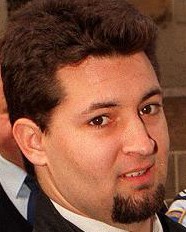 Mark Valera
Murderer · Australia · 1998
Mark Valera (previously known as Mark van Krevel) was born 24 April 1979. He wa…
2 victims
Mark Valera
Murderer · Australia · 1998
Mark Valera (previously known as Mark van Krevel) was born 24 April 1979. He wa…
2 victims
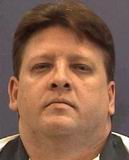 Melbert Ray Ford
Murderer · USA · 1986
Melbert Ray Ford, Jr. was convicted in Newton County, Georgia, of murdering his…
2 victims
Melbert Ray Ford
Murderer · USA · 1986
Melbert Ray Ford, Jr. was convicted in Newton County, Georgia, of murdering his…
2 victims
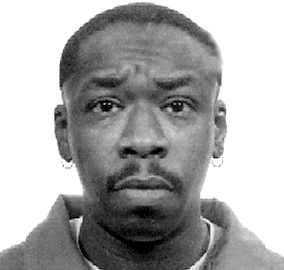 Greagree Davis
Murderer · USA · 1984
Greagree C. Davis told the roommate of his sexual interest in her. He had prior…
1 victim
Greagree Davis
Murderer · USA · 1984
Greagree C. Davis told the roommate of his sexual interest in her. He had prior…
1 victim
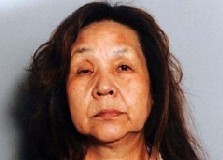 Miyoko Sumida
Serial killer · Japan · 2003
Miyoko Sumida was a Japanese serial killer who killed six people in a case invo…
6 victims
Miyoko Sumida
Serial killer · Japan · 2003
Miyoko Sumida was a Japanese serial killer who killed six people in a case invo…
6 victims
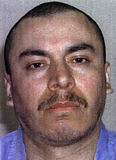 Arturo Juarez Suarez
Mass murderer · USA · 1998
Arturo Juarez Suarez was a ranch worker in Auburn, California. In July 1998, he…
4 victims
Arturo Juarez Suarez
Mass murderer · USA · 1998
Arturo Juarez Suarez was a ranch worker in Auburn, California. In July 1998, he…
4 victims
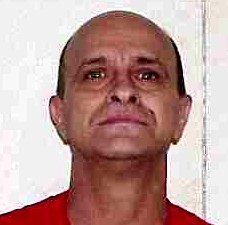 David Smith
Spree killer · USA · 1980
David Smith was sentenced to death in 1983. Smith was angered because his girlf…
4 victims
David Smith
Spree killer · USA · 1980
David Smith was sentenced to death in 1983. Smith was angered because his girlf…
4 victims
- Gender
- male
- Country
- USA
- Location
- St. Charles Parish, Louisiana, USA
- Date of birth
- 1962
- Age at first offence
- 19
- Characteristics
- rape, torture, alcoholic, child abuse
- Victim profile
- Barbara Jo Brown (female, 11)
- Method of murder
- Beating with a brick
- Date(s) of murder
- October 7, 1981
- Years active
- 1981
- Date of arrest
- Same day
- Status
-
Executed
Executed by electrocution in Louisiana on July 30, 1987
Background
John E. Brogdon was described as an alcoholic since he was 14 years old. His father, Ed Brogdon, admitted that he drank liquor and smoked marijuana with his teen-age son and said he beat his son so severely that he once broke some of the boy’s ribs. Brogdon maintained that he was the victim of child abuse and that he was mentally retarded and mildly retarded.
The offence
On the evening of October 7, 1981, Rubeta Brown and her eleven-year old sister, Barbara Jo, walked to a convenience store near their home in Luling, Louisiana, to use the telephone. Nineteen-year old Brogdon and his seventeen-year old friend, Bruce Perritt, arrived at the store while Rubeta was on the phone. Perritt approached Barbara Jo and put his arm around her. Rubeta called her sister away, and the two left. On the way home, Barbara Jo asked her sister if she could visit a neighbor's home for a few minutes. Rubeta allowed her sister to leave her to do so. Rubeta went to the neighbor's house about ten minutes later to pick up Barbara Jo. Barbara Jo, however, was not there.
After a short search in the neighborhood, Rubeta informed her mother that Barbara Jo was missing. The Browns then called the sheriff's office. Soon thereafter, a friend of Barbara Jo’s came forward to say that he had seen Barbara Jo earlier that evening in a car seated between Brogdon and Perritt. Two men discovered Barbara Jo's body later that evening behind a levee in Luling. Perritt's car was found parked a short distance away. Two other men later informed authorities that they had seen Brogdon and Perritt walking on the road near this levee.
Brogdon was without a shirt and “appeared disheveled.” Brogdon and Perritt were arrested that evening at Brogdon's home on suspicion of Barbara Jo's murder.
After being informed of his Miranda rights at the sheriff's office, Brogdon waived his right to counsel and confessed to the murder and aggravated rape of Barbara Jo. In his statement, Brogdon told how he and Perritt tortured and killed her. The confession admitted that after they picked her up at the convenience store, Brogdon and Perritt drove her to the levee where her body was later found. Brogdon and Perritt repeatedly raped her and forced her to perform oral sex on them. All during the while, the two beat Barbara Jo with their fists. They also broke bottles on the cement and then stabbed her repeatedly with the edges. Perritt also struck Barbara Jo in the head with a brick that he found nearby. Brogdon then beat her with the brick. The two also used pointed sticks to pierce her body. Brogdon and Perritt left the scene of the crime and Perritt's vehicle when they thought a motor vehicle was approaching.
Brogdon and Perritt were convicted for the rape and torture murder of 11-year-old Barbara Jo Brown behind a levee near Luling on October 7, 1981. Brogdon was convicted by a St. Charles Parish jury of murder and aggravated rape, and the trial court sentenced him to death for his part in the murder.
Investigation
After the murder, Rubeta Brown’s family called the sheriff’s office. A friend later came forward saying he had seen Barbara Jo earlier that evening in a car seated between Brogdon and Perritt. Authorities later discovered Barbara Jo’s body behind a levee in Luling, and Perritt’s car was found parked a short distance away.
Two men later informed authorities that they had seen Brogdon and Perritt walking on the road near this levee. Brogdon was without a shirt and “appeared disheveled.”
Arrest
Brogdon and Perritt were arrested that evening at Brogdon's home on suspicion of Barbara Jo's murder.
Trial
Conviction
Brogdon was convicted of first degree murder on February 4, 1982. On that same day, the jury recommended that Brogdon receive the death sentence. The trial court then sentenced Brogdon to die.
The Louisiana Supreme Court affirmed Brogdon's first degree murder conviction but reversed his death sentence and remanded his case for a new sentencing hearing. State v. Brogdon, 426 So.2d 158 (La.1983).
Brogdon received a second sentencing hearing after a change of venue. A joint motion for a change of venue was granted, and the second sentencing hearing was held in Franklin, Louisiana on June 13-17, 1983. The second jury recommended that Brogdon receive the death sentence, and the court entered the sentence. Under Louisiana law, the jury's “recommendation” of a death sentence required the court to assess that penalty.
The Louisiana Supreme Court affirmed Brogdon’s death sentence. State v. Brogdon, 457 So.2d 616 (La.1984).
Sentencing
Brogdon’s initial trial resulted in a death sentence. After remand, Brogdon was again sentenced to death at the second proceeding, which was affirmed by the Louisiana Supreme Court.
The trial judge entered judgment accordingly on February 16, 1982.
Appeals
United States Supreme Court
Brogdon filed a petition for certiorari with the United States Supreme Court, and the petition was denied on May 13, 1985. Brogdon v. Louisiana, 471 U.S. 1111, 105 S.Ct. 2345, 85 L.Ed.2d 862, reh’g denied, 473 U.S. 921, 105 S.Ct. 3547, 87 L.Ed.2d 670 (1985).
Federal appellate proceedings (review of habeas claims)
Brogdon filed a petition for habeas corpus in the United States District Court for the Eastern District of Louisiana on July 29, 1985. The district court denied Brogdon's petition on July 30, 1985, and also denied Brogdon a certificate of probable cause to appeal to this Court. Brogdon then asked for a stay of execution and a certificate of probable cause. A stay was granted on July 31, 1985.
In one appeal, the court addressed claims including:
- Suppression of favorable evidence concerning blood alcohol testing.
- Ineffective assistance of counsel.
- A Lockhart v. McCree claim concerning jury selection under Witherspoon v. Illinois.
- A claim regarding exclusion of evidence of the co-defendant’s life sentence as mitigating evidence.
- Proportionality challenges, including challenges alleging racial discrimination in imposing death sentences and challenges to Louisiana’s proportionality review.
- A claim that an evidentiary hearing was wrongly denied.
The court denied Brogdon a certificate of probable cause, vacated the stay, and stated that it found Brogdon raised no ground upon which relief may be granted. The appeal disposition included: “STAY VACATED AND APPEAL DISMISSED.”
In addressing the suppression claim, the court noted that a forensic biologist, Ms. Sherry Kirkland, tested Brogdon’s blood sample to determine his blood type and testified that she did not conduct a blood alcohol test and was not aware if anyone else did. The court stated that there was no indication from the record that the prosecution suppressed evidence of a blood alcohol test since there was no evidence that such a test was ever conducted, and also found that even if a blood test existed and was suppressed, it would not be material.
In addressing ineffective assistance of counsel, the court found that counsel was competent and that the failure to pursue further the existence of a blood alcohol test did not constitute ineffective assistance of counsel, including findings that counsel had requested results of all scientific tests and that the prosecution’s evidence was that no tests existed and none were turned over.
In addressing the Lockhart claim, the court stated that the claim was foreclosed by Lockhart v. McCree.
In addressing the co-defendant sentence evidence, the court stated that the life sentence received by Perritt was not relevant to Brogdon’s character or offense and that the evidence was properly excluded.
In addressing proportionality, the court found that even if statistical evidence were accepted, the claim lacked evidence of discriminatory intent in the imposition of the death penalty in Louisiana, citing Prejean v. Maggio. It also addressed comparative proportionality arguments related to the co-defendant’s life sentence and stated that the comparative review and proportionality review were upheld against constitutional attack in prior decisions.
In addressing the evidentiary hearing claim, the court held that there was no automatic requirement and affirmed the district court’s judgment on this issue.
Second habeas appeal and request for stay
Brogdon filed a second petition for relief under 28 U.S.C. Sec. 2254. In a subsequent federal appellate proceeding, the court:
- Granted the petition to appeal in forma pauperis.
- Denied the petition for a certificate of probable cause and denied a stay of execution and dismissed the appeal.
That proceeding listed seven claims including issues regarding overlapping aggravating circumstances, cruel and unusual punishment claims based on mental retardation, admission of photographs, suppression of favorable evidence related to blood sample alcohol content, exclusion of co-indictee life sentence testimony as mitigating evidence, capital punishment being excessive, and electrocution being a cruel and unusual means of punishment.
Sentencing
Jury and sentence details
Brogdon was sentenced to death for his part in the murder. The Louisiana Supreme Court:
- Affirmed Brogdon’s murder conviction.
- Reversed Brogdon’s death sentence and remanded for a new sentencing hearing.
- Later affirmed the death sentence after the second sentencing hearing.
Perritt received a life sentence after his separate trial, when the jury deadlocked in the penalty phase and could not agree on whether to recommend the death penalty. Perritt was convicted of first-degree murder.
Outcome
John E. Brogdon was under sentence of death and scheduled to be executed on July 30, 1987, by the State of Louisiana.
The United States Supreme Court refused to stay Brogdon’s execution on a vote of 6 to 2. The Louisiana Supreme Court, the Federal District Court, and the United States Court of Appeals for the Fifth Circuit also refused this week to block Brogdon’s execution. The State Pardon Board also rejected arguments for clemency based on Brogdon being mildly retarded and abused as a child by his father.
The execution occurred by electrocution in Louisiana on July 30, 1987. Brogdon was pronounced at 12:12 A.M.
As he turned to seat himself in the electric chair, his last words were: “God bless y’all.” In another account of Brogdon’s statement before execution, he responded “God bless you all.”
Aftermath
C. Paul Phelps, secretary of the Department of Corrections, stated that Brogdon was pronounced dead at 12:12 A.M. Warden Hilton Butler of the Louisiana State Penitentiary said that Brogdon spent his final hours with a religious adviser, Rabbi Myra Soifer, and that “He's calm and everything's going fine.”
Other details
Assistant District Attorney Greg Champagne of St. Charles Parish argued that although Brogdon might be somewhat mentally retarded, he knew right from wrong at the time of the murder and was mentally competent to stand trial.
Brogdon argued that his execution should be spared because he was mentally retarded and the victim of child abuse. Brogdon argued that he should be spared and stated, “I would like to live.” In the State Pardon Board hearing, Brogdon’s father, Ed Brogdon, admitted to drinking liquor and smoking marijuana with his teen-age son and stated that he beat his son so severely that he once broke some of the boy’s ribs.
The court proceedings noted that Brogdon had execution dates set aside in 1982 and 1983.
Brogdon’s lawyers argued that his execution should be postponed until the Supreme Court ruled in the fall whether juveniles convicted of murder can be executed, and they said the issue was related to the fact that Brogdon was mentally retarded because they involved people too immature to fully understand the consequences of their actions.
The federal appellate record also noted that, due to a blood sample drawn one to two hours after the murder, its probative value would have been questionable and could not tell how much intoxication resulted from alcohol consumed after Brogdon and Perritt left the levee.
The federal appellate proceeding also commented on the use of photographs at the sentencing hearing, stating that the constitutionality of Louisiana’s sentencing hearing provisions had been tested and affirmed, and that there was “no antiseptic way to present such evidence.” It noted that an offered stipulation would have borne on balancing but that the decision was primarily one for the trial court.
Spotted an error, or have more information about this case?