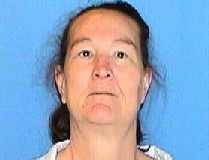
Jacqueline Gibons
Murderer Bobbie Sue Terrell
Murderer · USA · 1984
Bobbie Sue Dudley Terrell was a Pinellas County nurse and worked as the night s…
12 victims
Bobbie Sue Terrell
Murderer · USA · 1984
Bobbie Sue Dudley Terrell was a Pinellas County nurse and worked as the night s…
12 victims
 Marybeth Tinning
Murderer · USA · 1972
Marybeth Tinning (née Roe, born on September 11, 1942) was an American prisoner…
9 victims
Marybeth Tinning
Murderer · USA · 1972
Marybeth Tinning (née Roe, born on September 11, 1942) was an American prisoner…
9 victims
 Debbie Fornuto
Murderer · USA · 1972
Deborah Fornuto was the mother of six children whose deaths were initially rule…
7 victims
Debbie Fornuto
Murderer · USA · 1972
Deborah Fornuto was the mother of six children whose deaths were initially rule…
7 victims
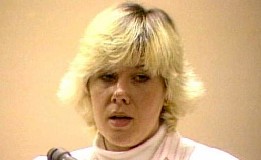 Catherine May Wood
Murderer · USA · 1987
Catherine May Wood was an American caregiver who worked at the Alpine Manor Nur…
5 victims
Catherine May Wood
Murderer · USA · 1987
Catherine May Wood was an American caregiver who worked at the Alpine Manor Nur…
5 victims
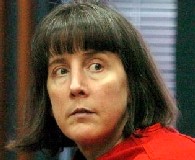 Amy Bishop
Murderer · USA · 1986
Amy Bishop — biology professor and perpetrator · James Anderson — Bishop’s husb…
4 victims
Amy Bishop
Murderer · USA · 1986
Amy Bishop — biology professor and perpetrator · James Anderson — Bishop’s husb…
4 victims
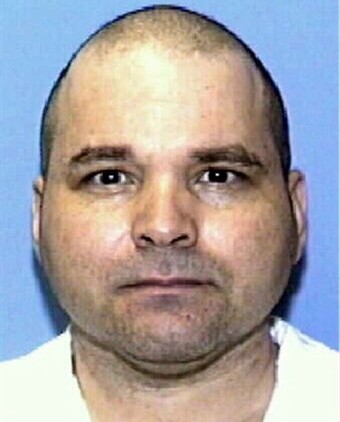 Michael Anthony Rodriguez
Murderer · USA · 1994
Michael Anthony Rodriguez was executed by lethal injection in Texas on August 1…
2 victims
Michael Anthony Rodriguez
Murderer · USA · 1994
Michael Anthony Rodriguez was executed by lethal injection in Texas on August 1…
2 victims
 Pete Russell
Murderer · USA · 2001
Pete Russell, Jr. was listed with TDCJ Number 999443 and Date of Birth 05/02/19…
1 victim
Pete Russell
Murderer · USA · 2001
Pete Russell, Jr. was listed with TDCJ Number 999443 and Date of Birth 05/02/19…
1 victim
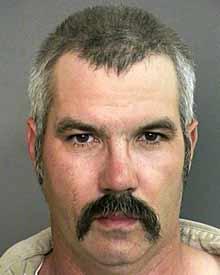 Scott Wilson Williams
Serial killer · USA · 1997
Scott Wilson Williams received three consecutive life sentences without parole…
3 victims
Scott Wilson Williams
Serial killer · USA · 1997
Scott Wilson Williams received three consecutive life sentences without parole…
3 victims
 Steven Laffin
Murderer · Canada · 2010
Steven Laffin was sentenced to life in prison with no chance of parole for 13 y…
1 victim
Steven Laffin
Murderer · Canada · 2010
Steven Laffin was sentenced to life in prison with no chance of parole for 13 y…
1 victim
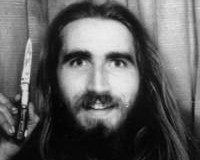 Daniel Rakowitz
Homicide · USA · 1989
Daniel Rakowitz was born in 1960 in Rockport, Texas. He moved to New York aroun…
1 victim
Daniel Rakowitz
Homicide · USA · 1989
Daniel Rakowitz was born in 1960 in Rockport, Texas. He moved to New York aroun…
1 victim
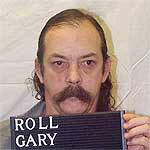 Gary Lee Roll
Murderer · USA · 1992
Gary Lee Roll — defendant; executed in Missouri on August 30, 2000. · David Rho…
3 victims
Gary Lee Roll
Murderer · USA · 1992
Gary Lee Roll — defendant; executed in Missouri on August 30, 2000. · David Rho…
3 victims
- Gender
- female
- Country
- USA
- Location
- Skokie, Cook County, Illinois, USA
- Date of birth
- April 30, 1962
- Age at first offence
- 20
- Characteristics
- parricide, murder for hire
- Victim profile
- Benjamin Gibons, 62, and his wife, Sybil, 60 (her adoptive parents)
- Method of murder
- Beating with a claw hammer
- Date(s) of murder
- July 29, 1982
- Years active
- 1982
- Date of arrest
- August 11, 1982
- Status
-
Life imprisonment
Convictions overturned on October 24, 1986; pleaded guilty on June 26, 1989; sentenced to 60 to 80 years in prison (natural life in prison later overturned for retrial purposes; also sentenced to natural life in prison, two consecutive terms of 60 years for armed robbery of both parents, 7 years for conspiracy and 5 years for concealment in June 1985; convictions overturned on October 24, 1986)
Case record: Jacqueline Gibons
People
- Jacqueline Gibons (only child; adoptive daughter of Benjamin and Sybil Gibons; defendant)
- Benjamin Gibons (victim; 62)
- Sybil Gibons (victim; 60)
- Barry Wilson (defendant; accused of masterminding the killings)
- Robert St. Pierre (defendant; actual killer)
- Harriet Metrick (Mrs. Gibons’s sister; called police after employers informed her the Gibonses had not shown up for work)
- Detective Greg McLaughlin (Skokie police detective who investigated)
- Detective Chief Inspector Alan Reid
- Assistant State’s Atty. Scott Nelson (prosecutor)
- Lynne Kawamoto (prosecutor)
- Bobby St. Pierre (Robert St. Pierre identified as formerly of 5550 N. Kenmore Ave.)
- Judge Richard Neville (sentencing judge for the plea on June 27, 1989)
- Judge Leonard Grazian (trial judge; presided over original murder trial)
- Appellate Justice James Murray (Illinois Appellate Court)
- Steven Clark (State Appellate Defender's Office; for appellant Jacqueline Gibons)
- Martin Carlson (State Appellate Defender's Office; for appellant Jacqueline Gibons)
- Peter C. Rolewicz (Chicago; for appellant Barry Wilson)
- Richard M. Daley (State's Attorney of Chicago)
- Joan S. Cherry (Assistant State's Attorney; of counsel)
- Thomas V. Gainer, Jr. (Assistant State's Attorney; of counsel)
- Mary E. Shields (Assistant State's Attorney; of counsel)
- Assistant State's Attorney James Lieberman (took a statement from St. Pierre on August 3)
- Sergeant Phillip O'Keefe (Phoenix; interviewed Rawlins and Wilson)
- Craig Rawlins (friend of Wilson’s; mentioned in police investigation and tracing)
- Kathy Merkelz (juror quoted)
- Juror Kathy Merkelz (quoted)
- Mildred Reitman (friend of some 45 years; recalled Sybil’s statements)
- Bonita Brodt (Chicago Tribune reporter)
- Charles Mount (Chicago Tribune reporter)
Timeline
- July 27, 1982 — Skokie police were summoned to the Gibons’ home after an attempted break-in; Detective Greg McLaughlin learned Wilson had telephoned Jacqueline and that the parents were out.
- July 29, 1982 — Benjamin Gibons and Sybil Gibons were murdered in their home in Skokie, Illinois.
- August 2 — Detective Greg McLaughlin went to the Gibonses’ residence after a call from Harriet Metrick; he observed bloodstains, cleaning fluids, rags and towels, and evidence including Benjamin’s wallet and items bearing St. Pierre’s name and prison number.
- August 3, 1982 — Assistant State’s Attorney James Lieberman took a statement from St. Pierre.
- August 5, 1982 — McLaughlin and Sergeant Phillip O'Keefe flew to Phoenix to speak with Craig Rawlins, who was in police custody.
- August 10, 1982 — The bodies of Benjamin and Sybil Gibons were found in a remote area near Albuquerque, New Mexico.
- June 1985 — Sentencing with terms including natural life, two consecutive terms of 60 years for armed robbery, 7 years for conspiracy, and 5 years for concealment.
- October 24, 1986 — Convictions overturned by a state appeals court; new separate trials were ordered.
- June 26, 1989 — Jacqueline Gibons pleaded guilty.
- June 27, 1989 — Sentencing to 60 to 80 years in prison after the plea.
- 1983 — St. Pierre was tried and convicted in Illinois state court.
- October 25, 1986 — Appeal court decision reported reversing convictions and life sentences.
Background
Jacqueline Gibons was the adopted daughter of Benjamin and Sybil Gibons. She was described as an only child. The Gibonses brought Jacqueline into their home rather late in their lives when both were in their 40s.
Jacqueline was born in 1962 and was described as a bright child who could read and write numbers before entering kindergarten, but she had difficulty making friends and often lashed out at other children, including kicking and punching them. She was expelled from preschool for biting and, in kindergarten, stabbed a fellow student with scissors when he took a sheet of paper from her. By the time she was 10, she was stealing money from teachers and lunches from other students.
An EEG performed when she was a pre-teen revealed no brain abnormalities. Her mother was described as barely able to care for herself, and Sybil told friends she had been haunted by images of Jackie’s birth mother.
In the early 1970s, Jacqueline was diagnosed as a teen with a passive-aggressive personality disorder. Psychologists expressed concerns about her violent fantasies and “gruesome stories,” and one wrote: “Her various hostile fantasies indicate strong, chronic, underlying anger.”
During her childhood, Benjamin was frequently away at work for long hours and Sybil was described as strict with high expectations. The Gibonses were described as private people, and it was described that Jacqueline rarely played with other children. Sybil’s elderly mother lived with the family and was described as disturbed and openly hostile to Jacqueline, whom she referred to as “garbage” for not being a “real Jew.”
Jacqueline was placed in the first of many residential facilities for emotionally troubled girls when she was 10 years old. She improved over time, but as a young teen she experimented with drugs and became sexually active. As a 17-year-old, she met Barry Wilson, who was 21 at the time.
It was described that Barry Wilson was an 8th-grade dropout, with a mother who considered him a chronic prevaricator and thief, and that he had a record for petty, nonviolent crimes. In December 1980, he convinced Jacqueline to pass bad paper and she was arrested and jailed for writing bad checks; Benjamin and Sybil collected money from friends to post her $1,000 bail. Over the next two years, Jacqueline lived with her parents with little motivation or direction in life.
At trial and in subsequent accounts, Wilson and St. Pierre were described as key participants in a murder-for-hire plot targeted at Benjamin and Sybil.
The offence
Benjamin Gibons and his wife Sybil Gibons were murdered. The murders occurred in their home in Skokie, Illinois. They were beaten to death; testimony and findings described skull fractures and torso injuries.
Bodies were found in a remote area near Albuquerque, New Mexico on August 10, 1982. The bodies were wrapped in blankets and plastic and tied with rope and tape. A forensic pathologist testified she performed an autopsy on each body and that both exhibited several skull fractures and torso injuries. The pathologist stated that the end of one of Mrs. Gibons’s fingers was missing, and that she could not determine whether its absence was the result of injury or decomposition.
A belt found at the crime scene belonged to St. Pierre, bearing his name and prison identification number.
Investigation
Detective Greg McLaughlin was assigned to investigate a burglary of the Gibons’ residence. McLaughlin learned that Jacqueline had told her parents that Wilson telephoned her earlier, told her he had fallen through a window of the house, and that Jacqueline should “clean up the mess” before her parents discovered it.
Benjamin later failed to appear before a judge the next day concerning the complaint he had signed, after which McLaughlin called the Gibons’ residence on July 29 and Jacqueline answered and told him her father was not at home. On July 31, McLaughlin called again and received the same response.
On August 2, police officers and Harriet Metrick went to the Gibons’ home after being told by the Gibonses’ employers that the Gibonses had not shown up for work. Officers entered the house when no one answered the doorbell. McLaughlin arrived shortly thereafter and found holes cut in the living room carpet, cleaning fluids, blood-soaked rags and towels, blood splattered throughout multiple rooms, and a large hole broken through the wall between the bedroom closet and the garage.
McLaughlin found Benjamin’s wallet in the kitchen with a traffic ticket describing a 1982 Buick automobile. A belt was found in the bedroom with St. Pierre’s name and prison number on it. Further inspection of the garage revealed garbage bags containing bloodstained carpeting, gloves, clothing, and a hammer covered with masonry dust. The automobile was not in the garage and the Gibons were not on the premises.
McLaughlin testified that he went to the police station to make out a report and unsuccessfully tried to locate Wilson and Craig Rawlins, Wilson’s friend.
On August 3, McLaughlin met with Jacqueline, who had been brought to the police station at her own request. Jacqueline told him how her parents had been killed, implicated Wilson and St. Pierre, told him Wilson was in Los Angeles, California with Craig Rawlins, and gave him St. Pierre’s address. McLaughlin also testified that Jacqueline provided a formal written statement in which she described prior “hinting” by Wilson that he was thinking of killing her parents and that Wilson later told her he bought sleeping pills and a gun with a silencer. Jacqueline stated that there was never any discussion about her paying Wilson to kill her parents and she did not think Wilson was serious until it “really happened.”
McLaughlin testified that on July 28, Wilson called Jacqueline, told her her parents were considering pressing charges, and said he needed some money because her parents were “going down” that evening. Jacqueline told him she did not have money and would have to get it the next day.
McLaughlin testified that on July 29, Wilson came to Jacqueline’s office, met with St. Pierre in an alley, and Wilson told Jacqueline that St. Pierre would kill her parents for $300. Jacqueline stated she was in shock and thought that “it was just a game,” but she agreed to pay St. Pierre. Wilson told Jacqueline to open the door later that evening and that St. Pierre would come and then “come a little later.”
At approximately 6 p.m., St. Pierre arrived; Jacqueline and her father admitted him; Jacqueline went into the living room; St. Pierre picked up a hammer lying on a chair in the hallway and followed Benjamin into the kitchen. Jacqueline stated that St. Pierre killed Benjamin by beating him to death with the hammer. After she heard the “hammering,” Jacqueline opened the front door and Wilson came in. Wilson and St. Pierre wrapped Benjamin’s body in a blanket and placed it in the master bedroom. Prior to placing the body in the bedroom, Wilson gave Jacqueline Benjamin’s wallet, from which Jacqueline took all of his credit cards.
McLaughlin testified that at approximately 7 p.m., McLaughlin called to speak to Jacqueline’s parents and she told him they were not at home. Mrs. Gibons called 10 minutes later and asked Jacqueline to pick her up from the train station. Instead of picking her up immediately, the defendants drove to a hardware store where Wilson purchased plastic bags, a roll of tape and sheets of plastic for tying up Mrs. Gibons’s body. They returned and the sequence of calls continued; Jacqueline left to pick up her mother from the train station and then drove home.
When Sybil entered the house, St. Pierre attacked and beat her to death with the hammer. Wilson and St. Pierre wrapped Sybil’s body in a blanket and plastic and placed it in the bedroom. After cleaning up, Wilson drove Jacqueline and St. Pierre to a hotel, left them there, and drove away.
During the drive, St. Pierre stated that “he did it [the murders] for them” and “they should thank him.” Jacqueline responded that she agreed with him.
The next day defendants returned to the house. Wilson and St. Pierre knocked a hole through the wall of the bedroom to the garage, Jacqueline helped push the bodies through, and Wilson and St. Pierre placed the bodies in the trunk of the victims’ car.
McLaughlin testified that after dropping off St. Pierre at his home, Wilson and Jacqueline drove around and discussed “how crazy St. Pierre was” and the fact that Mrs. Gibons’s finger had been sliced “because of the ring and who did it.” Wilson stopped at a hotel and showed bodies to some “black dude.” Wilson dropped Jacqueline off downtown around midnight and told her he was going to take the bodies to Arkansas to be buried by his cousin.
On August 3, Assistant State’s Attorney James Lieberman took a statement from St. Pierre. St. Pierre stated that he met Wilson in mid-July 1982. Toward the end of July, Wilson told him he had a job, that Jacqueline wanted her parents killed, and St. Pierre would get $1,000 to $10,000. St. Pierre said they went to the Gibons’ home, Wilson broke in through a window, and they were “suppose to get money” but Wilson only came out with some food.
St. Pierre stated that on July 29 he met with Wilson and Jacqueline in an alley, and Wilson told Jacqueline that St. Pierre wanted her to tell him she wanted her parents killed; Jacqueline nodded and said “Yes.” They planned how they would do it, deciding to use a hammer. St. Pierre stated they got $35 from Jacqueline, had lunch, drank a 12-pack of beer, then went to a bar, had another drink, and took a train to Skokie.
St. Pierre stated that at approximately 5 p.m. Wilson gave him the restaurant’s telephone number, and St. Pierre left and went to the Gibons’ home. He stated that when he arrived, Jacqueline gave him a hammer and asked him to put on some gloves; he refused, followed Benjamin into the kitchen, and killed him with the hammer. He then gave Jacqueline the restaurant’s telephone number and she called Wilson, who arrived shortly thereafter. St. Pierre stated that while passing Mrs. Gibons through the hole in the closet wall, he noticed that someone had cut her finger off apparently to remove a diamond ring from her finger.
McLaughlin also testified that police learned Wilson drove to Los Angeles to see Craig Rawlins rather than going to Arkansas. When Wilson arrived at Rawlins’s home, he called Jacqueline and asked her to send him money so he could return to Chicago, and she sent money.
McLaughlin and Sergeant Phillip O’Keefe flew to Phoenix on August 5. Rawlins told McLaughlin that while Wilson and Rawlins were in Phoenix, Wilson told him that “he and St. Pierre had killed the Gibons — St. Pierre killed the Gibons with a hammer,” that Jacqueline called Wilson to come over after Benjamin was killed, that St. Pierre killed Sybil after she entered the house, and that Rawlins helped clean up the house, knock a hole in the closet wall, push the victims’ bodies through, and help put the bodies in the trunk of the victims’ car.
Rawlins also stated Wilson told him Wilson wanted to bring the bodies to Los Angeles to show him but instead had “dropped” them off near Albuquerque, New Mexico. Rawlins stated Wilson told him that “Jackie would get the insurance money, but didn’t say he [Wilson] would.”
McLaughlin also interviewed Wilson in custody along with Rawlins. Wilson told McLaughlin he would help find the victims’ bodies and said they were in Missouri. When McLaughlin stated the police knew Wilson had not been in Missouri, Wilson said he could not remember where he had dropped them off because he had been drunk during his drive to Los Angeles. Officers returned to Chicago with Wilson.
During the flight, Wilson made an oral statement to Sergeant O'Keefe stating he was not present when St. Pierre killed Benjamin; he went to the house after Jacqueline called him at a restaurant; he saw Benjamin lying on the kitchen floor; he helped St. Pierre wrap up the body and carry it to the bedroom; and he helped clean up the kitchen. Wilson stated he was not present when St. Pierre killed Sybil, but that when told his codefendants stated he was present, he told O’Keefe he was in the hallway when Sybil was killed. Wilson stated he helped wrap up Sybil’s body, knock a hole in the garage wall, and put the victims’ bodies in the car. Wilson stated he later drove to California after dropping off Jacqueline and St. Pierre.
Wilson also stated that he and St. Pierre had gone to the Gibons’ home looking for Jacqueline prior to the murders; he had fallen through a window; and they took some food from the refrigerator. Wilson denied, however, that he had told Rawlins he left the bodies in New Mexico, and said he did not remember where he left them.
On cross-examination, O’Keefe testified that Wilson never said he conspired with his codefendants to kill the Gibons, never aided or abetted, never robbed the victims, and never asked Wilson about such a conspiracy. O’Keefe stated Wilson replied, “I don’t know why, I just didn’t,” when asked why he did not leave the house when he arrived and saw Benjamin’s body. O’Keefe also testified that Wilson commented that St. Pierre was crazy and had just gotten out of jail.
Arrest
Skokie police arrested Robert St. Pierre and Jacqueline Gibons by following leads after the investigation. The investigation described Wilson being arrested in Arizona and St. Pierre being arrested shortly afterward.
Trial
Following a joint jury trial, the jury found Jacqueline Gibons, Barry Wilson, and Robert St. Pierre guilty on counts including the murders of Benjamin and Sybil Gibons, two counts of conspiracy to commit murder, two counts of armed robbery, and two counts of concealment of a homicidal death.
Benjamin and Sybil were described in the appellate opinion as both approximately 62 years of age.
The appellate opinion listed statutes and counts as:
- 38, pars. 9-1(a)(1), (a)(2), (a)(3), 8-2(a), 18-2(a), 9-3.1(a).
Sentencing after trial:
- Jacqueline Gibons and Barry Wilson were sentenced to natural-life imprisonment for the murders.
- They received two extended terms of 60 years to be served consecutively for the armed robberies.
- They received two concurrent terms of 7 years for conspiracy to commit murder.
- They received two concurrent terms of 5 years for concealment of the homicidal deaths of the victims.
- Robert St. Pierre was sentenced to death, and the court entered judgments but no sentences on the other counts.
- St. Pierre was not a party to the appeal.
Jackqueline’s account during investigation was that she thought the plan was “just a game,” and she admitted agreeing to pay St. Pierre $300 to murder her parents after meeting with Wilson and St. Pierre, but she did not admit that she planned the murders.
At sentencing after the plea, Judge Richard Neville agreed to sentence Jacqueline Gibons to 60 to 80 years, and Assistant State’s Atty. Scott Nelson prosecuted with Lynne Kawamoto.
Appeals
On direct appeal, the Illinois Appellate Court reversed the convictions and life sentences and ordered new separate trials.
The appellate court ruled that Judge Leonard Grazian should have held separate trials because of conflicting defenses. The appellate opinion said it reversed Gibons and Wilson’s convictions and remanded their cases for new and separate trials.
The appellate opinion included a statement by Appellate Justice James Murray:
“we believe the evidence at trial was sufficient for (the jury) to conclude that defendants were guilty beyond a reasonable doubt. This does not mean we are making a finding as to defendants` guilt or innocence which would be binding on retrial.”
The appellate opinion also described:
- Wilson’s oral statement was devoid of admissions similar to codefendants’ statements that Wilson participated in conspiracy to murder, aided or abetted, robbed victims, or paid St. Pierre to commit murders.
- Wilson did not have the same opportunity to confront St. Pierre, who chose not to testify.
- The appellate opinion found denial of severance reversible error and that nothing short of severance was required.
The appellate opinion described Wilson’s defense as extremely limited participation in opposition to his codefendants’ accusations, including that Wilson did not kill and did not intend to kill and at most was guilty of attempting to conceal bodies.
The appellate opinion described Jacqueline’s situation similarly:
- The trial court erred in denying severance because portions of St. Pierre’s statement bearing to significant degree on Jacqueline’s participation were not thoroughly substantiated by Jacqueline’s own confession.
- Discrepancies between the statements were described as crucial with respect to premeditation or intent.
The appellate opinion held:
- Jacqueline’s convictions were reversed.
- The cause remanded for a new, and separate, trial.
- The court did not address remaining arguments on appeal.
Outcome
After the appeal reversal and remand:
- Robert St. Pierre accepted responsibility and pled guilty in 1989 to the two murders rather than face another trial.
- He was sentenced to death.
- He was taken off death row when Governor George Ryan granted blanket clemency to the state’s condemned prisoners.
- Jacqueline Gibons pleaded guilty on June 26, 1989.
- Judge Richard Neville sentenced Jacqueline Gibons to 60 to 80 years in prison on June 27, 1989.
- Jacqueline Gibons had agreed to testify in the trial of Barry Wilson, who was accused of masterminding the killings.
In the 1989 plea and sentencing account, Jacqueline had originally been charged with two counts of murder but by pleading guilty to the lesser charge of conspiracy she avoided a death sentence.
Aftermath
It was described that the Gibons home was renovated and sold, and Benjamin’s car was sold.
It was described that the estate would be divided among the Gibons relatives.
In the 1985 narrative, it was described that investigators learned that Wilson had allegedly broken into the Skokie residence and that the parents were considering filing burglary charges when Wilson hatched the plot and recruited St. Pierre.
It was also described that Jacqueline lived with her parents at 9151 N. Karlov Ave., Skokie, and that Wilson had previously broken into the residence.
A letter in trial proceedings was described as attached to a Sears order in which the letter was signed “B. Gibons” and stated:
“Please forgive me if there are any errors (in this order), since my eyesight isn't too good. Since I have not used my card in a while, I do not recall what my limit is, but since my daughter needs these items, please send them to her as soon as possible and charge it to my account.”
A juror comment was included:
“She was just not the grief-stricken daughter her attorney tried to portray,” observed juror Kathy Merkelz.
A quote about Jacqueline’s response to imprisonment was included:
“How do I feel about prison?” Do you want the honest truth?” Jacquelin pauses to light another in a chain of cigarettes. Her voice is almost a whisper. “I would rather have had him give me the death penalty. In here, I get very moody. People gossip a lot. It scared me to think about death, but I guess I didn't really think I would get it. One of the guards told me that no judge wanted to be the first one in Illinois to put a woman on death row.”
Jacqueline’s statement about her parents’ murders included:
“I am sorry. It should never have happened,” she recites flatly.
“I try not to think about it. . . I don`t think I betrayed them. . . . I loved them.”
Jacqueline’s statements about their relationship included:
“They were loving and affectionate, my parents. And I really dislike the approach some have taken to this whole thing. They try to say I had this tragic life, a tragic childhood, and I don't recall ever having such a rotten time as a kid. I will say there was a generation gap. I never had the kind of talks some kids have with their parents.”
Jacqueline’s statement about why she said Wilson was involved included:
“Nothing would ever have happened, she maintains, had it not been for Wilson.”
“I didn't love him, but I needed a friend. I realize now I was just his bank book. A lot of people told me that if I didn't watch myself, Barry would cause me a lot of pain in the future. Even his own mother told me to wise up. I guess I just blocked it all out. I sometimes wonder why I didn't pull back before it all happened, and I don't even know myself. I really don't know.”
Jacqueline’s statement about inheritance and the estate included:
“In the end she inherited nothing. The house was renovated and sold to the highest bidder, as was Benjamin's car. The estate will be divided among th Gibons' relatives.”
Friend Mildred Reitman was quoted as recalling Sybil’s statements:
“Sybil and I would talk on the phone every day during that time,” recalled Mildred Reitman, a friend of some 45 years. “She was in a terrible state. She would cry and tell me she just couldn`t believe all of this was going on. 'Millie,' she would say, 'they are going to get to me. This is just going to kill me yet.'”
Jacqueline’s statement about wanting them alive included:
“If I could change things, I would wish them alive. I miss their company and their advice.”
A quote attributed to Jacqueline about her parents included:
“They were always trying to push me on to better things, and I always resisted them,” Jacquelin said in a rare moment of reflection. “I think about that now.”

Spotted an error, or have more information about this case?