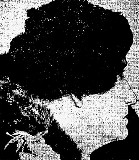
Bertha Gifford
Serial killer Della Sorenson
Serial killer · USA · 1918
Della Sorenson was a Nebraska woman who killed relatives by poisoning. She was…
8 victims
Della Sorenson
Serial killer · USA · 1918
Della Sorenson was a Nebraska woman who killed relatives by poisoning. She was…
8 victims
 Tillie Klimek
Serial killer · USA · 1914
Ottilie “Tillie” Klimek, also known as Ottilie “Tillie” Klimek (or Tillie Gbure…
6 victims
Tillie Klimek
Serial killer · USA · 1914
Ottilie “Tillie” Klimek, also known as Ottilie “Tillie” Klimek (or Tillie Gbure…
6 victims
 Tillie Klimek
Serial killer · USA · 1914
Ottilie “Tillie” Klimek (also known as Tillie Gburek) was a Polish American ser…
6 victims
Tillie Klimek
Serial killer · USA · 1914
Ottilie “Tillie” Klimek (also known as Tillie Gburek) was a Polish American ser…
6 victims
 Amy Archer-Gilligan
Serial killer · USA · 1908
Amy Archer-Gilligan (1868–1962) was a serial killer in Windsor and Connecticut…
5 victims
Amy Archer-Gilligan
Serial killer · USA · 1908
Amy Archer-Gilligan (1868–1962) was a serial killer in Windsor and Connecticut…
5 victims
 Anna Cunningham
Serial killer · USA · 1918
Mrs. Anna Cunningham was a Chicago widow. She lived on a farm at Bachley Corner…
5 victims
Anna Cunningham
Serial killer · USA · 1918
Mrs. Anna Cunningham was a Chicago widow. She lived on a farm at Bachley Corner…
5 victims
 Austin Sigg
Homicide · USA · 2012
Austin Sigg was charged in connection with the kidnapping and killing of Jessic…
1 victim
Austin Sigg
Homicide · USA · 2012
Austin Sigg was charged in connection with the kidnapping and killing of Jessic…
1 victim
 Darrell Glenn Carr
Murderer · 1991
Darrell Glenn Carr was sentenced to death on March 10, 1993.
1 victim
Darrell Glenn Carr
Murderer · 1991
Darrell Glenn Carr was sentenced to death on March 10, 1993.
1 victim
 Richard Lee Adams
Murderer · USA · 1998
The District Court of Appeal of the State of Florida opinion 5D00-1685 Richard…
1 victim
Richard Lee Adams
Murderer · USA · 1998
The District Court of Appeal of the State of Florida opinion 5D00-1685 Richard…
1 victim
 Lesley Eugene Warren
Serial killer · USA · 1987
Lesley Eugene Warren Lesley Eugene Warren was born on October 15, 1967 in Candl…
8 victims
Lesley Eugene Warren
Serial killer · USA · 1987
Lesley Eugene Warren Lesley Eugene Warren was born on October 15, 1967 in Candl…
8 victims
 Michael Anthony Lopez
Homicide · USA · 1998
Name: Michael Anthony Lopez · TDCJ Number: 999318 · Date of Birth: 4/28/1981 ·…
1 victim
Michael Anthony Lopez
Homicide · USA · 1998
Name: Michael Anthony Lopez · TDCJ Number: 999318 · Date of Birth: 4/28/1981 ·…
1 victim
- Gender
- female
- Country
- USA
- Location
- Catawissa, Missouri , USA
- Date of birth
- October 1872
- Age at first offence
- 37
- Characteristics
- poisoner
- Victim profile
- Elmer and Lloyd Schamel / Edward Brinley
- Method of murder
- Poisoning (arsenic)
- Date(s) of murder
- 1909 - 1928
- Years active
- 1909–1928
- Date of arrest
- August 25, 1928
- Status
-
Acquitted / overturned
Found not guilty by reason of insanity and committed to the Missouri State Hospital where she remained until her death on August 20, 1951
Background
Bertha Gifford (1872- August 20, 1951) was a farmwife in rural Catawissa, Missouri during the early 1900s who was accused of murdering 17 members of the local community. While some consider her to be America's first female serial killer, that dubious honor was earned 100 years previously by Lavinia Fisher near Charleston, South Carolina.
Bertha Alice Williams Graham Gifford was born in Grubville, Missouri, the daughter of William Poindexter Williams and his wife Matilda, née Lee. She was one of 10 children. She was married to Henry Graham and this union produced one daughter, Lila. Following Graham's death, she married Eugene Gifford and they had one child, James.
Bertha Gifford was the daughter of William and Matilda Williams. She married Henry Graham (December 1894) in Hillsboro, Jefferson County, Missouri. After his death she married Eugene Gifford (1907) in Hillsboro, Jefferson County, Missouri.
Neighbors reported she was an extraordinary cook. She was described as a friendly, caring woman who would don a white dress and carry her satchel to ailing neighbors. Gene and Bertha moved to Catawissa (Morse Mill area), Franklin County, Missouri.
She reportedly bought considerable amounts of arsenic for rat infestation in her barn. She was reported to have used arsenic to “al[e]ve their suffering.”
The offence
Gifford was accused of murdering 17 members of the local community over a period of 21 years, though counts varied. Most of her victims were children.
“Mrs. Bertha Gifford, the tireless ‘Good Samaritan’ and death-bed watcher of Meremec River, Missouri, is in jail, suspected of 17 murders, most of them of children, of which, the police say, she has confessed three and admitted that there ‘may have been more.’”
Investigation
After the exhumation and post mortem exams of Edward Brinley and Elmer and Lloyd Schamel, whose bodies were found to contain large amounts of arsenic, Gifford was put on trial in Union, Missouri. The investigation followed numerous deaths of patients.
Gifford explained each one of the deaths plausibly, stating they were from acute gastritis caused by the rural habit of eating a heavy dinner at noon and then laboring on a full stomach instead of having the main meal at night after the day’s work is over.
Dr. James Stewart, State Health Commissioner, examined records of drug stores in neighboring towns and found that Mrs. Gifford had been a steady customer of arsenic rat poison which produces symptoms quite similar to gastritis. The records also indicated she had made purchases in some cases just before the deaths in question.
Gifford was brought over before the grand jury, and the grand jury indicted her for murder.
Arrest
In 1928, Gifford was arrested at Eureka, Missouri and charged with the murders of three people.
Trial
Following a three-day trial in Union, Missouri, Gifford was found not guilty by reason of insanity.
“Following the three-day trial, she was found not guilty by reason of insanity and committed to the Missouri State Hospital #4 (a mental institution) where she remained until her death in 1951.”
Testimony and alleged incidents described
George Stuhlfelder told the grand jury that George L. Shamel had nursed, and described deaths that he attributed to acute gastritis with stomach cramps and vomiting. Shuhlfelder’s account included:
- Bernard (15-months old), Margaret (two years), and Irene (seven) dying after ailments that “promptly turned into acute gastritis and ended in the death of all of them.”
- A 1925 visit by Shamel, after which his boy Lloyd, nine years old, developed stomach cramps and died two days later; the doctor said it was acute gastritis and there was no post mortem.
- Elmer, seven years old, getting sick with stomach cramps and dying two days later; there was no post mortem.
George L. Shamel testified about two boys:
“I worked off and on for the Giffords about 18 years. I went to the Gifford place once in 1925, on a Saturday night. On the very next day, the Sabbath, my boy, Lloyd, nine years old. had stomach cramps. Two days later he died after being sick at his stomach all the time. The doctor said it was acute gastritis but didn’t know what caused it. There was no post mortem. Five weeks later my other boy Elmer —he was seven years old—got sick, with stomach cramps. He lived two days too. They said it was the same gastritis. There was no post mortem. I always trusted the Giffords and thought it was just my luck when the boys died.”
The narrative also described:
- A chain of coincidences going back to 1909, when Mr. Graham died of cramps in the night before the doctor arrived.
- A death in 1913 described as “ptomaine poisoning,” involving Mrs. Emilie Gifford.
- A subsequent death a year later involving her thirteen-year-old brother-in-law, James Gifford.
Statements and alleged confession
Andrew McConnell, chief of police of Webster Groves, a suburb of St. Louis, took a hand in the investigation.
“He noticed that the prisoner seemed specially annoyed at the suggestion that, she had poisoned Beulah Mounds, three-year-old daughter of S. Herman Pounds. He harped on that case until, according to McConnell, she finally snapped at him: Well, anyway, I did not give any arsenic to that Pounds child.”
McConnell asked:
“To whom did you give it?”
McConnell described her answer as a confession that she had poisoned Brinley, the Shamel boys and perhaps some others.
The narrative asserted that since the confession, Brinley’s body was exhumed and its stomach showed traces of arsenical poisoning, according to the police.
Sentencing
Gifford was committed to the Missouri State Hospital #4 (a mental institution).
She remained there until her death on August 20, 1951.
Outcome
Gifford was found not guilty by reason of insanity and committed to the Missouri State Hospital.
Aftermath
She remained in the Missouri State Hospital until her death on August 20, 1951.
The narrative included a statement about her conduct in custody:
“Since the confession, Bertha’s chief ambition has been to avoid being photographed. She sits in her cell with a blanket, ready to throw over her head whenever she hears a footfall in the corridor. She exhibits remorse, too, and says she does not care to live.”
It also included this final statement:
“If she is guilty of the crimes charged against her, there seems no reason why she should live.”
Other details
Bertha Gifford was described as “one of the most beautiful women of Jefferson County with dark hair and a dark complexion.”
Her marital history was described as:
- Marriage to Henry Graham (December 1894).
- After Graham’s death, marriage to Eugene Gifford (1907).
Gifford was described in the narrative as:
“Mrs. Gifford, though not n trained nurse, was a very competent volunteer one as the doctors well knew. She could keep temperature and nourishment chart, understood symptoms and drugs and therefore might be allowed discretion in administering medicines.”
The narrative further stated:
“When Bertha took charge of a case she took command of the household, ordering this in and that out of the sick-room and impressing the family in countless ways with her superior knowledge and experience.”
It included a quoted exchange:
“Now, my dear, I want you to go to bed and get a good night’s rest, so you can take my place tomorrow. Don’t worry—I am here.”
The narrative also alleged:
- She resented attempts to show signs of recovery.
- She “fed them rat poison” when patients rallied.
- She took command of funerals.
- She paid for the embalming of one of her victims.
It described multiple specific individuals and deaths, including:
- Mary Brown, the “seven-year-old Mary Brown,” and the aunt who spoke was “Mrs. Laura Brown, of East St. Louis.”
- Ed Brinley, described as “a neighbor and another cider victim.”
- Beulah Mounds, described as “three-year-old daughter of S. Herman Pounds.”
- Birdie Unnerstall, described as “Grandma Birdie Unnerstall.”
- Eva, “meaning Mary’s mother.”
- Mary Sluhlfelder, “aged 74.”
The narrative described the symptoms and circumstances around deaths in connection with “acute gastritis,” “nausea,” and “stomach pains,” and it attributed some deaths to “acute gastritis, superinduced by alcoholism.”
An enumerated snippet included:
[“Dealt Out Death in the Guise of an Angel of Mercy – Kindly Mrs. Gifford Was Always Glad to Nurse a Sick Neighbor for Nothing, but So Loved to See Them Die, the Missouri Police Charge, That She Fed Them Rat Poison if They Showed Signs of Getting Better,” The American Weekly, San Antonio Light (Tx.), Magazine section, Oct. 13, 1928, p. 7]

Spotted an error, or have more information about this case?