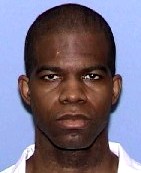
Pete Russell
Murderer Russell Ellwood
Murderer · USA · 1991
Russell Ellwood was a former taxi driver. Authorities suspected him of killing…
20 victims
Russell Ellwood
Murderer · USA · 1991
Russell Ellwood was a former taxi driver. Authorities suspected him of killing…
20 victims
 Robert Martines Perez
Murderer · USA · 1994
Name: Robert Martines Perez · Other name used in proceedings: Robert Martinez P…
15 victims
Robert Martines Perez
Murderer · USA · 1994
Name: Robert Martines Perez · Other name used in proceedings: Robert Martinez P…
15 victims
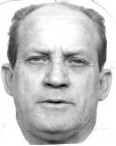 Billy Frank Vickers
Murderer · USA · 1993
Billy Frank Vickers Vickers was executed by lethal injection in Texas on Januar…
14 victims
Billy Frank Vickers
Murderer · USA · 1993
Billy Frank Vickers Vickers was executed by lethal injection in Texas on Januar…
14 victims
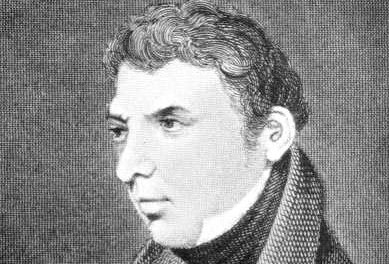 John Thurtell
Murderer · United Kingdom · 1823
John Thurtell (born December 21, 1794) was hanged at Hertford on January 9, 182…
1 victim
John Thurtell
Murderer · United Kingdom · 1823
John Thurtell (born December 21, 1794) was hanged at Hertford on January 9, 182…
1 victim
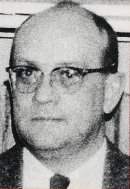 Leo Held
Mass murderer · followed by more bullets. This continued until he was finally hit in the head. He stopped firing then. He died later in the Lock Haven Hospital unable to answer any of the questions that police had. home last updates contact · 1967
Leo Held was a 39-year-old laboratory technician who was described as a quiet,…
6 victims
Leo Held
Mass murderer · followed by more bullets. This continued until he was finally hit in the head. He stopped firing then. He died later in the Lock Haven Hospital unable to answer any of the questions that police had. home last updates contact · 1967
Leo Held was a 39-year-old laboratory technician who was described as a quiet,…
6 victims
 Frank Martinez Garcia
Murderer · USA · 2001
Name: Frank Martinez Garcia TDCJ Number: 999418 Date of Birth: 10/21/1972 Age a…
2 victims
Frank Martinez Garcia
Murderer · USA · 2001
Name: Frank Martinez Garcia TDCJ Number: 999418 Date of Birth: 10/21/1972 Age a…
2 victims
 Yu Hagino
Murderer · Japan · 2005
Yu Hagino (萩野 裕, Hagino Yū, born 1982) was a teacher at a cram school in Uji, K…
1 victim
Yu Hagino
Murderer · Japan · 2005
Yu Hagino (萩野 裕, Hagino Yū, born 1982) was a teacher at a cram school in Uji, K…
1 victim
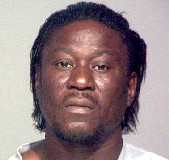 Walter Ellis
Serial killer · USA · 1986
Walter E. Ellis was a serial killer known as the Milwaukee North Side Strangler…
7 victims
Walter Ellis
Serial killer · USA · 1986
Walter E. Ellis was a serial killer known as the Milwaukee North Side Strangler…
7 victims
- Gender
- male
- Country
- USA
- Location
- Harris County, Texas, USA
- Date of birth
- May 2, 1973
- Age at first offence
- 28
- Characteristics
- retaliation, mentally ill
- Victim profile
- Tanjala Brewer, 40
- Method of murder
- St abbing with knife
- Date(s) of murder
- August 13, 2001
- Years active
- 2001
- Date of arrest
- Same day (suicide attempt)
- Status
-
Sentenced to death
Sentenced to death on February 26, 2003
Case identifiers
Pete Russell, Jr. was listed with TDCJ Number 999443 and Date of Birth 05/02/1973. Russell was 29 when received. The case appeared in the Court of Criminal Appeals of Texas as No. 74,595.
Timeline
- 08/13/2001 — Russell fatally stabbed Tanjala Brewer in Houston, Texas.
- 08/13/2001 — A capital murder (1) conviction occurred in February 2003 for a capital murder committed on August 13, 2001.
- 02/26/2003 — A jury convicted Russell of a capital murder (1) and, pursuant to the jury's answers to statutory special issues, the trial court sentenced him to death (3). Appeal to the Court of Criminal Appeals of Texas was automatic (4).
- 02/02/2005 — The Court of Criminal Appeals of Texas delivered an en banc opinion, affirming the trial court’s judgment.
- 08/13/2001 — Russell was sentenced to ten year on the cocaine charge (date referenced in the facts).
- 09/07 — Russell agreed to turn himself in on September 7 (as part of the cocaine sentence sequence).
- 11/02/1999 — Russell was discharged upon expiration of an eight year sentence from Harris County.
Background
Pete Russell, Jr. was a black male. Russell’s hair color was black, and his height and weight were listed as 6 ft 3 in and 188. His eye color was brown. Russell’s prior occupation included Texas clerk, welder, laborer. Russell had a prior prison record: #643435 on an eight year sentence from Harris County for aggravated assault with a deadly weapon and aggravated robbery; on 11/02/1999, he was discharged upon expiration of the sentence.
Russell had been convicted previously on a cocaine-related charge that occurred after Brewer became involved with an undercover narcotics officer and introduced Russell to Officer Bush.
The offence
Russell fatally stabbed Tanjala Brewer, a 40 year old black female, in Houston, Texas.
The capital murder conviction related to intentionally causing the death of Tanjala Brewer while in the course of committing or attempting to commit the offense of retaliation against her. Brewer had been in a relationship with Russell, and she was also a police informant.
Russell believed that Brewer had set him up on a delivery of cocaine charge. Russell was sentenced to ten year on the cocaine charge, and he committed the killing while on bond from the court to get his personal affairs in order before serving his sentence.
Investigation
Brewer took an undercover narcotics officer D.K. Bush to Russell’s house and introduced them on May 2, 2001. Russell agreed to sell Bush several ounces of crack cocaine. A few hours later, Bush called Russell to arrange the transaction. The two met at a store and completed the transaction. Bush signaled other officers to arrest Russell.
Around 11:00 p.m. on August 12, 2001, Brewer’s neighbor, Andre Wilson, saw Brewer and Russell walking down the street near Brewer’s house. After Russell left and shortly before midnight, Brewer’s boyfriend, Wilbert Reed, stopped by Brewer’s house and spent some time with her before he went to work. Reed called Brewer from his workplace every thirty minutes or so throughout his shift, but he always got a busy signal.
At about 1:00 a.m., Wilson heard Brewer’s screen door close and saw Russell walking down Brewer’s driveway. Russell was running by the time he reached the street.
Brewer was found dead around 9:30 that morning. Natural gas valves had been turned on in the house, and candles were burning. Wilson’s account and evidence at the scene led police to suspect Russell.
When officers found Russell at a local motel, he was sitting in the bathtub fully clothed, with a bottle of rat poison in his hand, and he was foaming at the mouth. Officers took Russell to a hospital where his stomach was pumped.
At the hospital, Russell said in a tape-recorded statement that after he had broken off his relationship with Brewer, she had set him up. He admitted killing her.
In early July, more than a month before the murder, Russell told Deborah Calhoun that he knew Brewer had set him up in his case and that he appeared to be angry about it.
Arrest and custody
After undercover narcotics operations, Bush signaled other officers to arrest Russell.
On August 9, 2001, Russell pleaded guilty to the charge of delivering a controlled substance and received a ten-year sentence. He asked the court to delay the date for execution of the sentence. The court reset the case, and Russell agreed to turn himself in on September 7.
When police found Russell at a local motel, he was sitting in the bathtub, fully clothed, with a bottle of rat poison in his hand, and he was foaming at the mouth. Officers took him to a hospital and pumped his stomach.
Trial
The Court of Criminal Appeals of Texas affirmed the judgment of the trial court en banc.
Court and appellate posture
- The case was styled: Pete Russell, Jr., Appellant v. The State of Texas.
- The appeal was from Harris County.
- Womack, J., delivered the opinion for a unanimous court.
- The Court of Criminal Appeals stated: “Delivered February 2, 2005. Publish.”
Jury conviction and sentence
In February 2003, a jury convicted Russell of a capital murder (1) that was committed on August 13, 2001. Pursuant to the jury’s answers to the statutory special issues (2), the trial court sentenced Russell to death (3). The Court noted that the appeal was automatic (4) and that it affirmed (We affirm).
Points of error raised and rulings
Russell raised four points of error.
Point One
Russell complained that the trial court erred in allowing the jury to use transcripts of his recorded oral statements to assist during deliberations.
Before trial, Russell moved to suppress the two oral statements he had given. During the suppression hearing, the State offered the audiotapes of the two statements into evidence. The State also gave the court written transcripts of the tapes. The judge recognized the transcripts were only to assist listening to the tapes. Russell commented that he had “no objection to the Court following along with” the transcripts.
The court denied the motion to suppress the audiotaped confessions and overruled the objection that they were of “poor audio quality” and unable to be understood without the assistance of a transcript.
At trial, the officer who had taken the confessions testified that the transcripts fairly and accurately depicted what was on the audiotapes. The court admitted the audiotapes into evidence over Russell’s objection and admitted the transcripts as demonstrative evidence. Russell did not object to the admission of the transcripts, but requested a “prophylactic explanation” that the transcripts were only to be used as a guide. When jurors were given copies, the court instructed them that transcripts were to assist them, if they could, in understanding what was said on the tapes. The court told them that substantive evidence was what was stated on the tapes and that the jury would not be allowed to take the transcripts into the jury room with them.
After the jury retired, the foreman sent a note requesting that jurors be allowed to listen to the audiotapes and to use the transcripts to aid them. The State argued that the court could suspend deliberations and bring the jury back into open court to listen with aid of the transcripts. After verifying Russell did not dispute general accuracy, the court brought jurors back and instructed them they could use transcripts to assist them in listening to the tapes and that transcripts were not substantive evidence. The court reminded jurors to resolve discrepancies in favor of what they heard on the tape.
The jurors were then handed copies of the transcripts and allowed to listen to the tapes. After the tapes were played, the bailiff collected the transcripts, and the jury returned to the jury room to resume deliberating.
Russell argued that the statute allowing the jury to receive “any exhibits admitted as evidence in the case” (5) did not include demonstrative exhibits and that once the jury retired, deliberation could not be suspended and resumed. The Court held it did not need to decide those issues and concluded that even if error occurred, it did not result in harm under Rule of Appellate Procedure 44.2(b). The Court found that jurors did not discuss the case while in open court and reviewed what they reviewed during trial, and the procedure did not affect Russell’s substantial rights. The Court overruled point one.
Point Two
Russell complained that the trial court abused its discretion by allowing a witness for the State to remain in the courtroom throughout the guilt stage absent an expressed showing that he fell within an exemption or exception in Texas Rules of Evidence, Rule 614.
The Court discussed the purpose of excluding witnesses “under the rule,” and described the rule’s features including Articles 36.05 and 36.06 and how Rule 614 did not authorize excluding certain witnesses without their meeting categories. The Court explained that a party had the burden to show its witness fell within the exceptions.
Before the jury was brought into the courtroom, both parties requested witnesses be put under the rule. The court instructed all witnesses present not to discuss testimony and to retire to the hallway until called. After three witnesses testified, the prosecutor asked permission for Police Sergeant Hal Kennedy to sit at counsel table because he was the primary homicide detective. Defense counsel objected, stating “I thought that was a federal rule. I didn’t think it applied to state court.” The court overruled the objection and allowed Kennedy to serve as case agent and sit at counsel table, while also placing him under the rule.
The Court then stated that designating a “case agent” did not make Kennedy one whom the court could not exclude under Rule 614. The Court also stated it would not permit the State or a natural person defendant to remove the court’s authority to exclude by designating a witness.
The Court held the trial court erred in permitting Kennedy to remain in the courtroom because the State did not meet its burden. The Court then assessed harm, concluding the non-constitutional error did not affect Russell’s substantial rights because there was no substantial and injurious effect on the verdict.
The Court noted that Kennedy was the only officer present when the appellant gave his statement besides Officer Richard Moreno, and that both were called. The Court described that before Kennedy testified, he heard Moreno’s answers. The Court also addressed Russell’s argument that Kennedy influenced testimony by corroborating other police officer testimony and by “contradicted appellant’s testimony in two crucial areas,” including that Russell claimed Kennedy induced him to make an audio-taped statement and told him Brewer was an informant; Russell also explained he referred to Brewer being an informant because Kennedy told him before he gave the tape-recorded statement. The Court stated Kennedy and Moreno testified that they did not tell Russell and that it was not hearsay or influenced by other testimony.
The Court included verbatim exchange from the tape-recorded statement:
KENNEDY: Okay. Now you know why you're under arrest? You're under arrest for murder you know that? In your own words tell me what happened and why you did what you did.
RUSSELL: She…She set-she set me up-she set me up with the police. (16)
The Court included additional verbatim exchange:
KENNEDY: Okay ah now tell me how it is-how it is that she got killed whatever.
RUSSELL: Basically ah I went over her house and you know since she let me in and she was smoking some drugs whatever and you know we were just talking whatever you know about the things we used to do and I was basically asking her "Why did you set me up?" "Why did you set me up" and she kept on denying it talking about I ain't set you up. I ain't set you up. (17)
The Court concluded it saw no likelihood that Kennedy’s denial of influencing factors was influenced by hearing Moreno’s answers or Russell’s testimony. It stated it would not say from the record that the error had a substantial and injurious effect or influence. Point two was overruled.
Point Three
Russell complained that the trial court erred in permitting the State to cross-examine him regarding an extraneous drug offense.
Russell asserted the evidence was not relevant at the guilt stage, tended to show only that he was a criminal generally, and prejudiced his credibility. Although Russell objected to the admission of nineteen photographs, his brief did not discuss the exhibits. The Court described that his specific complaint alleged the State forced him to admit he possessed crack cocaine at his residence.
The Court described the cross-examination and the questions asked with exhibits:
- The State asked: “State's Exhibit 211, what is that?”
- Russell answered: “Crack cocaine. … Looks like it was in the truck.”
- The State asked: “This is stuff that you sold or some of the stuff that you sold to Officer Bush after Tanjala [Brewer] introduced you to him, isn't it, sir?”
- Russell answered: “Yes, sir.”
- The State asked about another photograph: “State's Exhibit No. 199, is that your car?”
- Russell testified: his car was his mother’s car, and he was driving it when he sold cocaine to Officer Bush.
The Court stated these questions and photographs were about the offense of cocaine delivery to Bush for which Russell had been indicted and convicted before the murder. The Court stated the indictment alleged Russell killed Brewer in retaliation for Brewer’s cooperation with Officer Bush by introducing Russell. The Court held this was not irrelevant extraneous offense and found no error in admission of the photographs or the cross-examination. Point three was overruled.
Point Four
Russell claimed the Texas death-penalty scheme was unconstitutional because it allowed death penalty without providing meaningful appellate review of any special issues giving rise to the sentence of death. The Court stated it previously addressed and rejected this precise contention and that Russell gave no reason to revisit. Point four was overruled.
Sentencing
The jury convicted Russell of capital murder committed on August 13, 2001. Pursuant to the jury’s answers to statutory special issues, the trial court sentenced Russell to death (3). The appeal was automatic (4). The Court affirmed the judgment of the trial court.
Appeals
The appeal to the Court of Criminal Appeals of Texas was automatic. The Court of Criminal Appeals overruled points one through four and affirmed the judgment of the trial court, en banc, delivered February 2, 2005, and published.
Outcome
The Court of Criminal Appeals of Texas affirmed the judgment of the trial court. The trial court’s death sentence remained in effect.
Aftermath
The judgment of the trial court was affirmed, and Russell’s capital murder conviction and death sentence were upheld by the Court of Criminal Appeals of Texas.
Spotted an error, or have more information about this case?