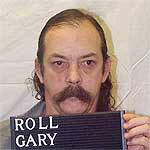
Gary Lee Roll
Murderer Brian Kevin Rosenfeld
Murderer · USA · 1985
Brian Kevin Rosenfeld Brian Kevin Rosenfeld was sentenced to three concurrent l…
23 victims
Brian Kevin Rosenfeld
Murderer · USA · 1985
Brian Kevin Rosenfeld Brian Kevin Rosenfeld was sentenced to three concurrent l…
23 victims
 Russell Ellwood
Murderer · USA · 1991
Russell Ellwood was a former taxi driver. Authorities suspected him of killing…
20 victims
Russell Ellwood
Murderer · USA · 1991
Russell Ellwood was a former taxi driver. Authorities suspected him of killing…
20 victims
 Robert Martines Perez
Murderer · USA · 1994
Name: Robert Martines Perez · Other name used in proceedings: Robert Martinez P…
15 victims
Robert Martines Perez
Murderer · USA · 1994
Name: Robert Martines Perez · Other name used in proceedings: Robert Martinez P…
15 victims
 Billy Frank Vickers
Murderer · USA · 1993
Billy Frank Vickers Vickers was executed by lethal injection in Texas on Januar…
14 victims
Billy Frank Vickers
Murderer · USA · 1993
Billy Frank Vickers Vickers was executed by lethal injection in Texas on Januar…
14 victims
 Gertrude Baniszewski
Murderer · USA · 1965
Name: Gertrude Baniszewski Also known as: Gertrude Wright; Nadine Van Fossan; G…
1 victim
Gertrude Baniszewski
Murderer · USA · 1965
Name: Gertrude Baniszewski Also known as: Gertrude Wright; Nadine Van Fossan; G…
1 victim
 Paul Leslie Snider
Murderer · USA · 1980
Paul Leslie Snider committed suicide by shooting himself the same day. Paul Les…
1 victim
Paul Leslie Snider
Murderer · USA · 1980
Paul Leslie Snider committed suicide by shooting himself the same day. Paul Les…
1 victim
 James Earl Slaughter
Murderer · USA · 1983
James Earl Slaughter (DOB 2-3-63) was sentenced to death on December 2, 1983. S…
1 victim
James Earl Slaughter
Murderer · USA · 1983
James Earl Slaughter (DOB 2-3-63) was sentenced to death on December 2, 1983. S…
1 victim
 Ervin Lupoe
Mass murderer · USA · 2009
Ervin Lupoe killed his wife, Ana Lupoe, and their five children, then killed hi…
6 victims
Ervin Lupoe
Mass murderer · USA · 2009
Ervin Lupoe killed his wife, Ana Lupoe, and their five children, then killed hi…
6 victims
- Gender
- male
- Country
- USA
- Location
- Cape Girardeau County, Missouri, USA
- Date of birth
- November 22, 1952
- Age at first offence
- 40
- Characteristics
- robbery, drugs
- Victim profile
- Sherry Scheper, 47; Randy Scheper, 17, and Curtis Scheper, 22
- Method of murder
- Shooting / Beating with gun / St abbing with knife
- Date(s) of murder
- August 9, 1992
- Years active
- 1992
- Date of arrest
- —
- Status
-
Executed
Executed by lethal injection in Missouri on August 30, 2000
Parties
- Gary Lee Roll — defendant; executed in Missouri on August 30, 2000.
- David Rhodes — accomplice; pleaded guilty; received three consecutive life sentences for second degree murder.
- John Browne — accomplice; pleaded guilty to one count of second degree murder; received a life sentence.
- Randy Scheper — victim; 17; shot in the head.
- Sherry Scheper — victim; 47; beaten and stabbed to death.
- Curtis Scheper — victim; 22; fatally stabbed with a hunting knife.
- Browne (spelled “Brown” in some places) — cited in the narrative as a lookout who waited outside during the robbery.
Status
Gary Lee Roll was executed by lethal injection in Missouri on August 30, 2000.
Timeline
- August 9, 1992 — Roll, David Rhodes, and John Browne went to the Scheper family home at about 4:00 a.m. with the intent to commit robbery; Roll identified himself as a police officer using a badge, entered, ordered Randy and Sherry Scheper to lie face-down on the carpet, shot Randy in the head, beat Sherry to death with his gun, and a co-actor stabbed Curtis with a hunting knife; the robbers left with marijuana and cash.
- October 25, 1992 — John Gregory Browne recorded a conversation with Roll using a tape-recorder, with “Del Orfo” helping to hide the recorder.
- November 3, 1992 — The tape was turned over to the police; police later arrested Roll.
- November 4, 1992 — Police executed a search warrant on Roll’s house on Big Bend Road (Highway 177) and arrested him; a SWAT team also encircled Roll’s house at 4:30 a.m. and captured him after entering with a search warrant and flash-bang grenades.
- November 15, 1993 — Circuit Judge William L. Syler, Jr. sentenced John Gregory Browne to life in prison.
- November 16, 1993 — Boone County Circuit Judge Frank Conley imposed the death penalty on Roll.
- August 30, 2000 — Roll was executed by lethal injection in Missouri.
Background
Roll was a military veteran and had no prior criminal history. He was born November 22, 1951 and died August 30, 2000. The narrative described chronic jaw pain from an injury incurred while serving in the United States military and healing from breaking his leg after a fall from his roof. It also described his consumption of recreational drugs to lessen pain.
The offence
After ingesting alcohol, marijuana, and four to six hits of LSD, Gary Lee Roll, David Rhodes, and John Browne decided to rob a drug dealer. Roll supplied each of them with a gun and a knife and drove the three to the home of an alleged drug dealer.
Later that night they decided to rob Randy Scheper. At about 4:00 a.m. Roll drove to Scheper’s house with Rhodes and Browne. Roll knocked on the door and Scheper’s mother, Sherry Scheper, answered. Roll displayed a badge, identified himself as a police officer, and ordered her to open the door. When she opened the door, Roll and Rhodes entered; Browne remained outside fearing he would be recognized.
Inside the house, Roll ordered Randy and Sherry Scheper to lie face-down on the carpet. Roll fatally shot Randy Scheper, 17, in the head and beat Sherry Scheper to death with his gun. Roll or one of the accomplices fatally stabbed Randy’s 22-year-old brother Curtis with a hunting knife.
The robbers left with approximately 12 ounces of marijuana and $214 cash (some sections state $215 in cash; other sections state $214).
Investigation
In the weeks after the murders, Browne began to fear for his safety. He wore a tape recorder during a conversation with Roll about the murders and protected it through “Del Orfo” before turning the tape over to the police. Roll admitted committing the murders on the tape and discussed getting rid of the murder weapons.
A note was described as arriving on November 3, 1992 on Detective Zeb Williams’s desk. The note included:
- "Gary Rhodes (177) killed Randy (Henderson) etc. 2 witnesses to the murder live in fear of him. 1 other than I knows he is guilty and will not talk. I am Del Orfo. I will provide more info and evidence for any reward money. There are conditions: (I) I will not testify (II) Certain parties must not be questioned (they are in danger) (III) Certain parties were used by him may appear guilty, they are not, no matter what my evidence shows (on my honor and word). Del Orfo."
Browne later gave a full confession to Detective Zeb Williams of the Cape Girardeau Police Department and Trooper Don Windham of the Missouri Highway Patrol. Rhodes was located and arrested and also gave a full confession. The narrative described police finding evidence that included a Cape Girardeau Police Department badge used to gain entry, weapons buried on Roll’s property, and forensic links such as a hair in the revolver sights that was consistent with being one of Sherry Scheper’s hairs.
Arrest
On November 4, 1992, at 4:30 a.m., SWAT team members encircled Roll’s house. Armed with a search warrant, they smashed through a sliding-glass door using a battering ram and tossed “flash-bang grenades” into the room. The SWAT team caught Roll as he was coming off his couch; Roll was taken alive and uninjured. His Rottweiler was also uninjured, though badly shaken by the noise of the explosions.
Roll claimed to know nothing about the murders. The narrative described that the murder weapon was found buried on his property and the police badge used to gain entry was found in his house.
Trial
Roll was first taken to jury trial. After the jury was selected, opening statements were given, and the first witness was called, Roll changed his plea to guilty.
The narrative described Roll pleading guilty to three counts of first degree murder, three counts of armed criminal action and one count of robbery in connection with the crimes. The narrative also described a version in which Roll pled guilty to three counts of first-degree murder and other charges.
At a sentencing hearing, both Rhodes and Browne testified and the tape-recording of Roll discussing the killings was played for the judge.
Co-defendants’ pleas and sentences
- John Gregory Browne — pleaded guilty to one count of second degree murder and received a life sentence.
- David Wayne Rhodes — pleaded guilty to three counts of second degree murder and received three consecutive life sentences.
- John Gregory Browne was also described as pleading guilty to one count of second degree murder under the felony murder doctrine and being responsible for murder even though he thought he was only participating in a robbery.
Sentencing
After hearing evidence presented at the sentencing hearing, Boone County Circuit Judge Frank Conley imposed the death penalty on November 16, 1993.
The sentencing court described aggravating and mitigating factors. The narrative described aggravating factors as including that each murder was committed while Roll was engaged in another homicide, that Roll committed the murders during a robbery, and that the murders were committed to conceal a felony drug offense by eliminating witnesses to the drug theft. The narrative described a mitigating factor as that Roll had no prior record.
During sentencing, the court said:
I have considered the aggravating circumstances, I've considered the mitigating circumstances, I've considered all of the evidence which was presented at the hearing.... I think in part there is an attempt to excuse whatever occurred as a result of the use of drugs, the use of lysergic acid, but on the other hand the [c]ourt and the law cannot countenance the commission of one offense as an excuse for the commission of another offense, and I cannot myself in this case do that.
Before imposing sentence, the court granted Roll allocution, asking:
[I]s there any legal reason why I should not at this time pronounce judgment and sentence?
The narrative stated Roll made no objections.
Appeals
Roll appealed the denial of his 28 U.S.C. § 2254 habeas petition. The narrative stated the federal district court denied relief and the Eighth Circuit affirmed.
The narrative described issues raised, including sentencing court consideration of mitigating evidence about drug use and ineffective assistance of trial counsel at sentencing regarding establishment of Roll’s mental condition at the time of the murders.
It described a Missouri Supreme Court decision affirming Roll’s conviction and sentence and affirming the trial court’s denial of postconviction relief, and it described that Roll argued the judge’s comments showed the judge improperly refused to consider mitigating evidence of Roll’s drug use at the time of the murders.
The narrative described the Eighth Circuit’s conclusion that there was no plain error and that the sentencing judge did not refuse to consider relevant mitigating evidence as a matter of law. It described that the sentencing court heard evidence of Roll’s drug use before sentencing and discounted additional evidence offered later as unpersuasive, concluding that the judge simply gave drug intoxication evidence little weight after finding “it wanting as a matter of fact.”
Outcome
Aftermath
The narrative included discussion of an Amnesty International vigil for Roll’s victims and for Roll.
It also included Roll’s final statement, which said:
I failed my family
The narrative described that Roll apologized to his family and to the relatives of his three victims: Sherry Scheper and her sons Randy and Curtis.
Other details
Victim ages and forensic findings
- Randy Scheper (17) died from a single gunshot wound to the head.
- Curtis Scheper (22) died from three stab wounds to his back and bled to death.
- Sherry Scheper (47) died from multiple blows to her head that crushed her skull and was stabbed three times in the back and once in the chest.
The narrative described the placement of bodies: Randy’s body was found in his bedroom; Sherry’s body was found in the dining room at the foot of the steps to her bedroom; Curtis’s body was found on his neighbor’s front porch with a blood trail described.
Amounts taken
The narrative described the robbers made off with about:
- 12 ounces of marijuana and $214 cash (also stated as $215 in cash in parts)
- The narrative described marijuana cigarettes and “Cheese Puffs” containing about 12 baggies of marijuana.
Weapons and items
The narrative described Roll’s weapons as:
- A Smith & Wesson .357 revolver
- A double-edged knife with a gray handle and a 6 and 7/8 inch blade
- At least one of the co-defendants carried a .22 pistol given by Roll.
The narrative stated:
- A Cape Girardeau Police Department badge was found in Roll’s gun cabinet.
- The revolver was found buried in the woods behind Roll’s house.
- The knife and ammunition were buried with the gun.
- A box of ammunition of the same caliber that had killed Randy Scheper was found with the knife.
The narrative stated a gun permit on file at the Sheriff’s Department showed Roll had owned the murder weapon since 1977, and that a firearms expert confirmed the gun could have fired the bullet in Randy’s head and the bullet in the wall.
Tape recording and alleged statements
The narrative included statements Roll made on the tape recorded during conversations with Browne. It included these excerpts attributed to Roll during the taped conversation:
- "You don't act like you know nothing."
- "I guarantee you he didn't feel [anything]."
- "I just say, Who? I don't know 'em. I don't watch TV or read the newspaper."
- "It didn't have to go down like that if they weren't so [explicative] stupid. I couldn't believe it. They tell me, he says, "I ain't gonna do [explicative]!" Bip! Boom! No! No! No! Shut up, [explicative]! Shuts up. Crazy."
- "There ain't no way unless they just come right out and somebody says something, they ain't never going to believe I was involved in [the killings] because of my [broken] leg, besides that, I ain't ever going to say nothing."
- "Then they're figurin' out that that gun was the gun that did it, cause it was a thirty-eight round . . and you know that was police issue ammo I had."
- "That's why I got rid of the ammo, when I come back, too. I got rid of the ammo and gun and that badge."
- "I'll tell you what, she was stupid. [Explicative], they all were. They were just stupid. I was settin there talkin to 'em, I said [explicative] . . . you know, I figured they would go in there and they would tell . . ."
- "He could've blown me away. I wouldn't even have seen him because his room is so dark and at that time the light wasn't on, and I was waitin' for, I knew cause you already told me right where the bedroom was, where he was, so I knew he was back in there. Then he just came walkin out of the room."
- "I couldn't do much else you know because they knew everybody. I figured they even knew me, because of something that was said in there. I didn't, you know, we already, I already said the way it was going to go down, the way, and then you guys said, well, you know, what's got to be done, and I said, yeah, well, you know, we already had all that, we knew we had to do something like that. It don't, it don't bother me."
- "We just missed, I guess, a lot of money. He just bought that car for six or eight hundred dollars, I forget what he told me, it's been a while."
- "I couldn't believe that dumb [woman] gonna let you in the house."
- . . . ."
- "they knew everybody...and I figured then they know me, because of something that was said in there..."
Execution scheduling
The narrative described a Missouri Attorney General press release setting an Aug. 30 execution date for Roll and stated Roll was scheduled for execution at 12:01 a.m. on August 30, 2000. The narrative also described execution occurring at 12:07 a.m. CT.
Federal appellate case
The narrative included a federal appellate citation:
- Gary Lee Roll v. Michael Bowersox, United States Court of Appeals for the Eighth Circuit, Submitted April 19, 1999; Filed May 24, 1999; Rehearing and Rehearing En Banc Denied June 25, 1999.
- It stated the case affirmed the district court’s denial of Roll’s 28 U.S.C. § 2254 habeas petition.
Spotted an error, or have more information about this case?