
Tracey Grissom
Murderer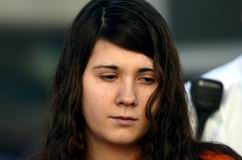 Miranda Barbour
Murderer · USA · 2013
Miranda Barbour, 19, defendant. · Elytte Barbour, 22, defendant and husband of…
100 victims
Miranda Barbour
Murderer · USA · 2013
Miranda Barbour, 19, defendant. · Elytte Barbour, 22, defendant and husband of…
100 victims
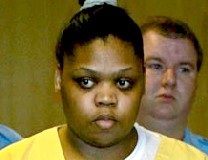 Tiffany Hall
Murderer · USA · 2006
Tiffany Hall was 24 when she was charged in September 2006. She later entered a…
5 victims
Tiffany Hall
Murderer · USA · 2006
Tiffany Hall was 24 when she was charged in September 2006. She later entered a…
5 victims
 Banita Jacks
Murderer · USA · 2007
Banita Jacks was a Washington, DC resident convicted of murdering her four daug…
4 victims
Banita Jacks
Murderer · USA · 2007
Banita Jacks was a Washington, DC resident convicted of murdering her four daug…
4 victims
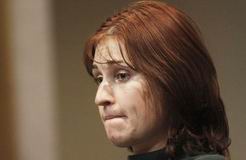 Holly Grigsby
Murderer · USA · 2011
Holly Grigsby was sentenced to life in prison without parole on July 15, 2014.…
4 victims
Holly Grigsby
Murderer · USA · 2011
Holly Grigsby was sentenced to life in prison without parole on July 15, 2014.…
4 victims
 Jessica Tata
Murderer · USA · 2011
Jessica Tata was a Houston home day care owner who fled to Nigeria after a fire…
4 victims
Jessica Tata
Murderer · USA · 2011
Jessica Tata was a Houston home day care owner who fled to Nigeria after a fire…
4 victims
 Amanda Bennett
Murderer · USA · 2011
Amanda Bennett was an Indiana woman who shot her three children and set the fam…
3 victims
Amanda Bennett
Murderer · USA · 2011
Amanda Bennett was an Indiana woman who shot her three children and set the fam…
3 victims
 James Riva
Murderer · USA · 1980
James Riva James Riva was sentenced to life in prison for second-degree murder…
1 victim
James Riva
Murderer · USA · 1980
James Riva James Riva was sentenced to life in prison for second-degree murder…
1 victim
 Yu Hagino
Murderer · Japan · 2005
Yu Hagino (萩野 裕, Hagino Yū, born 1982) was a teacher at a cram school in Uji, K…
1 victim
Yu Hagino
Murderer · Japan · 2005
Yu Hagino (萩野 裕, Hagino Yū, born 1982) was a teacher at a cram school in Uji, K…
1 victim
 William Shrubsall
Homicide · Canada · 1988
William Shrubsall (also known as Ian Thor Greene and now Simon Templar (Ethan S…
1 victim
William Shrubsall
Homicide · Canada · 1988
William Shrubsall (also known as Ian Thor Greene and now Simon Templar (Ethan S…
1 victim
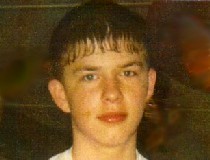 Evan Miller
Homicide · USA · 2003
Evan Miller was sentenced to spend the rest of his life in prison. He was sente…
1 victim
Evan Miller
Homicide · USA · 2003
Evan Miller was sentenced to spend the rest of his life in prison. He was sente…
1 victim
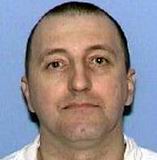 Cary Kerr
Murderer · USA · 2001
Cary D. Kerr was a white male born October 6, 1964 in Dallas, Texas. He was 46…
1 victim
Cary Kerr
Murderer · USA · 2001
Cary D. Kerr was a white male born October 6, 1964 in Dallas, Texas. He was 46…
1 victim
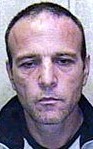 Phillip Heggarty
Murderer · United Kingdom · 2003
Phillip Heggarty (born 1956) was a British murderer. In 2003, Phillip Heggarty…
1 victim
Phillip Heggarty
Murderer · United Kingdom · 2003
Phillip Heggarty (born 1956) was a British murderer. In 2003, Phillip Heggarty…
1 victim
- Gender
- female
- Country
- USA
- Location
- Tuscaloosa County, Alabama , USA
- Date of birth
- 1982
- Age at first offence
- 30
- Characteristics
- rape, domestic violence, drugs, attempt to collect insurance money
- Victim profile
- Hunter Daniel Grissom, 28 (her ex-husband)
- Method of murder
- Shooting
- Date(s) of murder
- May 15, 2012
- Years active
- 2012
- Date of arrest
- Same day
- Status
-
Imprisoned
Sentenced to 25 years in prison on September 2, 2014
Case record: Tracey Grissom
Background
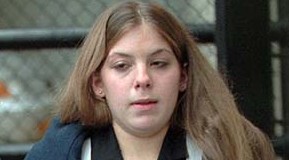
Tracey Grissom was convicted of the murder of her ex-husband, Hunter Grissom. She was 32 years old and from Alabama (described as being of Northport). The couple had a five-year-old daughter.
Hunter Grissom had previously been charged with first-degree rape, first-degree sodomy, unlawful imprisonment, and other drug-related charges. At the time of Hunter Grissom’s death, the local district attorney was pursuing charges, and he was never found guilty. Tracey Grissom was described as the alleged victim in the rape and sodomy charges.
The offence
Tracey Grissom shot and killed Hunter Grissom at the Binion Creek Boat Landing / boat ramp on May 15, 2012. She shot him in the back six times after ambushing him at work, and she shot him multiple times. Prosecutors said the killing was motivated by Tracey Grissom wanting to cash in Hunter Grissom’s $100,000 life insurance policy, and that she went there hoping to collect more than $100,000 in life insurance. The prosecution also contended Grissom killed her ex-husband for $103,000 in life insurance.
During the police account relayed in court documents, Tracey Grissom told investigators that she went to the boat landing to take a photo for a pending civil case related to their divorce, to prove he was working after he stopped support payments. She told police that Hunter Grissom gave her “a mean look and an obscene gesture,” and that she opened fire after he saw her sitting in her car. A co-worker of Hunter Grissom testified that Hunter Grissom told someone “call the law” when Tracey Grissom pulled up to the boat ramp in her car and before she opened fire.
Investigation
A 911 call was placed by William Dockery, Hunter Grissom’s friend and employee. Dockery told a dispatcher:
“Somebody just shot my boss, I think he’s dead,”
“She just pulled up and I guess he knew something was about to happen because he said ‘call the law.'”
Deputies with the Tuscaloosa County Sheriff’s Office responded to the boat landing at approximately 8 a.m. on May 15, 2012 after Tracey Grissom called 911. The first deputy on scene took Tracey Grissom into custody. Other officials secured the scene and the firearm, and found Hunter Grissom face down in the parking lot next to his vehicle. Paramedics declared Hunter Grissom dead at the scene.
Investigators took Tracey Grissom into the Tuscaloosa Homicide Officer for questioning. In her interview, she said she was on her way to work when she saw her ex-husband at the boat landing, and she pulled into the parking lot to take a photo for a pending civil case. She told investigators she left her car and began firing at her ex-husband until the clip was emptied, then called 911.
Court documents also detailed allegations made by Tracey Grissom regarding an earlier assault by Hunter Grissom. She reported that in November 2010, Hunter Grissom bound her legs with his belt, dragged her from their closet into their master bedroom, and sexually assaulted her. She said she was then knocked unconscious on the floor of their bathroom and did not wake up until the next morning. Paperwork from treatment showed a gash on her head, bruises, bind marks on her feet, and writing on her arm. It was also reported that Tracey Grissom’s 11-year-old son witnessed the couple arguing and heard someone running and falling.
Arrest
Tracey Grissom was booked into the Tuscaloosa County Jail at approximately 1:15 p.m. on May 15, 2012 on a charge of murder. Her bond was set at $60,000.
Trial
A jury was selected and opening statements began in Tracey Grissom’s murder trial on August 5, 2014. Assistant District Attorney Stephanie Billingslea argued that Tracey Grissom killed her estranged husband Hunter Grissom for more than $100,000 in insurance money in May 2012. The defense did not deny that Tracey Grissom pulled the trigger, and argued that she was suffering from post-traumatic stress disorder after being beaten and sexually assaulted by Hunter Grissom.
During the trial, it was stated that Hunter Grissom was awaiting trial on rape and other charges at the time of his killing. The defense lawyer, Warren Freeman, argued that when jurors heard the evidence and backstory, they would understand why Grissom shot him that day, and that Freeman believed jurors would find her not guilty.
At some points in the sentencing stage reporting, it was said that Grissom and her attorneys were not allowed to go into detail about the stories behind the alleged rape and sodomy allegations.
A jury found Tracey Grissom guilty of murder in August 2014.
Tracey Grissom testified during the trial. She said she went to a Lake Tuscaloosa boat ramp where her ex-husband was working to take a photo for use in their divorce case. She said:
“The plan was to get a picture and get out of there as quickly as possible,”
She said her ex-husband looked at her with an aggressive face:
“He flipped me a bird and started coming toward my vehicle,”
She said she was worried her vehicle would roll down the boat landing and into the water:
“At that point, I didn’t have anywhere to go,”
“At that point, I didn’t know what else to do except to defend myself.”
She said she had not left home planning to kill him. She also said she was afraid of him and once lived in a safe house to protect herself.
Sentencing
On September 2, 2014, Tuscaloosa County Circuit Court Judge John England sentenced Tracey Grissom to 25 years in prison after rejecting her plea for probation at a hearing that lasted nearly five hours.
Assistant District Attorney Stephanie Billingslea asked the judge to sentence Tracey Grissom to 40 years in prison. She said:
“She shot a man in the back as he was running away,”
“What leniency did she show him?”
During sentencing, one juror, Janice Kelley, asked the judge for leniency because she believed Grissom did not get a fair trial after details of the alleged rape and sodomy were not provided to jurors. It was also reported that Kelley said she wouldn’t have voted to convict if she had known details of the alleged rape, sodomy, and false imprisonment that Grissom said she suffered. Kelley said:
“I feel I made a mistake. If I had to do it over again, we'd have had a hung jury,”
“We didn't get her side. She did not get a fair trial.”
A jury foreman wrote a letter read during sentencing. The letter said jurors voted to convict because there was no dispute that Tracey Grissom shot Hunter Grissom. The letter stated jurors did not believe prosecutors’ claims that she did it to collect a life insurance policy, and said the shooting was a “crime of passion, not for financial gain,” and that she should be sentenced accordingly. The letter stated:
“I wish we had seen evidence of the rape allegation,”
“We feel that she just 'lost it.'”
During sentencing, when court restrictions were lifted, it was reported that Tracey Grissom told the court she had suffered permanent rectal and vaginal damage after allegedly being raped by her husband, and that she had undergone several surgeries. She pulled up her shirt to show that she was wearing a colostomy bag.
She told the court that:
“he would make it to where nobody would ever want me”.
She said she did not report the rape because he had threatened her life.
Judge England stated he could have sentenced Grissom to 20 years to life in prison and said he stayed at the lower end because of her mental state at the time of the shooting and because she had no criminal history. He noted that her attorney chose not to argue that she was not guilty due to her mental state at the time, and that the defense chose not to allow the jury to consider a less serious charge, such as manslaughter.
After sentencing, Tracey Grissom was escorted from the courtroom and cried, stating:
“It's not fair, it's not fair!”
She also said:
“I just hope that someone will still fight for domestic violence.”
It was also stated that Tracey Grissom was eligible for parole.
Appeals
Defense attorney Warren Freeman said outside court on September 2, 2014 that he would be seeking a new trial for his client. Freeman said they had evidence that something happened in the jury room that was not appropriate, and indicated that it involved a photograph that jurors saw during deliberations. Freeman also expressed disappointment in the judge’s decision and said the sentencing was too harsh, considering the foreperson of the jury indicated that the jurors did not feel she should be punished according to being found guilty of murder.
It was also reported that Freeman was working on a motion for a new trial, but because of the length of Tracey Grissom’s sentence, she was not eligible for an appeal bond. A circuit judge could release someone with a medical emergency, and it was reported that Tracey Grissom was on ten different medications under a doctor’s supervision. Her attorneys were exploring avenues including medical concerns to get her out on bond.
Outcome
Tracey Grissom was sentenced to 25 years in prison on September 2, 2014, after a jury found her guilty of murder.
Following sentencing, family members and friends gave statements. Hunter Grissom’s aunt, Gina Grissom, told Judge England:
“There have been lots of allegations against Hunter. We’ve never believed anything that has come out of her [Tracey Grissom] mouth.”
She also directed a question to Tracey Grissom:
“Hunter was proud of his name. Why would you still chose to use our name, and bring it down?”
Hunter Grissom’s sister Chloe did not testify, but a victim’s services officer read her statement to the judge. Chloe wrote:
“I can only pray that you see how psychotic this woman really is,”
“She is the most selfish human being on this planet.”
Hunter Grissom’s mother, Melanie Garner, told the judge:
“This tremendous loss has changed me,”
“and I don’t know how to change back.”
After sentencing, it was stated that Grissom’s friend and supporters wore matching t-shirts in support of domestic violence awareness and that an online support group existed.
Other details
A domestic violence counselor, Marian Waters, testified that Grissom’s injuries were among the worst she had seen in a 20-year career. Waters said:
“I was horrified,”
“She had been subjected to a very vicious and very brutal assault. She was constantly on guard, experienced panic attacks and was jumpy. She had horrible night terrors. I felt she about to be put in a lethal situation and was terrified for her life.”
A friend testified that she helped Tracey Grissom after the alleged attack and said the hematoma she saw on Tracey’s side was the size of a grapefruit or small soccer ball. It was also stated that the alleged attack caused rectal nerve damage requiring surgery, torn vaginal ligaments, and other medical problems, including a hysterectomy.
Prosecutors asked whether those problems were caused by an elective labiaplasty that went wrong. Grissom responded that:
“the surgery was to prevent infections and that she didn't experience problems until after the alleged rape.”
During the sentencing reporting, it was also reported that Tracey Grissom’s attorney planned to seek a new trial based on restrictions during the jury trial and the omission of rape-related details from jurors. The defense stated it would be the basis for their appeal.

Spotted an error, or have more information about this case?