
Martha Grinder
Murderer Lydia Sherman
Murderer · USA · 1864
Lydia Sherman was also known as “The Derby Poisoner.” She was born in 1824 in B…
10 victims
Lydia Sherman
Murderer · USA · 1864
Lydia Sherman was also known as “The Derby Poisoner.” She was born in 1824 in B…
10 victims
 Ann Bilansky
Murderer · USA · 1859
Ann Bilansky was executed by hanging in Minnesota on March 23, 1860 for the ars…
1 victim
Ann Bilansky
Murderer · USA · 1859
Ann Bilansky was executed by hanging in Minnesota on March 23, 1860 for the ars…
1 victim
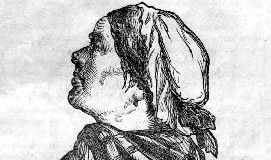 Bridget Durgan
Murderer · USA · 1867
Bridget Durgan was an Irish domestic who was hanged on August 30, 1867. She was…
1 victim
Bridget Durgan
Murderer · USA · 1867
Bridget Durgan was an Irish domestic who was hanged on August 30, 1867. She was…
1 victim
 Kenneth Richey
Homicide · USA · 1986
Kenneth Richey was a UK-US dual citizen. He was born August 3, 1964, in Zeist,…
1 victim
Kenneth Richey
Homicide · USA · 1986
Kenneth Richey was a UK-US dual citizen. He was born August 3, 1964, in Zeist,…
1 victim
 Paul Warner Powell
Murderer · USA · 1999
Paul Warner Powell was an imprisoned Virginia capital defendant. In January 199…
1 victim
Paul Warner Powell
Murderer · USA · 1999
Paul Warner Powell was an imprisoned Virginia capital defendant. In January 199…
1 victim
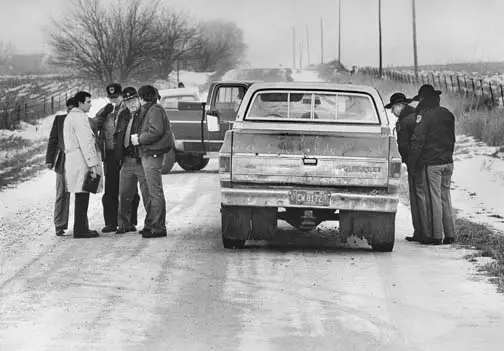 Dale Burr
Murderer · USA · 1985
Dale Burr shot his wife, Emily, at their home; bank president John Hughes at hi…
3 victims
Dale Burr
Murderer · USA · 1985
Dale Burr shot his wife, Emily, at their home; bank president John Hughes at hi…
3 victims
 Christopher Coleman
Murderer · USA · 1995
December 14, 1995 — A man approached the passenger side of a car occupied by fo…
3 victims
Christopher Coleman
Murderer · USA · 1995
December 14, 1995 — A man approached the passenger side of a car occupied by fo…
3 victims
- Gender
- female
- Country
- USA
- Location
- Pittsburgh, Allegheny County, Pennsylvania , USA
- Date of birth
- 1815
- Age at first offence
- 49
- Characteristics
- poisoner
- Victim profile
- Jane R. Buchanan / Mary Caroline Caruthers
- Method of murder
- Poisoning ( arsenic and antimony)
- Date(s) of murder
- February 28, 1864 / August 1, 1865
- Years active
- 1864–1865
- Date of arrest
- August 24, 1865
- Status
-
Executed
Sentenced to death on November 25, 1865; executed by hanging on January 19, 1866
Case record: Martha Grinder
Names and identification
Martha Grinder was convicted of murder in the first degree for poisoning Mary Caroline Caruthers.
The offence
Mrs. Martha Grinder was hanged in Pittsburgh, Pennsylvania for the poisoning by arsenic of Mary Caruthers and Jane Buchanan. She confessed to crimes to which she confessed, and she was described as having been “poisoning by arsenic, of Mary Caruthers and Jane Buchanan.”
She told the jury at her trial:
“I loved to see death in all its forms and phases and left no opportunity to gratify my tastes for such sights. Could I have had my own way, probably I should have done more.”
Background and alleged wider pattern
The New York Times reported that it was suspected that “these two women were not her only victims.”
A separate report described that Mrs. Grinder, with her husband, became a resident of Pittsburgh about six years before the reporting. The family consisted of the husband and wife and a little female child, probably about a year old.
The report described that, after a few months, she removed to a better house, had plenty of money, dressed elegantly, and introduced herself into society. It stated that she became a favorite among residents and was “always a welcome visitor.” It also stated that she connected herself with the Ames' Methodist Episcopal church as a member, but later lost the confidence of members and withdrew.
In explaining her sudden prosperity, she stated that she was a near relative of a wealthy Ex-Governor of Indiana. The report stated that he promised, prior to her marriage, that he would settle something handsome on her children if she should have any, and that he settled ten thousand dollars upon the child “above alluded to.”
The same report described a death of Jane R. Buchanan on the 28th day of February, 1864. It stated that Jane R. Buchanan had resided for four years prior to her death with Mrs. Kirkpatrick on Liberty-street in the capacity of a domestic. It stated that she had accumulated clothing and also thirty or forty dollars deposited in one of the city banks. It stated that on Wednesday preceding her death she left employment to visit her aunt in Philadelphia, drawing money from the bank to defray the expenses, and that for some reason the visit was postponed. It stated that on Thursday, Feb. 24, she accepted a situation in the family of Mrs. Grinder, then residing in Pusey's-court, off Hand-street, near the Allegheny River.
The report stated that on the same night she was taken suddenly ill with violent vomitings and purging. It stated that all the services of her friends were declined, and that on Saturday night Mr. Grinder called at the house where the trunk of the deceased had been left and requested it be given to him because she was uneasy about it. It stated that the trunk was produced and removed to the house of Mrs. Grinder.
It stated that the patient continued to sink and that no information about it had been sent to her acquaintances. It stated that on Monday morning she died. It stated that intelligence of the girl’s death was sent to Mrs. B. and others, creating surprise because the deceased previously enjoyed the best of health.
The report stated that several persons called at the house of Mrs. Grinder to assist in preparing for the funeral, and that upon opening the trunks all money, “a set of jewelry, and nearly all of the clothing were found to have been abstracted,” with not even sufficient clothing to dress the remains left. It stated that Mrs. Grinder supplied the necessary articles for her own wardrobe and that the body was prepared for interment.
The report stated that the fact of the deceased being possessed of the money and clothing was well known to her immediate acquaintances, especially to Roberts, who had accompanied her to Mrs. Grinder's house on the evening she accepted the place and had counted it for her. It stated that the sudden disappearance aroused suspicion that she had been foully dealt with.
It stated that Coroner McClung was notified and empanelled a jury to inquire, that the investigation failed to throw any light on the affair, and that with no post-mortem examination held the jury rendered a verdict of death from natural causes.
The same report also stated that Mrs. Hutchinson, wife of M.G.S. Hutchinson, was suddenly taken ill at the house of the accused after dined there, and that she was confined to her bed for some weeks thereafter.
It further stated that it was alleged that on the night after the death of Mrs. Caruthers, a supper was prepared by Ms. Grinder for watchers and that one or more of the persons who partook became sick with symptoms “precisely the same as [???] [???] themselves during the illness of Mrs. Caruthers,” while multiple other cases besides those given were mentioned.
Investigation
Arrest and charging information
On Friday morning, August 24, James A. Caruthers appeared before Mayor Lowry and made information charging Mrs. Martha Grinder, with the murder of his wife, Mary Caroline Caruthers, by means of poison.
A warrant was issued and placed in the hands of officers Messner and Herron. The officers preceded to her house in Gray’s Alley, Allegheny City, and after “considerable trouble” secured her arrest and brought her to the Mayors office, where she was locked up in the tombs for examination.
Statement of James A. Caruthers
At the time of making the information, Mr. Caruthers made the following statement:
“In June last I resided in Gray’s Alley, Allegheny City, in an adjoining house to Mrs. Grinder, and my wife’s health up to the 27th day of that month was good—On the evening of the 27th she was invited to take tea with the Grinder family, by Mrs. G. and while at the table eat some peaches and cream. On her return home she was taken suddenly ill, and at nine o’clock was much worse. At twelve she was seized with violent vomiting, purging, nausea at the mouth, and headache. These symptoms continued two hours, rendering her prostrate and weak; she also complained of great thirst. At daylight she requested me to go for Dr. Irish, which I did, and then went to my work. About eleven o’clock I returned home and found my wife still in bed, but somewhat better, gave her some water to quench her thirst, cooked my dinner and returned to the store. In the evening she was worse and she continued bad all night.—Went to the store in the morning and returned at eleven o’clock. My wife complained of being hungry, and requested me to make some rice soup. Went down to the kitchen and kindled a fire, and while so engaged Mrs. Grinder came in and said she had filled the kettle and tried to make a fire, but it would not burn. I made the soup and a pot of tea, and when it was ready my wife came downstairs and partook of the soup quite heartily, after which she returned to her room and I went to the store. About two o’clock Mrs. Grinder came to the store and said my wife was quite sick again. I hurried home and found her affected precisely as she had been in the first attack. Dr. Irish came and said she was poisoned. On Friday morning Mrs. Grinder brought in some coffee, toasted bread and crackers which my wife partook of and was soon after taken with vomiting, spasmodic affection of the throat and burning at the stomach. At noon Mrs. Grinder brought another lot of crackers, coffee and toast, of which my wife eat sparingly, and in twenty minutes after was seized with the old symptoms. Dr. Irish came soon after and informed us that there was something wrong about the house, and advised us to leave and go to the country. Told my wife not to eat anything more prepared by Mrs. Grinder, she did not do so, and on Saturday afternoon we went to New Castle, Lawrence County, where my wife soon recovered her health. [Mr. Caruthers, after eating of the rice soup, was also affected with symptoms similar to those experienced by his wife, and was in consequence confined to his bed until Saturday morning. He did not eat of any victuals prepared by Mrs. G. however, and escaped further injury.
ATTEMPT TO POISON MR. CARUTHERS On the 7th of July I returned to Allegheny City and took boarding with a Mrs. Love, sleeping at home. A few days after heard that Mrs. Grinder’s child was dead, called upon her, and at her request consented to accompany the funeral to Leechburg. Called at the house early next morning, when Mrs. Grinder invited me to partake of some breakfast; drank a cup of coffee, which had a strange metallic taste, and shortly after felt sick. On the way to Allegheny Valley Depot, Mrs. G. remarked that I looked pale and inquired if I was sick. After eating dinner felt better, and on my return to the city in the evening left the funeral party and went to Dr. Irish’s office, where I remained about half an hour and then went to Mrs. Grinder’s house. She requested me to wait a few moments for supper; went into my house, and returned in a short time, and eat quite hearty of the meal. After supper Mrs. Grinder told me if I got sick during the night to let her know. Then returned to my house and sat down to read, and after a while became quite ill and commenced vomiting. Afterward went to my window, put my head out and again vomited. Grinder came to his window and asked if I was sick. Replied in the affirmative, and requested him to go for Dr. Irish, who came and remained with me until twelve o’clock. On the next morning Mrs. Grinder came in and brought me some coffee and a piece of toast, which I drank and eat, and in less than half an hour afterwards was in the same condition as on the previous night. Thought I would die, and sent to New Castle for my wife.
RETURN OF MRS. CARUTHERS TO THE CITY My wife arrived at home on the evening of the same day, July 14, about eight o’clock. The next morning she cooked breakfast, and during the day I felt better. In the evening she prepared some rice for me but had no milk, and Mrs. G. coming in at the time offered to give her some. I eat of the rice and milk, after which my wife went to market. She returned in about an hour, and found me in an insensible condition. Dr. Irish was again sent for, and by pursuing his directions I soon got much better. While my wife was attending to me Mrs. Grinper[sic-Grinder] prepared supper in the kitchen, and when it was ready my wife went down and eat of the food. Shortly after she returned to my room, she became dizzy; said she was sick, had a burning in the stomach, and soon commenced to vomit. From that time until August 1 both Mr. and Mrs. Caruthers were confined to their beds—Mrs. Grinder attending to all their wants unceasingly. Whenever she prepared their food they became worse. If others furnished it no bad effects were felt. On the afternoon of August 1, Mrs. Caruthers, after seventeen days suffering, expired, and was taken to New Castle for interment.”
The statement also described that Mr. Grinder, in addition to Dr. Irish, was involved in the narrative of symptoms and recovery.
Search of Mrs. Grinder’s house; poison found
The Mayor dispatched an officer to her residence for a careful search. After a rigid examination of the building, several papers containing “a fine white powder,” along with a small pitcher filled with milk, were found and brought to the Mayor’s office. The papers and contents were sent to Prof. Otto Wuth for analysis.
Prof. Otto Wuth pronounced the poison to be antimony. The analysis of the milk found it to be “highly impregnated with poison.”
It was also stated that Mr. G. had purchased large quantities of the poisod [sic-poison] from a well known drug store in Allegheny City, and that on investigation the rumor was found to be correct.
Exhumation; analysis and jury findings
On the 30th of August, Coroner Clawson, accompanied by Dr. Geo. L. M. Cook and Mr. Caruthers, visited New Castle and exhumed the remains of Mrs. Caruthers, which were interred in the cemetery at that place. A portion of the remains were brought to the city and placed in the hands of Otto Wuth, who had conducted the previous examination.
The analysis occupied several days. On Friday, Sept. 8, the jury met at the Mayor’s Office to complete investigations. Professor Wuth testified in relation to the result of the analysis and stated that he discovered both arsenic and antimony in the remains.
Several other witnesses were examined. The jury rendered a verdict that the deceased, Mary C. Caruthers, came to her death from poison administered by Martha Grinder.
Trial
Court proceedings and verdict
The Grinder poisoning case was concluded in the Court of Oyer and Terminer. The report stated that during the “five days of the hearing of evidence” and addresses of counsel to the jury, the courtroom was crowded.
The report stated that “The evidence was entirely circumstantial,” but that the chain of testimony was complete enough that when the last witness left the stand a universal murmur of guilty was heard.
It reported that after Judge Sterbets’ charge, the jury retired at 5 o'clock and had not arrived at any conclusion when the court adjourned until 9 o'clock. It reported that on the first ballot the jury stood: “For acquittal, six: for conviction, six.” It reported that the vote was unanimous for conviction and that owing to the adjournment of the court they were unable to render it until the next morning.
On the morning of Oct. 28, the court was opened at 9 o’clock, and Mrs. Martha Grinder was brought in and placed in the dock. At 9:25 the jury took their seats in the jury-box.
CLERK HERREON instructed the jury:
“Gentlemen of the jury, look upon the prisoner. Have you agreed upon a verdict ?”
FOREMAN responded:
“We have. We find the prisoner guilty of murder in the first degree.”
CLERK HEBRON then asked:
“Gentlemen of the Jury, harken unto your verdict as the court hath recorded it. In this issue joined between the Commonwealth and MARTHA GRINDER, you say she is ‘guilty of murder in the first degree,’ and so you say all?”
JURORS answered:
“We do.”
Judge Sterrett thanked the jury and discharged them. Mrs. Grinder maintained composure, walked out with a firm and elastic step, and appeared indifferent to everything around her.
Arraignment
On Monday, Oct. 23, the prisoner was arraigned in regular form. In response to the interrogatory “Guilty or not guilty?” she replied in a clear, audiable voice:
“Not guilty, as God is my Judge!”
The trial proceeded with five days. The report stated that all witnesses examined were called by the Commonwealth, and that the defense offered no testimony.
The case was submitted to the jury at about four o’clock in the afternoon of Friday, October 27, and on the morning of the 28th they returned a verdict of “Guilty of murder in the first degree.”
Composure and requests after verdict
During the scene after verdict and before remand, Mrs. Grinder requested an interview with her husband. Warden White granted the request and admitted him to her cell.
During their interview, she wept bitterly. It was reported that Grinder also shed tears but did not appear to fully realize the awful position.
The report stated that, shortly after the interview, she was still weeping and protested her innocence repeatedly, stating that her neighbors had maliciously persecuted her and that on the trial they had sworn falsely.
She expressed anxiety as to the fate of her husband and begged the Sheriff to do all in his power to save his life, adding that he too was innocent of the charge pending against him.
When asked if she desired the services of a minister, she replied:
“In answer to the inquiry ‘if she desired the services of a minister,’ she said she did, and designated Rev. McDermott, of the M. E. Church, as the person whom she wished to administer to her spiritual welfare.”
Sentencing
Sentence of death
The prisoner remained in jail until the morning of Nov. 25, at which time she was brought into court for sentence. The report stated that during the interim the jail was daily visited by scores of persons seeking an interview with the prisoner, and that comparatively few were admitted due to rigorous prison rules.
On the morning of Nov. 25, after Marshall and Frecke had been sentenced, she was placed in the box. Judge Sterrett directed her to stand up and asked if she had anything to say why the sentence of death should not be pronounced upon her.
She replied that she was innocent and charged Mr. Caruthers with conspiracy against her. She then continued speaking in a rambling, almost in coherent manner for some time and finally sank down on her seat. After she was assisted again to her feet, the judge pronounced the sentence of death. She was remanded to jail to await execution.
Execution and last statements
Execution setting and conduct
The report stated that at precisely fifteen minutes past 1 o’clock Sheriff Stewart, accompanied by Deputy Sheriff Cluley, proceeded to the cell of the condemned woman. Upon entering, Sheriff Stewart remarked to Mrs. Grinder:
“ Are you coming for me? ”
The Sheriff replied:
“Yes, Mrs. Grinder.”
Mrs. Grinder then said:
“Jesus Christ is coming for me too.”
Sheriff Stewart pinioned her arms. The funeral procession moved slowly downstairs, with the sheriff in advance and the condemned supported on her right by the Rev. Holmes and on the left by Rev. Sinsabaugh. Following were Dr. A. G. McCandless, Thomas M. Marshall, Esq. and Deputy Sheriff Cluley.
The procession moved slowly to the prison yard. Mrs. Grinder mounted the platform of the dread instrument of death and took a seat in the chair on the trap door. After a short prayer by Rev. Holmes, he bid her farewell when she requested that he stay by her.
She then bid farewell to Mr. Sonsebaugh [sic-Sinsabaugh], Mr. Marshall, Dr. McCandless, and Deputy Cluley.
The Sheriff requested her to arise, bound her clothing about her feet, and requested a final good-by, to which she replied:
“I am going to Heaven and hope to meet you there.”
The Sheriff adjusted the rope, placed the cap, descended the scaffold, and sprung the trigger at twenty minutes past one; the trap fell and she was executed.
Confession to the press after the trap fell
After the trap fell, a confession furnished to members of the press was dated “Pittsburgh, Jan. 18, 1866” and stated:
“In view of my departure, in a few hours, from earth, I want to say that I acknowledge my guilt in the case of Mrs. Caruthers, and also in the case of Miss Buchanan. But I am innocent of all charges made against me in the papers for poisoning people. But bad as I have been, I feel that God for Christ’s sake has forgiven me; and through his mercy I hope to find an entrance into heaven. I die without any hard feelings to any one—forgiving all as I hope to be forgiven. Mr. Stewart has been very kind to me—doing all in his power to make me comfortable, and I pray that he may be assisted in his duty and be rewarded for his kindness. Mr. White has also been very kind and has treated me with respect always. May God be good to him. If I had been faithful to my Church duties, it would have been different with me now; but I am thankful that God is so good as to return to me now that I do come back to him. Her Martha[ X ]Grinder”
Outcome
Martha Grinder was executed by hanging in Pittsburgh, Pennsylvania for the murder of Mary Caroline Caruthers.
She had been sentenced to death on November 25, 1865, and the execution occurred on January 19, 1866.
A notice in The Spirit of Democracy reported that, in pursuance of the sentence of the law approved by Governor Andrew G. Curtin, Martha Grinder was executed in the yard of the county prison for the murder of Mary Caroline Caruthers.
Other details
The New York Times reported on October 31, 1865, stating that the trial concluded in the Court of Oyer and Terminer. It described the jury deliberation and the guilty verdict.
The narrative included remarks about her mental condition. It stated that a “thorough medical test was made of her mental condition” a few days prior, with “the conclusion was unanimous that she was entirely sane,” and that her demeanor on the gallows was unexpectedly calm.
The New York Times described a “most singular coincidence” involving the name “Caruthers,” stating that Mrs. Caruthers is the same name as an entire family of Caruthers in Carlisle, Pennsylvania who were poisoned about 15 years ago by a young girl named Rachel Clark, a domestic in the house of Mr. Caruthers. It stated that two, three or more of the family died and that Andrew Caruthers, an eminent lawyer of Carlisle, died a few years later, with his muscles and arms, hands and legs contracted and drawn up to a painful degree “being contracted and drawn up to a painful degree,” described as the result of the poisoning referred to. It also stated that it was alleged that jealousy caused the “youthful murderess,” who was represented as very handsome, to perpetrate the crime.

Spotted an error, or have more information about this case?