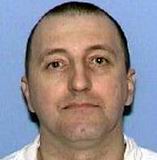
Cary Kerr
Murderer Russell Ellwood
Murderer · USA · 1991
Russell Ellwood was a former taxi driver. Authorities suspected him of killing…
20 victims
Russell Ellwood
Murderer · USA · 1991
Russell Ellwood was a former taxi driver. Authorities suspected him of killing…
20 victims
 Robert Martines Perez
Murderer · USA · 1994
Name: Robert Martines Perez · Other name used in proceedings: Robert Martinez P…
15 victims
Robert Martines Perez
Murderer · USA · 1994
Name: Robert Martines Perez · Other name used in proceedings: Robert Martinez P…
15 victims
 Billy Frank Vickers
Murderer · USA · 1993
Billy Frank Vickers Vickers was executed by lethal injection in Texas on Januar…
14 victims
Billy Frank Vickers
Murderer · USA · 1993
Billy Frank Vickers Vickers was executed by lethal injection in Texas on Januar…
14 victims
 Stacey Lannert
Murderer · USA · 1990
Name: Stacey Ann Lannert Also known as: Stacey Lannert Date of birth: May 28, 1…
1 victim
Stacey Lannert
Murderer · USA · 1990
Name: Stacey Ann Lannert Also known as: Stacey Lannert Date of birth: May 28, 1…
1 victim
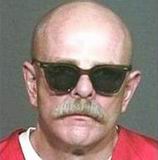 Barry Byron Mills
Murderer · USA · 1979
Barry Byron Mills (born 1948) was a leader of the Aryan Brotherhood (AB) prison…
8 victims
Barry Byron Mills
Murderer · USA · 1979
Barry Byron Mills (born 1948) was a leader of the Aryan Brotherhood (AB) prison…
8 victims
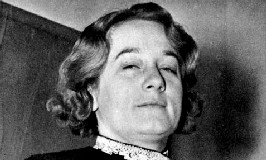 Anna Marie Hahn
Serial killer · USA · 1932
Anna Marie Hahn (née Filser; July 7, 1906 in Bavaria, Germany – December 7, 193…
5 victims
Anna Marie Hahn
Serial killer · USA · 1932
Anna Marie Hahn (née Filser; July 7, 1906 in Bavaria, Germany – December 7, 193…
5 victims
 Richard Albert Leavitt
Murderer · USA · 1984
Defendant: Richard Albert Leavitt, 44, of Blackfoot. · Victim: Danette Jean Elg…
1 victim
Richard Albert Leavitt
Murderer · USA · 1984
Defendant: Richard Albert Leavitt, 44, of Blackfoot. · Victim: Danette Jean Elg…
1 victim
 David John Copeland
Murderer · United Kingdom · 1999
David John Copeland was born in Isleworth, in the London Borough of Hounslow, a…
3 victims
David John Copeland
Murderer · United Kingdom · 1999
David John Copeland was born in Isleworth, in the London Borough of Hounslow, a…
3 victims
 Nicholas Yarris
Justice miscarriage · USA · 1981
Nicholas Yarris Nicholas Yarris was sentenced to death on January 23, 1983. His…
0 victims
Nicholas Yarris
Justice miscarriage · USA · 1981
Nicholas Yarris Nicholas Yarris was sentenced to death on January 23, 1983. His…
0 victims
- Gender
- male
- Country
- USA
- Location
- Tarrant County, Texas, USA
- Date of birth
- October 6, 1964
- Age at first offence
- 37
- Characteristics
- rape
- Victim profile
- Pamela Horton, 34
- Method of murder
- Strangled and pushed the victim out of a moving vehicle, resulting in her death
- Date(s) of murder
- July 12, 2001
- Years active
- 2001
- Date of arrest
- Same day
- Status
-
Executed
Executed by lethal injection in Texas on May 3, 2011
Case record: Cary Kerr
Cary D. Kerr was a white male born October 6, 1964 in Dallas, Texas. He was 46 years old at the time of execution. He had brown hair, green eyes, and a height of 5' 09" and weight of 219 (also given as 224 in a letter). He had an education of 10 years. His occupation included warehouseman, maintenance mechanic, and laborer.
Kerr’s prison number was 999449 and he was incarcerated at the Polunsky Unit (Polunsky Unit 3872 FM 350 South Livingston, TX 77351 USA). He had prior prison record: None.
Timeline
- 07/12/2001 — Kerr sexually assaulted and murdered Pamela Horton.
- 09/20/2001 — A Tarrant County grand jury indicted Kerr for capital murder (re-indicted 01/13/03).
- 03/25/2003 — A Tarrant County jury convicted Kerr of capital murder.
- 03/28/2003 — The 297th District Court of Tarrant County sentenced Kerr to death.
- 10/20/2004 — Kerr filed an original application for a state writ of habeas corpus.
- 01/12/2005 — The Texas Court of Criminal Appeals upheld Kerr’s conviction on direct appeal.
- 08/31/2005 — The Texas Court of Criminal Appeals denied Kerr’s request for habeas relief.
- 05/30/2006 — Kerr filed a petition for a federal writ of habeas corpus.
- 12/20/2006 — The Texas Court of Criminal Appeals dismissed Kerr’s subsequent application.
- 09/17/2009 — A Fort Worth federal district court denied habeas relief and issued final judgment.
- 06/30/2010 — The U.S. Court of Appeals (5th Circuit) affirmed denial of habeas relief.
- 01/10/2011 — The Supreme Court denied Kerr’s petition for certiorari review.
- 01/19/2011 — The 297th District Court of Tarrant County scheduled execution for May 3, 2011.
- 05/03/2011 — Kerr was executed by lethal injection in Texas; he was pronounced dead at 6:19 p.m.
Background
Kerr socialized with Pamela Horton and her friend Jennifer York at a Fort Worth nightclub. Horton described Kerr as a “nice guy.” Horton lived in the same trailer park as Kerr.
Kerr and Horton left a nightclub on the evening of July 11, 2001; the events leading to the killing occurred in the early morning hours after that.
Kerr lived in Tarrant County bars and had been seen with Horton at bars in his company for about a month.
The offence
Events involving Horton
In the early morning hours of July 12, 2001, the body of Pamela Horton of Haltom City was found in a street by a taxicab driver.
Horton later told York she needed a ride home and that York was not yet ready to leave. Kerr took Horton outside. Kerr then returned briefly and whispered to another girl, “I'm taking this drunk bitch home and I'll be right back.”
Kerr took Horton to his home, where he raped and strangled her with his hands. After that, he put her body in his car, drove around a little, and then pushed her body out of the car. Her body was found in the street at about 2 a.m. by a taxi driver.
Pamela Horton’s body was described as wearing shorts but nothing else, with no shirt, socks, shoes, or underwear, and only the top button of the shorts’ button-fly fastened.
Injuries and cause of death
An autopsy determined that Horton had been beaten and strangled.
The victim exhibited injuries that included bruising of the right temple and the top of the right eye, a bruise on the top side of the left eye or eyelid, tiny pinpoint bruises on the neck and the collarbone, a bruise on the chest above the right breast, and bruises on the arms. The hyoid bone of the neck was fractured.
Post-mortem injuries included abrasions on the trunk of the body, the front part of the breasts, the abdomen, the left arm, the right leg, and the right foot, described as “gliding abrasions” that could be found on someone thrown out of a motor vehicle.
The deputy medical examiner who performed the autopsy indicated that the cause of death was manual strangulation and that the death was a homicide. A forensic anthropologist testified that the broken hyoid bone was also a sign of manual strangulation.
The deputy medical examiner indicated that the injuries and sexual activity occurred within a short time of each other, and the examiner conceded in cross-examination that the physical condition of the body was not inconsistent with consensual sexual activity followed by a homicide.
Pamela Horton's blood alcohol concentration at the time of autopsy was 0.465. The deputy medical examiner estimated that the concentration probably had peaked at 0.5 and was on its way down, and that the victim would have to have been a “seasoned drinker” to be able walk around with that much alcohol in her body.
Semen and DNA evidence
It was determined that the victim also had semen in her mouth.
DNA testing showed that the semen in the victim's mouth matched Kerr’s DNA profile. The source listed probability of a match with another person as 1 in 21 trillion for Caucasians, 1 in 159 trillion for those of African descent, and 1 in 615 trillion for Southwestern Hispanics.
The brassiere and panties found in Kerr’s apartment contained DNA from the victim, and DNA testing showed that semen found in the victim matched Kerr’s DNA profile.
Hair clip and hair strand
Police and officers found a purse in Kerr’s car at the scene. Kerr first stated it was the victim’s and then added, “If that’s the girl I picked up, maybe it’s hers.” Police observed a long strand of blonde hair on Kerr’s face. Kerr did not have blonde hair but the victim did. One of the officers took the strand of blonde hair.
A search of Kerr's home yielded a plastic “tooth” for a comb or a hair clasp, along with a brassiere and panties. The brassiere was severely torn in two places.
Examination of a broken comb-like hair clip revealed that it had been manufactured with fourteen teeth but eight had broken off, and that part of the gripping surface was missing and the hinging mechanism was damaged. The comb tooth retrieved from Kerr’s residence was the same color as the hair clasp, and microscopic analysis showed a match. The forensic examiner testified that considerable force would be needed to cause the observed damage to the hair clasp. The comb tooth and the hair clip were described as matching by microscopic analysis.
Investigation and arrest
After the paramedics wrapped Horton’s body, Kerr approached them and asked them to pull back the sheet because he believed he could identify her. The paramedics responded that they would not pull back the sheet but asked Kerr to tell them who it was if he knew.
Kerr stated that he was the one who found the body and had called them. The paramedics responded that no one “called” them; they were on the scene because they had been approached by a taxicab driver. Kerr responded that he had flagged down the taxi.
Kerr stated that he had not stopped his car upon discovering her body because he thought she might be a robbery decoy and that he had seen a black sedan with two male passengers parked nearby. He also stated that he recognized the woman as someone who frequented bars in the area.
Police officers arrived, secured the scene, and talked to Kerr. Officers saw a purse in Kerr’s car and asked whose purse it was. Kerr retrieved the purse for officers’ inspection.
During the conversation with Kerr, officers noticed a long strand of blonde hair on his face. The officers later arrested Kerr at the scene.
On the way to the police station, Kerr started kicking the back window of the patrol car and began “cussing” and saying he was going to get out of the car.
Trial
Kerr was indicted for capital murder. A Texas Attorney General media advisory stated that a Texas jury sentenced Kerr to death in March 2003 for sexually assaulting and murdering Pamela Horton.
A Tarrant County jury convicted Kerr of capital murder on March 25, 2003.
The 297th District Court of Tarrant County sentenced Kerr to death on March 28, 2003.
Jury issues and habeas arguments (5th Circuit)
In his federal habeas proceedings, Kerr sought relief and a Certificate of Appealability (COA) and raised arguments including:
- The indictment failed to set forth aggravating factors later submitted as special issues.
- The State was not required to prove beyond a reasonable doubt that no sufficient mitigating evidence warranted a sentence less than death.
- The instructions did not inform the jury of the consequences of its failure to agree on special issues alleged at punishment phase.
- The future dangerousness special issue did not properly charge the burden of proof.
- The current method of execution by lethal injection violated the Eighth Amendment. The U.S. Court of Appeals for the Fifth Circuit denied a COA.
The Fifth Circuit discussed Texas’s death penalty scheme requiring the jury to answer two special issues unanimously to impose death: a future dangerousness issue and a mitigation issue.
The Fifth Circuit stated that the future dangerousness issue required the State to prove beyond a reasonable doubt, while the mitigation issue assigned no burden of proof.
The Fifth Circuit denied Kerr’s COA and described the denial as foreclosing relief.
Sentencing
Kerr was sentenced to death on March 28, 2003 in the 297th District Court of Tarrant County.
Appeals and habeas corpus
State proceedings
Kerr filed an original application for a state writ of habeas corpus on October 20, 2004.
The Texas Court of Criminal Appeals upheld Kerr’s conviction on direct appeal on January 12, 2005.
The Texas Court of Criminal Appeals denied Kerr’s request for habeas relief on August 31, 2005.
The Texas Court of Criminal Appeals dismissed Kerr’s subsequent application on December 20, 2006.
Federal proceedings
Kerr filed a petition for a federal writ of habeas corpus on May 30, 2006.
A Fort Worth federal district court denied habeas relief and issued final judgment on September 17, 2009.
On June 30, 2010, the U.S.
Kerr sought certiorari review, and on January 10, 2011, the Supreme Court denied Kerr’s petition for certiorari review.
The 297th District Court of Tarrant County scheduled execution for May 3, 2011 on January 19, 2011.
Outcome
On May 3, 2011, Kerr was executed by lethal injection in Texas and pronounced dead at 6:19 p.m. in the death house at the Huntsville Unit.
The execution used a three-drug combination and included pentobarbital, which replaced sodium thiopental in the protocol described in the available material.
Last statements and last meal
Kerr proclaimed his innocence just before the lethal dose began, saying:
“To the state of Texas: I'm an innocent man. Never trust a court-appointed attorney.”
Kerr then asked his friends to search for the person he claimed committed the crime, saying:
“Check that DNA, Check Scott. Here we go. Lord Jesus. Jesus.”
During execution reporting, Kerr also said:
“Lord Jesus,”
“Jesus.”
Kerr requested a final meal that included pizza, fried chicken, baked chicken, lasagna, tacos, pork ribs with picante sauce, cheeseburger, quiche with meat, cheese and broccoli, and ice cream.
Other details
Marriages and prior violence allegations during mitigation presentation
Michelle Landdreth and Kerr were married from 1987 to 1991. During their marriage, Kerr injured Landdreth on several occasions. The material described Kerr as beating and choking her, resulting in black eyes, busted lips, and bruises. Landdreth did not seek medical attention or press charges because she was afraid of Kerr.
Diana Forgeson and Kerr were married from 1993 to 1996. The material described that due to excessive drinking, Kerr became angry and jealous and would hit Forgeson if she said anything wrong or looked wrong.
Cindy Huffman and Kerr were romantically involved from 1989 to 1996. The material described Kerr as violent, hitting her and threatening her with a gun. Huffman reported Kerr to police and obtained several restraining orders against him.
On August 10, 1999, about 7 p.m., the material described a woman returning home with decorating items. Kerr—who was house-sitting next door—was described as waiting and inquired whether she wanted to come over for a swim. The material described an incident in which Kerr pushed the woman back into a pool, grabbed her, asked her to show her breasts, held her with both of her hands behind her back, threatened to kill her and dump her body into a lake, held her head under water, and later ripped her shirt and brassiere and demanded oral sex.
The material also described that the next day the woman contacted police and that Kerr pled guilty to assault causing bodily injury and was sentenced to one year in jail.
Contraband and threats while transporting Kerr
Officer Tim Clontz testified that while transporting Kerr to the Haltom City Police Department, Kerr began cursing and kicking the passenger window, threw his blue jeans at Officer Clontz during a change-over into jail attire, and threatened to kill Officer Clontz.
A Tarrant County jailer testified that during transfer to a different cell, contraband including tennis shoes was found. The jailer attempted to confiscate them. The jailer testified Kerr displayed a bad attitude, tossed the shoes at her when she turned away, and hit her with one.
Execution scheduling and federal litigation notes
A Texas Attorney General media advisory stated that Kerr was scheduled for execution after 6 p.m. on Tuesday, May 3, 2011.
Media reporting stated that earlier Tuesday the U.S. Supreme Court refused to block Kerr’s execution. The appeal described in the reporting did not challenge the drug switch; it argued that a lawyer did not properly represent Kerr in earlier appeals.
A federal appeals court COA discussion included that Kerr’s challenges were grouped and the court denied a COA. The Fifth Circuit stated it denied Kerr a COA, and the court’s opinion was described as unpublished and not precedent except under limited circumstances.

Spotted an error, or have more information about this case?