
Jean Harris
Murderer Bobbie Sue Terrell
Murderer · USA · 1984
Bobbie Sue Dudley Terrell was a Pinellas County nurse and worked as the night s…
12 victims
Bobbie Sue Terrell
Murderer · USA · 1984
Bobbie Sue Dudley Terrell was a Pinellas County nurse and worked as the night s…
12 victims
 Marybeth Tinning
Murderer · USA · 1972
Marybeth Tinning (née Roe, born on September 11, 1942) was an American prisoner…
9 victims
Marybeth Tinning
Murderer · USA · 1972
Marybeth Tinning (née Roe, born on September 11, 1942) was an American prisoner…
9 victims
 Debbie Fornuto
Murderer · USA · 1972
Deborah Fornuto was the mother of six children whose deaths were initially rule…
7 victims
Debbie Fornuto
Murderer · USA · 1972
Deborah Fornuto was the mother of six children whose deaths were initially rule…
7 victims
 Catherine May Wood
Murderer · USA · 1987
Catherine May Wood was an American caregiver who worked at the Alpine Manor Nur…
5 victims
Catherine May Wood
Murderer · USA · 1987
Catherine May Wood was an American caregiver who worked at the Alpine Manor Nur…
5 victims
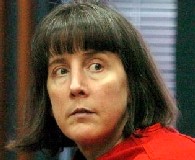 Amy Bishop
Murderer · USA · 1986
Amy Bishop — biology professor and perpetrator · James Anderson — Bishop’s husb…
4 victims
Amy Bishop
Murderer · USA · 1986
Amy Bishop — biology professor and perpetrator · James Anderson — Bishop’s husb…
4 victims
 Estelle Jones
Murderer · USA · 2012
Estelle Jones was a 72-year-old woman when she was sentenced. She was described…
2 victims
Estelle Jones
Murderer · USA · 2012
Estelle Jones was a 72-year-old woman when she was sentenced. She was described…
2 victims
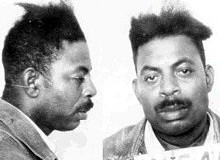 Ernest Patton
Murderer · USA · 1936
Ernest Patton was executed by asphyxiation-gas in Arizona on August 13, 1937. E…
1 victim
Ernest Patton
Murderer · USA · 1936
Ernest Patton was executed by asphyxiation-gas in Arizona on August 13, 1937. E…
1 victim
 Christopher Williams
Murderer · USA · 1989
Christopher Williams was convicted in the 1989 murders of 3 men in Germantown,…
3 victims
Christopher Williams
Murderer · USA · 1989
Christopher Williams was convicted in the 1989 murders of 3 men in Germantown,…
3 victims
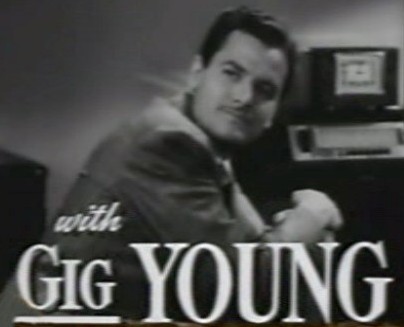 Gig Young
Murderer · USA · 1978
On 19 October 1978, three weeks after his marriage, Gig Young and his wife were…
1 victim
Gig Young
Murderer · USA · 1978
On 19 October 1978, three weeks after his marriage, Gig Young and his wife were…
1 victim
- Gender
- female
- Country
- USA
- Location
- Scarsdale, Westchester County, New York , USA
- Date of birth
- April 27, 1923
- Age at first offence
- 57
- Characteristics
- —
- Victim profile
- Her ex-lover Dr. Herman Tarnower, 69 (the well-known cardiologist and author of the best-selling book The Scarsdale Diet )
- Method of murder
- Shooting (.32 revolver)
- Date(s) of murder
- March 10, 1980
- Years active
- 1980
- Date of arrest
- Same day
- Status
-
Released
Sentenced to 15 years to life on February 24, 1981; Governor Mario Cuomo commuted the remainder of her sentence on December 29, 1992; released on January 23, 1993
Case record: Jean Harris
Background
Jean S. Harris was born Jean Struven in 1923 in Cleveland, USA. Her mother, Mildred, was a Christian Scientist, and her father, Albert, was a civil engineer. Albert was described as intelligent but humorless and known for a terrible temper. He was hospitalised for a manic-depressive disorder at least once and received electro-shock treatment. Harris got good grades at school and attended Smith College majoring in economics.
Soon after graduation, Harris married Jim Harris, a handsome Navy veteran. They settled in Grosse Pointe, Michigan. Their first son David was born in 1950 and Jimmie followed in 1952. Harris set up a kindergarten from home.
A cardiologist named Tarnower set himself up as a cardiologist in the Scarsdale and White Plains areas of New York. He was described as having joined the US Military Corps during World War II and being promoted to major. After the war, he founded the Scarsdale Medical Center and was described as highly regarded among colleagues and patients. Tarnower was described as a relentless social climber who held elaborate dinner parties and cultivated a circle of wealthy friends and patients. He was also described as a renowned playboy.
In 1967, Tarnower proposed marriage to Harris. Harris refused because she was concerned about having to move her two sons from their schools. After the boys finished their school year, Tarnower changed his mind and told Harris she should see other men because he would not be able to commit to her. Harris and Tarnower carried on seeing each other for 14 years, during which time Tarnower continued dating other women.
Harris became particularly jealous of Lynne Tryforos, a young and attractive secretary/medical assistant of Tarnower. The women embarked on a competition for Tarnower’s affections. Harris received mysterious and obscene phone calls and suspected they were from Tryforos. One night at Tarnower’s, Harris found her favorite dress smeared with excrement. She returned the gesture by telephoning Tryforos every night for a month.
Harris became the Director of the Middle School at Springside, a female academy in a Philadelphia suburb. In 1977, she became head of the extremely prestigious Madeira School for Girls in Washington D.C. When Harris took the role, the school was described as suffering a decline, and during the next two years she failed to improve the school’s academic reputation. When a performance report came out in May 1979 it recommended her dismissal.
Friends from the publishing world suggested to Tarnower that he write a book documenting the diet he recommended to his patients. The nutritional philosophy was described as cutting down on carbohydrates, eating plenty of oily fish, lean meat, fruit and vegetables, and having a low intake of fats, salt and sweets. When Tarnower wrote The Complete Scarsdale Medical Diet, it became an immediate bestseller. The basic nutritional philosophy was described as revolutionary at the time.
In the period when Harris’s depression grew deeper, Tarnower was described as prescribing her Desoxy, a methamphetamine better known as speed. Harris was also described as buying a .32 revolver.
Harris had a history of depression and was described as being fragile emotionally.
The offence
On March 10, 1980, mounting tensions came to a boiling point when Harris drove from the Madeira School in McLean, Virginia to Tarnower’s home in Purchase, New York, with an unused handgun in her possession, with which she said she had planned to commit suicide after talking in person with Tarnower one last time.
When she arrived, she noticed Lynne Tryforos’s lingerie in the bedroom and an argument ensued. It was alleged that Tarnower said, "Jesus, Jean, you're crazy! Get out of here!" Harris shot Tarnower four times at close range, wounding him mortally. Tarnower died that night.
In Harris’s version of events, she had planned to spend her final moments with him before putting a bullet through her head at a tiny island in the middle of a pond in his grounds. She arrived and Tarnower ignored her. She became angry when she saw Tryforos’s negligee and slippers and a box of pink curlers in his bathroom, flew into a rage, throwing the garments around, and Tarnower slapped her hard in the mouth. Harris slumped down, took out the gun, and pointed it at her head. A struggle between the two ensued and Harris ended up shooting Tarnower five times. Harris stated that turning the gun on herself proved fruitless because it was empty.
In the prosecution’s view, Harris descended upon Tarnower in his sleep and shot him. The prosecution said he awoke and put his hand up in a futile attempt to ward off a bullet, and that Harris pumped the gun twice more and ran into the bathroom where she threw Tryforos’s things around.
The source records that Herman Tarnower sustained four bullet entry wounds, although only three bullets actually lodged in his body.
Investigation
After the shooting, Harris was arrested and booked for second-degree murder. Calls were placed to Dr. Tarnower’s prominent friends and patients.
Harris was told she could make a phone call at the police station and called Leslie Jacobson, corporate attorney and husband of Marge, who had introduced Harris and Tarnower. Harris told Leslie Jacobson, "I think I killed Hy." Leslie Jacobson ordered, "Dont say another word," and arranged for associates and an attorney.
The prosecution and defense produced evidence and testimony on forensics, where Tarnower was when he was shot, and the trajectory of the bullets.
A prosecution witness was Dr. Louis Roh, Deputy Medical Examiner of Westchester County, who testified that Harris shot Tarnower while he lay in bed. Dr. Roh testified that the wound in the hand was made by a bullet that went on to the poor mans shoulder. On cross-examination, it was said that defense counsel cast doubt by showing Dr. Roh had changed opinions more than once from what he had given in the autopsy report and that he had told the Grand Jury.
The defense witness was Professor Herbert MacDonnell, who contradicted Roh’s assertion about the bullet trajectory. MacDonnell testified that a bullet tracked a trajectory that had penetrated the double glass door of Tarnower’s bedroom and then ricocheted and went into a deck. MacDonnell testified about finding a bloodstain on the glass door’s frame and tracing its trajectory, concluding that the two trajectories intersected at the point Harris recalled she and Tarnower were when he was shot in the hand. It was stated that the bullet did not go into the wounded man’s shoulder but through the glass door.
It was also stated that prosecution and defense engaged in a dispute over three tiny bits of tissue found in Tarnower’s chest. Dr. Roh testified that the bits were bits of skin from the palm of Tarnower’s hand. Defense pathologist Dr. A. Bernard Ackerman testified "unequivocal[ly]" that they were not.
Arrest
Harris was arrested and booked for second-degree murder.
She was released on $40,000 bail raised by her brother and sisters and was signed into the United Hospital of Port Chester for psychiatric evaluation and therapy.
Trial
The trial took place at the Westchester County Court in New York and lasted three months. It was described as becoming a national melodrama.
Harris pleaded temporary insanity and accidental death, insisting that she had only wanted to kill herself.
The jury deliberated for eight days. The jury found Harris guilty of second-degree murder.
George Bolen acted as the prosecution lawyer, and Joel Aurnou acted as Harris’s defense lawyer. Aurnou was described as being heavily criticised for not sufficiently preparing his client for the trial.
The trial was described as involving expert arguments over forensics, where Tarnower was when he was shot, and the trajectory of the bullets.
The source records that Bolen argued that Harris descended upon Tarnower in his sleep and shot him.
Bolen read to the jury the content of a 10-page letter Harris had written to Tarnower, which was described as repeatedly calling Tryforos vulgar names and including passages showing Harris’s lack of self-worth.
The source records that Harris was charged with second-degree murder in the death of Tarnower, and that first-degree murder applied only to the killing of a police officer or corrections officer on duty at that time in New York. To be found guilty of first-degree murder, the prosecutor would need to prove conscious intent to cause death. It was stated that the jury would normally be offered the option of first-degree or voluntary manslaughter, but the jury was not offered the option of voluntary manslaughter in the Jean Harris case because Joel Aurnou requested that the judge not include it and he explained he wanted to force the jury to choose either murder or acquittal without compromise. The jury was given two lesser charges: second-degree (involuntary) manslaughter and criminally negligent homicide.
Joel Aurnou’s emotional summation to the jury included the instruction: "Do not compromise [The death of Herman Tarnower] was a tragic accident Don't compromise! Search for the truth - we can take it!"
Harris testified in her own defense. During direct examination, Joel Aurnou read aloud to the jury a poem Harris had written, titled "A Very Merry to Vivian and Arthur and Herman." The poem content was read in full and included lines such as:
Twas the night before Christmas, and in part of the house Arthur was snuggling with Vivian, his spouse.
In the guest room lay Herman who, trying to sleep,
Was counting the broads in his life stead of sheep!
...
And with Jeannie obediently three paces back,
They tip-toed to the living room to watch Nick unpack.
The source records quotations from Bolen’s cross-examination question fragment and Harris responses during trial. It includes: BOLEN: Mrs. Harris, [would you tell us about] certain incidents that took place at Dr. Tarnowers home and particularly in the bedroom?" HARRIS: Could you be more specific? BOLEN: Did you have conversations with Dr. Tarnower? HARRIS: Yes, whenever we talked we had conversation.
It also includes: "Back in October and November of 78, sir, to your knowledge, was there any in-house procedures promulgated by either yourself or someone immediately superior to you with respect to the procedures to be done with respect to acquainting any prospective purchaser of firearms, with the operation, maintenance and care and general safety of any handgun, be it a gun, or any type of weapon?"
The source also records that during the reading of the Scarsdale Letter at trial: HARRIS: It had a lot to do with my very deep affection for him. and: HARRIS: Yes, but more to do with my own integrity in being touched by the other woman than by the other woman herself. and: HARRIS: I thought he was publicly humiliated much more than I.
When Harris was asked questions involving the letter’s contents, the source also recorded that people gasped when they heard Harris wrote, "to be jeered at and called 'old and pathetic' made me seriously consider borrowing $5,000 just before I left New York and telling a doctor to make me young again -- to do anything but make me not feel like discarded trash. I lost my nerve because there was always the chance I'd end up uglier than before."
On the day she was to be sentenced, Harris made a statement before the judge passed sentence. The statement included the following words:
"I wasn't to say that I did not murder Dr. Herman Tarnower," she began, "that I loved him very much and I never wished him ill, and I am innocent as I stand here. For you or for Mr. Bolen to arrange my life so that I will be in a cage for the rest of it, and that every time I walk outside I will have iron around my wrists" -- here she paused to hold up her hands together as if in handcuffs -- "is not justice; it is a travesty of justice. The people in that jury were told Mr. Bolen will prove to you beyond a reasonable doubt that Mrs. Harris intended to kill Dr. Tarnower. In their many statements, and a number of them decided to become public figures now, and they have written for the newspaper and they have been on television shows and they have been on radio shows in every single statement they have said, in essence, Mrs. Harris took the stand and didn't prove to us she was innocent, and therefore we find her guilty. In the 10,000 pages of testimony that have been taken here, there isn't a page, there isn't a paragraph and there isn't a sentence in which anyone suggests, in which the prosecution suggests, how I was guilty of intentionally hurting Dr. Tarnower. And certainly for [Mr. Bolen] to suggest that he cannot adequately articulate how people feel the loss, that is really gratuitous, because he certainly doesn't have to explain it to me. No one in the world feels that loss more than I do. I am not guilty, your Honor."
After the impassioned statement, there was described as a brief burst of applause from some spectators and Judge Leggett gaveled for order.
Sentencing
Harris was sentenced to 15 years to life at the Bedford Hills Correctional Facility in New York.
Appeals
Numerous appeals followed the conviction. It was stated that the higher courts determined she had received a fair trial. It was also stated that her attorneys appealed the verdict three times but lost.
Outcome
The record states that Harris was sentenced to 15 years to life on February 24, 1981, and that Governor Mario Cuomo commuted the remainder of her sentence on December 29, 1992. She was released on January 23, 1993.
Aftermath
In prison, Harris wrote an autobiography and two other books. She spent much of her time working in the prison’s children’s center and worked in parenting-related programs for inmate mothers. The source describes that she taught a parenting class and developed the in-prison nursery for babies born to inmates.
It was stated that during her term she suffered two heart attacks. She was later granted clemency on grounds of ill health.
After release, Harris planned initially to live in a cabin in New Hampshire, but later moved to the Whitney Center, a retirement home in Hamden, Connecticut, where she currently resided in the account provided. She visited Tarnower’s grave at Mount Hope Cemetery in Hastings-on-Hudson on multiple occasions.
The source also records that Harris’s story was told by Diana Trilling in "Mrs Harris" and by journalist Shana Alexander in "Very Much a Lady: The Untold Story of Jean Harris and Dr. Herman Tarnower." It also recorded that her murder trial was depicted in the 1981 made-for-television movie "The People vs. Jean Harris," with Ellen Burstyn portraying her. The account further recorded that in 2006, a made-for-TV movie titled "Mrs. Harris" starred Annette Bening and Ben Kingsley portrayed Tarnower. It also recorded that the story was referred to on the sitcom Seinfeld as the basis for a fictional musical "Scarsdale Surprise."
Other details
The record contains multiple detailed descriptions of events at the Madeira School and of Harris’s and Tarnower’s relationship. It also contains allegations and disputes between Harris’s version and the prosecution’s version, including explanations about the shooting circumstances and details about the Scarsdale letter’s contents.
The record includes the following statement attributed to Tarnower at a time when Harris feared the school board would dismiss her: "Hell, theyll never fire you. Theyre too lazy to look for a new head."
It also includes the statement attributed to Tarnower regarding when he would see Harris on the night she planned suicide: "Suit yourself."
It includes a description of a mother telling Harris: "If I had known you ran this school with your own Gestapo, I would never have sent my daughter here!"
It includes the following quotation attributed to the prosecution and defense context regarding jury options, and the explanation attributed to Aurnou that he wanted to force the jury to choose either murder or acquittal no compromise: "Usually it's the defense lawyer who asks to have lesser included offenses charged. In this instance, the DA will ask it, and I will insist that they not be. I want to force that jury to choose either murder or acquittal no compromise."
The record also describes that Harris was not legally eligible to inherit $220,000 Tarnower left her in his will after the guilty verdict.


Spotted an error, or have more information about this case?