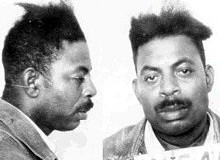
Ernest Patton
Murderer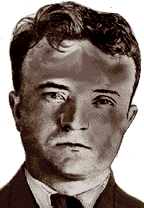 Paul Jaworski
Murderer · USA · 1926
Paul Jaworski was born in Poland as Paul Poluszynski in 1900. He later immigrat…
20 victims
Paul Jaworski
Murderer · USA · 1926
Paul Jaworski was born in Poland as Paul Poluszynski in 1900. He later immigrat…
20 victims
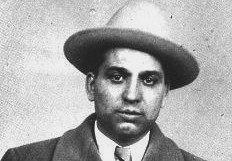 Harry Maione
Murderer · USA · 1937
Harry “Happy” Maione (1908 – February 19, 1942) was a New York mobster who serv…
12 victims
Harry Maione
Murderer · USA · 1937
Harry “Happy” Maione (1908 – February 19, 1942) was a New York mobster who serv…
12 victims
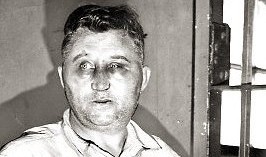 Harry Powers
Murderer · USA · 1931
Harry Powers was executed by hanging on March 18, 1932, at the West Virginia Pe…
5 victims
Harry Powers
Murderer · USA · 1931
Harry Powers was executed by hanging on March 18, 1932, at the West Virginia Pe…
5 victims
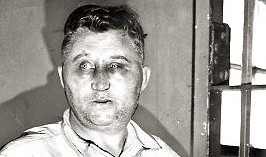 Herman Drenth
Murderer · USA · 1931
Herman Drenth was also known by the aliases Harry F. Powers and Cornelius O. Pi…
5 victims
Herman Drenth
Murderer · USA · 1931
Herman Drenth was also known by the aliases Harry F. Powers and Cornelius O. Pi…
5 victims
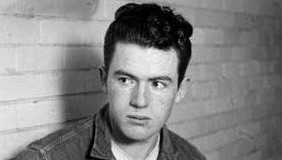 William Edward Hickman
Murderer · USA · 1926
William Edward Hickman was a man who tried to solve his financial problems by k…
5 victims
William Edward Hickman
Murderer · USA · 1926
William Edward Hickman was a man who tried to solve his financial problems by k…
5 victims
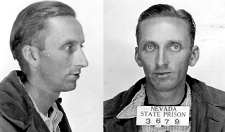 Luther Jones
Murderer · USA · 1936
Luther Jones Luther Jones was executed by asphyxiation-gas in Nevada on January…
4 victims
Luther Jones
Murderer · USA · 1936
Luther Jones Luther Jones was executed by asphyxiation-gas in Nevada on January…
4 victims
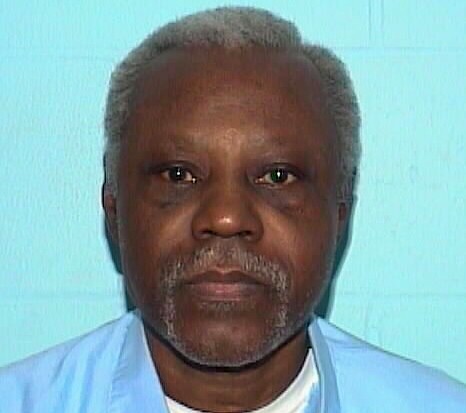 Bernard Middleton
Murderer · USA · 1995
Bernard Middleton was sentenced to 50 years in prison in 2003. He had been char…
1 victim
Bernard Middleton
Murderer · USA · 1995
Bernard Middleton was sentenced to 50 years in prison in 2003. He had been char…
1 victim
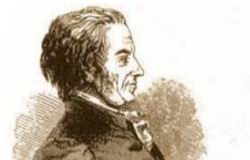 John Tawell
Murderer · United Kingdom · 1845
John Tawell was a British murderer. In 1845, he became the first person to be a…
1 victim
John Tawell
Murderer · United Kingdom · 1845
John Tawell was a British murderer. In 1845, he became the first person to be a…
1 victim
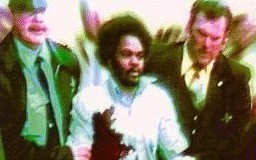 Raymond Lee Stewart
Spree killer · USA · 1981
Raymond Lee Stewart was a serial killer convicted and sentenced to death in two…
6 victims
Raymond Lee Stewart
Spree killer · USA · 1981
Raymond Lee Stewart was a serial killer convicted and sentenced to death in two…
6 victims
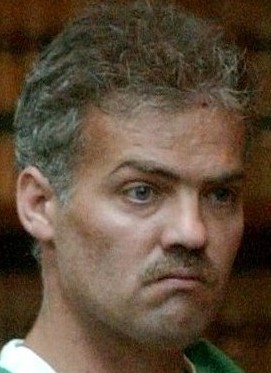 William Downs
Murderer · USA · 1991
William Downs was executed by lethal injection in South Carolina on July 14, 20…
2 victims
William Downs
Murderer · USA · 1991
William Downs was executed by lethal injection in South Carolina on July 14, 20…
2 victims
 Charles Hedlund
Murderer · USA · 1991
Charles Hedlund was convicted in connection with the murders of 40-year-old Chr…
2 victims
Charles Hedlund
Murderer · USA · 1991
Charles Hedlund was convicted in connection with the murders of 40-year-old Chr…
2 victims
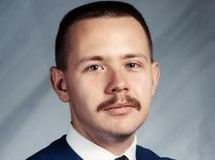 Michael McLendon
Spree killer · USA · 2009
Michael McLendon died of self-inflicted gunshot wound after shootout with autho…
10 victims
Michael McLendon
Spree killer · USA · 2009
Michael McLendon died of self-inflicted gunshot wound after shootout with autho…
10 victims
- Gender
- male
- Country
- USA
- Location
- McNary, Arizona, USA
- Date of birth
- 1900
- Age at first offence
- 36
- Characteristics
- jealousy, torture
- Victim profile
- Creacy Mae Millard, 29 (his girlfriend)
- Method of murder
- Shooting
- Date(s) of murder
- December 25, 1936
- Years active
- 1936
- Date of arrest
- Same day
- Status
-
Executed
Executed by asphyxiation-gas in Arizona on August 13, 1937
Status
Ernest Patton was executed by asphyxiation-gas in Arizona on August 13, 1937.
Background
Ernest Patton pleaded guilty to first degree murder, resulting in the killing of one Creacy Mae Millard at McNary, Arizona, on or about the 25th day of December, 1936. Ernest Patton was described as “a burly, illiterate negro,” age 36 years. He stated he had no previous criminal record.
Lovi S. Udall was a judge and Earl Platt was a judge? and County Atty. was listed as Earl Platt.
Ernest Patton was born in Alabama and later drifted to Mississippi, where in 1929 he became acquainted with Creacy Mae Millard, a colored girl of 22 years. He entered a plea of guilty to her murder on Christmas Day.
They “kept company” until 1932, when Patton came to McNary to work for the Lumber Company. It appeared that he was thereafter married to another woman. The defendant said that they could not agree on how their property was divided by the Deputy Sheriff at McNary, and he said she later divorced him in Mississippi.
Three and a half months before the killing, the deceased came to McNary where Patton immediately renewed their acquaintance. Shortly thereafter she began living in un-lawful cohabitation with Patton, who lavished his meager earnings upon her and of whom he was extremely jealous. Patton stated that he and the deceased planned to be married at Holbrook on the “next pay day,” and that he was saving his money for that purpose.
The offence
On Christmas Day, the afternoon of the killing, Patton left the deceased at his house getting dressed, went first to the deceased’s brother Frank’s place, and later to Mack’s Cafe (Colored). He then went down to Pinetop for a bottle of ginger ale for Frank, who was ill. The narrative also referenced “possibly the pint of liquor found on his person with the seal unbroken when he was arrested for the killing.”
He returned to Frank’s place in time to meet the deceased just as she and Curtis McLemore, a young colored boy, were leaving for Pinetop. The deceased told Patton they were going to get some beef tallow to rub Frank with. Patton did not forbid her from going with McLemore, but he did say “Just a minute” and then walked in the house to ask Frank if he sent his sister after tallow. When he got back to the door of the house she was gone.
It appeared from Patton’s statements, though denied by McLemore, that McLemore had been paying attention to the deceased, leaving fruit, whiskey and other presents for Creacy Mae. Patton “strenuously objected” to these attentions and warned her to quit fooling around with Curtis or anyone else as long as they stayed together. He admitted he never personally spoke to McLemore about the matter, and that there had never been any previous trouble between them.
During the time the deceased and McLemore were making the trip to Pine top and back, occupying about 45 minutes, Patton went back to his house, did his chores, secured his loaded pistol, and returned to Mack’s Cafe.
The deceased and McLemore, accompanied by the witness Portis, after delivering the beef tallow to her brother returned to the Cafe at deceased’s request, looking for Patton. The narrative stated it would appear from the deceased’s action that she was apprehensive Patton might be angry and she was endeavoring to rejoin him at the earliest moment possible. The time was after dark at about six P.M., and the area in front of Mack’s cafe where the McLemore car was parked was well lighted from porch lights.
The deceased sent the witness Portis into the Cafe for some gum, and she began making inquiry of bystanders for “Ernest.” At this moment Patton came onto the porch from the cafe and spied the McLemore car with McLemore and the deceased sitting therein. Patton walked toward the car and motioned with his finger for the deceased to follow him. She got out of the car and came to the porch, saying to him she had sent after some gum.
Patton said: “Come on let’s go” and walked some 40 feet down the board walk toward his house, evidently expecting her to follow him afoot. As he started off she said: “Come on Ernest, let’s get in the car, there is so much snow, I don’t like to get in the snow”. McLemore spoke up and offered to take both of them home in his car.
Patton then returned to the car and said to the deceased: “Get out of that God Damned car and come here”. When he said that, the deceased made an effort to get out, opening the door and getting her right foot onto the running board, he pushed her back in with his left hand, saying: “you’re too late”. He began shooting at a distance of two feet with the pistol held in his right hand.
Three shots penetrated the woman’s right side, killing her almost instantly. One bullet inflicted a minor flesh wound upon McLemore. Patton stated this was accidental, that he was not trying to shoot him.
Patton ejected the five shells from his pistol, which fell upon the running board of the car, and reloaded the pistol. He told bystanders: “I ought to kill every son of a bitch big enough to die”.
A few moments later Patton surrendered to Deputy Sheriff Mineer without resistance, and admitted the shooting to Mineer freely. The only excuse offered by Patton was: “That I was so mad, I did not know what I was doing”. The narrative also stated that this was then followed by detailed recitation of what he did and said both before and at the time of the shooting.
The narrative stated Patton was not drunk according to his own admission. It was also established that the deceased was unarmed, as was McLemore.
Investigation
The killing was followed by Patton’s surrender to Deputy Sheriff Mineer without resistance. Patton freely admitted the shooting to Deputy Sheriff Mineer.
Arrest
The narrative referred to Patton being arrested for the killing and to “possibly the pint of liquor found on his person with the seal unbroken when he was arrested for the killing.”
Trial
Patton pleaded guilty to the crime of first degree murder, resulting in the killing of one Creacy Mae Millard at McNary, Arizona, on or about the 25th day of December, 1936.
The narrative stated: “The legal question presented is whether jealousy and anger constitutes circumstances of mitigation or extenuation.” The court answered in the negative, stating “In the mind of the Court, this must be answered in the negative.”
The court examined the whole record in favor of life and found there were “no circumstances of mitigation or extenuation,” denying the defendant’s plea for a sentence of life imprisonment.
The narrative included the court’s discussion on human life as “the most sacred of all interests committed to its protection,” and that “To take the life of a human being is an awful thing even when it is taken by the law in the due administration of justice.” It concluded: “the facts here shows a cold blooded murder with no extenuating circumstances.”
Sentencing
The death penalty was imposed. The execution was set for March 24, 1937, with the walls of the state prison at Florence, Arizona, by the administration of lethal gas.
Outcome
Other details
Patton was described as extremely jealous and did not want the deceased in the presence of McLemore or possibly any of the male species. The narrative stated there was no provocation or justification for the “atrocious, brutal slaying” of the defenseless woman.
The narrative stated the deceased and McLemore were unarmed. It also stated Patton professed to love the deceased and stated he intended to marry her.
Named individuals included: Creacy Mae Millard (deceased), Patton (defendant), Frank (deceased’s brother), Curtis McLemore (young colored boy), Portis (witness), Deputy Sheriff Mineer, Lovi S. Udall (judge), Earl Platt (also listed in the judicial/prosecutorial role as “County Atty. The defendant, Earnest Patton… judge Earl Platt, County Atty.”), and “Ernest” as referenced by the deceased to bystanders.
Spotted an error, or have more information about this case?