
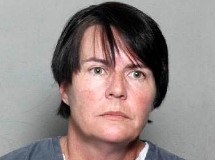
Amy Hebert
Murderer Miranda Barbour
Murderer · USA · 2013
Miranda Barbour, 19, defendant. · Elytte Barbour, 22, defendant and husband of…
100 victims
Miranda Barbour
Murderer · USA · 2013
Miranda Barbour, 19, defendant. · Elytte Barbour, 22, defendant and husband of…
100 victims
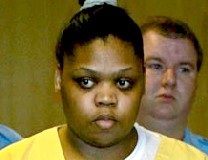 Tiffany Hall
Murderer · USA · 2006
Tiffany Hall was 24 when she was charged in September 2006. She later entered a…
5 victims
Tiffany Hall
Murderer · USA · 2006
Tiffany Hall was 24 when she was charged in September 2006. She later entered a…
5 victims
 Banita Jacks
Murderer · USA · 2007
Banita Jacks was a Washington, DC resident convicted of murdering her four daug…
4 victims
Banita Jacks
Murderer · USA · 2007
Banita Jacks was a Washington, DC resident convicted of murdering her four daug…
4 victims
 Holly Grigsby
Murderer · USA · 2011
Holly Grigsby was sentenced to life in prison without parole on July 15, 2014.…
4 victims
Holly Grigsby
Murderer · USA · 2011
Holly Grigsby was sentenced to life in prison without parole on July 15, 2014.…
4 victims
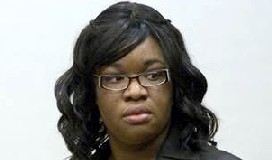 Jessica Tata
Murderer · USA · 2011
Jessica Tata was a Houston home day care owner who fled to Nigeria after a fire…
4 victims
Jessica Tata
Murderer · USA · 2011
Jessica Tata was a Houston home day care owner who fled to Nigeria after a fire…
4 victims
 Amanda Bennett
Murderer · USA · 2011
Amanda Bennett was an Indiana woman who shot her three children and set the fam…
3 victims
Amanda Bennett
Murderer · USA · 2011
Amanda Bennett was an Indiana woman who shot her three children and set the fam…
3 victims
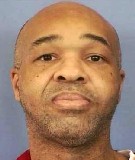 Eddie Lee Howard
Murderer · USA · 1992
Eddie Lee Howard, Jr. was a forty-one year old male. He was convicted and sente…
1 victim
Eddie Lee Howard
Murderer · USA · 1992
Eddie Lee Howard, Jr. was a forty-one year old male. He was convicted and sente…
1 victim
 Misty Stoddard
Murderer · USA · 2012
Misty Stoddard was a 37-year-old resident of Sarasota County. She was the stepm…
1 victim
Misty Stoddard
Murderer · USA · 2012
Misty Stoddard was a 37-year-old resident of Sarasota County. She was the stepm…
1 victim
 Michael McCrea
Murderer · Singapore · 2002
Michael McCrea was sentenced to 24 years imprisonment on June 29, 2006. · 2 Jan…
2 victims
Michael McCrea
Murderer · Singapore · 2002
Michael McCrea was sentenced to 24 years imprisonment on June 29, 2006. · 2 Jan…
2 victims
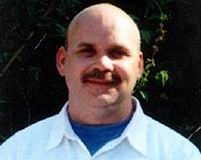 Douglas Donald Moore
Murderer · Canada · 2003
Douglas Donald Moore died of an apparent suicide in a cell at the Maplehurst De…
3 victims
Douglas Donald Moore
Murderer · Canada · 2003
Douglas Donald Moore died of an apparent suicide in a cell at the Maplehurst De…
3 victims
 Judy Buenoano
Serial killer · USA · 1971
Judy Buenoano was executed by electrocution in Florida on March 30, 1998. Judy…
3 victims
Judy Buenoano
Serial killer · USA · 1971
Judy Buenoano was executed by electrocution in Florida on March 30, 1998. Judy…
3 victims
- Gender
- female
- Country
- USA
- Location
- Mathews, Lafourche Parish, Louisiana, USA
- Date of birth
- 1967
- Age at first offence
- 40
- Characteristics
- domestic violence, torture
- Victim profile
- Her two children, Camille, 9, and Braxton, 7
- Method of murder
- Stabbing with knife
- Date(s) of murder
- August 20, 2007
- Years active
- 2007
- Date of arrest
- Same day (suicide attempt)
- Status
-
Life imprisonment
Sentenced to two consecutive life sentences on June 24, 2009
Case record: State of Louisiana Court of Appeal, First Circuit — State of Louisiana v. Amy T. Hebert
Timeline
- August 9, 1991 — Amy Hebert and Chad Hebert married.
- July of 2005 — Amy Hebert and Chad Hebert separated.
- April of 2006 — Amy Hebert and Chad Hebert divorced.
- June 2007 — Judy Hebert took note of Amy’s relationship with their children and said she ignored Amy when Judy spoke; Camille and Braxton had not visited Judy’s house since June 2007.
- August 16, 2007 — A “Functional Health Intake Summary” for physical therapy reflected that Amy Hebert could fully concentrate.
- August 20, 2007 — Amy Hebert fatally stabbed Camille Catherine Hebert and Braxton John Hebert at the family home at 118 St. Anthony Street, Mathews, Louisiana; she also inflicted self-inflicted stab wounds and left notes.
- August 21, 2007 — Amy Hebert was treated at Ochsner St. Anne General Hospital; Dr. Alexandra Phillips attempted to talk with her.
- August 23, 2007 — Dr. Alexandra Phillips met with Amy Hebert again; the attending physician observed her responding to internal stimuli; antipsychotic medication was prescribed.
- August 20, 2007 (hospital aftermath referenced in record) — Amy Hebert was treated in the intensive care unit at Ochsner St. Anne General Hospital in Raceland.
- March 24, 2009 — Dr. George Seiden interviewed Amy Hebert.
- April 16, 2009 — Jury selection began.
- May 4, 2009 — Trial evidence presentation began.
- May 6, 2009 — Testimony included Chad Hebert and witnesses describing depression and anger after the divorce and news her ex-husband planned to remarry.
- May 11, 2009 — Forensic psychologist Glenn Ahava testified to Amy Hebert’s description of her children’s final moments; court also held a session about counseling.
- May 17, 2009 — Judge Jerome Barbera announced the jury could not reach a unanimous verdict needed to sentence her to death; penalty was life imprisonment.
- June 24, 2009 — Amy Hebert was sentenced to two consecutive life sentences.
- July 15, 2008 — Voter registration was 56,233 (as cited in the appeal record regarding venue).
- 2011 — The Louisiana Supreme Court denied Hebert’s appeals.
- 2014 — District Judge Jerome J. Barbera denied Hebert’s request to overturn her first-degree murder conviction and sentence.
- 2015 — The Louisiana Supreme Court denied Hebert’s appeals.
Background
Amy Hebert was born Amy Talbot and was described as an Evangelical Christian. She had originated from Lafourche Parish and had resided in Thibodaux at one time. She worked as a teacher’s aide at Lockport Lower Elementary School in Lockport, Louisiana, and at the time of the offense was described as a former teacher’s aide and as a Sunday school teacher.
Amy Hebert married Chad Hebert on August 9, 1991. In 1994, they moved to 118 St. Anthony Street, Mathews, Louisiana. In July 2005 they separated, and in April 2006 they divorced. After the divorce, Chad Hebert entered a relationship with another woman and later married her in 2008. The record described Amy Hebert as having sought to save the marriage through counseling and reflected competing views of the significance of the marriage counseling.
At the time of the children’s deaths, Camille Catherine Hebert attended Lockport Upper Elementary School and Braxton John Hebert attended Lockport Lower Elementary School. Chad and Amy Hebert jointly held custody of them, and the father and Amy had scheduled visitation.
The offence
On August 20, 2007, Amy Hebert fatally stabbed her children at the family home at 118 St. Anthony Street, Mathews, Louisiana, and she also fatally stabbed or cut the family dog. She also inflicted self-inflicted knife wounds to herself.
The victims were:
- Camille Catherine Hebert, age 9
- Braxton John Hebert, age 7
The record described the stabbing wounds as extensive and stated that both victims were stabbed in the heart. The children also had defensive wounds to their hands and arms.
Camille suffered approximately 30–35 stab wounds to the front of her torso and about 30–35 stab wounds to her back. The record also stated she was stabbed on her scalp about 30 times and that the blade did not penetrate her skull. The record further stated that all of Camille’s vital organs had been hit and that she was stabbed four times in the heart. The record described defensive wounds on her right and left arms and noted that her head wounds were discovered after her head was shaved in one account.
Braxton suffered approximately 50–55 stab wounds to his torso, with about 30 to the front and 20–25 to the back. The record described that he was stabbed four times in the heart and that he bled to death. In one account, Braxton’s back wounds were described as more than 50 to 55 stab wounds due to the presence of perforating wounds.
The record described that Camille begged for her life, and that Braxton received similar statements from Ahava’s testimony as recounted in the record.
Amy Hebert also stabbed herself about 30 times, with wounds described in the abdomen, chest, neck, and wrist, and in one account she had severed wrists with exposed tendons and collapsed lungs from stab wounds. The record also described wounds to her eyelids and wounds on her skull and neck.
Investigation
A coworker who noticed Amy Hebert did not show up to work drove by her house. The coworker knocked on the door and received no response, then contacted a member of Hebert’s family. The father dialed 9-1-1, asking authorities to check on the welfare of the children.
R.J. “Buck” Hebert, the injured children’s paternal grandfather, came to the house and discovered injured Amy Hebert and the dead victims. Buck knocked on the front door and, when no one answered, broke into the utility room by climbing through a window. Buck saw blood splattered on the kitchen/dining area floor and saw a large quantity of blood in the master bedroom and Amy Hebert lying in bed with the children.
Deputies of the Lafourche Parish Sheriff’s Office entered the home. A Taser electroshock weapon was used to subdue Amy Hebert so that they could attempt a rescue of the children.
Forensic and crime scene evidence described in the appeal record and trial accounts included multiple knives, fingerprints and palm prints on a notebook and knives, and DNA analysis reflecting blood belonging to Amy Hebert or the children.
The record described that detectives and forensic experts recovered:
- A video captured from the Taser showing Amy Hebert holding a knife and threatening authorities to leave the residence.
- Multiple knives, including an electrical knife.
- Dead dog in the bed with the children.
- Two suicide notes at the residence.
One account stated that investigators recovered 152 pieces of evidence and took 59 blood swabs from Amy Hebert’s home on the day of the offenses. Another account described defense motions to bar certain items and evidence on the basis that they were not properly seized, including discussion of warrants and seizure timing issues.
Arrest and medical treatment
Amy Hebert was secured and taken by ambulance to Ochsner St. Anne General Hospital in Raceland, where she was treated in the intensive care unit. The record described her condition as touch and go and stated she was unresponsive in the intensive care unit.
After her hospitalization as a pretrial inmate, the record described that she was held at the Louisiana Correctional Institute for Women (LCIW), the sole state prison for women in Louisiana, instead of Lafourche Parish jails because the parish facilities could not accommodate a female felon needing medical care.
Trial
Pleas and charges
The record stated that Amy Hebert was charged by Lafourche Parish grand jury indictment with two counts of first degree murder and that the state gave notice of its intent to seek the death penalty.
She entered a plea of not guilty and not guilty by reason of insanity on both counts.
Jury decision on guilt and insanity defense
A jury found Amy Hebert guilty as charged on both counts of first degree murder. Defense motions for a new trial and for post-verdict judgment of not guilty by reason of insanity were denied.
The record stated that the jury credited testimony presented by the State and rejected testimony presented by the defense regarding insanity.
Death penalty phase outcome
The jury was unable to reach a unanimous verdict on either count for the death penalty. Under Louisiana law as described in the record, the jury’s failure to return a unanimous decision resulted in the imposition of life imprisonment.
In separate trial accounts within the provided material, the record described that three members of the 12-person jury refused to impose death and that juror Erin Folse said three jurors voted for life imprisonment in a 12-minute closing argument context.
Prosecutor and defense
The record identified:
- Prosecuting attorney: district attorney of the parish, Camille “Cam” Morvant II (noted as her first capital murder case tried by Morvant).
- Defense lawyers: George Parnham, Goorley Stroud, and Marty Stroud; Goorley and Marty Stroud were from Capital Assistance Project of Louisiana, and Parnham had previously defended Andrea Yates.
The prosecutor stated that Amy Hebert was resentful of her ex-husband, and the defense argued that she was under a form of insanity.
Expert testimony on mental state
The record included multiple expert witnesses addressing psychosis/insanity and credibility.
Dr. Alexandra Philips, a psychiatrist at Ochsner St. Anne, stated that Amy Hebert heard the words of Satan for a long time and pushed them away with the words of Christ and prayer. Dr. Philips testified:
“Satan was in the room laughing at her”
She attempted to talk with Amy Hebert after the offense, but Amy Hebert was unresponsive and later began screaming; antipsychotic medication was prescribed.
Dr. Phillip Resnick, a defense witness accepted as an expert in psychiatry, examined Amy Hebert on August 6, 2008. He diagnosed major depression with psychotic features and opined that Amy Hebert was suffering from auditory hallucination on the day of the offenses, could not distinguish right from wrong, and believed killing her children was in their best interests.
Dr. Glenn Wolfner Ahava, accepted as an expert in forensic psychology, testified in trial accounts that he believed Amy Hebert was psychotic and incapable of distinguishing right from wrong. The record included details about interviews and the basis for his diagnosis, including statements about the voice urging her to kill her children and herself, with her reporting hesitation and a direction to practice stabbing on a bed.
The record included verbatim testimony in one account of a psychologist recounting Amy Hebert’s description of the children’s final moments:
“ ‘Mommy, I don’t want to die. I love you,’ ”
Camille Hebert told her mother, according to psychologist Glenn Ahava’s testimony
“ ‘I love you, too, but I can’t let daddy take you,’ ”
he said Hebert replied, referring to her ex-husband, Chad Hebert
The record also included verbatim testimony as recounted about what Amy Hebert told Dr. Ahava and about the voice she believed was God or Satan, including the note contents.
Dr. David Self testified as an expert in forensic psychiatry and opined that due to mental disease Amy Hebert was incapable of distinguishing the wrongfulness of her conduct.
Dr. Rafael Salcedo was accepted as a court expert in clinical and forensic psychology. He opined that although Amy Hebert had a psychotic disorder (major depression), the disorder did not rise to a level that impaired her ability to distinguish right from wrong. He discussed anger, stressors, and the notes as consistent with deliberate motive rather than psychosis.
Suicide notes (verbatim)
The appeal record included two suicide notes stated as found at the residence. The notes were:
First note:
Monday 8-20-07 Chad, You wanted your own life. You got it. I'll be damned if you get the kids, too. Your ambition greed for money won out over your love for your family. The hell you put us through I do mean all of us because you don't know what the kids used to go through because of course you weren't here. This is no kind of life for them to live. I sure hope you two lying alduttering (sic) home wrecking whores can have more kids because you can't have these. Actually I hope you can't because then you'll only produce more lying homewrecking adultering (sic) whores like yourselves. Maybe you can buy some with all of your money you will make from this house the life insurance benefits you'll get from the kids.
Second note:
Monday 8-20-07 Judy, You run from the very thing you support! Monica pairs up with a married man, becomes a kept woman your response is maybe she is in love with him — so that makes it okay? How stupid! Your sons have affairs bring these whores home you welcome them all in. I guess its okay for them to hurt the family as long as it is not you. Well when you started delivering my kids to that whore, Kimberly, that was the last straw! To all my friends thanks for all the help support you tried to give me. 1 love you all, Sorry Daddy, Celeste Renee I love you all too.
Other trial narrative included that prosecutors characterized the notes as “vitriolic” and referred to them as suicide notes written by Amy Hebert to her ex-husband and mother-in-law.
Evidence described in the record
The record referenced that fingerprint and palm print experts verified fingerprints found on a notebook and three knives, that DNA analysis found blood belonging to Amy Hebert or the children, and that police discovered the two notes.
Challenges and rulings at trial
The appeal record addressed multiple assignments of error. In one part, it described a right to present a defense issue involving proposed testimony by Dr. Daniel Spitz, an expert in forensic, anatomic, and clinical pathology. The trial court excluded supplemental testimony connecting wound analysis to the defendant’s mental state, and the appellate court held that exclusion was not an abuse of discretion and that the mental condition at the time of the offenses was outside the scope of Dr. Spitz’s expertise.
During the court’s discussion outside the presence of the jury, the record included verbatim material from Dr. Spitz’s expected answer:
It would be. The extreme overkill is the wound pattern that's being analyzed. And if you — in certain cases, when the wound pattern is so unusual, it can be used as an indicator for the state of mind of the assailant. And in this case the extreme overkill, the excessive wounding of both child victims, as well as the family dog, was indicative of an individual who was suffering a severe psychiatric illness. In other words, this was well outside the typical — what is typically expected with the overwhelming majority of homicides. And when you have homicides that involve young children where the mother is the believed assailant and you have extreme overkill, you're really down to a very limited number of situations that can account for it as far as the state of mind of the assailant. And I'm not here to analyze the assailant in terms of a psychiatric approach. This is the — this is a wound analysis to help identify what might be going on with the assailant. As far as the wounds go, there is [sic] a limited number of possibilities.
In one trial context, the record also included verbatim testimony from Dr. Spitz on cross or follow-up about overkill:
“Overkill is something that I see fairly infrequently. In fact, it's infrequent to say the least. And what it is is extreme wounding, wounding that is far beyond what is necessary to result in somebody's death, wounding that is so extreme that it raises a variety of questions.”
Venue
The appeal record addressed a motion for change of venue based on alleged prejudice in Lafourche Parish. The record described a poll by defense expert Elliot Stonecipher conducted in May 2008. The record stated that Stonecipher concluded there was “unquestionably a high degree of prejudice existing in the public mind of Lafourche Parish,” and that it would be impossible for the defendant to receive a trial by fair and impartial jurors in Lafourche Parish.
The appellate record also summarized the trial court’s reasoning for denying the venue motion and described that, upon denial and supervision relief efforts, the appellate court denied writ application stating no abuse of discretion.
Sentencing
Following the penalty phase, the jury was unable to reach a unanimous verdict needed for death. Judge Jerome J. Barbera ordered Amy Hebert’s penalty to be life imprisonment in accordance with state law.
Amy Hebert received two consecutive life sentences:
- one for Camille Catherine Hebert
- one for Braxton John Hebert
The sentencing was ordered to run consecutively as expressly directed by the trial court.
A district court judge referenced in sentencing materials was Jerome Barbera III/Barbera (the record used “Jerome J. Barbera III” and “Judge Jerome Barbera”).
Appeals
The appeal record stated that Amy Hebert appealed and designated six assignments of error:
- The trial court erred in denying the motion for post-verdict judgment of not guilty by reason of insanity.
- The trial court erred in denying the motion for new trial.
- The evidence was insufficient to support the jury’s verdicts.
- The trial court erred in limiting the presentation of a defense by not allowing Dr. Spitz to testify as an expert in forensic pathology as to the defendant’s state of mind, specifically her psychosis.
- The trial court erred in failing to grant the defense’s motion for change of venue.
- The trial court imposed an excessive sentence by making the life sentences consecutive.
The appellate court affirmed the convictions and sentences. It concluded that any rational trier of fact could have found Amy Hebert failed to rebut the presumption of sanity at the time of the offenses and rejected the change of venue and excessive consecutive sentences arguments.
The material also stated that in 2011 and 2015 Amy Hebert’s appeals were denied by the Louisiana Supreme Court, and that she entered an appeal in federal court accusing her attorney of low quality work and the courts of improperly vetting the jury pool.
Outcome
The outcome was affirmance of Amy Hebert’s convictions and sentences. She was sentenced to two consecutive life sentences and remained incarcerated as a sentenced felon at LCIW.
Other details
The record referenced:
- Her bond was set to $1 million.
- The trial had a cost of about $100,000.
- Her sentence was described as life without benefit of parole, probation, or suspension of sentence in the appeal record, and the trial court expressly ordered consecutive sentences and remanded her to the custody of the Department of Corrections.
- Police described the attack as particularly violent, and the father R.J. “Buck” Hebert testified about discovering Amy Hebert and the children.
- The record included that her father Daniel Talbot took the stand to beg for mercy and that Chad Hebert and family members presented testimony during the penalty phase.
The record also described events after trial including memorials, fundraising, and scholarships, including:
- Visitations for Braxton and Camille occurred at Falgout Funeral Home in Lockport, and the funeral for the victims was held at St. Hilary of Poitiers Catholic Church in Mathews.
- Another memorial service occurred at Victory of Life Church in Lockport.
- The children were buried at Resurrection Memorial Park in Mathews.
- A 501(C)(3) “Camille and Braxton Hebert Memorial Fund Inc.” was used to establish recreational areas/playgrounds at Lockport Lower and Lockport Upper.
- The playground at Lockport Lower had the text “Braxton’s Buddies.”
- Camille’s Court at Lockport Upper was scheduled to be a basketball court with a plaque and flowerbed.
- Scholarships named for both children were established at Nicholls State University for education major students.
In a venue-related context, the record referenced media coverage and that the television news stories, newspaper articles, and transcribed radio stories spanned August 20, 2007 through July 19, 2008, with various characterizations of the defendant in those reports.

Spotted an error, or have more information about this case?