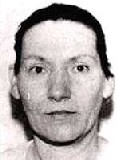
Judy Buenoano
Serial killer Genene Jones
Serial killer · USA · 1977
Genene Anne Jones (born July 13, 1950) was a former pediatric nurse who worked…
11 victims
Genene Jones
Serial killer · USA · 1977
Genene Anne Jones (born July 13, 1950) was a former pediatric nurse who worked…
11 victims
 Diana Lumbrera
Serial killer · USA · 1976
Diana Lumbrera (1976–1990) systematically suffocated 6 of her own children and…
7 victims
Diana Lumbrera
Serial killer · USA · 1976
Diana Lumbrera (1976–1990) systematically suffocated 6 of her own children and…
7 victims
 Velma Barfield
Serial killer · USA · 1969
Velma Barfield was executed by lethal injection in North Carolina on November 2…
7 victims
Velma Barfield
Serial killer · USA · 1969
Velma Barfield was executed by lethal injection in North Carolina on November 2…
7 victims
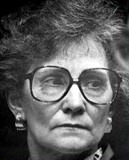 Blanche Taylor Moore
Serial killer · USA · 1968
Blanche Kiser Taylor Moore was an American convicted murderer from Alamance Cou…
4 victims
Blanche Taylor Moore
Serial killer · USA · 1968
Blanche Kiser Taylor Moore was an American convicted murderer from Alamance Cou…
4 victims
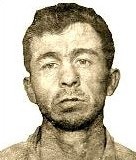 Donald Henry Gaskins
Serial killer · USA · 1969
Donald Henry Gaskins, also known as Donald “Pee Wee” Gaskins, was a serial kill…
200 victims
Donald Henry Gaskins
Serial killer · USA · 1969
Donald Henry Gaskins, also known as Donald “Pee Wee” Gaskins, was a serial kill…
200 victims
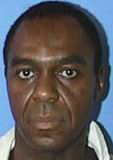 Carl Eugene Watts
Serial killer · USA · 1974
Carl Eugene Watts (born November 7, 1953; died September 21, 2007), also known…
100 victims
Carl Eugene Watts
Serial killer · USA · 1974
Carl Eugene Watts (born November 7, 1953; died September 21, 2007), also known…
100 victims
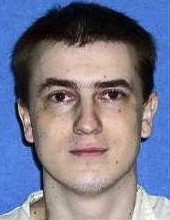 Joseph Ray Ries
Murderer · USA · 1999
Fall of 1998 — Joseph Ray Ries formed a friendship with Robert Ratliff and move…
1 victim
Joseph Ray Ries
Murderer · USA · 1999
Fall of 1998 — Joseph Ray Ries formed a friendship with Robert Ratliff and move…
1 victim
 Dale R. Anderson
Murderer · USA · 1978
Dale R. Anderson was sentenced to life imprisonment on May 11, 1990. Anderson d…
7 victims
Dale R. Anderson
Murderer · USA · 1978
Dale R. Anderson was sentenced to life imprisonment on May 11, 1990. Anderson d…
7 victims
 Gregory Bryant-Bey
Murderer · USA · 1992
Gregory Bryant-Bey was the owner of no store mentioned; the victims included Da…
2 victims
Gregory Bryant-Bey
Murderer · USA · 1992
Gregory Bryant-Bey was the owner of no store mentioned; the victims included Da…
2 victims
- Gender
- female
- Country
- USA
- Location
- Florida/Colorado, USA
- Date of birth
- April 4, 1943
- Age at first offence
- 28
- Characteristics
- poisoner, to collect insurance money
- Victim profile
- James Goodyear (her husband) / Bobby Joe Morris (her boyfriend) / Michael Goodyear (her partially paralyzed 19-year-old son)
- Method of murder
- Poisoning (arsenic) - Drowning
- Date(s) of murder
- 1971 - 1980
- Years active
- 1971–1980
- Date of arrest
- January 11, 1984
- Status
-
Executed
Executed by electrocution in Florida on March 30, 1998
Case record: Judy Buenoano
Status
Judy Buenoano was executed by electrocution in Florida on March 30, 1998.
Other names
Judy Buenoano was also known as Judias Welty, also known as Judias Goodyear, and also known as Judias Morris.
Background
Judy Buenoano was born Judias Welty in Quanah, Texas, on April 4, 1943.
Her mother died of tuberculosis when she was barely two years old. She was sent to live with her grandparents while two older siblings were placed for adoption.
Her family later moved to Roswell, New Mexico, after her father remarried. She described abuse from both parents, including being beaten, starved, burned with cigarettes, and forced to work slave hours.
At age fourteen, she attacked two stepbrothers with hot grease and attacked her parents with flying fists, feet, and objects she could lay her hands on. She spent sixty days in jail, confined with adult prostitutes, and then chose reform school rather than going back home. She attended Foothills High School, a girls reformatory in Albuquerque, until graduation in 1959, at age sixteen.
She worked in 1960 in Roswell as a nurses aide under the pseudonym of Anna Schultz. She gave birth to an illegitimate son, christened Michael Schultz, on March 30, 1961, and refused comment on rumors that his father was a pilot from a nearby air force base.
On January 21, 1962, she married an air force officer, James Goodyear. Their first child, James, Jr., was born four years later on January 16, 1966. Her husband adopted Michael Schultz. She later had a daughter, Kimberly, in 1967 after the family moved to Orlando, Florida.
A year later, she opened the Conway Acres Child Care Center in Orlando, listing her husband as co-owner despite his continuing service with the Air Force, including a tour of duty in Vietnam.
James Goodyear, Sr. had been home from Southeast Asia for barely three months when he was admitted to the U.S. Naval Hospital in Orlando suffering from symptoms staff physicians never quite identified. He died on September 15, 1971. She waited a discreet five days before cashing in his three life insurance policies. She later received $90,000 in fire insurance after an accidental blaze at her Orlando home.
Loneliness was not a problem for the recent widow. She moved her family to Pensacola in 1972 and lived with new lover Bobby Joe Morris the following year.
Her son Michael became a problem for her, raising hell in school and scoring in the dull-normal range on IQ tests. She obtained an evaluation at the state hospital in 1974 and placed her first-born out to foster care with a provision for psychiatric treatment.
Bobby Morris moved to Trinidad, Colorado, in 1977, inviting her and her brood to join him. She collected fire insurance on a second house in Pensacola and then reclaimed Michael from foster care, moving west with her tribe to settle in Trinidad as Judias Morris.
Bobby Joe was admitted to San Rafael Hospital on January 4, 1978, and was released to her care on January 21. Two days later he collapsed at the dinner table and was rushed back to the hospital, where he died on January 28; his death was ascribed to cardiac arrest and metabolic acidosis. In early February, she cashed three life insurance policies on Morris.
In 1974, she and Bobby Joe visited Morriss hometown of Brewton, Alabama, where a male resident of Florida was found dead in a Brewton motel. An anonymous call traced to a local pay phone led police to the room where the victim was found, shot in the chest with a .22-caliber weapon and with his throat slashed. Bobby Joe’s mother overheard her telling Bobby Joe: “The son of a bitch shouldn’t have come up here in the first place. He knew if he came up here he was gonna die”. Morris later blurted on his deathbed: “Judi, we should never have done that terrible thing.” Police reported they could find no fingerprints inside the room, no bullet recovered from the corpse, and no firm suspects.
On May 3, 1978, she legally changed her own last name and that of her children to Buenoano, the Spanish equivalent of Goodyear.
In a month, the family was back in Pensacola, settling into a home on Whisper Pine Drive in suburban Gulf Breeze.
Michael Buenoano dropped out of high school in his sophomore year and joined the army in June 1979, receiving an assignment to Ft. Benning, Georgia, after basic training.
In 1980, she took Michael and her younger brother James canoeing on the East River; the canoe capsized. James and Judi got out from under the upturned canoe, but Michael, weighed down by heavy braces, drowned.
She opened a beauty parlor in Gulf Breeze and began dating Pensacola businessman John Gentry II. She fabricated a stint at nursing school and claimed academic credentials and a tour of duty as head of nursing at West Florida Hospital.
In October 1982, John and Judi purchased life insurance policies on one another. She later boosted the coverage on him from $50,000 to $500,000 without his knowledge and paid the premiums out of her own pocket. By December, she was feeding him vitamin capsules that produced dizziness and vomiting.
On June 25, 1983, she announced she was pregnant and John went out to get some champagne to celebrate. When he started his car, a bomb exploded and he was seriously injured.
Before trial and conviction in the Florida cases, she denied criminal activity and maintained her innocence.
People
- Judy Buenoano — defendant; also known as Judias Welty, Judias Goodyear, and Judias Morris.
- James Goodyear — husband; Air Force sergeant; victim; died in 1971.
- Michael Goodyear — son; victim; 19-year-old partially paralyzed; died in 1980.
- James Goodyear, Jr. — child of Judy Buenoano and James Goodyear.
- Kimberly Hawkins — daughter of Judy Buenoano.
- John Gentry II — fiancé/boyfriend; seriously injured in a car bombing in Pensacola.
- Bobby Joe Morris — boyfriend; victim; died in 1978 in Colorado.
- Gerald Dossett — boyfriend mentioned as deceased in 1980; body exhumed for arsenic search; no charges filed.
- Russell Edgar — Pensacola prosecutor who prosecuted Buenoano years ago and gave her the “black widow” nickname.
- Ted Chamberlain — investigator who examined the case.
- Sylvia Smith — state-appointed attorney.
- Jeanne Eaton — cousin who visited before the execution.
- Kim Hawkins — adult daughter referenced in connection with last days and death-row material.
- Ricky Hicks — testified witness in Michael case.
- Diamond — rescue squad diver; testified.
- Dr. Barry — treating physician in Michael case.
- Constance Lang — former neighbor and later housemate; testified.
- Ken Barnes — former neighbor; observed relationships in the home.
- Peggy Goeller — appellant’s former sister-in-law; testified.
- David Lackey — testified for rebuttal in Michael insurance-related claim.
The offence
Arsenic poisoning of husband (1971)
Judy Buenoano was convicted for the 1971 murder of her husband, Air Force sergeant James Goodyear. Goodyear died on September 15, 1971 after returning to Orlando from a tour of duty in South Vietnam. Symptoms during hospitalization included nausea, vomiting, diarrhea, and later fluid overload and pulmonary congestion, with death resulting from cardiovascular collapse and renal failure.
After exhumation, toxicology indicated arsenic poisoning. Evidence at trial also included testimony that she discussed killing a person by adding arsenic to food, and testimony that she admitted killing Goodyear.
Following Goodyear’s death, Buenoano collected benefits including life insurance proceeds and Veterans Administration dependency indemnity compensation.
Drowning of son (1980)
A jury convicted Judy Buenoano of murdering her son Michael Goodyear in 1980. Michael was 19 and was partially paralyzed, requiring braces and assistive equipment. He drowned when the canoe capsized on the East River during a fishing trip.
The defense described an accidental drowning caused by the canoe capsizing. Witness testimony described that a snake fell into the canoe during confusion, that the canoe hit a submerged log and capsized, that Michael’s body was recovered later, and that there were disputes about details including whether a ski belt was present.
Evidence at trial included testimony about Buenoano’s relationship with Michael and insurance matters, along with bank and employment records. The state’s theory was that she killed Michael in a way intended to appear accidental so she could collect life insurance proceeds. The jury convicted for first degree murder.
Attempted murder of fiancé/boyfriend (car bombing, 1983)
In 1983, Judy Buenoano was convicted of attempted murder in a car bombing involving John Gentry II in Pensacola. Prior to the bombing, Gentry reported receiving “vitamin” capsules from Buenoano that made him sick. Several alleged vitamin capsules were recovered and analyzed as containing arsenic and paraformaldehyde.
The attempted murder charge resulted in a 12-year prison sentence.
Suspected poisoning deaths of other partners
The record described other suspected poisoning events including:
- Bobby Joe Morris (1978): exhumed and found with arsenic after Buenoano became a suspect; Colorado prosecutors did not bring charges after the Florida death sentence.
- Gerald Dossett: his body was exhumed in July 1983 for an arsenic search, but no charges were filed in that case.
- A suspected murder in Alabama was mentioned in the background material: a male Florida resident was found dead in a Brewton motel after a pay-phone traced anonymous call; the narrative described inability to bring charges due to insufficient evidence. No further legal outcome was stated in the provided text for that Alabama matter.
Investigation
Pensacola police began unraveling the case after a car bombing seriously injured John Gentry II in downtown Pensacola.
Gentry told police that Buenoano had given him “vitamins” that made him sick. Later analysis of capsules indicated they contained arsenic and paraformaldehyde. The investigations led to exhumations and forensic testing for arsenic.
Investigators also found discrepancies in her background and details regarding alleged pregnancy.
Arrest
Judy Buenoano was arrested in connection with the attempted murder charge and was later indicted and arrested for first-degree murder in the death of her son.
She made bail on the attempted murder charge.
Trial
Michael Goodyear trial
The trial for Michael Goodyear’s death resulted in conviction on all counts and a life imprisonment sentence for the first twenty-five years.
Appellate material also set out details of the evidence presented, including:
- Michael’s heavy metal neuropathy after therapy and transfer between medical facilities.
- Brace requirements and equipment used for ambulation.
- Testimony from family and witnesses about circumstances of the canoeing trip, alleged reasons for the canoe capsizing, recovery timing, current conditions, and whether a ski belt was on Michael’s body.
- Testimony from neighbors about shame or relationships within the home.
- Trial disputes about accidental drowning versus intentional killing intended to support insurance fraud.
- Insurance policies on Michael and benefits received after his death.
Attempted murder trial (John Gentry)
A jury convicted Buenoano and imposed a 12-year prison sentence, consecutive with her life term for the Michael Goodyear case.
Husband trial (James Goodyear)
On October 22, 1985, Buenoano went to trial for the murder of her husband, James Goodyear. The trial consumed a week.
She was convicted of first-degree murder and was formally sentenced to death on November 16. Four aggravating circumstances were found and no mitigating factors were found.
Sentencing
- For the Michael Goodyear case, Buenoano received a life sentence (with life imprisonment without parole for the first twenty-five years in the appellate record).
- For the John Gentry attempted murder case, she received a 12-year prison sentence consecutive with her life term.
- For the James Goodyear murder case, she received a death sentence.
Appeals
The Florida Supreme Court unanimously ruled not to delay the scheduled Monday execution.
The Florida Supreme Court denied appeals based on the background of a juror at Buenoano’s trial and the work of an FBI chemist.
In federal proceedings:
- The Eleventh Circuit considered an application for leave to file a second or successive federal habeas corpus petition.
- The court denied authorization to file a second federal habeas petition.
- The court also denied a request for a stay of execution.
- The application was denied, and stay was denied.
Outcome
Judy Buenoano was executed in Florida’s electric chair.
Execution details
She was transferred to Starke and confined to a cell where she passed her time watching a small black and white television through the bars in the death watch area adjacent to the execution room.
Her final meal consisted of broccoli, asparagus, strawberries and hot tea.
She entered the execution chamber at 7:02 a.m. She was strapped into an oak chair with leather straps over her waist, wrists, chest, and legs. Electrodes were fitted with moistened sponges.
When asked if she had any final statement, she replied: “No, sir,” while keeping her eyes shut and not looking at the witnesses.
The electrocution cycle commenced at 7:08 a.m. She was pronounced dead at 7:13 a.m.
Her last fear was described as leaving her children behind.
She maintained her innocence until she died and denied murdering her husband and drowning her son, and denied the other killings.
Timeline
- April 4, 1943 — Judy Buenoano was born in Quanah, Texas.
- January 21, 1962 — She married James Goodyear.
- September 15, 1971 — James Goodyear died after returning from Vietnam.
- 1973 — She moved in with Bobby Joe Morris.
- January 1978 — Bobby Joe Morris succumbed to arsenic poisoning.
- May 3, 1978 — She legally changed her surname and that of her children to Buenoano.
- June 1979 — Michael Goodyear joined the army.
- November 6 — Michael showed symptoms of base metal poisoning while at Ft. Benning.
- May 13, 1980 — Michael Goodyear drowned after their canoeing trip on the East River.
- December 16 — John Gentry was hospitalized after taking the “vitamin” capsules.
- June 25, 1983 — She announced she was pregnant; a bomb exploded in John Gentry’s car.
- July 27 — Officers and federal agents searched her home in Gulf Breeze, retrieving wire and tape matching the bomb.
- August 10 — James Buenoano was acquitted of trying to kill James Gentry.
- October 15 — Trial opened in the case related to John Gentry.
- October 22, 1985 — Trial began for the murder of husband James Goodyear.
- November 16 — She was formally sentenced to death.
- June 1990 — Her latest stay of execution was granted by a federal court.
- March 27, 1998 — Florida’s Supreme Court ruled not to delay the scheduled execution.
- March 29, 1998 — Her last appeal was turned down.
- March 30, 1998 — She was executed by electrocution in Florida.
Other details
“Black Widow” nickname
The record described that Pensacola prosecutor Russell Edgar gave Buenoano the nickname “black widow,” comparing her to a black widow feeding off her males and her young.
In connection with the nickname, Russell Edgar said: “I likened her to a black widow who fed off her males and her young.”
In another quotation, Edgar said: “I feel sorry for her surviving children. They’re without a father, without a brother and now without a mother, and we lay it all at Judy’s feet ’cause she did it.”
Ted Chamberlain was quoted as saying: “A person this cruel really needs to get what she deserves,” and as describing her as “ the coldest killer I ever knew.”
Defendant’s statements and family quotes
A statement attributed to Buenoano included: “I would like to clear the record for my grandson, I would like for him to know that his grandmother was not a murderer.”
Buenoano said: “Seeing the face of Jesus, that’s what I think about,” and “I’m ready to go home.”
A quote attributed to her daughter Kimberly Hawkins included: “She did things with us,” and “She worked a lot ... but she always made time for us.”
Kimberly Hawkins also said: “I’m fixing to watch my mom die in the electric chair. People have burned alive in it. I don’t want to see her burned alive in it. I accept the penalty that she has to die. But we can choose a better way for her to die.”
Jeanne Eaton, a cousin, was quoted as saying afterwards: “She had no fear at all, she’s mostly afraid of leaving her children and how upset they were.”
When asked if she had a final statement, Buenoano said: “No, sir,” as she was executed.
Jury deliberation and sentence timing
The provided material described that jurors deliberated for a mere two hours before voting to convict in the case opened October 15, resulting in a 12-year sentence made consecutive with the life term.
Execution mechanism and timing
Florida executed Buenoano in the electric chair. The record described that the cycle officially recorded included voltage and amperage steps and lasted 38 seconds, and that she was pronounced dead at 7:13 a.m.
A prison spokesman quote attributed to Gene Morris included: “She was very solemn. This is the first time I’ve seen that expression on her,” and: “She stared straight ahead, made no visible expression.”
Spotted an error, or have more information about this case?